Decoding 2026 US Student Loan Interest Rates: A Borrower’s Guide

Decoding 2026 US Student Loan Interest Rates: What Borrowers Need to Know Now
As we navigate the ever-evolving landscape of higher education finance, one question consistently looms large for millions of Americans: what will happen with 2026 student loan rates? The cost of education continues to rise, making student loans an indispensable tool for many. Understanding the potential trajectory of interest rates is not just a matter of curiosity; it’s a critical component of responsible financial planning for both current and prospective students.
The year 2026 might seem distant, but the factors influencing student loan interest rates are already in motion. Economic indicators, legislative changes, and the broader financial market all play a role in shaping these crucial figures. For borrowers, deciphering these complexities can mean the difference between manageable debt and financial strain. This comprehensive guide aims to shed light on the mechanics of student loan interest rates, offer informed predictions for 2026 student loan rates, and arm you with strategies to navigate this financial terrain effectively.
Whether you’re a high school student planning for college, a current undergraduate or graduate student, or a parent supporting your child’s education, the information contained within this article will be invaluable. We will explore the different types of student loans, the mechanisms by which their interest rates are set, and the economic forecasts that could impact these rates in the coming years. Furthermore, we’ll provide actionable advice on how to prepare for and potentially mitigate the effects of future interest rate changes, ensuring you’re well-equipped to make informed decisions about your educational financing.
Understanding the Basics: How Student Loan Interest Rates Are Set
Before we delve into predictions for 2026 student loan rates, it’s essential to understand the fundamental ways in which these rates are established. Student loans in the U.S. primarily fall into two categories: federal and private. Each has its own distinct method for setting interest rates, which directly impacts the borrower’s financial obligation.
Federal Student Loan Interest Rates
Federal student loan interest rates are set by Congress and are fixed for the life of the loan. This means that once you take out a federal loan, your interest rate will not change. The rates are typically determined annually for loans disbursed during a specific period (July 1st to June 30th of the following year). The formula Congress uses is tied to the 10-year Treasury note auction, plus an additional fixed percentage. This formula ensures that federal rates generally reflect the broader economic environment without being subject to daily market fluctuations.
- Direct Subsidized Loans & Direct Unsubsidized Loans (Undergraduate): These usually have the lowest rates, reflecting a government subsidy on interest while the student is in school.
- Direct Unsubsidized Loans (Graduate & Professional): These typically have slightly higher rates than undergraduate unsubsidized loans.
- Direct PLUS Loans (Graduate & Parent): These loans, available to graduate students and parents of dependent undergraduates, generally carry the highest federal interest rates.
The specific add-on percentages for each loan type are determined by legislation. For instance, if the 10-year Treasury note yield is 3%, and Congress sets an add-on of 2.05% for undergraduate unsubsidized loans, the interest rate for that year would be 5.05%. This mechanism provides a degree of predictability, but the underlying 10-year Treasury note yield can fluctuate significantly based on economic conditions, which directly impacts future 2026 student loan rates.
Private Student Loan Interest Rates
Private student loans, offered by banks, credit unions, and other financial institutions, operate very differently. Their interest rates are not set by Congress and are often variable, meaning they can change over the life of the loan. Private loan rates are typically tied to a financial index, such as the Prime Rate or LIBOR (though LIBOR is being phased out in favor of SOFR), plus a margin determined by the lender. This margin is largely influenced by the borrower’s creditworthiness (credit score and history) and whether they have a co-signer).
- Variable Rates: Can fluctuate based on the underlying index, potentially increasing or decreasing your monthly payments over time.
- Fixed Rates: Some private lenders offer fixed rates, which remain constant throughout the loan term, similar to federal loans. However, these fixed rates are still determined by market conditions and the borrower’s credit profile at the time of origination.
The lack of standardization and the reliance on individual credit profiles make private loan rates much more diverse and, for many, less predictable than federal rates. This also means that economic shifts, particularly those affecting benchmark interest rates, can have a more immediate and direct impact on private loan borrowers, especially those with variable rates. When considering 2026 student loan rates, it’s crucial to differentiate between these two distinct types of loans.
Key Factors Influencing 2026 Student Loan Rates
Predicting 2026 student loan rates requires an understanding of the various economic and political forces at play. Several key factors will contribute to the direction these rates take. Let’s explore the most significant ones:
Federal Reserve Monetary Policy and Interest Rate Environment
The Federal Reserve’s actions are paramount. When the Fed raises or lowers the federal funds rate, it has a ripple effect throughout the economy, influencing everything from mortgage rates to consumer loans. While federal student loan rates are directly tied to the 10-year Treasury note, the yield on this note is heavily influenced by the Fed’s stance on monetary policy. A hawkish Fed (one that raises rates to combat inflation) tends to push Treasury yields up, leading to higher federal student loan rates. Conversely, a dovish Fed (one that lowers rates to stimulate the economy) can lead to lower yields and, consequently, lower federal student loan rates.
For private student loans, the connection is even more direct. Many private loan rates are tied to benchmark rates that respond almost immediately to Fed policy changes. Therefore, the Fed’s projected path for interest rates in the coming years will be a major determinant of 2026 student loan rates across the board.
Inflationary Pressures
Inflation is another critical factor. High inflation often prompts the Federal Reserve to raise interest rates to cool down the economy. This, in turn, can drive up Treasury yields and the indices used for private loans. If inflation remains elevated leading up to 2026, it’s reasonable to expect upward pressure on student loan interest rates. Conversely, a return to more stable, lower inflation could allow for more moderate or even declining rates.
Economic Growth and Stability
A strong, growing economy generally leads to higher demand for credit and can contribute to higher interest rates as the market anticipates tightening monetary policy. Conversely, an economic slowdown or recession might lead the Fed to cut rates to stimulate activity, which could translate to lower student loan rates. The overall health and stability of the U.S. economy between now and 2026 will undoubtedly shape the interest rate landscape.
Legislative Changes and Government Policy
While federal student loan rates are tied to market indices, the fixed add-on percentages are determined by Congress. Any new legislation passed between now and then could alter this formula, directly impacting 2026 student loan rates. Furthermore, broader government policies related to higher education funding, student loan forgiveness programs, or changes to repayment plans could indirectly influence the perceived risk of student loans and, thus, their pricing.
Supply and Demand in the Credit Market
For private loans, the interplay of supply and demand for credit also plays a role. If there’s high demand for private student loans but limited capital available from lenders, rates could increase. Conversely, if lenders are eager to lend and competition is high, rates might be more favorable. This market dynamic is less influential for federal loans but is a significant consideration for private loan borrowers.
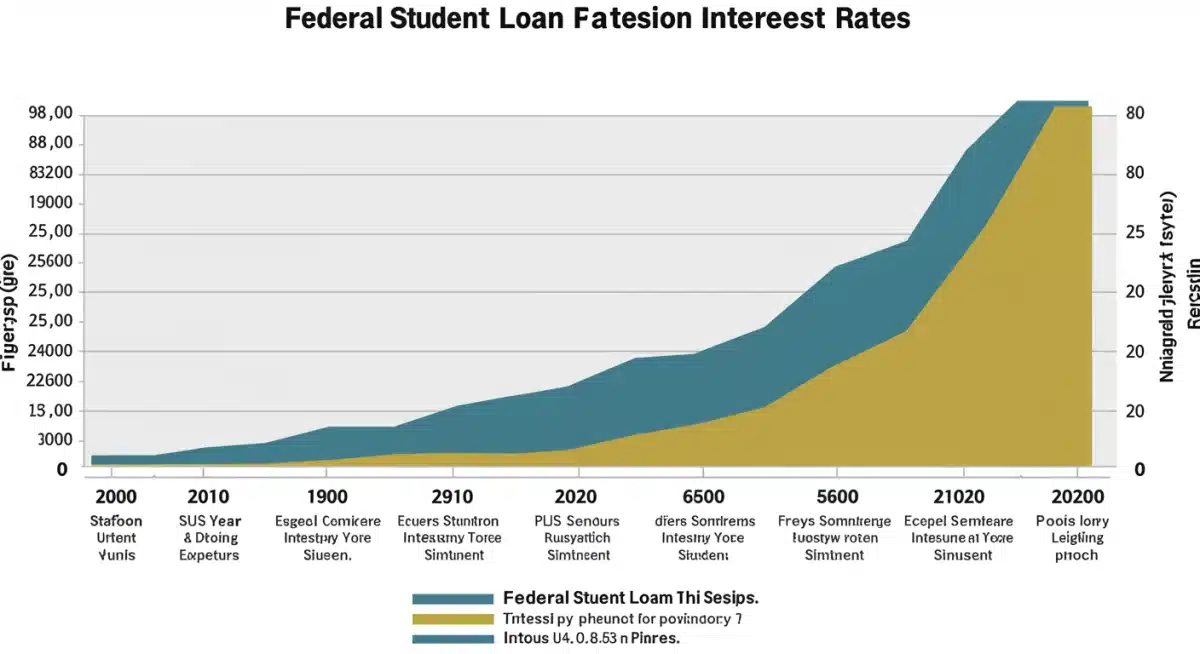
Predictions and Scenarios for 2026 Student Loan Rates
Given the multitude of influencing factors, offering precise predictions for 2026 student loan rates is challenging. However, we can explore several plausible scenarios based on current economic forecasts and historical trends.
Scenario 1: Moderate Increase in Rates
This scenario assumes that the Federal Reserve will continue its efforts to bring inflation under control, potentially leading to a few more rate hikes or maintaining elevated rates for an extended period. If economic growth remains steady but inflation proves persistent, the 10-year Treasury note yield could remain elevated or see slight increases. In this environment, we could see federal student loan rates for new loans in 2026 settling at slightly higher levels than those observed in the early 2020s. Private loan rates, particularly variable ones, would also likely remain higher or see further modest increases, especially for borrowers with less robust credit profiles.
Scenario 2: Rates Stabilize or Slightly Decrease
This scenario posits that inflation will be successfully tamed, allowing the Federal Reserve to begin gradually lowering interest rates by late 2024 or 2025. A more stable economic environment with controlled inflation could lead to a decrease in the 10-year Treasury note yield. Consequently, federal student loan rates for new loans disbursed in 2026 could be similar to, or even slightly lower than, recent years. Private loan rates would also likely follow suit, with more competitive offerings emerging as the cost of capital for lenders decreases.
Scenario 3: Significant Economic Volatility Leading to Unpredictable Rates
This less desirable scenario involves unforeseen economic shocks, such as a deep recession, geopolitical instability, or a resurgence of inflation. Such events could lead to highly volatile financial markets, making interest rate predictions extremely difficult. A severe recession might prompt aggressive rate cuts, leading to very low rates, while a renewed inflationary spiral could force the Fed to hike rates significantly. In this scenario, both federal and private 2026 student loan rates would be highly unpredictable, emphasizing the need for flexible financial planning.
It’s important to remember that these are scenarios, not guarantees. Economic forecasts are subject to change, and borrowers should stay informed about macroeconomic developments and policy announcements from the Federal Reserve and Congress.
Strategies for Current Borrowers Facing 2026 Student Loan Rates
If you already have student loans, understanding the potential shifts in 2026 student loan rates is crucial for managing your debt effectively. Here are several strategies to consider:
Refinancing Private Student Loans
If you have private student loans, especially those with variable interest rates, refinancing might be a wise move if fixed rates become available at lower levels or if your credit score has significantly improved since you first took out the loan. Refinancing allows you to replace your existing private loans with a new one, potentially with a lower interest rate, a fixed rate (if you currently have variable), or different repayment terms. Be cautious, however: refinancing federal loans into a private loan means losing federal protections like income-driven repayment plans, forbearance, and deferment options. Always weigh the pros and cons carefully.
Consolidating Federal Student Loans
Federal Direct Consolidation Loans allow you to combine multiple federal student loans into a single loan with one monthly payment. The interest rate for a Direct Consolidation Loan is the weighted average of the interest rates of the loans being consolidated, rounded up to the nearest one-eighth of one percent. While this doesn’t necessarily lower your interest rate, it can simplify your repayment and unlock eligibility for certain income-driven repayment plans or Public Service Loan Forgiveness (PSLF).
Exploring Income-Driven Repayment (IDR) Plans
For federal loan borrowers, Income-Driven Repayment (IDR) plans can be a lifeline, especially if interest rates rise and your income doesn’t keep pace. These plans cap your monthly payments at an affordable percentage of your discretionary income and can lead to loan forgiveness after 20 or 25 years of payments. Understanding your eligibility and the different IDR options (SAVE, PAYE, IBR, ICR) is vital for managing federal loan debt, regardless of 2026 student loan rates.
Making Extra Payments
If your financial situation allows, making extra payments on your student loans can significantly reduce the total interest paid over the life of the loan. Prioritize loans with the highest interest rates first (the ‘debt avalanche’ method) to maximize savings. Even small additional payments can make a big difference over time.
Building an Emergency Fund
An emergency fund provides a crucial buffer against unexpected financial hardships. Having 3-6 months of living expenses saved can prevent you from missing loan payments, incurring late fees, or having to resort to forbearance or deferment, which can cause interest to accrue and capitalize.
Strategies for Future Borrowers Considering 2026 Student Loan Rates
For those planning to take out student loans in the coming years, proactively preparing for 2026 student loan rates is key to minimizing future debt burden.
Maximize Federal Loan Options First
Federal student loans generally offer more favorable terms and borrower protections than private loans, regardless of the prevailing interest rates. Always exhaust your eligibility for federal loans (Direct Subsidized, Direct Unsubsidized, PLUS) before considering private options. Their fixed interest rates and income-driven repayment options provide greater stability and flexibility.
Understand Your Credit Score
If you anticipate needing private student loans, begin building and maintaining a good credit score early. A strong credit history can qualify you for the lowest available interest rates from private lenders. Check your credit report regularly for errors and work to address any negative marks.
Consider a Co-signer for Private Loans
If your credit history is limited or your score isn’t ideal, a creditworthy co-signer can significantly improve your chances of approval for a private loan and help you secure a lower interest rate, potentially mitigating the impact of higher 2026 student loan rates. Just ensure both parties understand the responsibilities involved.
Borrow Only What You Need
It sounds simple, but it’s often overlooked. Borrowing only the essential amount for tuition, fees, and necessary living expenses can dramatically reduce your overall debt. Every dollar borrowed accrues interest, so minimizing the principal amount is one of the most effective ways to save money.
Explore Scholarships, Grants, and Work-Study
Free money for college is always the best option. Actively seek out and apply for scholarships and grants, which do not need to be repaid. Federal Work-Study programs can also help offset educational costs without incurring additional debt.
Research Schools and Their Costs
The cost of attendance varies wildly between institutions. Researching schools that offer a good return on investment and fit within a reasonable budget can significantly reduce your reliance on loans. Consider community college for the first two years or in-state public universities, which often have lower tuition rates.

The Broader Impact of Student Loan Rates
The impact of 2026 student loan rates extends beyond individual borrowers. High or volatile interest rates can have broader economic and societal consequences.
Impact on Higher Education Accessibility
Rising interest rates can make higher education less accessible, particularly for students from lower-income backgrounds. If the cost of borrowing becomes too high, it could deter prospective students from pursuing college degrees, potentially impacting workforce development and economic mobility.
Consumer Spending and Economic Growth
A significant portion of disposable income for many young adults is allocated to student loan payments. If these payments increase due to higher interest rates, it leaves less money for other forms of consumer spending, such as buying homes, starting families, or investing in businesses. This can have a dampening effect on overall economic growth.
Housing Market Implications
Student loan debt is often cited as a major barrier to homeownership for younger generations. Higher interest rates on student loans mean larger monthly payments, which can make it more difficult to save for a down payment or qualify for a mortgage. This can further delay major life milestones for many.
Policy Discussions and Future Reforms
The ongoing discussion around student loan debt, including interest rates, is a constant topic in policy circles. The trajectory of 2026 student loan rates could intensify calls for reforms, such as interest rate caps, simplified repayment plans, or further loan forgiveness initiatives. Keeping an eye on political developments will be important for understanding potential future changes.
Staying Informed and Proactive
Given the dynamic nature of economic and legislative environments, staying informed is perhaps the most crucial strategy for navigating 2026 student loan rates. Here’s how you can remain proactive:
- Monitor Economic News: Pay attention to reports from the Federal Reserve, inflation data, and general economic forecasts. These indicators provide clues about the likely direction of interest rates.
- Follow Legislative Updates: Keep an eye on congressional discussions and potential legislation related to higher education funding and student loan policy.
- Review Your Loan Portfolio Annually: Understand the terms of all your student loans – federal and private. Know your interest rates, repayment schedules, and available options.
- Consult Financial Aid Offices: For current and prospective students, financial aid offices are invaluable resources for understanding federal loan options and application processes.
- Seek Professional Financial Advice: A qualified financial advisor specializing in student loan debt can offer personalized guidance based on your specific situation and goals.
Conclusion: Preparing for the Future of Student Loan Rates
The future of 2026 student loan rates remains subject to a complex interplay of economic forces, monetary policy, and legislative decisions. While precise predictions are impossible, understanding the factors that drive these rates and preparing for various scenarios is well within your control.
For current borrowers, strategies like exploring IDR plans, considering refinancing for private loans, and making extra payments can significantly improve your financial standing. For future borrowers, prioritizing federal loans, building strong credit, and meticulously researching costs are essential steps to minimize future debt. Ultimately, a proactive and informed approach will be your best asset in navigating the landscape of student loan interest rates, ensuring that your educational investments lead to a brighter, more financially secure future. By staying vigilant and implementing sound financial strategies, you can confidently address the challenges and opportunities presented by the evolving student loan environment leading up to and beyond 2026.