Estate Planning Updates 2026: Navigate New Laws for Asset Protection

The landscape of estate planning is in a constant state of evolution, shaped by legislative changes, economic shifts, and societal trends. As we look towards 2026, it’s imperative for individuals and families to be aware of the upcoming changes that could significantly impact their asset protection strategies and legacy plans. Proactive engagement with these developments is not merely advisable; it is essential for safeguarding your wealth and ensuring your wishes are honored. This comprehensive guide delves into the anticipated Estate Planning 2026 updates, offering insights and actionable advice to help you navigate the complexities and fortify your financial future.
Understanding the Shifting Sands of Estate Planning 2026
The year 2026 is poised to bring significant alterations to federal estate and gift tax exemptions, primarily due to the sunset provisions of the Tax Cuts and Jobs Act (TCJA) of 2017. While the specifics are still subject to potential legislative adjustments, the current trajectory suggests a substantial reduction in the federal estate, gift, and generation-skipping transfer (GST) tax exemptions. This impending change necessitates a thorough review of existing estate plans and a strategic recalibration for many affluent individuals and families.
The Sunset of TCJA Provisions: A Deep Dive into Exemption Changes
One of the most critical aspects of Estate Planning 2026 revolves around the scheduled expiration of the enhanced federal estate and gift tax exemptions. Under the TCJA, these exemptions were effectively doubled, reaching unprecedented levels. For 2024, the federal estate and gift tax exemption is $13.61 million per individual, or $27.22 million per married couple. However, come January 1, 2026, without new legislation, these amounts are projected to revert to their pre-TCJA levels, adjusted for inflation. This could mean a reduction by approximately half, potentially bringing the exemption closer to $7 million per individual. This change has profound implications, as many estates that are currently exempt from federal estate tax may become subject to it, leading to significant tax liabilities for beneficiaries.
Impact on High-Net-Worth Individuals
For high-net-worth individuals, this reduction could trigger substantial estate tax exposure. It means that more of their assets will be subject to the federal estate tax rate, which currently stands at 40%. The time to act is now, as strategies that utilize the higher current exemptions, such as making large lifetime gifts, could be highly beneficial. Understanding the ‘use it or lose it’ principle is paramount. The IRS has provided guidance confirming that gifts made under the higher exemptions will not be clawed back into an estate if the exemption amounts decrease in the future. This offers a unique window of opportunity for wealth transfer.
Generation-Skipping Transfer (GST) Tax Exemptions
Parallel to the estate and gift tax exemptions, the GST tax exemption is also expected to decrease. The GST tax applies to transfers made to beneficiaries who are two or more generations younger than the donor (e.g., grandchildren). A reduced GST exemption means that more wealth transferred to grandchildren or other skip persons could be subject to an additional layer of taxation, further eroding the value of the legacy intended for future generations. This emphasizes the need for careful planning around dynasty trusts and other long-term wealth transfer vehicles.
Strategic Responses to Anticipated Changes in Estate Planning 2026
Given the impending changes, proactive and strategic planning is crucial. Estate planning is not a static process; it requires regular review and adjustment to align with evolving laws and personal circumstances. Here are several strategies to consider as we approach Estate Planning 2026:
1. Maximize Lifetime Gifting Opportunities
One of the most effective strategies before the exemptions potentially revert is to utilize the current higher gift tax exemption. Making large gifts now can remove assets from your taxable estate, effectively locking in the current favorable exemption amounts. This could involve direct gifts to individuals, funding irrevocable trusts, or establishing other gifting vehicles. It’s important to consider the annual gift tax exclusion (currently $18,000 per donee in 2024), which allows you to give away a certain amount each year without using any of your lifetime exemption or incurring gift tax. However, for significant wealth transfer, utilizing the lifetime exemption is the primary focus.
2. Review and Update Existing Trusts
Many individuals have established trusts as part of their estate plan. With the anticipated changes, it’s vital to review these trusts with an estate planning attorney. Existing trusts may need to be modified or restructured to optimize tax efficiency under the new exemption levels. For instance, trusts designed to be ‘grantor trusts’ for income tax purposes but excluded from the grantor’s estate for estate tax purposes might need adjustment. Furthermore, charitable trusts, such as Charitable Remainder Trusts (CRTs) or Charitable Lead Trusts (CLTs), could become more attractive as a means to reduce taxable estates while supporting philanthropic goals.
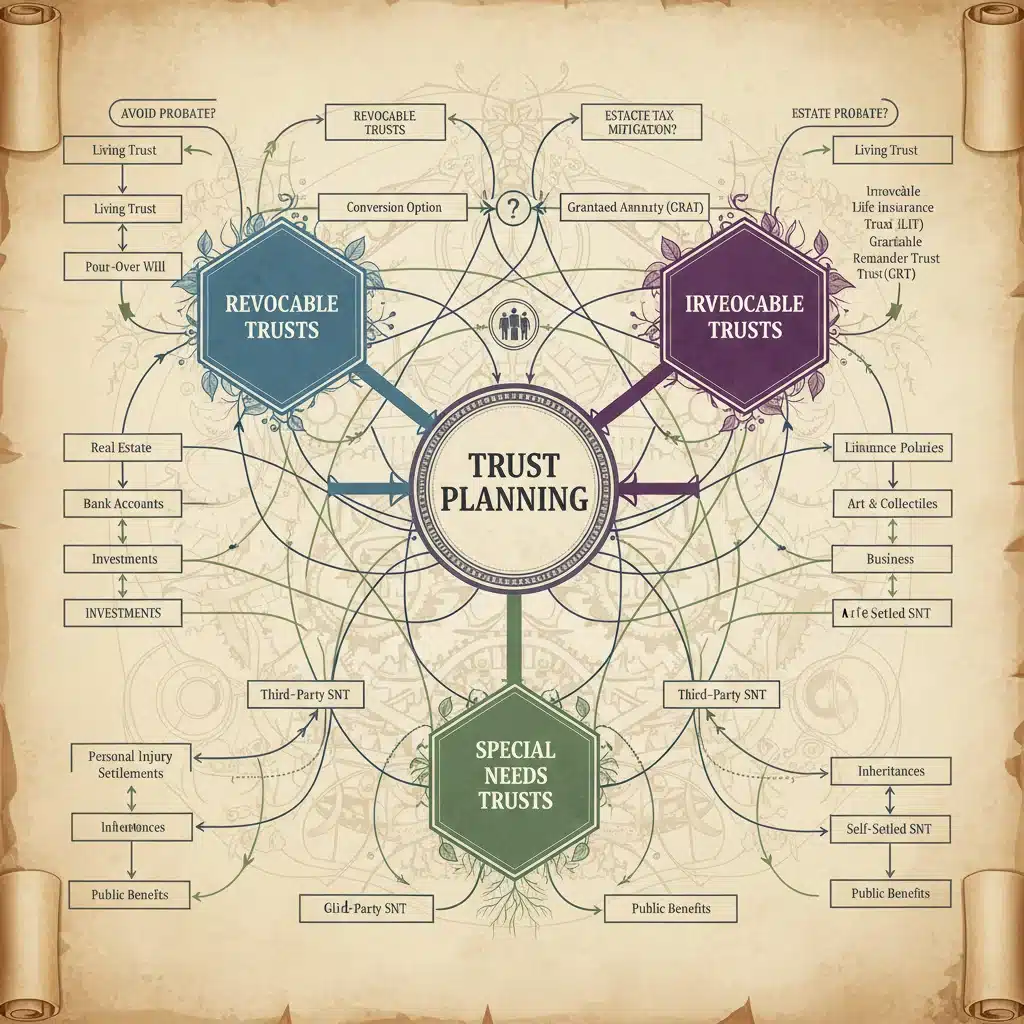
3. Consider Irrevocable Life Insurance Trusts (ILITs)
Life insurance can be a powerful tool in estate planning, especially when structured correctly. An Irrevocable Life Insurance Trust (ILIT) can be used to own a life insurance policy, removing the policy’s proceeds from your taxable estate. This ensures that the death benefit can be used to provide liquidity for your heirs, pay estate taxes, or replace wealth given to charity, all without being subject to estate tax itself. With potential reductions in exemptions, ILITs may become an even more critical component of a comprehensive estate plan.
4. Explore Spousal Lifetime Access Trusts (SLATs)
For married couples, a Spousal Lifetime Access Trust (SLAT) offers an excellent way to utilize one spouse’s gift tax exemption while still allowing the other spouse to benefit from the gifted assets. This strategy involves one spouse (the donor spouse) making a gift to an irrevocable trust for the benefit of the other spouse (the beneficiary spouse) and other descendants. The beneficiary spouse can access the trust assets during their lifetime, providing a degree of flexibility and access to funds, while the assets are removed from the donor spouse’s estate. This is a sophisticated strategy that requires careful execution to ensure it achieves its intended tax and non-tax objectives.
5. Revisit Business Succession Planning
For business owners, Estate Planning 2026 changes could significantly impact business valuations and succession strategies. A lower estate tax exemption might mean a greater portion of a business owner’s equity is subject to estate tax, potentially forcing the sale of the business or parts of it to cover tax liabilities. It’s crucial to review business valuation methods, consider gifting strategies for business interests, and ensure buy-sell agreements are up-to-date and adequately funded. Furthermore, exploring options like intentionally defective grantor trusts (IDGTs) can facilitate the transfer of appreciating business assets to heirs with minimal gift tax consequences.
Understanding State-Specific Estate Tax Laws
While federal estate tax changes often dominate the conversation, it’s vital to remember that many states impose their own estate or inheritance taxes. These state-level taxes operate independently of federal laws and can have their own exemption amounts and tax rates. Even if an estate avoids federal estate tax due to its size, it may still be subject to state estate or inheritance taxes. As part of your Estate Planning 2026 review, always consider the laws of your state of residency and any states where you own significant property. Some states are considering conforming their laws to the federal changes, while others may maintain their current structures, adding another layer of complexity to the planning process.
Navigating State Estate Taxes
States like New York, Illinois, Maryland, and others have their own estate tax thresholds, which are often considerably lower than the federal exemption. For example, some states have exemptions as low as $1 million. This means that even smaller estates could face significant state estate tax burdens. Strategies to mitigate state estate taxes might include changing domicile (if feasible and desirable), utilizing state-specific charitable deductions, or implementing trusts designed to minimize state-level tax exposure. Consulting with an attorney knowledgeable in both federal and state estate tax laws is indispensable.
The Role of Portability in Estate Planning 2026
Portability allows the surviving spouse to use any unused federal estate tax exemption of their deceased spouse. This provision has been a cornerstone of modern estate planning for married couples, effectively allowing a couple to combine their exemptions. However, as the federal exemption amounts are expected to decrease, the actual dollar value of the portable exemption will also decrease. While portability remains a valuable tool, its effectiveness might be diminished. Couples should review how portability impacts their overall estate plan, especially if they have opted for simpler ‘I love you’ wills without bypass trusts, relying heavily on portability. It’s a good time to reassess whether a more complex trust structure might offer greater tax efficiency and control over asset distribution, particularly in light of the potential changes.
Beyond Tax: Non-Tax Considerations for Estate Planning 2026
While tax implications are a significant driver of estate planning decisions, it’s crucial not to lose sight of the non-tax aspects. A robust estate plan goes beyond minimizing taxes; it ensures your wishes are respected, your loved ones are provided for, and your legacy is preserved. As you prepare for Estate Planning 2026, consider these non-tax elements:
1. Reviewing Beneficiary Designations
Beneficiary designations on retirement accounts (IRAs, 401(k)s), life insurance policies, and other financial accounts often supersede your will. It’s common for these designations to be outdated, potentially leading to unintended consequences. A comprehensive review of all beneficiary designations is essential to ensure they align with your current wishes and overall estate plan. This is especially critical after major life events such as marriage, divorce, birth of a child, or death of a loved one.
2. Updating Wills and Powers of Attorney
Your will is the cornerstone of your estate plan, dictating how your assets will be distributed and who will care for minor children. Powers of attorney (financial and healthcare) ensure that trusted individuals can make decisions on your behalf if you become incapacitated. These documents should be reviewed regularly, but especially in anticipation of significant legal changes. Make sure your chosen executors, trustees, and agents are still willing and able to serve, and that their contact information is current.
3. Digital Asset Planning
In our increasingly digital world, digital assets (online accounts, cryptocurrency, intellectual property stored digitally) are a growing component of many estates. Without proper planning, these assets can be difficult for your loved ones to access or manage. Consider including provisions in your estate plan for digital assets, outlining how they should be managed, accessed, or distributed. This might involve creating a digital asset inventory and providing clear instructions to a digital executor.
4. Philanthropic Goals
If philanthropy is part of your legacy, integrate your charitable giving into your Estate Planning 2026 strategy. Consider donor-advised funds, private foundations, or direct bequests to your favorite charities. These strategies can not only fulfill your philanthropic vision but also offer significant tax advantages.

The Importance of Professional Guidance
The complexities of Estate Planning 2026 updates underscore the critical need for professional guidance. An experienced estate planning attorney, often working in conjunction with financial advisors and tax professionals, can help you navigate the nuances of the law, evaluate your current financial situation, and craft a tailored plan. They can provide insights into the latest legislative proposals, assess the potential impact on your estate, and recommend the most effective strategies to achieve your goals while minimizing tax liabilities.
Choosing the Right Team
When selecting your estate planning team, look for professionals who specialize in estate and gift tax law, have a deep understanding of trust administration, and are up-to-date on current and proposed legislation. A collaborative approach, where your attorney, financial advisor, and accountant work together, ensures that all aspects of your financial life are considered and integrated into a cohesive estate plan. This holistic view is crucial for effective asset protection and legacy planning.
Conclusion: Proactive Planning for a Secure Future
The anticipated changes in Estate Planning 2026 present both challenges and opportunities. For those who are proactive and engage in thoughtful planning, these changes can be managed effectively, ensuring that wealth is preserved, taxes are minimized, and legacies are secured for future generations. The window of opportunity to utilize the current higher federal estate and gift tax exemptions is closing rapidly. Don’t wait until the last minute to review and update your estate plan. Take action now to consult with qualified professionals, understand the potential impacts, and implement strategies that align with your long-term financial and personal goals. Your diligence today will provide peace of mind and financial security for tomorrow.
Remember, estate planning is an ongoing process, not a one-time event. Regular reviews, especially in light of significant legislative shifts like those expected in 2026, are paramount to maintaining an effective and current plan. By staying informed and working with expert advisors, you can confidently navigate the evolving landscape of estate law and protect what matters most.