SSI Benefits 2026: Navigating the Application Process for New Entrants

The prospect of applying for Supplemental Security Income (SSI) benefits can be daunting, especially for new entrants navigating the complex system for the first time. As we look towards SSI Benefits 2026, understanding the nuances of the application process becomes paramount. This comprehensive guide is designed to demystify the journey, offering a step-by-step roadmap for individuals seeking this vital financial assistance. Whether you’re an adult with a disability, a blind individual, or aged 65 or older with limited income and resources, SSI can provide a crucial safety net. Our goal is to equip you with the knowledge and confidence to successfully apply for SSI Benefits 2026, ensuring you receive the support you deserve.
Understanding Supplemental Security Income (SSI)
Before diving into the application process for SSI Benefits 2026, it’s essential to grasp what SSI is and how it differs from other Social Security programs. SSI is a needs-based program administered by the Social Security Administration (SSA) that provides monthly payments to adults and children with a disability or blindness who have income and resources below specific financial limits. It also provides payments to people aged 65 or older without disabilities who meet the financial criteria.
SSI vs. Social Security Disability Insurance (SSDI)
A common point of confusion for many new applicants is the distinction between SSI and Social Security Disability Insurance (SSDI). While both are administered by the SSA and provide benefits to people with disabilities, their eligibility requirements are fundamentally different:
- SSI (Supplemental Security Income): This is a needs-based program. Eligibility is determined by financial need (limited income and resources) and meeting the SSA’s definition of disability or blindness, or being 65 or older. Work history is not a factor for SSI.
- SSDI (Social Security Disability Insurance): This is an insurance program. Eligibility is based on your work history and contributions to Social Security taxes. You must have worked long enough and recently enough in jobs covered by Social Security to qualify. Financial need, while often present, is not the primary determinant for SSDI.
It’s important to note that some individuals may be eligible for both SSI and SSDI. This dual eligibility can provide a more robust financial safety net. When you apply for disability benefits, the SSA will evaluate your eligibility for both programs. For the purposes of this guide, we will focus specifically on the application process for SSI Benefits 2026.
Who Is Eligible for SSI Benefits in 2026?
To qualify for SSI Benefits 2026, you must meet several key criteria. These criteria primarily revolve around age, disability/blindness, and financial need. Understanding these requirements from the outset can save you significant time and effort during the application process.
Age Requirement
You can qualify for SSI if you are age 65 or older. This is a straightforward criterion, but it’s important to remember that financial limits still apply, even if you meet the age requirement.
Disability or Blindness Requirement
For individuals under 65, eligibility for SSI Benefits 2026 hinges on meeting the SSA’s strict definition of disability or blindness. The SSA defines disability as:
- The inability to engage in any substantial gainful activity (SGA) due to a medically determinable physical or mental impairment.
- The impairment(s) must be expected to last for a continuous period of not less than 12 months or result in death.
For children, the definition of disability is slightly different. A child under age 18 can be considered disabled if they have a medically determinable physical or mental impairment or combination of impairments that causes marked and severe functional limitations, and that can be expected to last for a continuous period of not less than 12 months or result in death.
Blindness is defined as central visual acuity of 20/200 or less in the better eye with the use of a correcting lens, or a visual field limitation such that the widest diameter of the visual field subtends an angle no greater than 20 degrees.
Income and Resource Limits for SSI Benefits 2026
This is arguably the most critical and often most complex aspect of SSI eligibility. SSI is a needs-based program, meaning your income and resources must fall below certain thresholds. These thresholds are subject to change annually, and it’s imperative to consult the most current SSA guidelines for SSI Benefits 2026.
- Income Limits: The SSA counts various types of income, but not all income is counted. Exclusions exist for certain types of income, such as the first $20 of most income, the first $65 of earned income plus half of the remainder, and some infrequent or irregular income. Generally, your countable income must be below the federal benefit rate (FBR) to qualify.
- Resource Limits: Resources are things you own, such as cash, bank accounts, stocks, bonds, and real estate (other than your primary residence). For an individual, the resource limit is typically $2,000. For a couple, it’s $3,000. Certain assets are excluded, such as your home, one vehicle, household goods, and personal effects.
It’s crucial to understand what counts as income and resources, as even small amounts can affect your eligibility or benefit amount. The SSA provides detailed rules on these exclusions, and it’s highly recommended to review them carefully or seek guidance from the SSA directly.
Gathering Essential Documents for Your SSI Benefits 2026 Application
The application process for SSI Benefits 2026 requires a substantial amount of documentation. Being prepared with all necessary papers beforehand can significantly streamline your application and prevent delays. Think of this as your pre-application checklist.
Personal Information and Identification
- Your Social Security card or a record of your Social Security number.
- Proof of age (birth certificate, passport, religious record of birth).
- Proof of U.S. citizenship or lawful alien status (U.S. birth certificate, U.S. passport, immigration documents).
- Information about your marital history (dates of marriages, divorces, or deaths of spouses).
- Information about any children under 18 or disabled children over 18.
Medical Information (for Disability/Blindness Applications)
This is perhaps the most critical section for disability-based SSI Benefits 2026 applications. The SSA will need a complete picture of your medical condition.
- Names, addresses, and phone numbers of all doctors, hospitals, clinics, and other medical sources that have treated you for your condition.
- Dates of treatment.
- Medical records, test results, and reports from your medical providers.
- Names of all medications you are taking and who prescribed them.
- Information about any medical tests you have had, where and when they were done, and who ordered them.
- A detailed description of how your illness, injury, or condition limits your ability to perform daily activities and work.
Work History Information
Even though SSI is not work-history dependent, information about your past work can be relevant, especially if you are also being evaluated for SSDI or if it helps establish the onset of your disability.
- Names and addresses of employers for the past 15 years.
- Dates you worked for these employers.
- A description of the type of work you did.
Financial Information
To assess your financial eligibility for SSI Benefits 2026, the SSA will require detailed information about your income and resources.
- Bank account statements (checking and savings) for at least the past 60 days.
- Information about any other assets you own (e.g., stocks, bonds, property, vehicles).
- Proof of income from all sources (pay stubs, tax returns, workers’ compensation, unemployment benefits, pensions, annuities, other government benefits).
- Information about your living arrangements (rent or mortgage payments, utility bills, who lives with you).
- Details of any other sources of support you receive.
It’s always a good idea to bring original documents and copies. While the SSA usually only needs to see the originals, having copies can be helpful for your own records.
The Step-by-Step Application Process for SSI Benefits 2026
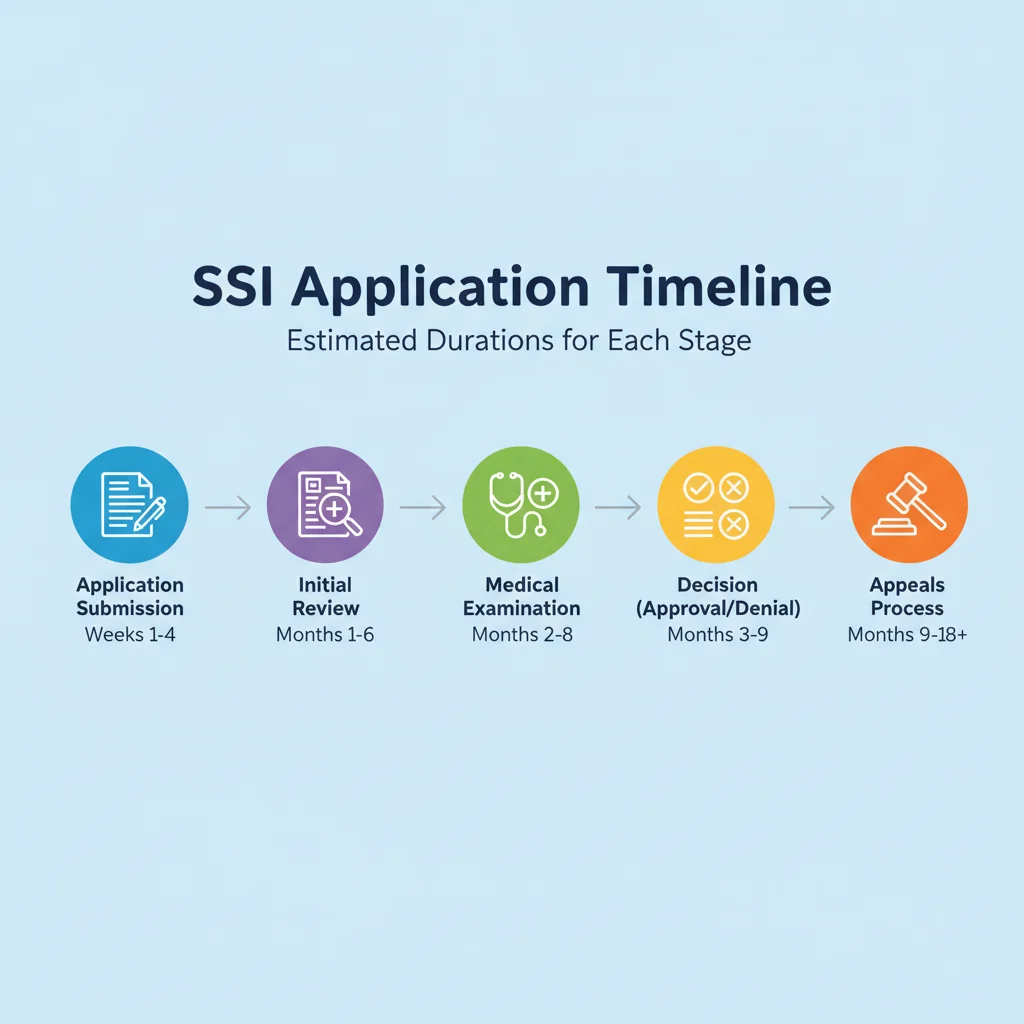
Once you have gathered all your documents, you are ready to begin the application process for SSI Benefits 2026. This process typically involves several stages, from initial application to a decision.
Step 1: Initial Application
You can start your application for SSI Benefits 2026 in several ways:
- Online: For disability benefits, you can start your application online on the SSA’s website. This is often the quickest way to begin.
- By Phone: You can call the SSA at 1-800-772-1213 (TTY 1-800-325-0778) to schedule an appointment or to apply over the phone.
- In Person: Visit your local Social Security office. It’s often advisable to call ahead to schedule an appointment to avoid long wait times.
When applying for SSI, you will typically complete several forms:
- Application for Supplemental Security Income (Form SSA-8000): This is the primary application for SSI.
- Disability Report (Form SSA-3368): If applying due to disability, this form collects detailed information about your medical condition, treatment, and how your condition affects your daily life.
- Authorization to Disclose Information to the Social Security Administration (Form SSA-827): This form allows the SSA to obtain your medical records.
Be thorough and honest when filling out these forms. Any inconsistencies or missing information can lead to delays or denials.
Step 2: Review by the Disability Determination Services (DDS)
If your application for SSI Benefits 2026 is based on disability, your case will be sent to a state agency called Disability Determination Services (DDS). The DDS is responsible for making the medical determination of disability or blindness. They will:
- Review all your submitted medical evidence.
- Contact your doctors and other medical sources to obtain additional records, if necessary.
- May schedule you for a consultative examination (CE) with an independent doctor if they need more information or if your existing medical records are insufficient. Attend any scheduled CEs, as failure to do so can lead to a denial.
During this stage, it’s crucial to cooperate with the DDS and provide any additional information they request promptly.
Step 3: Financial Determination
While the DDS is evaluating your medical eligibility, the SSA will also be reviewing your financial information to ensure you meet the income and resource limits for SSI Benefits 2026. This involves verifying your reported income, assets, and living arrangements. They may request additional financial documents or clarification during this phase.
Step 4: The Decision
Once both the medical and financial determinations are complete, the SSA will make a decision on your application for SSI Benefits 2026. You will receive a letter in the mail informing you of their decision. This letter will explain whether you have been approved or denied and the reasons for the decision.
What to Do if Your SSI Benefits 2026 Application is Denied
It’s a common misconception that an initial denial means the end of the road. In reality, many initial applications for SSI Benefits 2026 are denied, but a significant number of these denials are overturned during the appeals process. If your application is denied, don’t despair; you have the right to appeal.
The Appeals Process
The SSA’s appeals process typically involves four levels:
- Reconsideration: This is the first level of appeal. Your case will be reviewed by someone who was not involved in the original decision. You can submit new medical evidence at this stage.
- Hearing by an Administrative Law Judge (ALJ): If reconsideration is denied, you can request a hearing before an ALJ. This is an in-person hearing where you can present your case, bring witnesses, and have a representative (like an attorney) speak on your behalf.
- Appeals Council Review: If the ALJ denies your claim, you can ask the Appeals Council to review the ALJ’s decision. They may affirm, reverse, or remand the decision back to an ALJ.
- Federal Court Review: As a last resort, if all previous appeals are unsuccessful, you can file a lawsuit in federal district court.
It is highly recommended to seek legal assistance from an attorney specializing in Social Security disability law if your application is denied, especially at the ALJ hearing stage and beyond. An attorney can significantly improve your chances of success.
Maximizing Your Chances of Approval for SSI Benefits 2026
While there’s no guaranteed path to approval, several strategies can significantly improve your chances of successfully obtaining SSI Benefits 2026.
1. Be Thorough and Accurate
Provide complete and accurate information on all forms. Incomplete applications are a common reason for delays and denials. Double-check all dates, names, and contact information.
2. Provide Comprehensive Medical Evidence
The strength of your medical evidence is paramount for disability-based claims. Ensure your doctors have detailed records of your condition, treatment, prognoses, and most importantly, how your condition limits your ability to function. Ask your doctors to write detailed reports outlining your functional limitations.
3. Be Consistent in Your Statements
Your statements about your disability and limitations should be consistent across all forms, interviews, and medical records. Inconsistencies can raise red flags for the SSA.
4. Keep Detailed Records
Maintain a personal file of all documents you submit to the SSA, copies of correspondence, and notes from any phone calls or appointments. This will be invaluable if you need to appeal a decision.
5. Attend All Appointments and Consultative Examinations
Missing an appointment or a consultative examination (CE) can lead to an automatic denial of your application. If you absolutely cannot make an appointment, contact the SSA or DDS immediately to reschedule.
6. Seek Professional Assistance
Consider consulting with a Social Security disability attorney or advocate. They are experts in the application and appeals process and can help you gather evidence, complete forms, and represent you at hearings. While you can apply on your own, professional help can significantly increase your success rate, especially for complex cases or appeals.
7. Understand Ongoing Reporting Requirements
If you are approved for SSI Benefits 2026, remember that SSI is a needs-based program with ongoing eligibility requirements. You must report changes in your income, resources, living arrangements, and medical condition to the SSA promptly. Failure to do so can result in overpayments that you will have to repay, or even suspension of your benefits.
Key Changes and Considerations for SSI Benefits in 2026
While the fundamental principles of SSI eligibility and application typically remain consistent, specific details and regulations can evolve. As we approach SSI Benefits 2026, it’s important to be aware of potential changes or specific considerations that might impact new entrants.
Federal Benefit Rate (FBR) Adjustments
The Federal Benefit Rate (FBR), which sets the maximum monthly SSI payment and is a key component of the income limits, is typically adjusted annually based on the cost-of-living adjustment (COLA). While the exact FBR for 2026 won’t be announced until late 2025, applicants should anticipate that these figures will be updated. This means the income thresholds for eligibility will also shift accordingly. It’s crucial to check the SSA’s official website for the most current FBR and income/resource limits as they become available for SSI Benefits 2026.
Potential Legislative or Policy Changes
Although major overhauls to SSI are less common, minor legislative or policy adjustments can occur. These could include changes to how certain types of income or resources are counted, or modifications to the disability determination process. Staying informed through official SSA announcements or reputable news sources is advisable for anyone planning to apply for SSI Benefits 2026.
Focus on Modernization and Online Services
The SSA continues to invest in modernizing its services. For SSI Benefits 2026, new entrants might find an even more streamlined online application experience or enhanced digital tools for tracking application status. While in-person and phone options will remain, leveraging online resources can often expedite parts of the process.
Impact of Economic Conditions
Broader economic conditions can indirectly influence the SSI program. For instance, inflation rates affect COLA adjustments, which in turn impact the FBR. Awareness of the economic climate can help set expectations regarding potential benefit amounts and financial thresholds for SSI Benefits 2026.
Life After Approval: Managing Your SSI Benefits
Congratulations, if your application for SSI Benefits 2026 is approved! However, receiving benefits isn’t the end of your responsibilities. As mentioned, SSI is a needs-based program, and ongoing eligibility requires diligent management and reporting.
Reporting Changes
You must report changes in your circumstances to the SSA. These changes include, but are not limited to:
- Income: Any new job, increase in wages, or receipt of other benefits.
- Resources: If your bank account balance exceeds the limit, or you acquire new assets.
- Living Arrangements: Moving to a new address, changes in who lives with you, or changes in who pays for your food and shelter.
- Marital Status: Getting married, divorced, or becoming widowed.
- Medical Condition: If your disability improves or you return to work.
- Absence from the U.S.: If you leave the country for 30 consecutive days or more.
These changes must be reported within 10 days after the end of the month in which the change occurred. Failure to report changes can lead to overpayments, benefit suspension, or even termination.
Continuing Disability Reviews (CDRs)
If you receive SSI Benefits 2026 based on a disability, the SSA will periodically review your case to determine if you are still disabled. These are called Continuing Disability Reviews (CDRs). The frequency of your CDRs depends on the nature of your disability:
- Medical Improvement Expected (MIE): Reviewed in 6 to 18 months.
- Medical Improvement Possible (MIP): Reviewed every 3 years.
- Medical Improvement Not Expected (MINE): Reviewed every 5 to 7 years.
During a CDR, the SSA will ask for updated medical information and may require you to attend new medical examinations. It’s essential to cooperate with these reviews to maintain your benefits.
Work Incentives for SSI Beneficiaries
The SSA offers various work incentives to help SSI beneficiaries return to work and become self-sufficient. These incentives allow you to work and still receive some or all of your benefits, or retain Medicare/Medicaid coverage. Examples include:
- Plan to Achieve Self-Support (PASS): Allows you to set aside money and resources for a work goal.
- Impairment-Related Work Expenses (IRWEs): Costs for items and services you need to work because of your impairment can be deducted from your earned income when calculating your SSI payment.
- Student Earned Income Exclusion (SEIE): For students under age 22, a portion of earned income can be excluded.
Understanding and utilizing these work incentives can be a powerful tool for improving your financial independence while still relying on the safety net of SSI Benefits 2026.
Conclusion: Securing Your Future with SSI Benefits 2026
Navigating the application process for SSI Benefits 2026 can seem like a monumental task, but with careful preparation and a clear understanding of the requirements, it is a manageable journey. This guide has aimed to provide new entrants with a comprehensive overview, from understanding eligibility criteria and gathering essential documents to navigating the application and appeals process. Remember that perseverance is key, especially if you face an initial denial.
By being thorough, proactive, and seeking assistance when needed, you can significantly improve your chances of securing the financial support that Supplemental Security Income offers. The SSA’s mission is to help those in need, and by following the steps outlined here, you can effectively advocate for yourself and ensure your financial well-being in 2026 and beyond. Stay informed, stay organized, and don’t hesitate to reach out to the Social Security Administration or a qualified professional for personalized guidance.