Master’s Degree ROI 2026: Is It Worth the Investment?

In an increasingly competitive global landscape, the question of whether a Master’s Degree is a worthwhile investment continues to be a hot topic. As we look ahead to 2026, the answer is more nuanced than ever, heavily influenced by evolving job markets, technological advancements, and individual career aspirations. This comprehensive analysis delves into the Master’s Degree ROI 2026, examining its value proposition across four pivotal sectors: Technology, Healthcare, Business, and Education. Understanding the potential return on investment (ROI) is crucial for anyone contemplating this significant academic and financial commitment.
The Evolving Landscape of Higher Education and the Job Market
The traditional view of a Master’s Degree as an automatic ticket to higher salaries and career advancement has undergone significant scrutiny. While a postgraduate qualification often correlates with increased earning potential and specialized roles, the costs associated with tuition, living expenses, and foregone income during study can be substantial. Therefore, a careful calculation of the Master’s Degree ROI 2026 is imperative.
Several macro trends are shaping the value of advanced degrees:
- Technological Disruption: Automation and AI are transforming industries, creating new roles that demand highly specialized skills, often acquired through postgraduate study.
- Globalization: An interconnected world requires professionals with advanced problem-solving skills, cross-cultural competence, and a deep understanding of global markets.
- Lifelong Learning: The pace of change necessitates continuous skill development, making advanced degrees a vital component of a lifelong learning strategy.
- Specialization: Generalist roles are increasingly being automated, pushing professionals towards niche areas where advanced degrees offer a competitive edge.
Given these shifts, prospective students must consider not just the immediate salary bump, but also the long-term career resilience, networking opportunities, and intellectual growth that a Master’s Degree can provide. The Master’s Degree ROI 2026 isn’t just about financial metrics; it encompasses a broader spectrum of benefits.
Analyzing Master’s Degree ROI in Key Fields for 2026
Let’s dive into specific sectors to understand where a Master’s Degree offers the most significant return in 2026.
1. Technology: The Digital Frontier
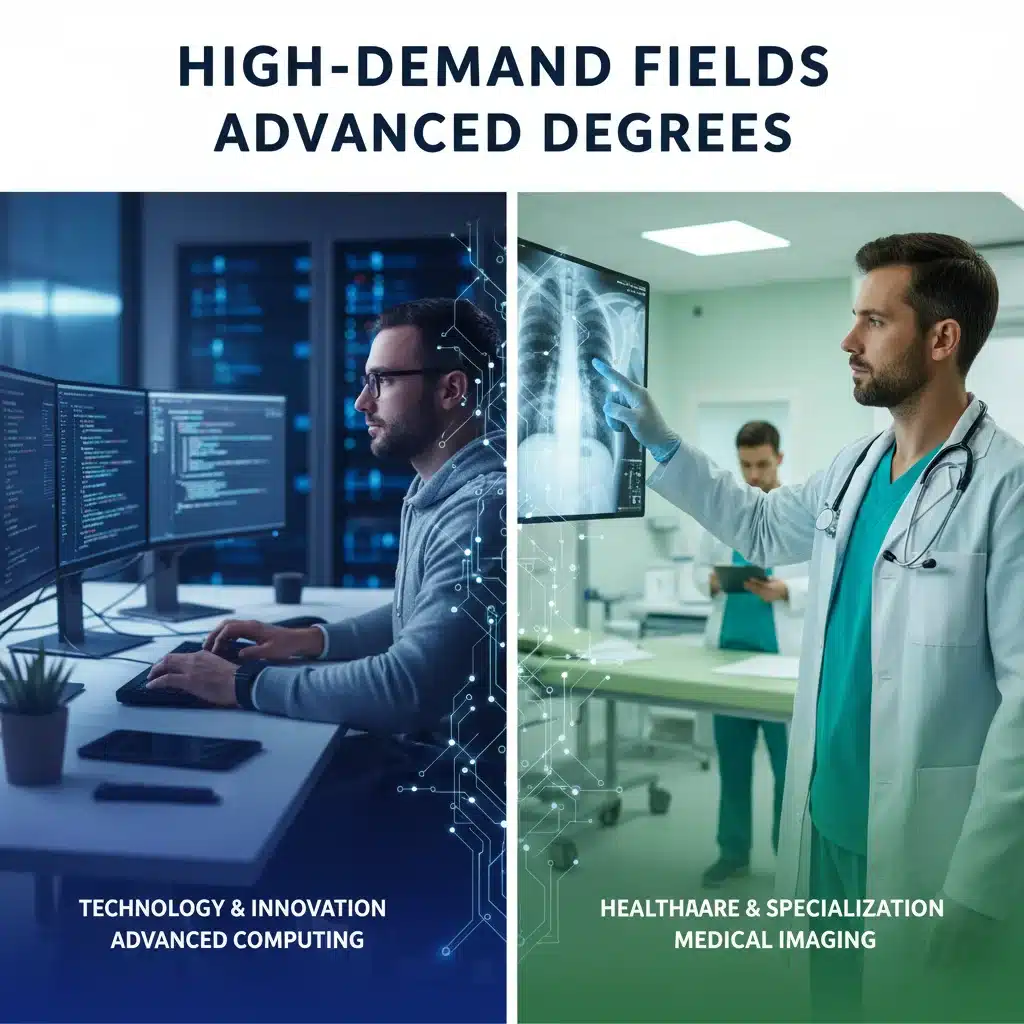
The technology sector continues its explosive growth, driven by advancements in artificial intelligence, machine learning, cybersecurity, data science, and cloud computing. A Master’s Degree in a specialized tech field can significantly enhance career prospects and earning potential. The demand for highly skilled tech professionals far outstrips supply, making advanced degrees particularly valuable.
Key Specializations and Their ROI:
- Master of Science in Data Science/Analytics: With data being the new oil, professionals who can collect, analyze, and interpret complex datasets are in high demand. A Master’s in Data Science can lead to roles as Data Scientists, Machine Learning Engineers, or Business Intelligence Analysts, with median salaries often exceeding $120,000 annually. The investment typically pays off within 2-4 years, considering the rapid salary growth in this field.
- Master of Science in Cybersecurity: As cyber threats become more sophisticated, the need for cybersecurity experts is paramount. A Master’s in Cybersecurity prepares individuals for roles such as Security Architects, Information Security Analysts, and Chief Information Security Officers (CISOs). These positions command high salaries, often starting above $110,000, and offer excellent job security. The Master’s Degree ROI 2026 in cybersecurity is robust due to critical demand.
- Master of Science in Artificial Intelligence/Machine Learning: At the cutting edge of technological innovation, AI and ML specialists are driving the next wave of automation and intelligence. A Master’s in these areas can lead to lucrative roles in research, development, and implementation, with salaries frequently starting north of $130,000.
- Master of Science in Software Engineering (Specialized): While a Bachelor’s is often sufficient for entry-level software development, a Master’s can open doors to leadership roles, specialized architecture positions, or highly complex system design. This can significantly boost earning potential and career progression, especially in areas like embedded systems, distributed systems, or high-performance computing.
Factors Boosting Tech ROI:
- Industry Demand: The tech industry consistently faces a talent gap for specialized roles.
- Rapid Salary Growth: Salaries for advanced tech roles tend to increase quickly.
- Innovation: Master’s programs often provide access to cutting-edge research and technologies, making graduates highly competitive.
However, prospective students should be aware of the fast-changing nature of technology. Continuous learning, even after the Master’s, is essential to maintain relevance and maximize the Master’s Degree ROI 2026.
2. Healthcare: Caring for the Future
The healthcare sector is another area where a Master’s Degree frequently offers an excellent ROI, particularly as populations age and medical advancements create new specializations. The demand for skilled healthcare professionals is projected to remain strong, making advanced degrees a sound investment for many.
Key Specializations and Their ROI:
- Master of Science in Nursing (MSN) – Nurse Practitioner (NP): NPs are increasingly taking on primary care roles, especially in underserved areas. An MSN allows registered nurses to specialize and become NPs, significantly increasing their autonomy, responsibility, and salary. Median NP salaries often exceed $120,000, with a strong job outlook. The ROI here is often quick, as many nurses can continue working part-time while pursuing their MSN.
- Master of Health Administration (MHA): For those aspiring to leadership roles in hospitals, clinics, or public health organizations, an MHA is invaluable. It equips graduates with the business acumen and healthcare-specific knowledge needed to manage complex healthcare systems. Salaries for healthcare administrators can range from $90,000 to over $150,000, depending on the size and type of organization.
- Master of Public Health (MPH): An MPH is crucial for professionals interested in addressing population-level health challenges, from epidemiology to health policy. With global health crises and a focus on preventative care, MPH graduates are in high demand in government agencies, non-profits, and research institutions. Salaries vary widely but can reach well over $80,000 for experienced professionals.
- Physician Assistant (PA) Programs (Master’s level): PA programs are typically at the Master’s level and offer a fast track to a highly respected and well-compensated medical career. PAs work alongside physicians, diagnosing illnesses, prescribing medication, and assisting in surgeries. Median salaries for PAs are often above $115,000, with excellent job growth.
Factors Boosting Healthcare ROI:
- Demographic Shifts: An aging population drives increased demand for healthcare services.
- Specialization: Advanced degrees allow for specialization in high-demand, high-paying niches.
- Job Security: Healthcare roles are generally resilient to economic downturns.
The Master’s Degree ROI 2026 in healthcare is strong, but prospective students should be prepared for rigorous programs and often demanding work environments.
3. Business: Leading the Enterprise
A Master’s Degree in business, most notably an MBA, remains a powerful credential for those seeking leadership positions, career transitions, or entrepreneurial ventures. However, the ROI for an MBA can vary significantly based on the program’s prestige, the individual’s pre-MBA experience, and their post-MBA career trajectory.
Key Specializations and Their ROI:
- Master of Business Administration (MBA): A top-tier MBA from a highly-ranked institution often yields the highest ROI, with graduates securing roles in consulting, investment banking, product management, and senior leadership. Post-MBA salaries can jump significantly, with many graduates earning $150,000+ in their first year. However, the cost of these programs is also very high, making the ROI calculation complex. Mid-tier MBAs can also offer good value, especially for those looking to advance within their current industry or make a lateral move.
- Master of Science in Finance (MSF): For a more specialized route into finance, an MSF can be an excellent alternative to an MBA. It provides deep analytical and quantitative skills for roles in investment management, corporate finance, and risk management. Salaries for MSF graduates can be very competitive, often starting around $80,000-$100,000, with significant growth potential.
- Master of Science in Marketing Analytics: As marketing becomes increasingly data-driven, a Master’s in Marketing Analytics equips professionals with the skills to leverage data for strategic marketing decisions. This specialization is growing rapidly, with strong demand for roles like Marketing Analyst, SEO Specialist, and Digital Marketing Manager. Salaries can range from $70,000 to over $100,000 for experienced professionals.
- Master of Science in Supply Chain Management: The complexities of global supply chains have highlighted the critical need for skilled professionals in this area. A Master’s in Supply Chain Management can lead to roles in logistics, procurement, and operations management, offering competitive salaries and high job security.
Factors Affecting Business ROI:
- Program Prestige: Top MBA programs often offer superior networking and recruiting opportunities.
- Pre-MBA Experience: Relevant work experience before an MBA can significantly impact post-MBA salary and role.
- Networking: The connections made during an MBA program are a significant, albeit intangible, part of the ROI.
The Master’s Degree ROI 2026 in business is highly dependent on individual strategy and program selection. It’s crucial to research specific programs and their career services outcomes.

4. Education: Shaping Minds and Futures
While often not associated with the highest immediate financial returns, a Master’s Degree in Education can offer significant long-term career advancement, increased earning potential for educators, and the profound satisfaction of shaping future generations. In many school districts, a Master’s Degree is a prerequisite for higher pay scales and administrative roles.
Key Specializations and Their ROI:
- Master of Education (M.Ed.) / Master of Arts in Teaching (MAT): For current teachers, an M.Ed. or MAT can lead to salary increases, eligibility for leadership positions (e.g., department head, instructional coach), and opportunities to specialize in areas like special education, curriculum development, or educational technology. While salary increases for teachers with Master’s degrees vary by district, they can be substantial over a career.
- Master of School Administration (MSA) / Master of Educational Leadership: These degrees prepare educators for roles as principals, superintendents, and other school administrators. These positions come with significantly higher salaries than teaching roles, often ranging from $80,000 to over $120,000, depending on the district and level.
- Master of Library and Information Science (MLIS): For those interested in academic or school libraries, an MLIS is often a requirement. Librarians play a crucial role in information literacy and access. Salaries vary but can be competitive, especially in academic settings.
- Master of Science in Educational Technology: With the increasing integration of technology in classrooms, specialists in educational technology are in demand. This degree can lead to roles in instructional design, educational software development, or technology integration specialist, often with competitive salaries and opportunities in both K-12 and higher education.
Factors Boosting Education ROI:
- Salary Schedule Increases: Many public school systems have established salary bumps for teachers with Master’s degrees.
- Career Advancement: Essential for moving into administrative or specialized roles.
- Impact: The non-financial return of making a significant impact on students and communities.
The Master’s Degree ROI 2026 in education is often more about long-term career growth, stability, and impact than immediate, dramatic salary increases, though these are certainly a factor.
Calculating Your Personal Master’s Degree ROI for 2026
While industry averages provide a useful benchmark, your personal Master’s Degree ROI 2026 will depend on several individual factors:
- Cost of the Program: This includes tuition, fees, books, and living expenses. Consider both public vs. private institutions and in-state vs. out-of-state tuition.
- Foregone Income: If you pursue a full-time program, you’ll be giving up your current salary for the duration of your studies. This is a significant part of the cost.
- Expected Salary Increase: Research the average salary increase for graduates with your target Master’s Degree in your desired field and location.
- Career Advancement: Quantify the value of moving into higher-paying, more responsible roles.
- Networking Opportunities: While hard to quantify, the professional connections made during a Master’s program can be invaluable.
- Geographic Location: Salaries and job opportunities can vary significantly by region.
- Program Format: Online, hybrid, and part-time programs can reduce foregone income and offer flexibility.
Practical Steps to Assess ROI:
- Talk to Alumni: Connect with graduates of programs you’re considering to understand their career trajectories and perceived ROI.
- Review Career Services Reports: Many universities publish detailed reports on graduate employment rates, salaries, and job titles.
- Utilize Online Tools: Websites like Payscale, Glassdoor, and the Bureau of Labor Statistics (BLS) provide salary data for various roles and education levels.
- Consider Scholarships and Financial Aid: Reducing the upfront cost directly improves your ROI.
Beyond Financial Returns: Intangible Benefits of a Master’s Degree
While financial ROI is a critical consideration, it’s important not to overlook the intangible benefits that a Master’s Degree can provide. These often contribute significantly to overall career satisfaction and long-term success:
- Enhanced Expertise and Specialization: A Master’s allows for deep dives into specific subjects, making you an expert in your chosen field. This intellectual growth can be incredibly rewarding.
- Critical Thinking and Problem-Solving Skills: Advanced degrees hone your ability to analyze complex problems, conduct research, and develop innovative solutions – skills highly valued in any profession.
- Expanded Professional Network: You’ll build connections with professors, classmates, and industry professionals, opening doors to new opportunities and collaborations.
- Increased Credibility and Authority: A Master’s Degree signals a high level of commitment, discipline, and knowledge, enhancing your professional standing.
- Personal Growth and Confidence: The challenge of a Master’s program can lead to significant personal development, boosting confidence and resilience.
- Career Mobility and Resilience: In a rapidly changing job market, specialized knowledge and advanced skills can make you more adaptable and marketable, providing a form of career insurance.
These non-monetary benefits can be just as important, if not more so, than the financial returns, contributing to a holistic Master’s Degree ROI 2026.
Is a Master’s Degree Worth It in 2026? The Verdict.
The question of whether a Master’s Degree is worth it in 2026 does not have a universal answer. It depends heavily on the field of study, the specific program, the individual’s career goals, and their financial situation. However, based on the analysis of key sectors:
- For those in Technology and Healthcare, a Master’s Degree often presents a clear and compelling financial ROI due to high demand for specialized skills and competitive salaries.
- In Business, the ROI is highly variable and often dependent on the prestige of the program and the individual’s strategic career planning. Top-tier MBAs can offer exceptional returns, but the investment is also substantial.
- In Education, the ROI is often measured in terms of long-term career progression, increased earning potential over a career, and the significant intangible benefits of impact and leadership.
Ultimately, a Master’s Degree in 2026 is most likely to be a worthwhile investment if:
- You choose a program and specialization that aligns with high-demand industries and skills.
- You have a clear career goal that requires or significantly benefits from advanced education.
- You carefully assess the financial costs against the projected salary increases and career opportunities.
- You value the intangible benefits of intellectual growth, networking, and personal development.
Before embarking on this journey, conduct thorough research, speak to professionals in your desired field, and critically evaluate your personal circumstances. The Master’s Degree ROI 2026 is not a given, but with thoughtful planning and strategic choices, it can be a transformative step in your career and life.
Future Trends Impacting Master’s Degree Value
Looking beyond 2026, several trends will continue to shape the value proposition of a Master’s Degree:
- Micro-credentials and Stackable Degrees: The rise of shorter, specialized certifications and micro-credentials might offer alternatives or complements to traditional Master’s programs, especially for targeted skill acquisition.
- Online and Hybrid Learning: The continued evolution of online learning will make advanced degrees more accessible and potentially more affordable, impacting the cost component of ROI.
- Employer-Sponsored Education: As companies struggle to find specialized talent, more employers might invest in their employees’ postgraduate education, shifting the financial burden and improving individual ROI.
- Focus on Soft Skills: While technical skills are paramount, Master’s programs that also emphasize leadership, communication, and emotional intelligence will be increasingly valuable in roles that require complex human interaction and strategic decision-making.
The landscape of higher education and professional development is dynamic. Staying informed about these trends will be key to maximizing the Master’s Degree ROI 2026 and beyond.
Conclusion: Making an Informed Decision
Deciding whether to pursue a Master’s Degree in 2026 is a significant life choice that requires careful consideration. It’s not merely about acquiring a piece of paper, but about investing in your future intellectual capital, professional network, and career trajectory. By meticulously evaluating the financial implications, understanding the specific demands of your chosen industry, and acknowledging the invaluable intangible benefits, you can make an informed decision that maximizes your Master’s Degree ROI 2026.
Remember, the best investment is always in yourself. A Master’s Degree, when chosen wisely and pursued with dedication, can unlock doors to opportunities and levels of fulfillment that might otherwise remain out of reach. Take the time to research, reflect, and plan your path to advanced education, ensuring it aligns perfectly with your aspirations for 2026 and the years to come.