U.S. Grid Transformation: New Energy Policies 2030 Impact

Investigative Report: How New Energy Policies will Reshape the U.S. Grid by 2030, Starting with 5 Key States in 2026
The United States stands at a pivotal juncture in its energy history. With escalating concerns about climate change, energy independence, and grid resilience, a suite of new US Energy Policies is poised to fundamentally transform the nation’s power infrastructure. This investigative report delves into the anticipated impacts of these policies, projecting their full realization by 2030, with a critical focus on five trailblazing states set to implement significant changes as early as 2026. The journey towards a cleaner, more reliable, and sustainable energy future is not merely an aspiration but a rapidly unfolding reality, driven by legislative mandates, technological advancements, and shifting economic paradigms.
The current U.S. energy grid, a marvel of engineering from the 20th century, faces unprecedented challenges. Aging infrastructure, increasing demand, extreme weather events, and the imperative to integrate vast amounts of intermittent renewable energy sources necessitate a comprehensive overhaul. The new US Energy Policies are designed to address these multifaceted issues head-on, promoting a transition away from fossil fuel reliance towards a diversified energy portfolio dominated by renewables, complemented by advanced grid technologies and enhanced energy storage solutions.
This report will explore the intricacies of these policies, examining their mechanisms, potential benefits, and the inevitable hurdles they will encounter. We will analyze how these changes will ripple across the energy landscape, influencing everything from power generation and transmission to consumption patterns and consumer costs. Understanding the scope and scale of this transformation is crucial for policymakers, industry stakeholders, and the general public alike, as the decisions made today will dictate the energy security and environmental health of the nation for decades to come.
The Policy Landscape: Driving the Shift in US Energy Policies
The impetus for these transformative US Energy Policies stems from a combination of federal initiatives, state-level mandates, and international agreements. At the federal level, legislative frameworks such as the Infrastructure Investment and Jobs Act and the Inflation Reduction Act have allocated unprecedented funding towards clean energy development, grid modernization, and climate resilience. These acts provide tax credits, grants, and loan programs designed to accelerate the deployment of renewable energy technologies, expand transmission capacity, and develop innovative energy storage solutions.
State-level policies, however, often serve as the primary engines of change. Many states have adopted aggressive Renewable Portfolio Standards (RPS), mandating a certain percentage of electricity to come from renewable sources by specific deadlines. Others have implemented carbon pricing mechanisms, clean energy mandates, and incentives for distributed generation and energy efficiency. These diverse, yet often complementary, policies create a complex mosaic of regulations and market signals that are collectively steering the U.S. towards a low-carbon energy future.
The overarching goal of these US Energy Policies is not simply to replace fossil fuels with renewables, but to create a more resilient, efficient, and equitable energy system. This involves significant investments in smart grid technologies, which utilize digital communication and advanced analytics to optimize energy flow, predict demand, and respond to disruptions in real-time. It also necessitates the development of robust energy storage solutions, such as large-scale battery systems and pumped-hydro storage, to address the intermittency of solar and wind power and ensure grid stability.
Furthermore, these policies are increasingly emphasizing energy justice, aiming to ensure that the benefits of the clean energy transition are shared equitably across all communities, particularly those historically marginalized or disproportionately affected by pollution. This includes initiatives to promote community-owned renewable projects, provide job training for green industries, and offer financial assistance for energy efficiency upgrades in low-income households. The comprehensive nature of these US Energy Policies underscores a holistic approach to energy transformation, recognizing the interconnectedness of environmental, economic, and social factors.
Five Key States Leading the Charge in 2026
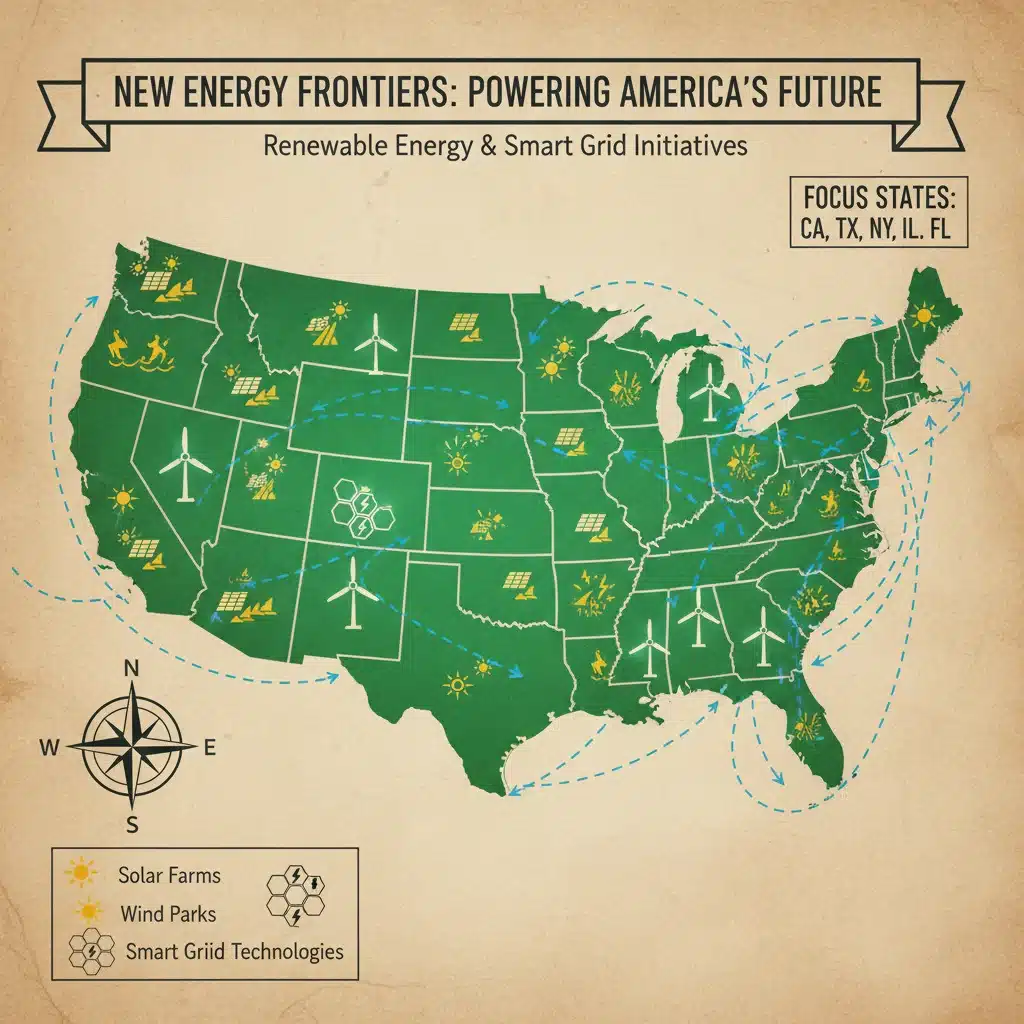
While the national effort to reshape the U.S. grid is broad, five states are poised to implement particularly impactful changes by 2026, serving as bellwethers for the rest of the nation. These states, due to their progressive policies, significant renewable resources, or strategic geographical importance, are at the forefront of the energy transition. Their experiences will offer invaluable lessons and potentially accelerate the adoption of similar strategies nationwide. The selection of these states is not arbitrary; it reflects a combination of ambitious legislative targets, substantial investment in infrastructure, and a demonstrated commitment to clean energy innovation. The success and challenges faced by these states will undoubtedly shape the future trajectory of US Energy Policies.
California: The Renewable Powerhouse
California has long been a leader in renewable energy and environmental policy. By 2026, the state is expected to significantly ramp up its renewable energy portfolio, moving closer to its goal of 100% clean electricity by 2045. Key initiatives include aggressive solar and battery storage mandates, expanded transmission lines to integrate remote renewable projects, and the continued development of offshore wind. The state’s innovative approach to demand-side management and vehicle-to-grid integration will also play a crucial role in stabilizing its increasingly renewable-dependent grid. California’s policies often serve as a blueprint for other states, and its progress will be closely watched.
Texas: A Surprising Green Giant
Despite its historical reliance on oil and gas, Texas has emerged as a national leader in wind energy and is rapidly expanding its solar capacity. By 2026, the state will focus on strengthening its independent grid (ERCOT) to better handle the influx of renewables, addressing grid reliability issues highlighted by recent extreme weather events. Investments in utility-scale battery storage, advanced forecasting technologies, and improved interconnections with neighboring grids are critical components of its strategy. Texas’s market-driven approach to energy development, coupled with its vast land resources, makes it a unique case study in the evolution of US Energy Policies.
New York: Building a Green Grid in the Northeast
New York is committed to achieving 70% renewable electricity by 2030 and a zero-emission grid by 2040. By 2026, significant progress will be made in developing offshore wind farms along its coast, expanding its transmission infrastructure, and promoting distributed energy resources. The state is also investing heavily in energy storage projects and smart grid technologies to ensure grid stability and reliability. New York’s focus on electrifying transportation and buildings further underscores its comprehensive strategy for decarbonization, setting a high bar for other densely populated states.
Illinois: A Midwestern Renewable Hub
Illinois has set ambitious goals, including 100% clean energy by 2045. By 2026, the state will see accelerated development of solar and wind projects, supported by its strong Renewable Portfolio Standard and a focus on community solar programs. Investments in transmission upgrades and grid modernization are also critical to integrating these new energy sources. Illinois’s strategic location in the Midwest, a region with significant wind potential, positions it as a vital contributor to the national clean energy transition, demonstrating how US Energy Policies can drive regional economic development.
Florida: Navigating Solar Growth and Climate Resilience
Florida, with its abundant sunshine, is rapidly expanding its solar capacity. By 2026, the state will focus on large-scale solar farms and integrating distributed solar generation, particularly in residential and commercial sectors. Given its vulnerability to hurricanes, Florida’s energy policies are also heavily centered on grid hardening, microgrids, and enhancing resilience to extreme weather events. The balance between rapid renewable deployment and robust grid protection will be a key challenge and learning opportunity for other coastal states facing similar climate risks, making its approach to US Energy Policies particularly relevant.
Technological Advancements: The Backbone of the New Grid
The successful implementation of these US Energy Policies hinges significantly on continuous technological innovation. The transformation of the U.S. grid by 2030 will be underpinned by a suite of advanced technologies that enable greater efficiency, reliability, and integration of diverse energy sources. These innovations are not merely incremental improvements but represent fundamental shifts in how energy is generated, transmitted, stored, and consumed.
Advanced Renewable Energy Technologies
While solar photovoltaic (PV) and wind turbine technologies are already mature, ongoing research and development are yielding even more efficient and cost-effective solutions. By 2030, we can expect to see widespread deployment of advanced solar panels with higher conversion efficiencies, bifacial designs that capture sunlight from both sides, and perovskite solar cells offering new possibilities. Wind turbines are growing larger and more powerful, with innovations in blade design and offshore floating platforms unlocking vast untapped wind resources. Geothermal energy, while less widespread, is also seeing advancements that make it more accessible and cost-competitive, contributing to a more diversified renewable portfolio under the new US Energy Policies.
Energy Storage Solutions
The intermittency of solar and wind power has historically been a challenge for grid operators. However, rapid advancements in energy storage technologies are providing critical solutions. Lithium-ion batteries, already prevalent, are becoming cheaper and more energy-dense. Beyond lithium-ion, emerging technologies like flow batteries, solid-state batteries, and long-duration storage solutions (e.g., compressed air, liquid air, hydrogen) are gaining traction. These storage systems are essential for balancing supply and demand, providing grid stability, and ensuring continuous power delivery, thereby enabling the ambitious targets set by US Energy Policies.
Smart Grid and Digitalization
The concept of a "smart grid" is central to the future energy landscape. This involves integrating digital communication technologies into every aspect of the power system, from generation to consumption. Key components include advanced metering infrastructure (AMI), which provides real-time data on energy usage; sensors and monitors across the transmission and distribution networks to detect and respond to faults quickly; and sophisticated software platforms for grid optimization, predictive analytics, and cybersecurity. These technologies empower grid operators to manage complex energy flows, integrate distributed energy resources (DERs) like rooftop solar, and enhance overall grid resilience. The digitalization of the grid is a cornerstone of effective US Energy Policies implementation.
Transmission Infrastructure Enhancements
To effectively transport renewable energy from often remote generation sites to demand centers, significant upgrades to the transmission infrastructure are necessary. This includes the development of high-voltage direct current (HVDC) lines, which are more efficient for long-distance power transmission than traditional AC lines. Innovations in grid topology, such as meshed grids and supergrids, aim to create more robust and interconnected systems. Furthermore, dynamic line ratings, which use real-time data to optimize transmission capacity, will allow existing infrastructure to carry more power, reducing the need for costly new construction. These transmission advancements are vital for the successful execution of current US Energy Policies.
Demand-Side Management and Prosumer Engagement
The new grid will not only be about how energy is supplied but also how it is consumed. Demand-side management (DSM) programs encourage consumers to shift their energy use to off-peak hours, reducing strain on the grid and optimizing renewable energy utilization. This is facilitated by smart appliances, smart thermostats, and home energy management systems. The rise of the "prosumer" – a consumer who also produces energy (e.g., through rooftop solar) – further complicates and enriches the grid landscape. Policies promoting net metering, virtual power plants, and community energy projects are empowering prosumers to play an active role in grid management, a key aspect of evolving US Energy Policies.
Challenges and Hurdles on the Path to 2030
While the vision for a transformed U.S. grid is compelling, the path to 2030 is fraught with significant challenges. Overcoming these hurdles will require sustained political will, innovative financing mechanisms, and collaborative efforts across all sectors. The ambition embedded in the new US Energy Policies must be matched by equally robust strategies for implementation and problem-solving.
Infrastructure Development and Siting
Building new transmission lines, large-scale renewable energy projects, and energy storage facilities faces considerable obstacles. Siting and permitting processes can be lengthy and complex, often encountering local opposition due to concerns about visual impact, environmental effects, or property rights. Inter-state coordination for transmission projects is also notoriously difficult, as different regulatory frameworks and political interests can create bottlenecks. Streamlining these processes while ensuring environmental protection and community engagement is a critical challenge for the effective deployment of US Energy Policies.
Grid Reliability and Resilience
Integrating a high penetration of intermittent renewable energy sources into the grid requires sophisticated management to maintain reliability. While energy storage and smart grid technologies offer solutions, ensuring continuous power supply during periods of low wind or solar generation, or during extreme weather events, remains a complex engineering and operational challenge. The risk of cyberattacks on a highly digitalized grid also poses a significant threat, demanding robust cybersecurity measures to protect critical infrastructure. The focus on resilience within US Energy Policies is paramount.
Economic and Market Restructuring
The shift away from traditional fossil fuel-based generation impacts existing energy markets and business models. Utilities and power generators accustomed to centralized, dispatchable power plants must adapt to a more decentralized, dynamic, and renewable-heavy system. This transition can lead to stranded assets, job displacement in traditional energy sectors, and the need for new market mechanisms that appropriately value grid services provided by renewables and storage. Designing fair and efficient market structures is crucial for the economic viability of the new US Energy Policies.
Workforce Development and Training
The clean energy transition requires a skilled workforce capable of designing, installing, operating, and maintaining new technologies. There is a pressing need for training programs to reskill workers from fossil fuel industries and to educate a new generation of engineers, technicians, and specialists in renewable energy, smart grid technologies, and cybersecurity. Addressing this workforce gap is essential to ensure that the ambitious goals of US Energy Policies can be met.
Financing and Investment
The scale of investment required to transform the U.S. grid is enormous, running into trillions of dollars. While federal incentives provide a significant boost, private capital will be essential. Attracting sufficient investment requires stable policy environments, clear regulatory frameworks, and attractive returns. Public-private partnerships will likely play a crucial role in mobilizing the necessary funds, ensuring the financial sustainability of the new US Energy Policies.

The Environmental and Economic Benefits
Despite the challenges, the long-term benefits of these new US Energy Policies are profound, spanning environmental protection, economic growth, and enhanced energy security. The transition to a clean energy grid is not merely a cost but a strategic investment in the nation’s future.
Climate Change Mitigation
Perhaps the most significant benefit is the substantial reduction in greenhouse gas emissions. By phasing out fossil fuels and embracing renewables, the U.S. can significantly contribute to global efforts to combat climate change, reducing air pollution and its associated health impacts. This transition will help meet national and international climate targets, safeguarding ecosystems and human well-being. The environmental imperative is a core driver behind the ambitious scope of current US Energy Policies.
Economic Growth and Job Creation
The clean energy sector is a rapidly growing industry, creating millions of jobs in manufacturing, installation, operations, and research and development. Investments in renewable energy projects, grid modernization, and energy efficiency stimulate economic activity, foster innovation, and create new industries. The "green economy" offers opportunities for economic diversification and sustainable growth, providing a robust counter-narrative to concerns about job losses in traditional energy sectors. The economic dividends of robust US Energy Policies are becoming increasingly apparent.
Energy Independence and Security
Reducing reliance on imported fossil fuels enhances national energy independence and insulates the U.S. from volatile global energy markets and geopolitical risks. A diversified energy portfolio, with a significant share of domestically produced renewables, strengthens energy security. Moreover, a more resilient and decentralized grid is less vulnerable to large-scale outages caused by natural disasters or malicious attacks, further bolstering the nation’s energy security posture. These security benefits are a key rationale for the strategic deployment of US Energy Policies.
Improved Public Health
The reduction in air pollutants from fossil fuel combustion, such as particulate matter, sulfur dioxide, and nitrogen oxides, will lead to significant public health improvements. Lower rates of respiratory illnesses, cardiovascular diseases, and other health issues associated with air pollution will translate into reduced healthcare costs and increased productivity. This often overlooked benefit is a powerful argument for accelerating the clean energy transition through proactive US Energy Policies.
Conclusion: A Transformative Decade for US Energy Policies
The period between now and 2030 represents a critical decade for the transformation of the U.S. energy grid. Driven by a new generation of comprehensive US Energy Policies, the nation is embarking on an ambitious journey to decarbonize its power sector, enhance grid resilience, and foster sustainable economic growth. The five states leading the charge in 2026 – California, Texas, New York, Illinois, and Florida – will provide invaluable insights and demonstrate the feasibility of these profound changes.
While significant technological, economic, and political challenges lie ahead, the momentum towards a cleaner energy future is undeniable. Continuous innovation in renewable energy, storage solutions, and smart grid technologies will provide the tools necessary to overcome these hurdles. The long-term benefits, including a more stable climate, a thriving green economy, enhanced energy security, and improved public health, far outweigh the costs and complexities of this transition.
The success of these US Energy Policies will ultimately depend on sustained collaboration among federal and state governments, industry leaders, researchers, and communities. As the U.S. reshapes its grid, it is not just building new infrastructure; it is forging a new energy identity, one that prioritizes sustainability, innovation, and resilience for generations to come. The future of energy in the United States is bright, dynamic, and critically, achievable by 2030.