Online vs. Traditional Degrees 2025: Career Advancement Analysis
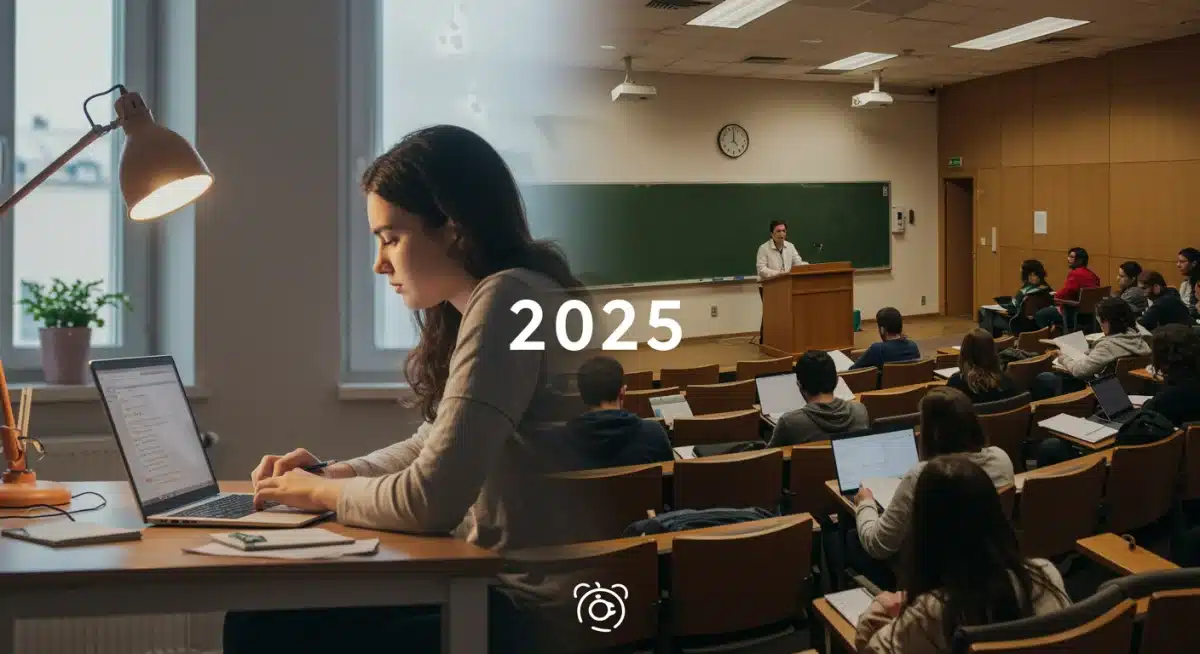
Choosing between an online and traditional degree in 2025 requires a data-driven analysis of career advancement, cost, flexibility, and employer perception to align with individual professional aspirations and life circumstances.
The landscape of higher education is constantly evolving, and in 2025, the decision between pursuing an online traditional degrees path or a traditional, on-campus program is more nuanced than ever. This comprehensive analysis delves into the critical factors influencing career advancement, offering insights based on current trends and projections.
Flexibility and accessibility: tailoring education to your life
One of the most compelling advantages of online degrees is their inherent flexibility and accessibility. This allows students to tailor their education to fit demanding schedules, family commitments, or geographical limitations, which is a significant draw for many adult learners and those seeking career changes.
Traditional degrees, while offering a structured campus experience, often require a full-time commitment to on-site attendance, which can be challenging for individuals with existing responsibilities. The rise of asynchronous learning in online programs means students can access course materials and lectures at their convenience, fostering a personalized learning pace.
Geographic freedom and diverse learning environments
- Global reach: Online programs enable students to enroll in institutions worldwide, expanding their educational options beyond local boundaries.
- Diverse peer groups: Virtual classrooms often bring together students from various backgrounds and locations, enriching discussions and broadening perspectives.
- Accessibility for all: Online learning can be particularly beneficial for individuals with disabilities or those in remote areas, providing access to quality education that might otherwise be out of reach.
The ability to learn from anywhere, coupled with the potential to access specialized programs not available locally, positions online degrees as a powerful tool for those prioritizing adaptability. This flexibility is not just about convenience; it’s about empowering individuals to pursue higher education without sacrificing other crucial aspects of their lives, leading to a more balanced and sustainable academic journey.
Cost considerations and financial aid opportunities
The financial investment in higher education is a significant factor for most students. When comparing online versus traditional degrees, the cost implications can vary substantially, impacting long-term financial stability and return on investment.
Traditional degrees typically involve tuition fees, on-campus housing, meal plans, transportation, and various student activity fees. These can add up quickly, making the overall cost a substantial burden. Online degrees, while still incurring tuition, often eliminate or significantly reduce expenses related to housing, commuting, and on-campus facilities, presenting a potentially more affordable alternative.
Understanding the true cost of each degree type
- Tuition variations: Some online programs may have slightly lower per-credit tuition rates than their traditional counterparts, though this is not universally true.
- Hidden costs: Traditional students face expenses like textbooks, supplies, and potentially lost income from full-time work due to class schedules. Online students also have textbook costs and may need reliable internet and appropriate technology.
- Financial aid landscape: Both online and traditional students are eligible for various forms of financial aid, including federal grants, loans, and scholarships. However, specific institutional scholarships might be tied to on-campus residency or participation.
Analyzing the total cost of attendance, beyond just tuition, is crucial for making an informed decision. While online degrees can offer financial advantages, it’s essential to research specific program costs thoroughly and explore all available financial aid options to determine the most economically viable path for individual circumstances.
Employer perception and market value in 2025
A critical concern for prospective students is how employers perceive online versus traditional degrees. In 2025, the stigma once associated with online education has largely diminished, with many employers recognizing the rigor and value of online programs.
Technological advancements and the increased prevalence of remote work have normalized virtual interactions, making the mode of learning less relevant than the skills and knowledge acquired. Employers are increasingly focused on competencies, practical experience, and the reputation of the issuing institution, rather than solely on whether the degree was earned online or on-campus.

Factors influencing employer perception
- Accreditation: A regionally or nationally accredited online program holds the same weight as its traditional counterpart. Accreditation signifies quality and adherence to educational standards.
- Reputation of institution: Degrees from well-regarded universities, regardless of delivery method, are generally viewed favorably by employers.
- Demonstrated skills: The ability to articulate and apply learned skills, coupled with relevant internships or work experience, often outweighs the mode of degree acquisition.
While some traditional fields or very senior roles might still hold a slight preference for traditional degrees from elite institutions, the overall trend indicates a growing acceptance and even preference for online degrees due to the self-discipline, time management, and technological proficiency they often cultivate. The key lies in selecting a reputable program and effectively showcasing the skills gained.
Networking opportunities and professional connections
Building a professional network is an invaluable aspect of higher education, significantly impacting career advancement. Both online and traditional degree paths offer unique avenues for forging connections, though their nature can differ.
Traditional university settings inherently provide numerous in-person networking opportunities through classes, student organizations, career fairs, and campus events. These face-to-face interactions can lead to strong, lasting relationships with peers, professors, and industry professionals. The informal interactions and shared experiences often form the foundation of these networks.
Virtual networking in the digital age
- Online communities: Many online programs foster vibrant virtual communities through discussion forums, group projects, and social media groups, allowing students to connect with peers globally.
- Virtual career services: Online universities often provide robust online career services, including virtual career fairs, résumé workshops, and alumni networking platforms.
- Professional platforms: Students in online programs can leverage platforms like LinkedIn to connect with classmates, professors, and professionals in their field, often extending their reach beyond geographical limitations.
While traditional networking might feel more organic, online students can be equally successful in building valuable professional connections through intentional effort and utilizing digital tools. The ability to connect with a global cohort can even provide a broader and more diverse network, offering unique perspectives and opportunities for collaboration.
Learning environment and pedagogical approaches
The effectiveness of a degree program is deeply intertwined with its learning environment and the pedagogical approaches employed. Online and traditional settings each offer distinct experiences that cater to different learning styles and preferences.
Traditional classrooms provide a structured, in-person environment with direct instructor interaction, immediate feedback, and collaborative group work. This setting can be ideal for students who thrive on routine, prefer face-to-face discussions, and benefit from the immersive social dynamics of a campus. The physical presence often fosters a sense of community and accountability.
Tailored learning for diverse needs
- Self-paced vs. structured: Online learning often allows for more self-paced study, appealing to independent learners, while traditional programs follow a fixed schedule.
- Technology integration: Online environments inherently integrate advanced learning technologies, preparing students for digitally-driven workplaces. Traditional settings may vary in their tech adoption.
- Instructor interaction: While direct in-person interaction is a hallmark of traditional education, online programs facilitate interaction through virtual office hours, email, video conferencing, and discussion boards, often leading to more thoughtful, written exchanges.
The choice between these environments depends heavily on an individual’s learning style, self-discipline, and comfort with technology. Both models are continuously evolving, with traditional programs incorporating more digital tools and online programs enhancing interactive elements to create engaging and effective learning experiences.
Career advancement and skill development
Ultimately, the primary goal of pursuing a degree is often to enhance career prospects and facilitate professional growth. Both online and traditional degrees can lead to significant career advancement, though the skills emphasized and the paths taken may vary.
Traditional degrees often provide a broad foundational education, fostering critical thinking, communication, and problem-solving skills through diverse coursework and extracurricular activities. The campus experience can also cultivate leadership and teamwork abilities through clubs and student governance. Many employers value the holistic development that a traditional university environment can offer.
Skills for the modern workforce
- Digital literacy: Online degree programs inherently develop strong digital literacy, including proficiency with various software, online collaboration tools, and virtual communication platforms, which are highly valued in today’s job market.
- Self-discipline and time management: The independent nature of online learning cultivates strong self-discipline, time management, and organizational skills – essential for remote work and autonomous roles.
- Specialized knowledge: Many online programs are designed to be highly specialized and career-focused, allowing students to acquire specific, in-demand technical skills directly applicable to their chosen industry.
Data from 2025 indicates that career advancement is less about the modality of the degree and more about the relevance of the skills acquired, the quality of the program, and the individual’s initiative. Both online and traditional graduates who actively seek internships, engage in continuous learning, and build strong professional networks are well-positioned for career success.
| Key Factor | Online vs. Traditional Summary |
|---|---|
| Flexibility | Online degrees offer greater schedule and location flexibility, catering to diverse lifestyles. Traditional degrees provide structured, on-campus experiences. |
| Cost | Online programs often reduce indirect costs like housing and commuting, potentially making them more affordable than traditional degrees. |
| Employer Perception | In 2025, employers increasingly value skills and institutional reputation over delivery method; online degrees are widely accepted. |
| Career Advancement | Both paths lead to advancement, with online degrees fostering digital literacy and self-discipline, valuable in modern careers. |
Frequently asked questions about online vs. traditional degrees
Yes, increasingly so. Employers in 2025 prioritize accreditation, the institution’s reputation, and the actual skills acquired, rather than just the mode of delivery. The shift to remote work has further normalized online credentials.
Absolutely. Online degrees are designed for maximum flexibility, allowing working professionals to balance their studies with existing career and personal commitments. Asynchronous learning is a key component of this adaptability.
Online degrees often reduce costs associated with housing, transportation, and campus fees. While tuition might be comparable, the elimination of these indirect expenses can make online education more financially accessible for many students.
Traditional programs offer in-person networking; online programs facilitate global connections through virtual communities, discussion forums, and professional platforms like LinkedIn. Both require proactive engagement to build strong networks.
Neither is inherently ‘better.’ Career advancement depends on the quality of the program, the relevance of skills learned, continuous professional development, and individual initiative. Both paths can lead to significant success.
Conclusion
In 2025, the choice between online and traditional degrees is less about a clear-cut winner and more about aligning educational pathways with individual needs, career aspirations, and personal circumstances. Both modalities offer distinct advantages and challenges across flexibility, cost, employer perception, networking, learning environment, and career advancement. The data suggests that success in either path hinges on selecting an accredited, reputable program, actively engaging with the learning process, and proactively developing in-demand skills. As the educational landscape continues to evolve, the most effective degree will be the one that best empowers the learner to achieve their unique professional and personal goals.