U.S. Inflation Outlook 2026: Experts Predict 3.2% Rate & Consumer Impact
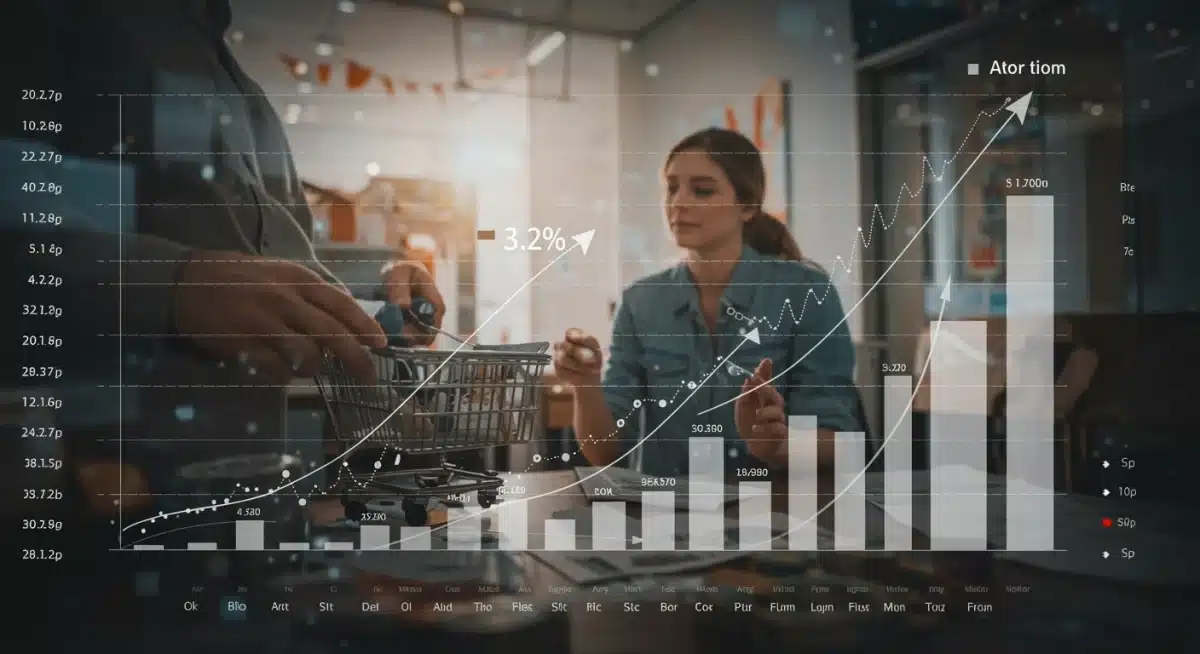
Experts predict a 3.2% U.S. inflation rate for 2026, signaling a moderate rise that will influence consumer spending habits, investment strategies, and the overall economic landscape, requiring careful financial planning.
The highly anticipated U.S. inflation outlook 2026 suggests a crucial turning point for the American economy, with experts forecasting a steady rate of 3.2%. This projection is not just a number; it represents a significant barometer for how families will manage their budgets, what businesses can expect in terms of operational costs, and the broader trajectory of consumer spending across the nation. Understanding these forecasts is paramount for everyone, from individual households to large corporations, as they navigate the financial landscape of the coming years.
Understanding the 2026 inflation forecast
The projected 3.2% inflation rate for 2026 in the United States reflects a complex interplay of various economic factors. This mid-range forecast indicates a stabilization after recent fluctuations, suggesting that while prices will continue to rise, the rate of increase might be more predictable than in previous years. Analyzing this forecast requires looking at both the underlying causes and the expert consensus shaping these predictions.
Several key indicators contribute to this forecast. Global supply chain improvements, a more balanced labor market, and the Federal Reserve’s monetary policy adjustments are all significant components. Economists from various institutions, including major banks and academic bodies, have converged on this 3.2% figure, based on advanced econometric models and historical data analysis. Their collective insights provide a robust foundation for understanding the future economic environment.
Key factors influencing the 2026 inflation rate
The factors driving the 2026 inflation forecast are multifaceted. Energy prices, geopolitical stability, and technological advancements all play a role. A stable energy market, for instance, can significantly temper inflationary pressures by reducing transportation and production costs. Conversely, any major global disruption could quickly alter these predictions.
- Supply Chain Resilience: Continued improvements in global logistics and manufacturing capacity are expected to alleviate price pressures.
- Labor Market Dynamics: A more balanced supply and demand for labor could lead to more stable wage growth, impacting consumer prices less dramatically.
- Monetary Policy: The Federal Reserve’s ongoing efforts to manage interest rates will be crucial in steering inflation towards its target.
- Technological Innovation: Advancements in automation and efficiency can reduce production costs, potentially offsetting some inflationary trends.
In conclusion, the 3.2% inflation forecast for 2026 is a carefully calculated projection, influenced by a blend of domestic and international economic forces. This understanding is vital for preparing for its effects on everyday life and broader economic stability.
Impact on consumer spending and purchasing power
The predicted 3.2% inflation rate in 2026 will undoubtedly shape consumer spending patterns and directly influence the purchasing power of American households. When inflation rises, the cost of goods and services increases, meaning that each dollar buys relatively less than before. This phenomenon forces consumers to make adjustments to their budgets and spending habits, often prioritizing necessities over discretionary items.
For many families, a 3.2% inflation rate translates into a need for careful financial planning. Essentials like groceries, housing, and transportation costs are likely to see price increases, which can strain household budgets, especially for those on fixed incomes. Consumers might find themselves searching for more affordable alternatives or delaying larger purchases, such as new vehicles or home improvements, to manage their finances effectively.
Adjusting household budgets in an inflationary environment
To cope with rising prices, consumers typically adopt various strategies. These can range from reducing non-essential expenditures to seeking higher-paying jobs or additional income streams. The aggregate effect of these individual decisions can significantly impact overall economic activity, influencing retail sales, savings rates, and even investment behaviors.
- Prioritizing Essentials: Households will likely allocate a larger portion of their income to food, utilities, and housing.
- Seeking Value: Consumers may become more price-sensitive, opting for generic brands or discount retailers.
- Delaying Large Purchases: Big-ticket items like cars, appliances, and homes might be put on hold as buying power diminishes.
- Increased Savings for Future Costs: Some may increase savings to buffer against future price increases or unexpected expenses.
Ultimately, the 3.2% inflation rate will require consumers to be more strategic with their money. Their ability to adapt to these changes will determine their financial resilience in the face of evolving economic conditions, highlighting the direct link between macroeconomic forecasts and personal financial well-being.
Sector-specific effects of moderate inflation
A moderate inflation rate of 3.2% in 2026 will not affect all sectors of the U.S. economy equally. While some industries might experience increased operating costs and reduced consumer demand, others could see growth opportunities. Understanding these sector-specific nuances is crucial for businesses, investors, and policymakers to prepare and adapt effectively.
The retail and consumer staples sectors, for instance, are often directly impacted as consumers adjust their spending habits. Discretionary spending on luxury goods, entertainment, and dining out might decrease as households prioritize essential purchases. However, sectors that offer value or necessities, such as discount retailers or essential service providers, may remain relatively stable or even see increased demand.

Industries to watch
Certain industries are inherently more sensitive to inflationary pressures. Energy and raw materials, for example, often experience price increases that ripple through other sectors. Technology and healthcare, while often facing their own cost pressures, might also offer innovative solutions that help mitigate the effects of inflation for consumers and businesses alike. The housing market will also be a key area to monitor, as interest rates and construction costs interplay with demand.
- Real Estate: Rising interest rates due to inflation can impact mortgage affordability and housing demand.
- Technology: Companies offering efficiency-enhancing solutions might see increased adoption as businesses seek to cut costs.
- Healthcare: Medical costs, already a significant concern, could see further increases, affecting insurance premiums and out-of-pocket expenses.
- Manufacturing: Higher input costs for raw materials and labor could squeeze profit margins, leading to price hikes for consumers.
In summary, the 3.2% inflation rate will create a varied landscape across different economic sectors. Businesses must strategically adapt to these shifts, focusing on cost efficiencies and understanding evolving consumer priorities to maintain stability and foster growth.
Strategies for businesses to navigate inflation
For businesses, preparing for a 3.2% inflation rate in 2026 involves more than just adjusting prices. It requires a comprehensive strategy that encompasses operational efficiency, supply chain management, and thoughtful pricing models. Proactive measures can help companies maintain profitability, retain customers, and even find competitive advantages during periods of moderate inflation.
One primary strategy involves optimizing supply chains to reduce costs and enhance resilience. This can include diversifying suppliers, negotiating long-term contracts, or investing in localized production to minimize transportation expenses and mitigate geopolitical risks. Businesses that can secure their input costs will be better positioned to manage their margins without passing exorbitant price increases onto consumers.
Implementing effective pricing and operational adjustments
Pricing strategies are also critical. Instead of blanket price hikes, businesses might consider dynamic pricing, value-added services, or adjusting product sizes to manage consumer perceptions. Operational efficiencies, such as investing in automation or streamlining processes, can also help absorb rising costs without impacting the bottom line too severely.
- Cost Control: Focus on reducing non-essential expenses and optimizing operational workflows.
- Supply Chain Diversification: Reduce reliance on single suppliers or regions to minimize disruption and cost volatility.
- Strategic Pricing: Implement targeted price adjustments, value-based pricing, or bundle offerings to retain customer loyalty.
- Technology Investment: Utilize automation and digital tools to enhance productivity and lower labor costs.
Ultimately, businesses that demonstrate agility and foresight in their response to the 3.2% inflation forecast will be better equipped to thrive. A focus on innovation, customer value, and robust financial planning will be key to navigating the economic environment of 2026 successfully.
Government policy and its role in managing inflation
The U.S. government and the Federal Reserve play pivotal roles in managing inflation, and their policy decisions will significantly influence the economic landscape in 2026. With a 3.2% inflation forecast, policymakers will likely continue to employ a combination of monetary and fiscal tools aimed at maintaining economic stability while fostering sustainable growth. Their actions are critical in shaping market expectations and consumer confidence.
The Federal Reserve, through its control over interest rates, is the primary institution responsible for monetary policy. Adjustments to the federal funds rate can influence borrowing costs for businesses and consumers, thereby impacting investment and spending. The Fed’s communication about its future intentions also plays a crucial role in anchoring inflation expectations, preventing self-fulfilling prophecies of higher prices.
Fiscal measures and regulatory oversight
Beyond monetary policy, fiscal measures enacted by Congress and the administration can also influence inflation. Government spending, taxation policies, and regulatory frameworks all have the potential to either stimulate or cool down economic activity. For instance, targeted investments in infrastructure or energy efficiency can boost supply and reduce long-term costs, thereby easing inflationary pressures.
- Interest Rate Adjustments: The Federal Reserve may fine-tune rates to balance economic growth with inflation control.
- Fiscal Stimulus/Contraction: Government spending and tax policies can impact overall demand in the economy.
- Regulatory Reforms: Policies aimed at increasing competition or reducing supply-side bottlenecks can help stabilize prices.
- International Trade Agreements: Facilitating smoother global trade can improve supply and reduce import costs.
In conclusion, a coordinated and well-communicated approach from government bodies and the Federal Reserve will be essential in navigating the 3.2% inflation forecast for 2026. Their policies will directly influence the pace of price increases and the overall health of the U.S. economy.
Long-term economic outlook beyond 2026
While the 3.2% inflation forecast for 2026 provides a near-term perspective, it is equally important to consider the long-term economic outlook. The trajectory of inflation beyond 2026 will depend on a confluence of global trends, technological advancements, and evolving consumer behaviors. Understanding these longer-term forces helps in strategic planning for individuals, businesses, and policymakers alike.
One significant long-term trend is the ongoing digital transformation across industries. Automation, artificial intelligence, and other technological innovations have the potential to increase productivity and reduce costs, which could act as a disinflationary force over time. However, the energy transition and the increasing frequency of climate-related events could introduce new sources of volatility and price pressures.
Global trends and future economic resilience
Demographic shifts, such as an aging population in many developed nations, will also influence labor markets and consumer demand. Additionally, geopolitical developments and the restructuring of global supply chains will continue to play a role in shaping trade flows and commodity prices. The ability of economies to adapt to these changes will be crucial for maintaining stability.
- Technological Disruption: AI and automation could drive down production costs and increase efficiency, influencing long-term price levels.
- Demographic Shifts: Changes in population age and growth rates will affect labor supply and consumer demand patterns.
- Climate Change Adaptation: Investments in green technologies and infrastructure may lead to initial cost increases but long-term sustainability.
- Geopolitical Realignment: Shifts in international relations and trade blocs could reshape global supply chains and commodity prices.
In summary, the economic landscape beyond 2026 is expected to be dynamic, with various global and technological forces at play. While the 3.2% inflation rate in 2026 offers a benchmark, continuous monitoring of these long-term trends will be essential for informed decision-making and fostering economic resilience.
| Key Aspect | Description |
|---|---|
| 2026 Inflation Rate | Experts forecast a 3.2% inflation rate for the U.S. economy. |
| Consumer Spending Impact | Purchasing power may decrease, requiring budget adjustments and prioritizing essentials. |
| Business Strategies | Focus on cost control, supply chain diversification, and strategic pricing. |
| Government Role | Monetary and fiscal policies are crucial for managing economic stability. |
Frequently asked questions about 2026 U.S. inflation
A 3.2% inflation rate means your savings will lose 3.2% of their purchasing power annually if they aren’t earning an equivalent or higher rate of return. It’s crucial to seek investment vehicles that can at least match, if not exceed, this rate to preserve your wealth.
Typically, central banks, like the Federal Reserve, respond to inflation by adjusting interest rates. A 3.2% inflation rate could prompt the Fed to maintain or slightly increase rates to cool down the economy and bring inflation closer to its target, impacting borrowing costs.
Whether your wages keep pace depends on various factors, including your industry, job market demand, and individual negotiations. Some sectors may see stronger wage growth, while others might lag behind, leading to a real reduction in purchasing power for some workers.
While inflation affects all goods, essentials like food, energy, and housing typically see the most noticeable increases for consumers. Discretionary items might also rise, but consumers often have more flexibility to reduce spending in these areas.
To prepare, focus on budgeting, reducing debt, and exploring investments that offer inflation protection, such as Treasury Inflation-Protected Securities (TIPS) or real estate. Diversifying your portfolio and maintaining an emergency fund are also crucial steps.
Conclusion
The expert forecast of a 3.2% U.S. inflation rate for 2026 presents a clear, albeit moderate, challenge for the American economy. This projection underscores the ongoing need for both consumers and businesses to adopt proactive financial strategies. From adjusting household budgets to optimizing corporate supply chains, understanding and responding to these inflationary pressures will be critical. Government and Federal Reserve policies will continue to play a crucial role in steering the economy, aiming for a balance between growth and price stability. Ultimately, adaptability and informed decision-making will empower stakeholders to navigate the anticipated economic landscape of 2026 and beyond, ensuring resilience in an ever-evolving global market.