Mastering 2026 FAFSA: 7 Insider Tips for Max US Financial Aid

Mastering the 2026 FAFSA: 7 Insider Tips to Maximize Your US Financial Aid Eligibility
Navigating the labyrinthine world of college financial aid can feel like a daunting task, especially with the continuous updates and changes to the Free Application for Federal Student Aid (FAFSA). As we look ahead to the 2026-2027 academic year, understanding the nuances of the 2026 FAFSA tips becomes paramount for students and families aiming to secure the maximum possible financial assistance. The FAFSA is not merely a form; it’s your gateway to federal grants, scholarships, work-study programs, and low-interest federal student loans. Missing out on critical details or making common mistakes can significantly impact your eligibility and the amount of aid you receive. This comprehensive guide is designed to equip you with seven essential insider tips, ensuring you are well-prepared to tackle the 2026 FAFSA and optimize your chances of receiving substantial financial support for your higher education journey.
The landscape of financial aid is dynamic, with recent legislative changes like the FAFSA Simplification Act continuing to reshape how aid is calculated and distributed. These changes, while intended to streamline the process and expand eligibility, also introduce new considerations that applicants must be aware of. Our goal is to demystify these complexities, providing actionable advice that goes beyond the basic instructions. We’ll delve into strategic planning, common pitfalls to avoid, and proactive steps you can take to present your financial situation in the most favorable light. By mastering these 2026 FAFSA tips, you’ll be well on your way to unlocking the full spectrum of financial aid opportunities available to you, transforming your educational aspirations into reality without undue financial burden.
Understanding the Evolving FAFSA Landscape for 2026
Before diving into specific tips, it’s crucial to grasp the broader context of the FAFSA for 2026. The FAFSA Simplification Act has brought about significant reforms, aimed at making the application process easier and improving the aid eligibility formula. While many of these changes were implemented for the 2024-2025 FAFSA cycle, their full impact and subsequent refinements will continue to influence the 2026 FAFSA. Key changes include a simplified application form, a revised methodology for calculating aid eligibility (moving from Expected Family Contribution or EFC to the Student Aid Index or SAI), and expanded Pell Grant eligibility. These adjustments mean that strategies that worked in previous years might need to be reconsidered. Staying informed about these evolving regulations is the first step in effectively planning your financial aid approach. The emphasis is now more on individual student circumstances, and understanding how your specific situation aligns with the new SAI calculation is vital. This foundational knowledge will empower you to apply our 2026 FAFSA tips more effectively.
One of the most significant shifts is the Student Aid Index (SAI), which replaces the Expected Family Contribution (EFC). The SAI is a number used by colleges to determine how much federal student aid a student is eligible to receive. Unlike the EFC, the SAI can be a negative number, indicating a higher level of financial need. This change, along with others, aims to provide a more accurate and equitable assessment of a family’s ability to pay for college. For the 2026 FAFSA, applicants will continue to see a more streamlined questionnaire, with fewer questions and direct data exchange with the IRS for tax information. While this simplifies the process, it also means less opportunity for manual adjustments, making accurate initial reporting even more critical. Familiarizing yourself with these foundational changes is the bedrock upon which all other 2026 FAFSA tips are built.
Tip 1: File Early and Accurately – The Golden Rule for 2026 FAFSA
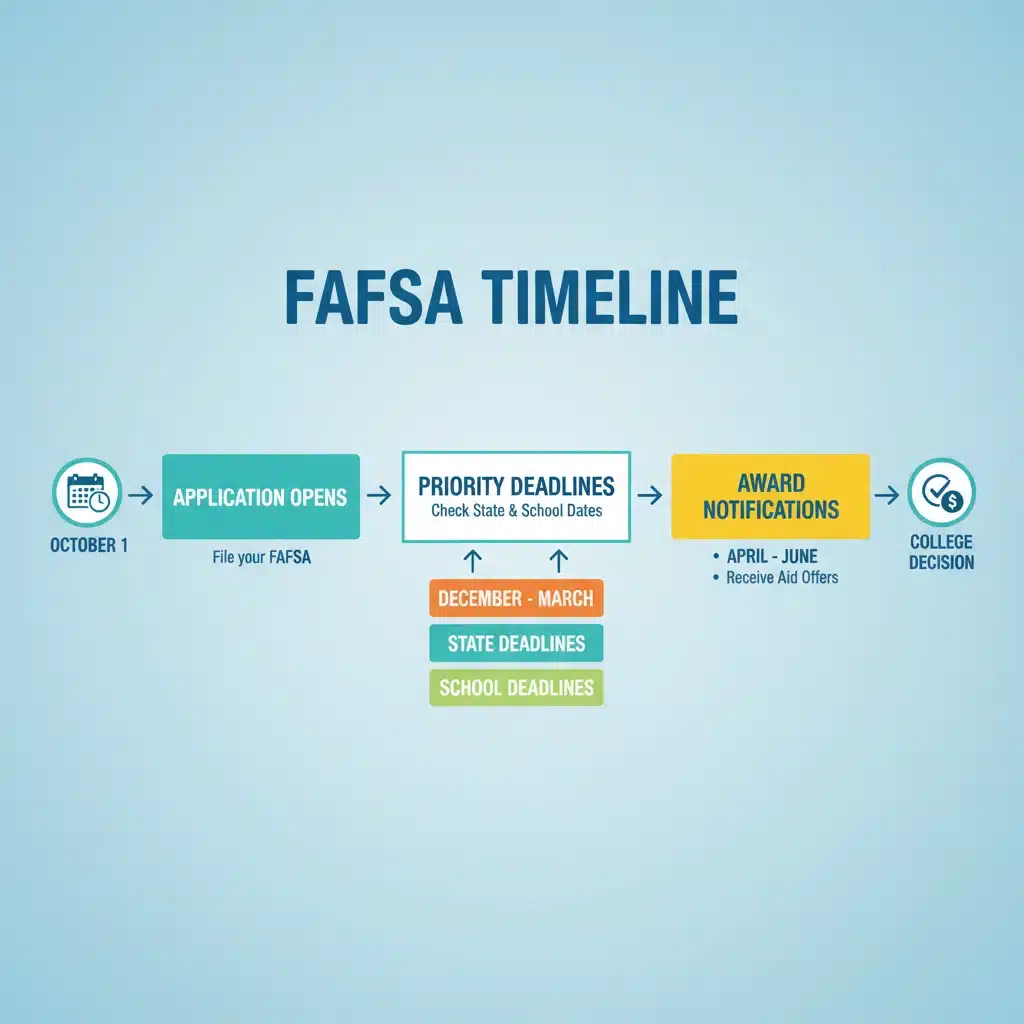
The adage "the early bird gets the worm" holds particularly true for financial aid. Filing your FAFSA as soon as it becomes available is arguably the most crucial of all 2026 FAFSA tips. While federal aid programs like Pell Grants are generally awarded to all eligible students, many state and institutional aid programs operate on a first-come, first-served basis or have strict deadlines. By submitting your FAFSA early, you not only ensure consideration for all available aid but also give yourself ample time to correct any potential errors before deadlines. The FAFSA typically opens on October 1st each year for the following academic year. For the 2026-2027 academic year, this means the FAFSA will likely open on October 1, 2025.
Accuracy is equally important. Even minor errors can lead to delays in processing or, worse, a reduction in your aid package. Double-check all financial figures, personal information, and school codes. Utilize the IRS Direct Data Exchange (DDX) feature to automatically transfer your tax information from the IRS directly into your FAFSA. This not only saves time but also significantly reduces the chance of errors. Remember, the 2026 FAFSA will use your 2024 tax information. Gather all necessary documents well in advance: your Social Security number, federal income tax returns, W-2s, and records of other money earned, as well as bank statements and records of investments. Proactive preparation and meticulous attention to detail when filing are indispensable 2026 FAFSA tips for maximizing your aid.
Tip 2: Understand the Student Aid Index (SAI) Calculation and Its Implications
As mentioned, the EFC has been replaced by the Student Aid Index (SAI). Understanding how the SAI is calculated is fundamental to strategizing your financial aid approach. The SAI considers several factors, including parent and student income, assets, and family size. For dependent students, parent income and assets typically carry more weight. A key change for the 2026 FAFSA is how family size is determined, which now aligns with the number of tax dependents claimed on the tax return, rather than the previous FAFSA definition. This seemingly small change can have a significant impact on your SAI. Additionally, cash support received by students is now included in the SAI calculation, which was not always the case with the EFC.
Knowing the components of the SAI allows you to understand which financial elements are most impactful. For instance, while certain assets (like primary home equity and retirement accounts) are excluded from the calculation, others (like savings accounts, checking accounts, and non-retirement investment accounts) are considered. If you have significant non-excluded assets, understanding their impact on your SAI can inform financial planning decisions. This doesn’t mean making drastic financial changes solely for FAFSA purposes, but rather being aware of how your current financial situation translates into the SAI. Staying informed about the SAI’s intricacies is one of the most powerful 2026 FAFSA tips to strategize for better outcomes. Consult the official Department of Education resources for the most up-to-date information on SAI calculations.
Tip 3: Strategic Asset Management and Income Reporting
This tip builds directly on understanding the SAI. Strategic asset management involves making informed decisions about your finances well in advance of filing the FAFSA. While it’s generally ill-advised to make significant financial moves solely to manipulate aid eligibility, understanding the rules can help you optimize your situation. For example, if you have significant cash savings or non-retirement investments, consider if these funds could be used for other purposes that are not counted in the SAI, such as paying down consumer debt or contributing to a retirement account (which is typically excluded). Remember, these decisions should be made with your overall financial health in mind, not just FAFSA.
When it comes to income, the FAFSA uses "prior-prior year" tax information. For the 2026-2027 FAFSA, this means your 2024 tax data will be used. If your family experienced a significant income reduction after 2024 due to job loss, divorce, or other special circumstances, you will need to communicate this directly with the financial aid office at each college. They have the discretion to make "professional judgments" and adjust your aid eligibility. Documenting any special circumstances thoroughly is critical. Similarly, if you expect a significant bonus or income spike in the year prior to the FAFSA filing (i.e., 2024 for the 2026 FAFSA), be aware of its potential impact. Careful planning around income and assets is a crucial element of effective 2026 FAFSA tips.
Tip 4: Don’t Overlook Special Circumstances and Professional Judgments
Life is unpredictable, and the FAFSA, by its nature, provides a snapshot of your financial situation from a previous tax year. If your family’s financial circumstances have changed significantly since the 2024 tax year (the "prior-prior year" for the 2026 FAFSA), you have the right to appeal for a "professional judgment" from the financial aid office. This is one of the most underrated 2026 FAFSA tips. Special circumstances can include job loss, significant medical expenses not covered by insurance, parental divorce or separation, death of a parent, or other unusual situations that impact your family’s ability to contribute to college costs.
It’s vital to understand that colleges are not obligated to grant professional judgments, but they do have the authority to adjust your FAFSA data to reflect your current financial reality. To initiate this process, you will need to contact the financial aid office at each college you are applying to and explain your situation. Be prepared to provide extensive documentation, such as termination letters, medical bills, legal documents, and a detailed letter explaining your circumstances. Being proactive and providing clear, comprehensive documentation significantly increases your chances of a favorable professional judgment. Don’t assume your situation is too complex or insignificant; always inquire and advocate for yourself. This proactive approach is a cornerstone of effective 2026 FAFSA tips.
Tip 5: Complete Your FAFSA Even If You Think You Won’t Qualify
Many families mistakenly believe they earn too much money to qualify for federal financial aid and therefore skip the FAFSA altogether. This is a critical error and one of the most important 2026 FAFSA tips to dispel. The FAFSA is not just for low-income families. It is the gateway to a wide range of financial aid opportunities, including:
- Federal Grants: Such as the Pell Grant, which is need-based and does not need to be repaid. The FAFSA Simplification Act has expanded Pell Grant eligibility, making it accessible to more students.
- Federal Work-Study: A program that allows students to earn money to help pay for educational expenses through part-time jobs on campus or with non-profit organizations.
- Federal Student Loans: While these are loans and must be repaid, federal student loans often come with lower interest rates, more flexible repayment options, and borrower protections compared to private loans. Subsidized federal loans, in particular, do not accrue interest while you are in school.
- Institutional Aid: Many colleges and universities use FAFSA data to determine eligibility for their own scholarships and grants, regardless of your income level.
- State Aid: Most states require a completed FAFSA to determine eligibility for state-funded financial aid programs.
Even if you don’t qualify for need-based grants, completing the FAFSA is often a prerequisite for receiving merit-based scholarships from your chosen institutions or even certain private scholarships. It’s also the only way to access federal student loans, which can be a valuable option for many families. Therefore, regardless of your income, always complete the FAFSA. This simple step can open doors to unexpected financial assistance and is a non-negotiable among our 2026 FAFSA tips.
Tip 6: Research and Understand Individual College Financial Aid Policies
While the FAFSA provides federal aid eligibility, each college has its own financial aid policies and packages. This is a crucial distinction and a significant aspect of successful financial aid planning. Some institutions are "100% need-met" schools, meaning they commit to meeting 100% of a student’s demonstrated financial need through a combination of grants, scholarships, and sometimes loans. Others may have different policies or prioritize certain types of students for their institutional aid.
Before applying, delve into the financial aid pages of prospective colleges. Look for information on their specific deadlines (which may be earlier than the federal FAFSA deadline), their institutional scholarship opportunities, and their approach to meeting financial need. Some colleges may require additional forms, such as the CSS Profile, which collects more detailed financial information than the FAFSA. Understanding these individual college requirements is vital for a complete application strategy. Don’t assume that applying to multiple schools with the same FAFSA will yield identical aid offers. Each institution’s approach to packaging aid can vary widely, making this research a powerful component of your 2026 FAFSA tips arsenal. Engage with financial aid counselors at your target schools; they are invaluable resources.

Tip 7: Stay Organized, Track Deadlines, and Follow Up Diligently
The financial aid process involves numerous forms, documents, and deadlines. Staying meticulously organized is paramount to avoiding costly mistakes and delays. Create a dedicated folder (digital and/or physical) for all financial aid-related documents, including your FAFSA confirmation, SAR (Student Aid Report), tax documents, and any correspondence from colleges or the Department of Education. Keep a detailed log of all deadlines for the FAFSA, CSS Profile (if applicable), and any institutional aid forms for each college you are considering. Missing a deadline, even by a day, can result in the loss of thousands of dollars in aid.
Once you’ve submitted your FAFSA, you’ll receive a Student Aid Report (SAR). Review this document carefully for any errors. If you find discrepancies, correct them immediately. Furthermore, actively follow up with the financial aid offices of the colleges you’ve applied to. Confirm they have received all necessary documents and inquire about the status of your application. Don’t be afraid to ask questions if something is unclear. Proactive communication and diligent follow-up are critical, especially if you’ve submitted an appeal for special circumstances. This organizational rigor and persistent follow-up are among the most practical and impactful 2026 FAFSA tips you can implement.
Beyond the FAFSA: Additional Avenues for Financial Aid
While the FAFSA is the cornerstone of federal and institutional aid, it’s essential to remember that it’s not the only source of funding for college. To truly maximize your financial assistance, you should also explore:
- Scholarships: Look for scholarships from a variety of sources, including local community organizations, private foundations, religious groups, employers, and professional associations. Many scholarships are not need-based and are awarded for academic achievement, extracurricular involvement, specific talents, or unique backgrounds. Utilize scholarship search engines and local resources.
- Grants: Beyond federal grants, many states and individual colleges offer their own grant programs. Research these opportunities thoroughly.
- Employer Tuition Assistance: If you or your parents are currently employed, check if their employers offer tuition reimbursement or assistance programs for employees or their dependents.
- Military Benefits: For veterans or current service members and their families, military benefits such as the GI Bill can provide substantial educational funding.
- Savings Plans: If you have 529 plans or other educational savings accounts, understand how best to utilize them in conjunction with financial aid.
A holistic approach to funding your education means casting a wide net beyond just the FAFSA. While our 2026 FAFSA tips focus on the primary federal application, integrating these additional funding strategies will create a robust financial plan for college. Start your scholarship search early and consistently, as many have deadlines well in advance of college application season.
Common Mistakes to Avoid on Your 2026 FAFSA
Even with the simplification efforts, mistakes can still happen. Being aware of common pitfalls can help you avoid them and streamline your application process. Here are a few to watch out for, reinforcing the importance of our 2026 FAFSA tips:
- Incorrect Social Security Numbers: A seemingly minor error, but this can cause significant delays. Double-check all SSNs for both student and parents.
- Leaving Fields Blank: If a question doesn’t apply to you, enter "0" or "N/A" rather than leaving it blank. Blank fields can sometimes be interpreted as incomplete information.
- Not Using the IRS Direct Data Exchange (DDX): This tool is designed to prevent errors and save time. Always use it if you are eligible.
- Missing Deadlines: As emphasized, federal, state, and institutional deadlines vary. Keep a comprehensive list and adhere to the earliest one.
- Not Listing Enough Schools: You can list up to 20 schools on your FAFSA. List all schools you are considering, even if you’re not sure you’ll apply. You can always remove or add schools later.
- Not Correcting Your SAR: Review your Student Aid Report (SAR) carefully for any errors or discrepancies and correct them immediately.
- Ignoring Parent Information: For dependent students, parental income and assets are crucial. Ensure all parent information is accurate and complete.
- Not Appealing for Special Circumstances: If your financial situation has changed, don’t assume you can’t get more aid. Always communicate with the financial aid office.
By actively avoiding these common mistakes, you significantly increase your chances of a smooth FAFSA process and a more favorable aid package, making these preventative measures valuable 2026 FAFSA tips.
The Long-Term Benefits of Mastering Your FAFSA
Mastering the 2026 FAFSA is not just about securing aid for one academic year; it’s about setting a precedent for your entire college career. Financial aid is typically awarded annually, meaning you’ll need to reapply for the FAFSA each year you are in college. By understanding the process now, you’re building a foundation for future applications, making each subsequent year’s process smoother and less stressful. Developing good habits like early filing, meticulous record-keeping, and proactive communication with financial aid offices will serve you well throughout your educational journey.
Furthermore, maximizing your financial aid eligibility can significantly reduce the amount of student loan debt you accrue. Less debt means more financial freedom after graduation, allowing you to pursue your career goals, save for future investments, or simply live more comfortably without the heavy burden of loan repayments. The effort you put into understanding and strategically completing your 2026 FAFSA now will pay dividends for years to come, affirming that these 2026 FAFSA tips are an investment in your future financial well-being.
Conclusion: Your Path to Maximized 2026 FAFSA Financial Aid
The journey through college financial aid can be complex, but with the right knowledge and strategic approach, it’s entirely navigable. By diligently applying these seven insider 2026 FAFSA tips – filing early and accurately, understanding the SAI, managing assets strategically, utilizing professional judgment for special circumstances, always completing the FAFSA, researching college policies, and maintaining organization – you position yourself for the best possible financial aid outcome. Remember, the FAFSA is a crucial tool, but it’s part of a larger financial planning picture. Combine these tips with a thorough scholarship search and proactive communication, and you’ll be well on your way to securing the financial resources needed to achieve your educational dreams. Don’t let the complexities deter you; empower yourself with knowledge and take control of your financial future.