AI Governance: Navigating Regulatory Shifts in 2026 and Beyond

The landscape of artificial intelligence (AI) is evolving at an unprecedented pace, bringing with it transformative opportunities and complex challenges. As AI technologies become more integrated into every facet of business and society, the call for robust AI governance shifts has grown louder. We are on the cusp of significant regulatory changes, with major shifts projected for early 2026. This isn’t merely a prediction; it’s a critical alert for businesses worldwide. Understanding these impending changes and preparing for their impact is not just advisable, it’s absolutely essential for continued operation, innovation, and competitive advantage.
For years, the development of AI has outpaced the establishment of comprehensive regulatory frameworks. This regulatory vacuum has allowed for rapid innovation but has also raised concerns about ethics, bias, privacy, security, and accountability. Governments and international bodies are now working diligently to bridge this gap, aiming to create a more structured and responsible environment for AI development and deployment. The projected AI governance shifts in early 2026 represent a pivotal moment, demanding immediate attention from legal teams, compliance officers, technology departments, and executive leadership.
This comprehensive guide will delve into the anticipated regulatory developments, explore their potential impact on various industries, and provide actionable strategies for businesses to navigate this complex new era of AI governance. Our goal is to equip you with the knowledge and tools necessary to not only comply with future regulations but to leverage them as a foundation for building trustworthy and ethical AI systems.
The Impending Wave: Understanding the Global Context of AI Governance Shifts
The drive for stricter AI governance shifts is not confined to a single nation or region; it’s a global phenomenon. Major economic blocs and leading technological nations are actively developing and implementing their own AI regulatory frameworks, often with varying scopes and requirements. This creates a complex web of compliance obligations for international businesses.
The European Union’s AI Act: A Benchmark for Global Regulation
The European Union (EU) has been at the forefront of AI regulation with its groundbreaking AI Act. This legislation, expected to fully come into force around late 2025 or early 2026, aims to establish a harmonized legal framework for AI across the EU. It adopts a risk-based approach, categorizing AI systems into different risk levels:
- Unacceptable Risk: AI systems that pose a clear threat to fundamental rights (e.g., social scoring by governments) will be banned.
- High-Risk: AI systems used in critical areas like healthcare, education, employment, law enforcement, and critical infrastructure will face stringent requirements. These include robust risk management systems, data governance, human oversight, cybersecurity, and transparency obligations.
- Limited Risk: AI systems with specific transparency obligations (e.g., chatbots, deepfakes).
- Minimal/No Risk: The vast majority of AI systems, with no specific obligations beyond existing legislation.
The EU AI Act’s extraterritorial reach means that any company offering AI systems or services to users within the EU, regardless of where the company is based, will need to comply. This makes it a crucial benchmark for global AI governance shifts.
United States: A Sector-Specific and State-Level Approach
In contrast to the EU’s comprehensive approach, the United States has historically adopted a more sector-specific and state-level regulatory strategy for AI. However, there’s a growing push for federal guidance and legislation. Key developments include:
- Executive Orders: President Biden’s Executive Order on the Safe, Secure, and Trustworthy Development and Use of Artificial Intelligence (October 2023) laid out a broad range of directives for federal agencies, focusing on safety, security, privacy, equity, and competition. This order signals a strong federal commitment to shaping future AI governance shifts.
- NIST AI Risk Management Framework (AI RMF): The National Institute of Standards and Technology (NIST) has published a voluntary framework to help organizations manage risks associated with AI. While voluntary, it’s expected to heavily influence future regulatory requirements and best practices.
- State-Level Initiatives: States like California, New York, and Colorado are exploring or have already enacted legislation addressing specific AI applications, particularly in areas like employment and consumer protection.
The fragmented nature of US AI regulation means businesses must monitor developments at both federal and state levels, preparing for a patchwork of compliance requirements.
United Kingdom: Balancing Innovation and Regulation
The UK has expressed a desire to foster AI innovation while ensuring safety and ethical considerations. Its approach emphasizes a pro-innovation, sector-specific regulatory framework, aiming to avoid stifling innovation with overly broad legislation. However, the UK is also mindful of international standards and is likely to align with aspects of EU and US regulations, particularly concerning high-risk applications. Upcoming white papers and legislative proposals will further define the UK’s contribution to global AI governance shifts.
Asia-Pacific: Diverse Approaches and Emerging Standards
Countries in the Asia-Pacific region are also actively shaping their AI regulatory landscapes. China has been particularly proactive, issuing regulations on algorithms, deep synthesis technologies, and generative AI. Other nations like Singapore, Japan, and South Korea are developing their own frameworks, often focusing on ethical AI principles, data privacy, and specific industry applications. This diverse regional landscape underscores the complexity of global AI governance shifts for multinational corporations.
Key Pillars of Future AI Governance Shifts: What to Expect
While the specifics of each regulatory framework may vary, several common themes are emerging as foundational pillars of future AI governance shifts. Businesses should anticipate and prepare for these core requirements:
1. Transparency and Explainability (XAI)
Regulators are increasingly demanding greater transparency into how AI systems make decisions. This means moving beyond ‘black box’ models to ensure that outcomes can be understood, interpreted, and explained to humans, especially when those decisions have significant impacts on individuals. Businesses will need to implement techniques for explainable AI (XAI) and provide clear documentation of AI system design, training data, and decision-making processes.
2. Data Governance and Quality
The quality and provenance of data used to train AI models are paramount. Future regulations will likely impose stringent requirements on data governance, including data collection practices, data privacy (aligning with GDPR, CCPA, etc.), data bias mitigation, and data security. Poor data quality or biased datasets can lead to discriminatory or unfair AI outcomes, which will be heavily scrutinized under new AI governance shifts.
3. Risk Management and Impact Assessments
A proactive approach to identifying, assessing, and mitigating AI-related risks will become a mandatory component of compliance. This includes conducting regular AI impact assessments (similar to data protection impact assessments) to evaluate potential risks to fundamental rights, safety, and security. Businesses will need to implement robust risk management frameworks tailored specifically for AI systems.
4. Human Oversight and Accountability
Despite the increasing autonomy of AI, the principle of human oversight remains critical. Regulations will emphasize the need for human intervention capabilities, ensuring that humans can monitor, override, or correct AI decisions when necessary. Furthermore, clear lines of accountability for AI system failures or harms will be established, requiring businesses to define roles and responsibilities within their organizations.
5. Cybersecurity and Robustness
AI systems are vulnerable to unique cybersecurity threats, including adversarial attacks that can manipulate models or data. Future AI governance shifts will likely mandate enhanced cybersecurity measures specifically designed for AI, ensuring the robustness, resilience, and integrity of AI systems against both malicious attacks and accidental errors.
6. Bias Detection and Mitigation
Addressing algorithmic bias is a central concern for regulators. Businesses will be required to implement processes for detecting, measuring, and mitigating bias in their AI systems, particularly in high-stakes applications like hiring, lending, or criminal justice. This includes auditing training data, evaluating model outputs for disparate impact, and developing strategies to promote fairness.
Industry-Specific Impacts of AI Governance Shifts
While the upcoming regulations will have broad implications, certain industries will feel the impact of AI governance shifts more acutely due to their reliance on AI and the sensitive nature of their operations:
Financial Services
AI is extensively used in fraud detection, credit scoring, algorithmic trading, and customer service in finance. New regulations will likely impose strict requirements on transparency, explainability, and bias mitigation for AI systems used in lending and insurance, ensuring fair and non-discriminatory access to financial products. Data privacy and security will also be paramount.
Healthcare and Life Sciences
AI in healthcare, from diagnostics to drug discovery, is transforming patient care. However, the high-stakes nature of medical decisions means AI systems will face rigorous scrutiny. Regulations will focus on accuracy, reliability, clinical validation, human oversight, and patient data privacy. The EU AI Act, for instance, classifies AI in medical devices as high-risk.
Automotive and Transportation
Autonomous vehicles and intelligent transportation systems rely heavily on AI. Safety and reliability are critical. Future regulations will address testing, validation, cybersecurity, and accountability for accidents involving AI-driven systems. The ethical implications of AI decision-making in life-or-death scenarios will also be a key focus.
Human Resources and Employment
AI tools are increasingly used in recruitment, performance evaluation, and workforce management. Regulations will aim to prevent algorithmic bias in hiring and promotion, ensuring fairness and equal opportunity. Transparency about the use of AI in HR decisions and mechanisms for human review will be crucial.
Public Sector and Law Enforcement
Governments and law enforcement agencies are deploying AI for various purposes, from facial recognition to predictive policing. These applications often involve fundamental rights, making them subject to the highest level of scrutiny. Regulations will focus on proportionality, necessity, human oversight, and safeguards against misuse and discrimination.
Strategies for Business Preparedness: Navigating the New Era of AI Governance Shifts
Proactive preparation is key to successfully navigating the impending AI governance shifts. Businesses should consider the following strategies:
1. Conduct an AI Inventory and Risk Assessment
Begin by identifying all AI systems currently in use or under development within your organization. Categorize them by risk level, aligning with frameworks like the EU AI Act or NIST AI RMF. For each system, assess its potential impact on individuals, society, and your business. This inventory will form the foundation of your compliance efforts.
2. Establish an Internal AI Governance Framework
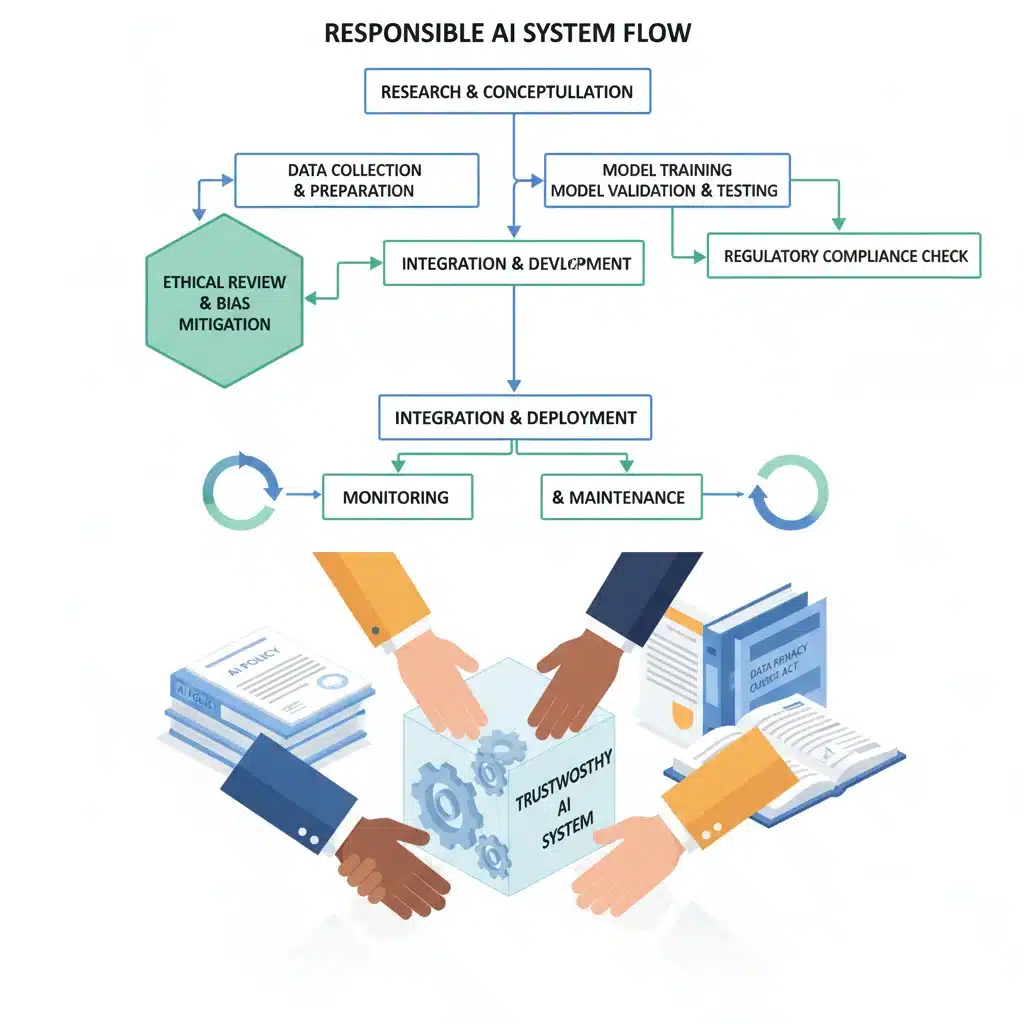
Develop an internal framework that outlines your organization’s principles, policies, and procedures for responsible AI development and deployment. This framework should:
- Define clear roles and responsibilities for AI governance.
- Establish guidelines for ethical AI design, data collection, and model development.
- Implement processes for AI risk management and impact assessments.
- Foster a culture of AI ethics and responsibility across the organization.
3. Invest in Explainable AI (XAI) and Transparency Tools
Start integrating XAI techniques into your AI development lifecycle. This includes using interpretable models where possible, developing tools to explain complex model decisions, and providing clear documentation of AI system logic and limitations. Transparency in communication with users about AI use is also vital.
4. Enhance Data Governance and Bias Mitigation Efforts
Strengthen your data governance practices, focusing on data quality, privacy, and bias detection. Implement strategies to audit training data for representational biases, and develop methods to monitor and mitigate algorithmic bias in model outputs. This may involve techniques like data augmentation, re-weighting, or post-processing.
5. Prioritize Security and Robustness
Integrate AI-specific cybersecurity measures into your existing security protocols. This includes protecting against adversarial attacks, ensuring data integrity, and implementing robust testing and validation processes for AI models before and during deployment.
6. Upskill Your Workforce and Foster Collaboration
Educate your employees, especially those involved in AI development, deployment, and legal/compliance, about the upcoming regulatory changes and best practices in responsible AI. Foster collaboration between technical teams, legal departments, ethics committees, and business units to ensure a holistic approach to AI governance.
7. Engage with Industry Associations and Regulatory Bodies
Stay informed about evolving regulatory landscapes by actively participating in industry forums, engaging with regulatory bodies, and contributing to policy discussions. This can provide valuable insights and an opportunity to influence the development of future AI governance shifts.

The Long-Term Vision: Beyond Compliance
While compliance with the impending AI governance shifts is a primary concern, businesses should view these regulations not as a burden, but as an opportunity. A proactive and ethical approach to AI governance can yield significant long-term benefits:
Building Trust and Reputation
Operating within a well-defined ethical and regulatory framework builds trust with customers, partners, and the public. Transparency and fairness in AI use can enhance your brand reputation and differentiate you in the market.
Mitigating Risks and Avoiding Penalties
Compliance helps mitigate legal, reputational, and financial risks associated with non-compliance, including hefty fines and legal challenges. Proactive risk management reduces the likelihood of AI failures or unintended harmful outcomes.
Fostering Responsible Innovation
By embedding ethical considerations and governance principles into the AI development lifecycle, businesses can foster more responsible and sustainable innovation. This leads to the creation of AI systems that are not only powerful but also beneficial and trustworthy.
Gaining a Competitive Edge
Organizations that are early adopters of robust AI governance practices will be better positioned to adapt to future regulatory changes, attract top talent, and build more resilient and trustworthy AI products and services, thereby gaining a significant competitive edge.
Conclusion: Preparing for the Future of AI with Confidence
The projected AI governance shifts of early 2026 mark a new chapter in the evolution of artificial intelligence. Businesses that recognize the urgency and complexity of these changes, and proactively implement robust AI governance frameworks, will be best prepared to thrive in this new regulatory environment. This is not a time for complacency but for strategic action.
By understanding the global regulatory landscape, anticipating key compliance requirements, and adopting a proactive approach to ethical AI development, your organization can transform potential challenges into opportunities. Embrace these AI governance shifts as a catalyst for building more responsible, transparent, and trustworthy AI systems that drive innovation and create lasting value for your business and society.
Start your preparation today. Assess your current AI footprint, establish your governance framework, and invest in the tools and talent needed to ensure your AI initiatives are not just cutting-edge, but also compliant and ethically sound. The future of AI is regulated, and those who lead in governance will lead in innovation.