The Federal Reserve’s Interest Rate Outlook for 2026: What 3 Potential Scenarios Mean for the U.S. Economy
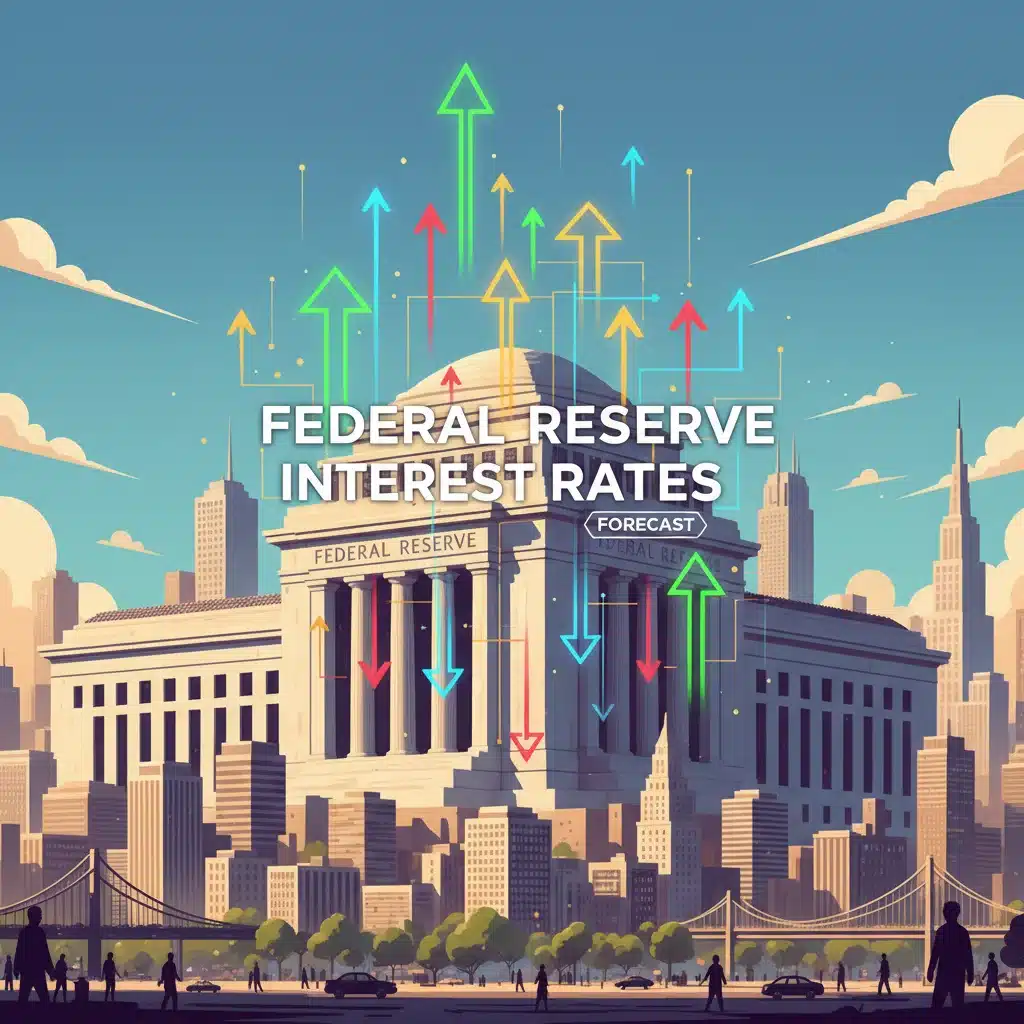
The Federal Reserve, often referred to simply as the Fed, stands as the central bank of the United States, wielding immense power over the nation’s economic trajectory. Its decisions on interest rates resonate far beyond the walls of the Eccles Building, influencing everything from mortgage rates and business investments to inflation and employment levels. As we look ahead to 2026, the question of the Fed rate 2026 becomes increasingly pertinent for policymakers, investors, businesses, and everyday citizens alike. The economic landscape is a dynamic and complex tapestry, woven with threads of global events, domestic policy, technological advancements, and consumer behavior. Predicting the future, especially in economics, is fraught with uncertainty, yet understanding potential pathways allows for better preparedness and strategic planning.
The Fed’s primary mandate revolves around achieving maximum employment and stable prices, often referred to as its ‘dual mandate.’ To fulfill this, it employs various monetary policy tools, with the federal funds rate being the most prominent. Changes to this benchmark rate ripple through the financial system, affecting borrowing costs across the economy. A higher federal funds rate generally translates to higher interest rates for consumers and businesses, which can cool down an overheating economy by discouraging borrowing and spending. Conversely, a lower rate aims to stimulate economic activity by making borrowing cheaper and encouraging investment and consumption.
Forecasting the Fed rate 2026 requires a deep dive into numerous economic indicators and a nuanced understanding of the Fed’s reaction function. Key factors that will undoubtedly shape the Fed’s decisions include inflation trends, labor market health, global economic conditions, and fiscal policy. Inflation, in particular, has been a significant concern in recent years, prompting aggressive rate hikes. Will inflationary pressures subside sufficiently by 2026 to allow for a more accommodative stance, or will they prove persistent, necessitating a continuation of restrictive policies? The labor market’s resilience, characterized by low unemployment rates and wage growth, also plays a critical role. A strong labor market might give the Fed more leeway to keep rates higher to combat inflation, while a weakening one could prompt a pivot towards rate cuts to support employment.
In this comprehensive analysis, we will explore three distinct, yet plausible, scenarios for the Federal Reserve’s interest rate outlook in 2026. Each scenario is built upon a unique set of economic assumptions and projects a different path for the federal funds rate, outlining the potential implications for various sectors of the U.S. economy. By examining these divergent possibilities, we aim to provide a clearer picture of the challenges and opportunities that may lie ahead. Understanding these potential futures is not about definitive predictions but about grasping the range of outcomes and their far-reaching effects on financial markets, business strategies, and individual financial well-being. Let’s delve into the intricate world of monetary policy and what the Fed rate 2026 might entail under different economic realities.
Scenario 1: The ‘Soft Landing’ – Gradual Normalization of the Fed Rate 2026
The ‘soft landing’ scenario is arguably the most desired outcome for central bankers and the general public. In this optimistic view, the Federal Reserve successfully navigates the delicate balance between taming inflation and avoiding a severe economic downturn. By 2026, under this scenario, inflation will have steadily receded towards the Fed’s long-term target of 2%, without significant damage to the labor market. This implies that the restrictive monetary policies implemented in prior years will have worked as intended, gradually cooling demand and supply imbalances.
Economic Conditions: Under a soft landing, we would anticipate a U.S. economy characterized by modest but positive GDP growth, perhaps in the range of 1.5% to 2.5%. The labor market would remain robust, though perhaps with a slight uptick in the unemployment rate from historically low levels, settling in the 4% to 4.5% range. Wage growth would moderate but still outpace inflation, leading to real wage gains for workers. Supply chains would be largely normalized, and geopolitical tensions, while still present, would not escalate to the point of causing major economic disruptions. Consumer spending would remain resilient, supported by healthy balance sheets and stable employment, albeit with a shift towards services rather than goods.
Fed Rate Trajectory: In this scenario, the Fed would likely have concluded its tightening cycle by late 2024 or early 2025, and by 2026, it would be in a phase of gradual rate normalization. This doesn’t necessarily mean aggressive rate cuts, but rather a measured approach to bringing the federal funds rate down from its peak to a more neutral stance. A ‘neutral rate’ is the theoretical interest rate that neither stimulates nor constrains economic growth. By 2026, the Fed rate 2026 might hover in the range of 3.0% to 3.75%. This would involve a few cautious rate cuts throughout 2025 and into 2026, signaling confidence in inflation control and stable economic growth. The Fed’s communication would emphasize data dependency, ensuring markets are prepared for each move.
Implications for the U.S. Economy:
- Financial Markets: Equity markets would likely experience renewed confidence, driven by stable earnings growth and a predictable interest rate environment. Bond yields would stabilize, offering reasonable returns without excessive volatility. The U.S. dollar might see some depreciation as interest rate differentials with other major economies narrow, making U.S. assets slightly less attractive in relative terms but benefiting exports.
- Businesses: Companies would benefit from more predictable borrowing costs, encouraging investment in expansion, research, and development. Small and medium-sized businesses, particularly sensitive to interest rate fluctuations, would find it easier to access credit. Corporate profitability would be supported by stable demand and easing input costs.
- Consumers: Mortgage rates, while not returning to pre-pandemic lows, would become more affordable, stimulating the housing market. Auto loans and other forms of consumer credit would also see rates decline, easing financial burdens for households. Real wage growth would boost purchasing power, contributing to sustained consumer spending.
- Government: The cost of servicing the national debt would stabilize or even slightly decrease, offering some fiscal relief. Policymakers would have more room to focus on long-term structural issues rather than immediate crisis management.
The soft landing scenario presents an ideal outcome where the economy successfully navigates inflationary pressures without succumbing to a recession. It requires adept monetary policy, favorable external conditions, and a degree of luck, making it a challenging but not impossible feat for the Federal Reserve to achieve by 2026.
Scenario 2: The ‘Hard Landing’ – Recession and Aggressive Rate Cuts for the Fed Rate 2026
In contrast to the soft landing, the ‘hard landing’ scenario envisions a more challenging path for the U.S. economy. This outcome materializes if the Federal Reserve’s efforts to combat inflation prove too aggressive, or if unforeseen economic shocks derail growth. By 2026, under this scenario, the U.S. economy would have experienced, or still be in the midst of, a significant recession, characterized by a substantial contraction in economic activity and a notable rise in unemployment.
Economic Conditions: A hard landing would be marked by negative GDP growth, potentially for several consecutive quarters. The unemployment rate would surge, possibly reaching 6% or higher, as businesses face reduced demand and cut back on hiring. Corporate bankruptcies would likely increase, and consumer confidence would plummet, leading to a sharp decline in discretionary spending. Inflation, while eventually falling, might do so rapidly due potentially to demand destruction rather than supply-side improvements. Global economic weakness or a significant geopolitical event could exacerbate these domestic challenges, creating a feedback loop of declining growth and increased uncertainty.
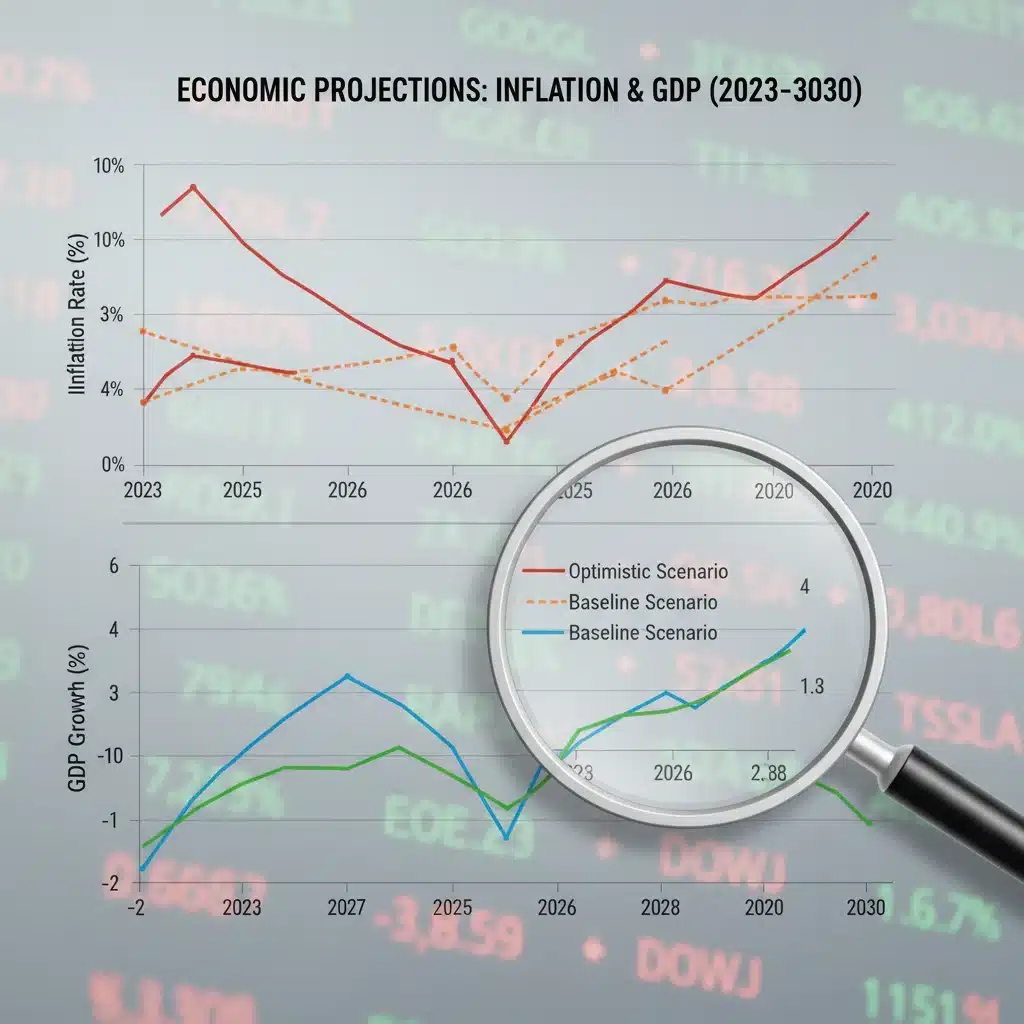
Fed Rate Trajectory: Faced with a recession and rapidly rising unemployment, the Federal Reserve’s priority would shift dramatically from combating inflation to stimulating economic growth and supporting the labor market. This would necessitate a series of aggressive and rapid rate cuts. By 2026, the Fed rate 2026 could be significantly lower than its peak, potentially falling to a range of 1.0% to 2.0% or even lower, approaching the effective lower bound. The Fed might also consider re-implementing quantitative easing (QE) programs, expanding its balance sheet to provide additional liquidity and support to financial markets. Communication would focus on reassuring markets and the public about the Fed’s commitment to restoring full employment and economic stability.
Implications for the U.S. Economy:
- Financial Markets: Equity markets would likely experience significant downturns, with volatility remaining high. Investors would flock to safe-haven assets like U.S. Treasury bonds, driving yields down. The U.S. dollar’s value might fluctuate, initially strengthening as a safe haven during the crisis, but potentially weakening later due to aggressive rate cuts and concerns about the economic outlook.
- Businesses: Companies would face severe headwinds, including reduced consumer demand, tighter credit conditions despite lower rates (due to increased lender caution), and pressure on profit margins. Investment plans would be shelved, and cost-cutting measures, including layoffs, would become prevalent. Startups and highly leveraged businesses would be particularly vulnerable.
- Consumers: Households would grapple with job losses, reduced income, and declining asset values (e.g., in housing and stock portfolios). Consumer confidence would be low, leading to increased savings and reduced spending. Access to credit might become more challenging for some, despite lower interest rates, due to stricter lending standards.
- Government: A recession would lead to a significant increase in government spending on unemployment benefits and other social safety nets, while tax revenues would decline. This would exacerbate budget deficits and increase the national debt. There would be immense pressure for fiscal stimulus measures to complement the Fed’s monetary policy.
The hard landing scenario represents a challenging period for the U.S. economy, requiring a swift and decisive response from both monetary and fiscal authorities. While undesirable, it is a potential outcome that policymakers must prepare for, especially given the historical precedents of aggressive monetary tightening leading to recessions.
Scenario 3: The ‘Stagflationary Trap’ – Persistent Inflation and Slow Growth, Shaping the Fed Rate 2026
The ‘stagflationary trap’ is perhaps the most challenging scenario for the Federal Reserve, as it presents a dilemma where conventional monetary tools are less effective. This scenario is characterized by a combination of persistent high inflation and sluggish economic growth, a situation reminiscent of the 1970s. By 2026, under this framework, the Fed would be grappling with an economy that is neither growing robustly nor seeing inflation recede to its target.
Economic Conditions: In a stagflationary environment, the U.S. economy would experience low or even negative GDP growth, coupled with an elevated unemployment rate (perhaps in the 5% to 6% range). Crucially, inflation would remain stubbornly high, potentially staying above 3% or even 4%, defying the Fed’s previous efforts to bring it down. This persistence could be driven by a combination of factors: entrenched inflation expectations, ongoing supply-side constraints (e.g., energy shocks, geopolitical disruptions impacting critical resources), or a wage-price spiral where rising wages chase rising prices. Consumer confidence would be severely eroded by the dual burden of rising costs and limited job opportunities. Business investment would stagnate due to uncertainty and high input costs.
Fed Rate Trajectory: The Federal Reserve’s response in a stagflationary trap would be incredibly difficult. If it prioritizes fighting inflation, it would need to maintain high interest rates, which would further stifle economic growth and exacerbate unemployment. If it prioritizes supporting growth and employment, it would risk allowing inflation to become even more entrenched. By 2026, the Fed rate 2026 in this scenario would likely remain elevated, perhaps in the 4.0% to 5.0% range, as the Fed struggles to gain control over inflation. There might be periods of small rate adjustments, but no clear path towards either significant cuts or further aggressive hikes, reflecting the policy paralysis. The Fed’s communication would be cautious, emphasizing the complexity of the situation and the need for fiscal policy to play a more active role in addressing supply-side issues.
Implications for the U.S. Economy:
- Financial Markets: Financial markets would be highly volatile and uncertain. Equity markets would struggle with poor earnings growth and high discount rates. Bond yields would likely remain elevated due to persistent inflation expectations, potentially leading to negative real returns for bondholders. The U.S. dollar’s performance would be mixed, as its safe-haven status would contend with concerns about the U.S. economic outlook.
- Businesses: Companies would face a ‘squeeze’ from both sides: high input costs (due to inflation) and weak consumer demand (due to slow growth and eroded purchasing power). Profit margins would be under severe pressure, leading to reduced investment, hiring freezes, and potential job cuts. Businesses with strong pricing power and those in essential sectors might fare better, but overall, the environment would be very challenging.
- Consumers: Households would experience a decline in real incomes as wages fail to keep pace with inflation. The cost of living would continue to rise, eroding savings and increasing financial stress. Unemployment would be a persistent concern, and consumer confidence would remain low, leading to a retrenchment in spending and a focus on necessities.
- Government: The government would face a difficult political and economic environment. High inflation would increase the cost of government programs, while slow growth would limit tax revenues. The national debt would grow, and the cost of servicing it would remain high due to elevated interest rates. There would be intense pressure for structural reforms to address supply-side bottlenecks and improve productivity, but political consensus might be hard to achieve.
The stagflationary trap is a particularly insidious economic state, as it limits the effectiveness of traditional monetary policy and requires a broader, more coordinated response from both central banks and governments. It represents a significant risk for the 2026 outlook if current inflationary pressures prove more deeply rooted than anticipated.
Key Factors Influencing the Fed Rate 2026 Decision
Regardless of which scenario ultimately unfolds, several critical factors will consistently influence the Federal Reserve’s decisions regarding the Fed rate 2026. Understanding these determinants is crucial for anyone attempting to forecast or react to monetary policy shifts.
1. Inflation Data: This is arguably the most dominant factor. The Fed closely monitors various inflation metrics, including the Consumer Price Index (CPI) and, more importantly, the Personal Consumption Expenditures (PCE) price index, particularly the core PCE (excluding volatile food and energy prices). The pace at which these indices move towards or away from the Fed’s 2% target will heavily dictate policy. Persistent inflation above target will necessitate a tighter stance, while a clear and sustained deceleration will open the door for more accommodative policies.
2. Labor Market Conditions: The other half of the Fed’s dual mandate, the labor market, is equally vital. Key indicators include the unemployment rate, job creation numbers (non-farm payrolls), wage growth, and labor force participation. A strong labor market, characterized by low unemployment and healthy wage growth, might give the Fed more room to focus on inflation. Conversely, a weakening labor market with rising unemployment would likely prompt the Fed to pivot towards supporting employment, potentially through rate cuts.
3. Economic Growth (GDP): The overall health and growth trajectory of the U.S. economy, measured by Gross Domestic Product (GDP), provides crucial context. Robust growth allows the Fed to maintain a tighter policy to prevent overheating. Stagnant or contracting GDP would signal the need for stimulus, potentially through lower rates. The Fed aims for sustainable growth, avoiding both boom-bust cycles.
4. Global Economic Environment: The U.S. economy does not operate in a vacuum. Global growth, geopolitical stability, and the policies of other major central banks (like the European Central Bank or the Bank of Japan) can significantly impact the Fed’s decisions. For instance, a global slowdown could weigh on U.S. exports and economic activity, prompting a more dovish stance from the Fed. Similarly, currency fluctuations influenced by global events can impact import prices and, consequently, domestic inflation.
5. Fiscal Policy: The actions of the U.S. Congress and the Executive Branch regarding government spending and taxation can either complement or complicate the Fed’s monetary policy. Large fiscal stimulus packages can add to inflationary pressures, potentially forcing the Fed to maintain higher rates. Conversely, fiscal austerity measures could slow economic growth, requiring the Fed to be more accommodative. The interplay between fiscal and monetary policy is a constant consideration.
6. Financial Stability Risks: The Fed also has a mandate to maintain financial stability. It monitors asset bubbles, excessive leverage in the financial system, and the health of banks and other financial institutions. If high interest rates or other economic conditions create significant risks to financial stability, the Fed might adjust its policy to mitigate these threats, even if it means temporarily deviating from its primary mandates.
7. Inflation Expectations: While actual inflation data is critical, the Fed also pays close attention to inflation expectations among consumers, businesses, and financial markets. If people expect inflation to remain high, they are more likely to demand higher wages and prices, creating a self-fulfilling prophecy. The Fed works to anchor these expectations at its 2% target, as unanchored expectations can make inflation much harder to control.
These factors are interconnected and constantly evolving. The Federal Reserve’s decision-making process is a continuous assessment of these variables, often involving complex modeling and robust debate among its members. The ultimate Fed rate 2026 will be a reflection of how these forces play out over the coming years.

Preparing for the Future: Navigating the Fed Rate 2026 Scenarios
Understanding the potential scenarios for the Fed rate 2026 is not merely an academic exercise; it’s a crucial step for proactive planning across all sectors of the economy. While no one can predict the future with absolute certainty, preparing for a range of outcomes can significantly mitigate risks and capitalize on emerging opportunities. Here’s how different stakeholders might navigate these potential futures:
For Businesses:
- Scenario 1 (Soft Landing): Businesses can plan for stable, moderate growth. Focus on strategic investments in capacity expansion, technology upgrades, and talent development. Optimize capital structure to take advantage of normalizing borrowing costs. Maintain efficient inventory management and responsive supply chains to meet steady demand.
- Scenario 2 (Hard Landing): Prepare for a downturn by shoring up balance sheets, conserving cash, and reducing unnecessary expenditures. Review debt obligations and consider refinancing at lower rates if possible. Diversify revenue streams and client bases. Develop contingency plans for staffing adjustments and be ready to innovate to meet changing consumer preferences in a tighter economic environment. Agility and cost control will be paramount.
- Scenario 3 (Stagflationary Trap): This scenario demands a focus on efficiency, pricing power, and cost control. Explore hedging strategies for input costs. Invest in automation and productivity enhancements to offset rising labor costs. Carefully manage inventory to avoid holding costly stock. Businesses with strong pricing power and those in essential sectors may be better positioned to pass on costs to consumers. Review pricing strategies frequently and focus on value proposition.
For Investors:
- Scenario 1 (Soft Landing): A balanced portfolio with exposure to growth stocks, value stocks, and high-quality bonds may perform well. Consider sectors that benefit from stable consumer spending and business investment. International diversification could also be beneficial as global growth stabilizes.
- Scenario 2 (Hard Landing): Shift towards defensive assets such as high-quality government bonds, dividend-paying stocks in resilient sectors (e.g., utilities, consumer staples), and potentially gold. Maintain higher cash reserves to capitalize on market downturns. Be prepared for increased volatility and potential drawdowns in equity markets.
- Scenario 3 (Stagflationary Trap): This is a challenging environment for traditional portfolios. Focus on real assets like real estate (with careful selection), commodities (especially those tied to supply constraints), and inflation-protected securities (TIPS). Value stocks and companies with strong pricing power might outperform growth stocks. Avoid long-duration bonds as they are vulnerable to persistent inflation.
For Consumers and Households:
- Scenario 1 (Soft Landing): Take advantage of stabilizing interest rates for major purchases like homes or cars. Continue to save and invest for long-term goals, benefiting from a more predictable market. Focus on career development to capitalize on a healthy job market.
- Scenario 2 (Hard Landing): Prioritize building an emergency fund (6-12 months of living expenses). Reduce discretionary spending and pay down high-interest debt. Be cautious with large purchases and potentially delay them. Focus on job security and skill development.
- Scenario 3 (Stagflationary Trap): Focus on budgeting and managing rising costs. Look for ways to reduce energy consumption and other essential expenses. Protect savings from inflation through investments in inflation-hedged assets. Prioritize paying off variable-rate debt as interest costs could remain high. Maintain diversified income streams if possible.
For Policymakers and the Federal Reserve:
- All Scenarios: Maintain clear and consistent communication with the public and markets. Remain data-dependent and flexible in policy responses. In a hard landing, be prepared for coordinated fiscal and monetary stimulus. In stagflation, consider structural reforms to enhance productivity and address supply-side issues, alongside carefully calibrated monetary policy. The Fed’s credibility will be paramount in all scenarios.
The path of the Fed rate 2026 is not set in stone. It will be the result of a complex interplay of economic forces and policy decisions. By understanding these potential scenarios and their implications, individuals and organizations can better prepare for the future, adapting their strategies to navigate the evolving economic landscape with greater resilience and foresight.
Conclusion: The Evolving Economic Landscape and the Fed Rate 2026
The journey towards 2026 is fraught with economic uncertainties, making the Federal Reserve’s interest rate outlook a topic of intense speculation and critical importance. We have explored three distinct, yet plausible, scenarios: the ‘soft landing,’ characterized by gradual normalization and stable growth; the ‘hard landing,’ involving a recession and aggressive rate cuts; and the ‘stagflationary trap,’ a challenging combination of persistent inflation and slow growth. Each scenario paints a unique picture of the U.S. economy and demands a different strategic response from all stakeholders.
The Federal Reserve’s role as the guardian of price stability and maximum employment is pivotal. Its decisions on the federal funds rate, influenced by a myriad of factors including inflation data, labor market conditions, economic growth, global events, and fiscal policy, will ultimately shape the economic environment of 2026. The institution’s ability to navigate these complex waters with agility, clear communication, and data-driven decisions will be crucial for maintaining confidence and fostering economic well-being.
For businesses, investors, and consumers, the key takeaway is the imperative of preparedness and adaptability. Relying on a single forecast can be perilous. Instead, a robust strategy involves understanding the potential range of outcomes, assessing personal and organizational vulnerabilities to each, and developing contingency plans. Diversification, liquidity management, and a focus on long-term resilience will serve as valuable safeguards against unforeseen economic shifts.
The period leading up to and including 2026 will undoubtedly be a test of economic resilience and policy acumen. While the Fed aims for the most favorable outcome, external shocks and internal dynamics can quickly alter the trajectory. By staying informed, remaining flexible, and planning for various possibilities, individuals and entities can better position themselves to thrive, regardless of which path the Fed rate 2026 ultimately takes. The future of the U.S. economy hinges not just on the Fed’s actions, but on how effectively all participants anticipate and respond to the evolving economic landscape.