
Critical Infrastructure Alert: New Federal Funding for Bridge Repairs Announced for 2026, Targeting 500+ Projects Nationwide
The backbone of any thriving nation lies in its infrastructure, and for the United States, bridges are undisputed critical arteries connecting communities, facilitating commerce, and ensuring the smooth flow of daily life. For decades, concerns have mounted over the deteriorating condition of America’s bridges, with many structures reaching or exceeding their intended lifespan. The good news, however, has finally arrived. A monumental announcement has shaken the infrastructure landscape, revealing a substantial influx of federal bridge funding earmarked for 2026. This unprecedented investment is set to revitalize over 500 critical bridge projects nationwide, promising a safer, more efficient, and more resilient transportation network for generations to come.
This initiative represents a significant step forward in addressing a long-standing national challenge. The allocation of this considerable federal bridge funding underscores a renewed commitment from the federal government to prioritize infrastructure development, recognizing its pivotal role in economic growth, public safety, and national security. The sheer scale of the undertaking—targeting more than 500 projects—speaks volumes about the urgency and comprehensive nature of this repair program. From rural bypasses to major metropolitan connectors, bridges of all sizes and functions are slated for much-needed attention, ensuring that no community is left behind.
The Imperative for Investment: Why Federal Bridge Funding is Crucial
The state of America’s bridges has been a topic of intense discussion and concern for years. Reports from organizations like the American Society of Civil Engineers (ASCE) have consistently graded the nation’s infrastructure, including bridges, poorly, highlighting a significant backlog of repairs and maintenance. Thousands of bridges are classified as structurally deficient or functionally obsolete, posing potential risks to public safety and creating bottlenecks that hinder economic activity. The consequences of neglecting these vital structures are far-reaching, encompassing increased travel times, higher vehicle maintenance costs, and, most critically, the potential for catastrophic failures.
Aging Infrastructure: A National Challenge
Many of the bridges currently in use were constructed during the mid-20th century, designed for different traffic volumes and weights than those they endure today. The materials and engineering standards of that era, while state-of-the-art at the time, are now showing their age. Continuous exposure to weather elements, heavy traffic loads, and the inevitable wear and tear have taken their toll. Without consistent and adequate investment in maintenance and repair, these structures inevitably degrade, leading to costly emergency fixes and, in the worst cases, closures or collapses.
Economic and Safety Implications
Beyond the immediate safety concerns, dilapidated bridges have profound economic implications. They disrupt supply chains, increase transportation costs for businesses, and make commuting more challenging for individuals. The inability to move goods and people efficiently can stifle regional economic development and competitiveness. Furthermore, the risk of accidents on structurally compromised bridges is a constant worry, affecting public confidence and creating a tangible threat to human lives. The new federal bridge funding directly confronts these challenges, aiming to mitigate risks and unlock economic potential.
Unpacking the 2026 Federal Bridge Funding Allocation
The newly announced federal bridge funding package is a multi-faceted initiative, designed to address a wide array of bridge-related issues. While specific state-by-state breakdowns are still emerging, the overarching goals and mechanisms of the funding have been made clear. The program emphasizes not just repair, but also resilience, innovation, and equity in its distribution.
Targeted Projects and Criteria
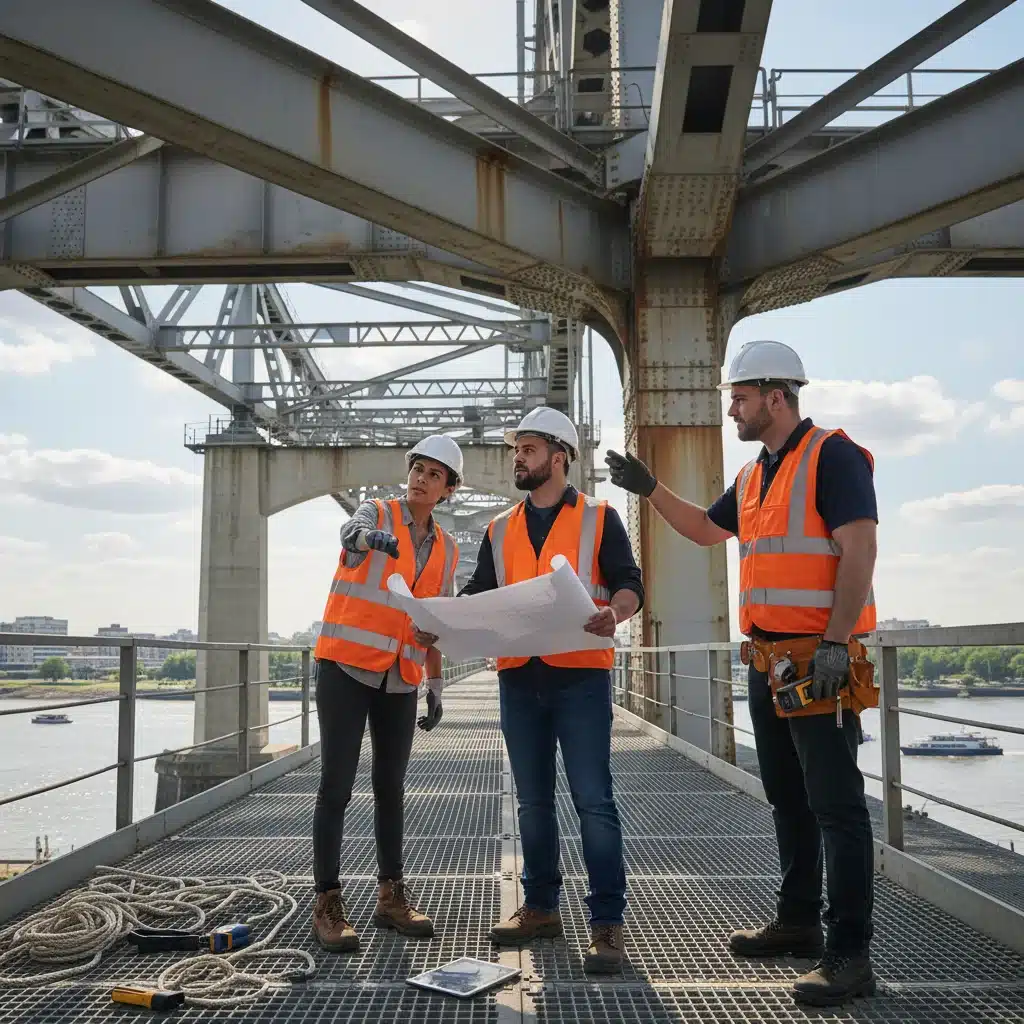
The 500+ projects slated for funding include a mix of critical repairs, full replacements, and significant rehabilitation efforts. Priority will be given to bridges that are:
- Structurally Deficient: Bridges identified as having significant defects in their primary structural components.
- Functionally Obsolete: Bridges that no longer meet current design standards due to factors like narrow lanes, inadequate clearances, or poor alignment.
- Economically Critical: Bridges that serve as vital links for commerce, agriculture, or essential services.
- Vulnerable to Climate Change: Projects that incorporate resilience measures against extreme weather events, such as flooding or seismic activity.
The application and selection process for these funds have been rigorous, involving detailed assessments by state and local transportation agencies, in conjunction with federal oversight. The aim is to ensure that the federal bridge funding is directed to where it will have the most significant impact, both in terms of safety and economic benefit.
Funding Mechanisms and Distribution
The funding will be distributed through a combination of existing federal programs and new, dedicated grant opportunities. This hybrid approach allows for flexibility while ensuring accountability. States will play a crucial role in identifying and prioritizing local projects, with federal agencies providing technical assistance and oversight. A significant portion of the funds is expected to be allocated to states based on formulas that consider factors such as bridge conditions, traffic volume, and population density. Additionally, competitive grants will be available for innovative projects or those addressing particularly complex engineering challenges.
The Impact: A Vision for a Stronger America
The infusion of federal bridge funding for 2026 is expected to yield a wide range of positive impacts, extending far beyond the physical repair of structures. This investment is a catalyst for economic growth, job creation, and enhanced quality of life for millions of Americans.
Economic Stimulus and Job Creation
Infrastructure projects are powerful engines of economic growth. The 500+ bridge projects will create thousands of direct and indirect jobs in construction, engineering, manufacturing, and related sectors. These jobs will not only provide employment but also stimulate local economies through increased spending on materials, equipment, and services. The multiplier effect of these investments means that every dollar spent on bridge repair can generate several dollars in broader economic activity. This makes the federal bridge funding a strategic economic policy as much as an infrastructure initiative.
Enhanced Safety and Efficiency
The primary benefit of repairing and modernizing bridges is, of course, improved safety. By addressing structural deficiencies and functional obsolescence, the risk of accidents and failures will be significantly reduced. Furthermore, updated bridges will feature improved design elements, such as wider lanes, better signage, and enhanced pedestrian/cyclist accommodations, leading to a smoother and safer travel experience for all users. Increased efficiency in transportation will reduce travel times, lower fuel consumption, and decrease wear and tear on vehicles, translating into tangible savings for commuters and businesses.
Long-Term Resilience and Sustainability
A key aspect of the new federal bridge funding is its emphasis on resilience and sustainability. Projects are encouraged to incorporate materials and designs that can withstand the impacts of climate change, such as more frequent and intense storms, flooding, and temperature extremes. This forward-looking approach ensures that the repaired bridges are not just safe for today but are also robust enough to serve communities effectively for decades to come, reducing the need for future costly repairs and replacements due to environmental factors.
Challenges and Opportunities Ahead
While the announcement of significant federal bridge funding is cause for optimism, the path forward is not without its challenges. However, these challenges also present unique opportunities for innovation and collaboration.
Overcoming Supply Chain and Workforce Issues
The scale of the planned repairs means that there will be a substantial demand for construction materials, equipment, and skilled labor. Potential challenges include ensuring a stable supply chain for steel, concrete, and other essential components, as well as addressing any potential workforce shortages. This presents an opportunity to invest in vocational training programs, apprenticeships, and recruitment initiatives to develop a new generation of infrastructure workers. The federal bridge funding can indirectly support these efforts by creating a consistent demand for these skills.
Innovation in Bridge Design and Construction
The need to repair and replace hundreds of bridges offers a fertile ground for innovation. New technologies in materials science, construction techniques, and project management can lead to more efficient, durable, and cost-effective solutions. For instance, accelerated bridge construction (ABC) methods can significantly reduce disruption to traffic and local communities. The federal bridge funding can incentivize the adoption of these innovative approaches, pushing the industry forward and setting new standards for infrastructure development.
Interagency and Public-Private Partnerships
Successful implementation of such a large-scale program requires seamless coordination among various federal, state, and local agencies. Furthermore, engaging the private sector through public-private partnerships (PPPs) can bring additional expertise, capital, and efficiency to project delivery. These partnerships can accelerate project timelines and ensure that the funding is leveraged to its maximum potential. The collaboration facilitated by this federal bridge funding can serve as a model for future infrastructure endeavors.
Regional Spotlight: How States Will Benefit from Federal Bridge Funding
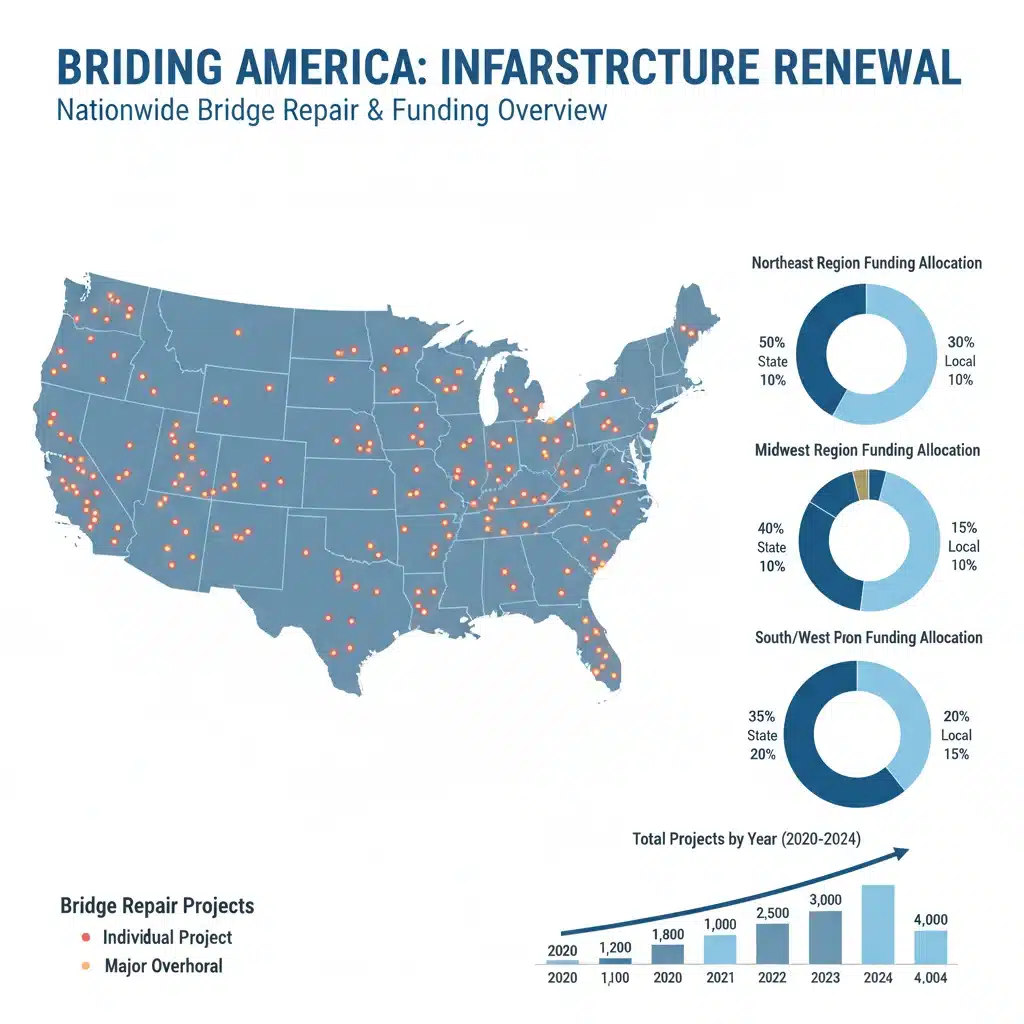
The impact of this federal bridge funding will be felt differently across the nation, with each state having its unique set of infrastructure challenges and priorities. While a comprehensive list of all 500+ projects is extensive, it’s possible to highlight how various regions might benefit.
Northeast: Addressing Historical Infrastructure
States in the Northeast, with some of the oldest infrastructure in the country, are expected to receive significant allocations. Many of their bridges date back to the early 20th century, requiring extensive rehabilitation or complete replacement. This funding will be crucial for maintaining vital transportation corridors in densely populated urban centers and supporting regional economies dependent on robust freight movement.
Midwest: Supporting Agricultural and Industrial Routes
The Midwest’s economy relies heavily on agriculture and manufacturing, necessitating reliable transportation for raw materials and finished goods. Bridges over major rivers and connecting industrial hubs are critical. The federal bridge funding will address the wear and tear from heavy truck traffic and extreme weather, ensuring that agricultural products can reach markets efficiently and manufacturing supply chains remain uninterrupted.
South: Managing Growth and Climate Resilience
The Southern states are experiencing rapid population growth, putting increased strain on existing infrastructure. Moreover, many areas in the South are particularly vulnerable to hurricanes and flooding. The funding will support not only the expansion and modernization of bridges to accommodate growth but also the implementation of resilient designs that can withstand increasingly severe climate events, protecting communities and vital evacuation routes.
West: Connecting Vast Landscapes and Urban Centers
In the West, bridges often span vast geographical features, connecting remote communities with major urban centers. Seismic activity is also a significant concern in many western states. The federal bridge funding will enable projects that enhance earthquake resilience, improve access to national parks and recreational areas, and ensure reliable transportation across diverse and challenging terrains.
The Role of Technology in Modern Bridge Repair
The effective deployment of federal bridge funding for 2026 will be significantly amplified by the integration of modern technology. From initial assessment to construction and ongoing monitoring, technological advancements are revolutionizing how bridge repairs are conceived and executed.
Advanced Inspection Techniques
Gone are the days of solely manual inspections. Drones equipped with high-resolution cameras and thermal imaging capabilities can now quickly and safely assess hard-to-reach areas of bridges, identifying cracks, corrosion, and other structural issues with unprecedented accuracy. Sensors embedded in bridge materials can provide real-time data on stress, strain, and environmental factors, allowing engineers to monitor structural health continuously. This proactive approach, supported by federal bridge funding, enables targeted repairs before minor issues escalate into major problems, saving time and resources.
Building Information Modeling (BIM) and Digital Twins
Building Information Modeling (BIM) allows for the creation of detailed 3D models of bridge projects, integrating all aspects of design, construction, and maintenance. This collaborative approach improves communication, reduces errors, and optimizes resource allocation. Furthermore, the concept of ‘digital twins’—virtual replicas of physical bridges—is gaining traction. These digital models, continuously updated with real-time sensor data, can be used to simulate stress tests, predict maintenance needs, and plan interventions with greater precision. The application of these technologies, facilitated by the new federal bridge funding, ensures that repairs are not just effective but also intelligent and data-driven.
Sustainable Materials and Construction Methods
Technological advancements in materials science are leading to the development of more durable, self-healing, and environmentally friendly construction materials. High-performance concretes, advanced steel alloys, and composite materials offer extended lifespans and reduced maintenance requirements. Coupled with innovative construction methods like modular construction, which involves prefabricating bridge sections off-site, these technologies can significantly reduce construction times and minimize disruption to traffic and local communities. The emphasis on sustainability within the federal bridge funding initiative encourages the adoption of these cutting-edge materials and methods.
Community Engagement and Public Awareness
While the technical aspects of bridge repair are paramount, the success of such a large-scale initiative also hinges on effective community engagement and public awareness. Residents, businesses, and local leaders are directly impacted by bridge projects, and their understanding and support are vital.
Transparent Communication
Open and transparent communication from federal, state, and local agencies is crucial. This includes clearly articulating the necessity of the repairs, the scope of the projects, expected timelines, and potential disruptions. Public meetings, dedicated websites, and regular updates through various media channels can help keep the public informed and address concerns proactively. This transparency builds trust and fosters a sense of shared responsibility for the success of the federal bridge funding program.
Minimizing Disruption
Bridge repairs often necessitate temporary road closures, detours, and traffic delays, which can be frustrating for daily commuters and businesses. Agencies are tasked with implementing strategies to minimize these disruptions, such as scheduling work during off-peak hours, utilizing accelerated construction techniques, and providing clear signage for alternative routes. Effective planning and communication about these mitigation efforts are essential to maintain public support for the projects funded by the federal bridge funding.
Celebrating Progress and Impact
As projects are completed, it’s important to highlight their success and the positive impact they have on communities. Showcasing before-and-after comparisons, sharing stories of how improved bridges benefit local residents and businesses, and celebrating milestones can reinforce the value of the investment. This not only builds public confidence but also generates political will for continued investment in infrastructure, ensuring that the momentum generated by the 2026 federal bridge funding continues into the future.
Conclusion: A New Era for America’s Bridges with Federal Bridge Funding
The announcement of substantial federal bridge funding for 2026, targeting over 500 projects nationwide, marks a pivotal moment in America’s commitment to its infrastructure. This investment represents more than just concrete and steel; it’s an investment in safety, economic vitality, and the long-term resilience of the nation. By addressing years of deferred maintenance and embracing modern engineering and technology, the United States is poised to build a stronger, more efficient, and safer transportation network.
The challenges involved in executing such a massive undertaking are significant, but the opportunities for innovation, job creation, and sustainable development are even greater. As these projects move from planning to execution, the collaborative efforts of federal, state, and local governments, along with the private sector and engaged communities, will be essential. This comprehensive approach ensures that the federal bridge funding will not only mend our aging bridges but also lay the groundwork for a more robust and interconnected future for all Americans. The year 2026 is set to be a landmark year for American infrastructure, ushering in a new era of reliability and progress on our nation’s vital bridge network.