Federal Pell Grants 2026: Maximize Your College Funding Up to $7,395

Embarking on a higher education journey is a significant step towards a brighter future, but the rising costs of tuition, fees, and living expenses can often feel overwhelming. Fortunately, federal financial aid programs, particularly the Federal Pell Grants 2026, stand as a cornerstone of support for millions of students. Understanding how these grants work, who is eligible, and how to maximize your award is crucial for making your educational dreams a reality.
The Pell Grant program, established in 1972, is the largest federal grant program offering need-based aid to undergraduate students to promote access to postsecondary education. Unlike loans, Pell Grants do not need to be repaid, making them an incredibly valuable resource. For the 2026 academic year, eligible students could receive up to an impressive $7,395, a sum that can significantly alleviate the financial burden of college.
This comprehensive guide will delve into everything you need to know about Pell Grants 2026, from the application process to eligibility requirements, disbursement, and strategies to ensure you receive the maximum possible aid. Whether you’re a prospective student, a current college attendee, or a parent supporting a student, this information is designed to empower you with the knowledge to navigate the financial aid landscape effectively.
Understanding Federal Pell Grants 2026: A Foundation for Your Future
The Federal Pell Grant program is designed to provide financial assistance to undergraduate students with exceptional financial need who have not yet earned a bachelor’s or professional degree. The amount of a student’s Pell Grant depends on several factors, including their Expected Family Contribution (EFC) or Student Aid Index (SAI) as it will be known starting in the 2024-2025 aid year, the cost of attendance (COA) at their chosen institution, their status as a full-time or part-time student, and their plans to attend school for a full academic year or less.
Key Features of Pell Grants:
- Need-Based: Eligibility is primarily determined by financial need, not academic merit.
- Non-Repayable: These are grants, not loans, meaning you do not have to pay them back.
- Foundation of Aid: Pell Grants often serve as the foundation of a student’s financial aid package, supplemented by other federal or institutional aid.
- Maximum Award: For the 2026-2027 academic year, the maximum award is projected to be up to $7,395, though this figure can be adjusted annually by Congress.
It’s vital to stay informed about any changes to the Pell Grant program, as federal policies and funding levels can impact the maximum award and eligibility criteria. The goal of Pell Grants 2026 remains consistent: to make higher education accessible to those who need it most.
Who is Eligible for Pell Grants 2026? Unpacking the Requirements
While the Pell Grant is a need-based program, specific criteria must be met to qualify. Understanding these requirements early can help you prepare your application and increase your chances of receiving aid.
General Eligibility Criteria:
- Financial Need: This is the primary determinant. Your financial need is assessed through the Free Application for Federal Student Aid (FAFSA). The Department of Education uses a formula to calculate your Student Aid Index (SAI), which replaced the Expected Family Contribution (EFC) starting with the 2024-2025 aid year. A lower SAI indicates a higher financial need.
- Undergraduate Student: You must be an undergraduate student enrolled in an eligible program at an eligible institution. Typically, you cannot have already earned a bachelor’s degree or a professional degree. In some limited circumstances, a student enrolled in a post-baccalaureate teacher certification program may be eligible.
- U.S. Citizen or Eligible Non-Citizen: You must be a U.S. citizen or an eligible non-citizen with a valid Social Security number.
- High School Diploma or GED: You must have a high school diploma or a recognized equivalent, such as a General Educational Development (GED) certificate.
- Satisfactory Academic Progress (SAP): You must maintain satisfactory academic progress as defined by your college or university. This usually means maintaining a certain GPA and completing a certain percentage of your attempted coursework.
- No Default on Federal Student Loans: You cannot be in default on any federal student loans or owe a refund on a federal student grant.
- Selective Service Registration: Males between the ages of 18 and 25 must be registered with the Selective Service System.
The rules for Pell Grants 2026 are designed to ensure that funds are directed to students who genuinely require financial assistance to pursue their education. It’s crucial to review these requirements carefully and address any potential issues before applying.
The FAFSA: Your Gateway to Pell Grants 2026
The Free Application for Federal Student Aid (FAFSA) is the single most important document for accessing federal financial aid, including Pell Grants 2026. Completing the FAFSA accurately and on time is paramount.
Steps to Completing the FAFSA:
- Obtain an FSA ID: Both the student and one parent (if the student is dependent) will need an FSA ID. This is a username and password used to log in to federal student aid websites and sign the FAFSA electronically.
- Gather Required Documents: Before starting the FAFSA, collect necessary documents, including:
- Social Security numbers (for student and parents, if applicable)
- Driver’s license number (if you have one)
- Alien Registration number (if you are an eligible non-citizen)
- Federal tax returns, W-2s, and other records of money earned (for student and parents, if applicable)
- Bank statements and records of investments (for student and parents, if applicable)
- Records of untaxed income (for student and parents, if applicable)
- Complete the FAFSA Online: The easiest and fastest way to complete the FAFSA is online at studentaid.gov. The application typically opens on October 1st for the upcoming academic year. For Pell Grants 2026 (covering the 2026-2027 academic year), the FAFSA will open on October 1, 2025.
- Use the IRS Data Retrieval Tool (DRT): If eligible, use the IRS DRT to automatically transfer your federal tax information into your FAFSA. This saves time and reduces errors.
- List Your Schools: Include all colleges and universities you are considering. The Department of Education will send your FAFSA information to these institutions.
- Sign and Submit: Electronically sign your FAFSA using your FSA ID and submit it.
- Review Your Student Aid Report (SAR): After your FAFSA is processed, you will receive a Student Aid Report (SAR). Review it carefully for any errors and make corrections if necessary. The SAR will include your Student Aid Index (SAI).

Pro Tip: Submit your FAFSA as early as possible! While federal aid like Pell Grants has a federal deadline, many states and individual colleges have their own financial aid deadlines, which are often much earlier. Missing these deadlines could mean missing out on valuable aid.
Calculating Your Pell Grant Award for 2026
The actual amount of your Pell Grants 2026 award is determined by several factors, and it’s not a fixed amount for everyone. The maximum award for the 2026-2027 academic year is projected to be up to $7,395, but your individual award could be less.
Factors Influencing Your Pell Grant Amount:
- Student Aid Index (SAI): This is the most significant factor. A lower SAI generally results in a higher Pell Grant award. The SAI is calculated based on the financial information you provide on your FAFSA.
- Cost of Attendance (COA): This includes tuition and fees, room and board, books and supplies, transportation, and personal expenses at your specific college. The Pell Grant cannot exceed your COA.
- Enrollment Status: Your award will be prorated if you are enrolled less than full-time. For example, if you are a half-time student, you will receive half of your eligible Pell Grant amount.
- Length of Enrollment: Whether you attend for a full academic year or less (e.g., one semester or quarter) will also affect the total amount you receive.
Colleges use a specific formula to determine your Pell Grant: Pell Grant Award = (Maximum Pell Grant - SAI) * (Enrollment Status Factor)
It’s important to remember that the maximum Pell Grant amount can change each year based on congressional appropriations. While $7,395 is the projected maximum for Pell Grants 2026, always check the official student aid website for the most up-to-date figures.
Disbursement of Your Pell Grants 2026
Once you’ve been awarded a Pell Grant, understanding how the funds are disbursed is the next step. Your college’s financial aid office is responsible for disbursing your Pell Grant funds.
How Pell Grants are Disbursed:
- Applied to Your Account: Your college will typically apply your Pell Grant funds directly to your student account to cover tuition, fees, and room and board (if you live on campus).
- Remaining Balance: If there are funds remaining after your direct costs are covered, the school will pay the balance to you directly. This usually happens via direct deposit to your bank account or a check. These funds can be used for other educational expenses, such as books, supplies, transportation, and living costs.
- Timing: Pell Grants are usually disbursed at least once per term (semester, quarter, or trimester). If you are a full-year student, you will likely receive at least two disbursements.
- Verification: Sometimes, your school might select your FAFSA for a process called verification. This means they will ask you to provide additional documentation to confirm the information you reported on your FAFSA. Your Pell Grant funds cannot be disbursed until this process is complete.
It’s crucial to communicate with your college’s financial aid office if you have any questions about the disbursement of your Pell Grants 2026. They can provide specific timelines and details relevant to your institution.
Maximizing Your Pell Grants 2026 and Other Financial Aid
While Pell Grants 2026 are a fantastic resource, they might not cover all your college expenses. It’s essential to explore all available financial aid options to create a comprehensive funding plan.
Strategies to Maximize Your Aid:
- File FAFSA Early: As mentioned, submitting your FAFSA as close to October 1st as possible is critical for maximizing both federal and state aid, as some funds are awarded on a first-come, first-served basis.
- Understand Your SAI: Review your Student Aid Index (SAI) from your Student Aid Report (SAR). If you believe there are errors or significant changes in your financial situation, contact your financial aid office for a professional judgment review.
- Consider All Eligible Schools: The cost of attendance varies significantly between institutions. A higher COA at an eligible school could potentially result in a larger Pell Grant if your SAI allows.
- Maintain Satisfactory Academic Progress (SAP): Failing to meet your school’s SAP requirements can lead to the loss of all federal financial aid, including Pell Grants. Stay focused on your studies!
- Search for Scholarships: Scholarships are another form of grant aid that does not need to be repaid. Look for institutional scholarships, private scholarships, and scholarships based on academic merit, specific majors, community service, or demographics.
- Explore State Grants: Many states offer their own grant programs based on financial need or academic achievement. Check with your state’s higher education agency.
- Consider Work-Study Programs: Federal Work-Study provides part-time jobs for undergraduate and graduate students with financial need, allowing them to earn money to help pay for educational expenses.
- Budget Wisely: Even with significant financial aid, managing your money effectively is crucial. Create a budget to track your income and expenses, ensuring your Pell Grant and other aid stretch as far as possible.
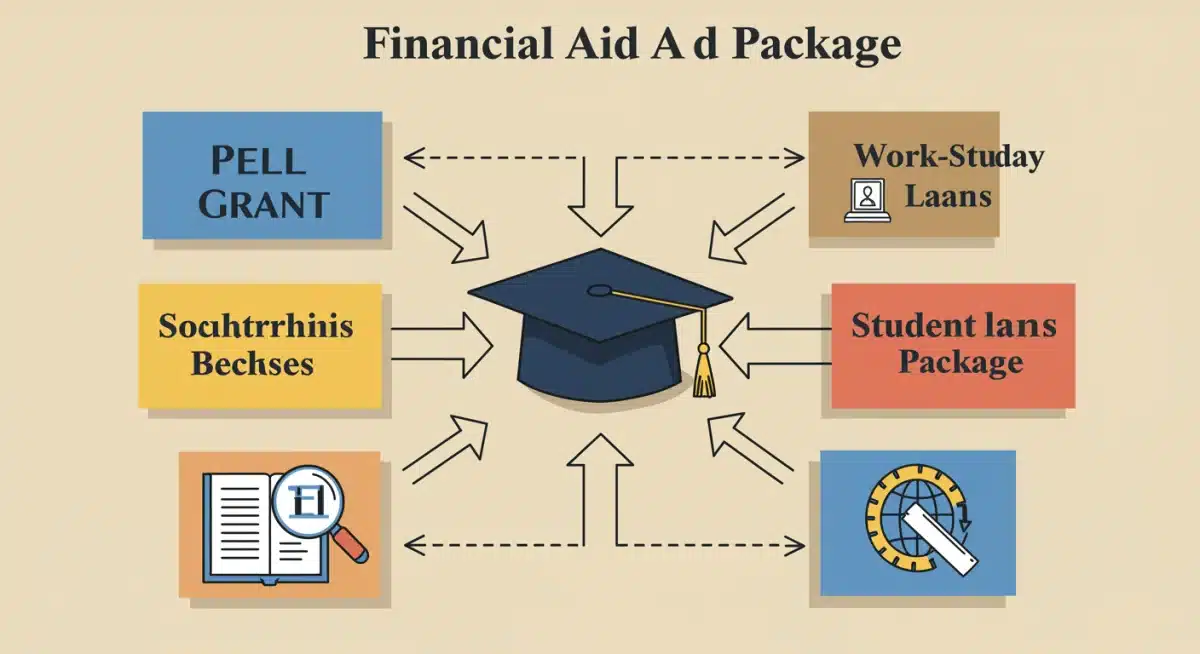
By taking a proactive approach to financial aid, you can significantly reduce your out-of-pocket costs and focus more on your academic pursuits. The availability of Pell Grants 2026 is a testament to the commitment to accessible education for all.
Special Considerations and Common Questions About Pell Grants 2026
Navigating financial aid can bring up unique situations and questions. Here are some common considerations regarding Pell Grants 2026:
Lifetime Eligibility Limit (LEU):
There is a limit to the total amount of Pell Grant funds you can receive over your lifetime. This is known as the Lifetime Eligibility Used (LEU), and it is measured as a percentage. You can receive Pell Grant funds for up to 12 semesters or the equivalent (roughly six years of full-time study). Once your LEU reaches 600% (meaning you’ve received 600% of your annual maximum award), you are no longer eligible for Pell Grants. It’s crucial to monitor your LEU, which you can do on the National Student Loan Data System (NSLDS) website.
Pell Grant and Study Abroad:
Yes, in many cases, you can use your Pell Grants 2026 to help pay for study abroad programs. The program must be approved for credit by your home institution and satisfy federal student aid requirements. The financial aid office at your school will be able to provide specific guidance on using your Pell Grant for study abroad.
Pell Grant for Summer Sessions:
You may be eligible to receive a Pell Grant for summer enrollment if you are enrolled in an eligible program and have remaining Pell Grant eligibility from the current award year. This is sometimes referred to as ‘Year-Round Pell.’ Your school’s financial aid office will determine your eligibility based on your enrollment status and remaining LEU.
Impact of Dependency Status:
Your dependency status (dependent or independent) on the FAFSA significantly impacts the financial information considered for your SAI. Independent students generally have a lower SAI because only their income and assets (and spouse’s, if applicable) are considered, rather than parental income and assets. There are specific criteria for being considered an independent student.
Changes in Financial Circumstances:
If your family’s financial situation has changed significantly since you filed your FAFSA (e.g., job loss, medical expenses, divorce), you can appeal to your college’s financial aid office for a ‘professional judgment’ review. They may be able to adjust your FAFSA data, potentially increasing your eligibility for Pell Grants 2026 and other aid.
The Future of Pell Grants: Beyond 2026
The Federal Pell Grant program has a long history of bipartisan support and is consistently recognized as a vital tool for promoting educational access and equity. While specific funding levels and eligibility criteria are subject to congressional review and appropriation each year, the core mission of the Pell Grant is expected to remain steadfast.
Discussions around increasing the maximum Pell Grant award, expanding eligibility to more students, and simplifying the FAFSA process are ongoing. These efforts aim to further strengthen the program and ensure that it continues to meet the evolving needs of students in the years leading up to and beyond 2026.
Staying informed about federal legislative changes and advocacy efforts related to student aid is a good practice for anyone relying on or interested in the future of programs like Pell Grants 2026. Organizations like the National Association of Student Financial Aid Administrators (NASFAA) and the U.S. Department of Education provide regular updates and resources.
Conclusion: Empowering Your Educational Journey with Pell Grants 2026
The journey through higher education is an investment in your future, and financial aid like the Federal Pell Grants 2026 plays an indispensable role in making that investment attainable. With a potential award of up to $7,395, these grants can significantly reduce the financial barriers to college, opening doors to new opportunities and pathways to success.
By understanding the eligibility requirements, meticulously completing your FAFSA, and proactively exploring all available aid options, you are taking crucial steps to secure your educational funding. Remember to submit your FAFSA early, maintain satisfactory academic progress, and communicate openly with your college’s financial aid office.
Don’t let the cost of college deter you from pursuing your academic aspirations. The Pell Grants 2026 program is designed to support you, providing a solid financial foundation upon which you can build your educational future. Take advantage of this invaluable resource and empower yourself to achieve your academic and career goals.
For the most accurate and up-to-date information, always refer to the official U.S. Department of Education’s Federal Student Aid website (studentaid.gov) and your college’s financial aid office.