LIHEAP 2025: Get Up to $700 in Heating & Cooling Aid

The Low Income Home Energy Assistance Program (LIHEAP) for 2025 offers crucial financial aid to eligible low-income households, providing up to $700 to help cover heating and cooling costs and ensure energy security.
Navigating the complexities of energy costs can be a significant challenge for many households across the United States. Fortunately, programs like the Low Income Home Energy Assistance Program (LIHEAP) are designed to offer a lifeline. For 2025, understanding how to access and maximize benefits from LIHEAP 2025 assistance can mean the difference between struggling with utility bills and maintaining a comfortable home environment.
Understanding the Low Income Home Energy Assistance Program (LIHEAP)
The Low Income Home Energy Assistance Program (LIHEAP) stands as a critical federal initiative aimed at assisting low-income households with their energy bills. This program is not just about financial aid; it’s about providing stability and preventing utility shut-offs, especially during extreme weather conditions. Administered at the state and local levels, LIHEAP tailors its services to meet the specific needs of communities, ensuring that help reaches those who need it most.
Beyond direct financial assistance for heating and cooling, LIHEAP often includes provisions for energy crisis intervention, such as furnace repairs or emergency fuel deliveries. It also supports weatherization and energy-related home repairs, which can lead to long-term energy savings. The program’s flexibility allows states to adapt their offerings, meaning that the specific benefits and application processes can vary significantly from one state to another.
Key Objectives of LIHEAP
LIHEAP serves several vital functions in communities nationwide, addressing immediate and long-term energy needs for vulnerable populations.
- Reducing Energy Burden: Directly helps households manage high heating and cooling costs.
- Preventing Disconnections: Offers crisis assistance to avert utility service terminations.
- Promoting Energy Efficiency: Supports weatherization services to lower future energy consumption.
- Ensuring Health and Safety: Helps maintain safe indoor temperatures, especially for the elderly, disabled, and young children.
The program’s impact extends beyond just financial relief, contributing to the overall well-being and stability of families. By addressing energy poverty, LIHEAP helps to free up household budgets for other essential needs, such as food and medicine.
In essence, LIHEAP is a cornerstone of support for millions of Americans, providing not only monetary aid but also a sense of security during challenging times. Its multifaceted approach ensures that households can maintain essential utility services and live in safe, energy-efficient homes.
Eligibility Requirements for LIHEAP 2025 Assistance
Determining eligibility for LIHEAP 2025 assistance is a crucial first step for anyone seeking help with their energy bills. While the general guidelines are set at the federal level, specific criteria can vary by state and even by local administering agency. It is important to check your state’s particular requirements, as these can impact whether you qualify and the amount of aid you might receive.
Generally, eligibility is based on household income relative to the federal poverty level or state median income. Many states also consider factors such as household size, energy costs, and the presence of vulnerable individuals, such as the elderly, disabled, or young children. Understanding these varying criteria is key to a successful application.
Typical Income Thresholds
Most states use a sliding scale based on the federal poverty guidelines. For example, a household’s income might need to be at or below 150% or 185% of the federal poverty level. Some states also use a percentage of the state median income, which can sometimes be more generous. It’s vital to obtain the most current income guidelines for your specific state for 2025, as these figures are updated annually.
- Federal Poverty Guidelines: Often a primary benchmark for income eligibility.
- State Median Income: An alternative or supplementary criterion used by some states.
- Household Size: Larger households typically have higher income thresholds for eligibility.
Beyond income, applicants must usually be responsible for paying home energy bills, either directly or as an undesignated portion of their rent. Proof of residency and citizenship or legal residency status are also commonly required. Gather all necessary documentation before applying to streamline the process.
It’s worth noting that even if your income slightly exceeds the standard thresholds, some states have provisions for households facing significant energy burdens or specific hardships. Always inquire about all possible avenues for assistance. Eligibility for LIHEAP 2025 assistance is designed to be comprehensive, ensuring that a broad range of low-income households can access support.
How to Apply for LIHEAP and Maximize Your Aid
Applying for LIHEAP 2025 assistance involves several steps, but with proper preparation, the process can be straightforward. The key is to gather all necessary documentation and submit your application accurately and on time. Since the program is administered locally, the application process might differ slightly depending on where you live, so always begin by checking your state or local energy assistance office’s website.
Most applications open in the fall for heating assistance and in the spring or summer for cooling assistance. It is advisable to apply as early as possible, as funds are often limited and distributed on a first-come, first-served basis. Don’t wait until you’re facing a crisis to seek help.
Essential Documents for Application
To ensure a smooth application process, have the following documents ready:
- Proof of Income: Pay stubs, tax returns, or benefit statements for all household members.
- Identification: Photo ID for the primary applicant and Social Security numbers for all household members.
- Utility Bills: Recent heating and cooling bills, or a statement from your landlord if energy costs are included in rent.
- Proof of Residency: A lease agreement or other document confirming your address.
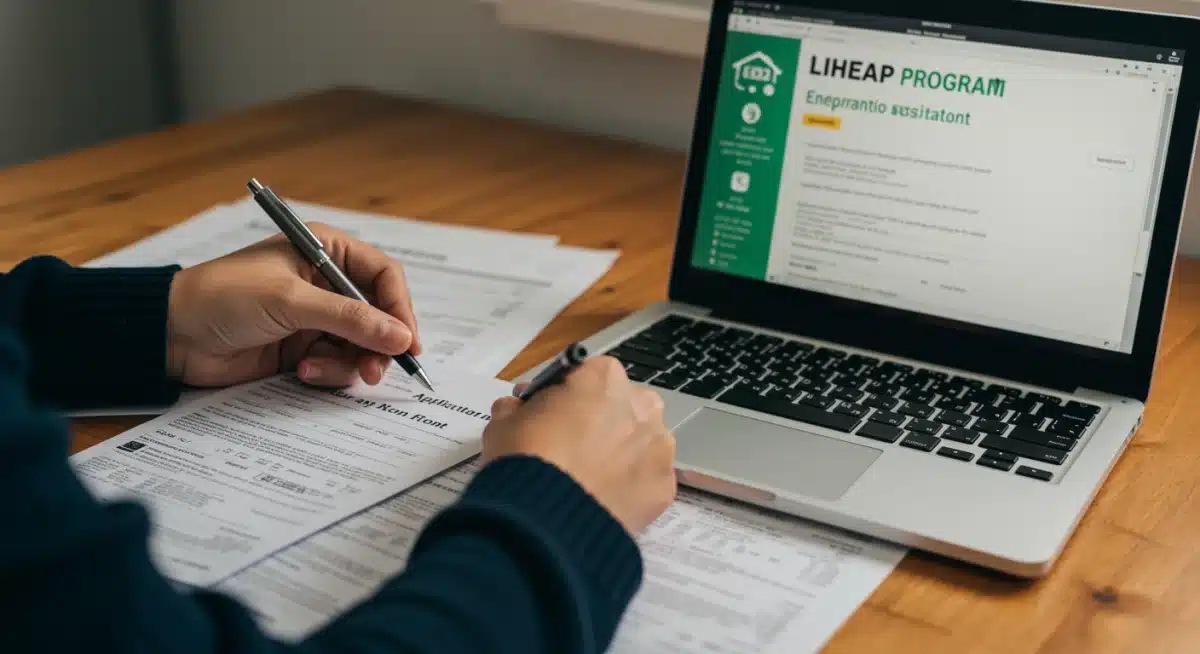
Once you have your documents, you can typically apply online, by mail, or in person at a local agency. Many agencies also offer assistance with completing the application form if you need help. Be thorough and honest in your application; any discrepancies could delay or jeopardize your aid.
To maximize your aid, consider applying for both heating and cooling assistance if eligible. Also, inquire about any additional state or local programs that might supplement LIHEAP funds. Some states offer emergency assistance for utility shut-offs or energy-efficiency upgrades that can further reduce your energy burden. By being proactive and well-informed, you can significantly benefit from LIHEAP 2025 assistance.
State-Specific LIHEAP Variations and Benefits
While LIHEAP is a federal program, its implementation and the specific benefits offered vary significantly from state to state, and even within counties. This decentralized approach allows states to address the unique energy needs and challenges of their populations. Understanding these state-specific variations is crucial for applicants to know what kind of assistance they can expect and how to best navigate the local system.
For instance, some states might prioritize households with elderly or disabled members, while others might focus more on crisis intervention during peak heating or cooling seasons. The maximum aid amount, often up to $700, can also differ based on state funding allocations and the average energy costs in that region. It’s not a one-size-fits-all program.
Examples of State-Specific Programs
Let’s consider a few hypothetical examples to illustrate potential differences:
- California: Might offer higher cooling assistance due to extreme summer heat, with a strong emphasis on energy efficiency upgrades.
- New York: Could prioritize heating assistance during harsh winters, with robust crisis intervention for furnace repairs.
- Texas: May have specific programs for households impacted by extreme weather events, alongside standard heating and cooling aid.
- Florida: Focuses heavily on cooling aid, given its tropical climate, potentially with specific provisions for air conditioning repair.
These examples highlight the importance of consulting your state’s official LIHEAP website or contacting your local energy assistance office. They can provide precise details on eligibility criteria, application deadlines, and the types of benefits available in your area for LIHEAP 2025 assistance. Many states also have online portals where you can track the status of your application.
Furthermore, some states combine LIHEAP funds with other state-funded energy assistance programs, creating a more comprehensive support system. This integrated approach can offer additional layers of financial relief and energy-saving opportunities, making it even more beneficial for eligible households. Always ask about all available resources when you apply.
Beyond LIHEAP: Complementary Energy Assistance Programs
While LIHEAP 2025 assistance is a cornerstone for many low-income households, it is by no means the only resource available. Several other programs, both federal and state-specific, exist to help manage energy costs and improve home energy efficiency. Combining these programs can provide a more robust safety net and long-term solutions for reducing utility bills.
Exploring these complementary programs is a smart strategy for maximizing your overall energy support. Many utility companies also offer their own assistance programs, often working in conjunction with state and federal initiatives. These can include payment arrangements, budget billing, or specific discounts for low-income customers.
Other Federal and State Initiatives
Consider these additional avenues for assistance:
- Weatherization Assistance Program (WAP): A federal program that helps low-income households reduce energy costs by making their homes more energy-efficient through improvements like insulation, weather-stripping, and furnace repairs.
- Emergency Rental Assistance Program (ERAP): While primarily for rent, some ERAP funds can be used for utility arrears, preventing shut-offs for households facing severe financial hardship.
- Utility Company Programs: Many local utility providers have their own charitable funds or low-income discount programs. Contact your specific electric, gas, or oil company to inquire about their offerings.
It’s important to remember that eligibility for one program does not automatically guarantee eligibility for another. Each program has its own set of criteria, and you may need to apply separately. However, the documentation required is often similar, making the application process for multiple programs more manageable.
By taking a holistic approach and investigating all available resources, households can create a comprehensive strategy for managing their energy expenses. This layered support ensures that families can not only cover immediate costs but also invest in long-term energy savings, moving towards greater energy independence and security.
Anticipated Changes and Future of LIHEAP in 2025
As we look towards 2025, it’s important to consider potential changes and the future trajectory of the Low Income Home Energy Assistance Program. While the core mission of LIHEAP remains constant, funding levels, administrative guidelines, and priority areas can evolve based on federal appropriations, economic conditions, and emerging energy challenges. Staying informed about these potential shifts will be beneficial for both current and prospective applicants.
Government agencies continually assess the effectiveness of programs like LIHEAP, often leading to adjustments aimed at improving efficiency, expanding reach, or targeting specific populations. For instance, there might be increased emphasis on climate resilience, encouraging states to integrate more energy efficiency measures or support for renewable energy sources within their LIHEAP frameworks.
Potential Areas of Evolution
Several factors could influence LIHEAP’s future:
- Increased Funding: Advocacy efforts and recognition of energy poverty could lead to higher federal appropriations, potentially increasing the maximum aid amount or expanding eligibility.
- Focus on Renewables: Greater integration of support for solar panels or other renewable energy solutions for low-income homes.
- Streamlined Application Processes: Efforts to simplify applications through digital platforms or cross-program eligibility checks.
- Enhanced Crisis Intervention: Strengthened provisions for emergency situations, such as extreme weather events or sudden utility price spikes.
While direct legislative changes for LIHEAP 2025 assistance are not yet finalized, the general trend points towards a more integrated and efficient system of energy support. This could mean easier access to information, more coordinated services between different assistance programs, and a greater emphasis on long-term energy solutions rather than just short-term relief.
Individuals seeking aid should monitor official government websites and local energy assistance agencies for the most up-to-date information regarding LIHEAP for 2025. Proactive engagement with these resources will ensure you are aware of any new opportunities or adjusted requirements, allowing you to effectively plan for your household’s energy needs.
| Key Aspect | Brief Description |
|---|---|
| LIHEAP Purpose | Assists low-income households with heating and cooling costs, preventing utility shut-offs. |
| Eligibility Factors | Primarily based on income (federal poverty level/state median income) and household size. |
| Application Process | Requires income proof, ID, and utility bills; apply through state/local agencies, often early. |
| Additional Support | Complementary programs like WAP and utility company aid can offer further relief. |
Frequently Asked Questions About LIHEAP 2025 Aid
The maximum aid from LIHEAP can vary significantly by state and local agency. While many programs offer up to $700, the exact amount depends on factors like your income, household size, energy costs, and the specific rules of your state’s program, as well as available funding.
Application periods for LIHEAP typically open in the fall for heating assistance and in the spring or summer for cooling assistance. It is highly recommended to apply as early as possible, as funds are often limited and distributed on a first-come, first-served basis by local agencies.
Yes, LIHEAP often includes provisions for emergency crisis intervention. If you are facing an imminent utility shut-off or have already had your service disconnected, contact your local LIHEAP office immediately to inquire about emergency assistance options and expedited processing.
No, you do not need to be a homeowner. Renters can also qualify for LIHEAP assistance if they are responsible for paying their home energy bills, either directly to a utility company or as an undesignated portion of their rent. Proof of responsibility for energy costs is usually required.
Absolutely. Beyond LIHEAP, consider the Weatherization Assistance Program (WAP), which helps improve home energy efficiency. Many utility companies also offer their own assistance programs, budget billing options, or low-income discounts. Check with your local utility provider for additional resources.
Conclusion
Navigating the landscape of energy assistance programs like LIHEAP can seem daunting, but the potential benefits, including up to $700 in aid for heating and cooling costs, are invaluable for eligible households. By understanding the eligibility criteria, preparing necessary documentation, and applying proactively, you can significantly alleviate the financial burden of utility bills. Remember that LIHEAP is a dynamic program, with state-specific variations and potential future adjustments, so staying informed through official channels is paramount. Furthermore, exploring complementary programs can provide an even more robust safety net, ensuring your home remains a comfortable and secure environment throughout the year.