2026 Financial Wellness Check-Up: 5 Key Metrics for Fiscal Health

The 2026 Financial Wellness Check-Up: 5 Key Metrics for Your Fiscal Health (PRACTICAL SOLUTIONS)
As we navigate the ever-evolving economic landscape, conducting a thorough financial wellness checkup becomes not just advisable, but absolutely essential. The year 2026 presents unique opportunities and challenges, making it the perfect time to assess your fiscal health and recalibrate your strategies. This comprehensive guide will walk you through five key metrics that serve as indicators of your financial well-being, providing practical, actionable solutions to help you achieve and maintain robust fiscal health. Whether you’re a seasoned investor or just starting your financial journey, understanding these metrics is paramount to securing your future and achieving your financial aspirations. Let’s dive deep into what it truly means to conduct a meaningful financial wellness checkup in 2026.
Why a 2026 Financial Wellness Check-Up is Crucial Now More Than Ever
The global economy is dynamic, influenced by technological advancements, geopolitical shifts, and changing consumer behaviors. What worked financially five years ago might not be optimal today. A regular financial wellness checkup allows you to adapt to these changes, identify potential risks, and capitalize on new opportunities. It’s not merely about knowing your bank balance; it’s about understanding the intricate web of your income, expenses, assets, liabilities, and future goals. Proactive financial management, guided by these key metrics, empowers you to make informed decisions, mitigate financial stress, and build a resilient financial future. This isn’t a one-time event but an ongoing process that ensures your financial plan remains aligned with your life goals and the economic realities of 2026.
Consider the impact of inflation, interest rate fluctuations, and market volatility. Without a consistent financial wellness checkup, these factors can silently erode your wealth and derail your long-term plans. This article aims to equip you with the knowledge and tools to conduct a thorough self-assessment, offering practical steps you can implement immediately to improve your financial standing. Our focus is on providing actionable insights that go beyond theoretical concepts, translating into tangible improvements in your fiscal health. By the end of this guide, you’ll have a clear roadmap for your 2026 financial journey.
Metric 1: Net Worth – The Ultimate Snapshot of Your Financial Health
Understanding Net Worth
Your net worth is arguably the most fundamental metric in your financial wellness checkup. Simply put, it’s the total value of your assets minus your total liabilities. Assets include everything you own that has monetary value – your home, investments, savings accounts, retirement funds, vehicles, and even valuable collectibles. Liabilities are what you owe – mortgages, car loans, student loans, credit card debt, and any other outstanding obligations. A positive and growing net worth indicates improving financial health, while a stagnant or decreasing net worth signals a need for re-evaluation.
Practical Solutions to Boost Your Net Worth
- Increase Income: Explore avenues for additional income, such as a side hustle, negotiating a raise, or investing in skills that lead to higher-paying opportunities. More income, when managed wisely, directly contributes to asset accumulation.
- Reduce Debt: Prioritize paying down high-interest debt, like credit card balances. The money saved on interest payments can then be redirected towards savings or investments, accelerating your net worth growth. Consider strategies like the debt snowball or debt avalanche method.
- Increase Savings and Investments: Automate contributions to your savings accounts and investment portfolios. Even small, consistent contributions can yield significant results over time due to compounding. Explore diverse investment options that align with your risk tolerance and financial goals.
- Manage Expenses: Regularly review your spending habits. Identify areas where you can cut back without significantly impacting your quality of life. Every dollar saved is a dollar that can be invested, directly enhancing your net worth.
- Asset Appreciation: Invest in assets that have the potential to appreciate over time, such as real estate or a diversified stock portfolio. However, always remember that investments carry risks.
Tracking your net worth annually, or even quarterly, provides a clear picture of your progress and motivates you to stay on track. It’s a powerful metric for any financial wellness checkup.
Metric 2: Debt-to-Income Ratio – Are You Overleveraged?
Understanding Debt-to-Income Ratio (DTI)
The debt-to-income (DTI) ratio is a critical indicator of your ability to manage monthly debt payments. It’s calculated by dividing your total monthly debt payments by your gross monthly income. Lenders often use this ratio to assess your borrowing risk, but it’s equally important for your personal financial wellness checkup. A high DTI suggests that a significant portion of your income is consumed by debt, leaving less for savings, investments, and discretionary spending. Generally, a DTI of 36% or lower is considered healthy, with anything above 43% signaling potential financial strain.
Practical Solutions to Optimize Your DTI
- Reduce Monthly Debt Payments: Focus on paying down debts with high minimum payments. Refinancing high-interest loans to a lower rate can also significantly reduce your monthly obligations. Consolidating multiple debts into a single, lower-interest loan is another effective strategy.
- Increase Income: As with net worth, boosting your income naturally lowers your DTI, assuming your debt payments remain constant. This could involve taking on extra work, freelancing, or seeking a promotion.
- Avoid New Debt: While working to reduce your DTI, it’s crucial to avoid taking on new loans or increasing credit card balances. This can be challenging, but it’s vital for long-term financial health.
- Budgeting for Debt Repayment: Allocate a specific portion of your budget each month solely for debt repayment, above the minimum payments. This accelerated approach can dramatically improve your DTI over time.
- Sell Unused Assets: If you have assets that are no longer serving a purpose, consider selling them to generate funds for debt repayment. This could include an extra vehicle, electronics, or other valuable items.
Monitoring your DTI regularly as part of your financial wellness checkup helps ensure you’re not overextending yourself financially, providing a buffer against unexpected expenses and allowing for greater financial flexibility.
Metric 3: Savings Rate – Are You Preparing for the Future?
Understanding Your Savings Rate
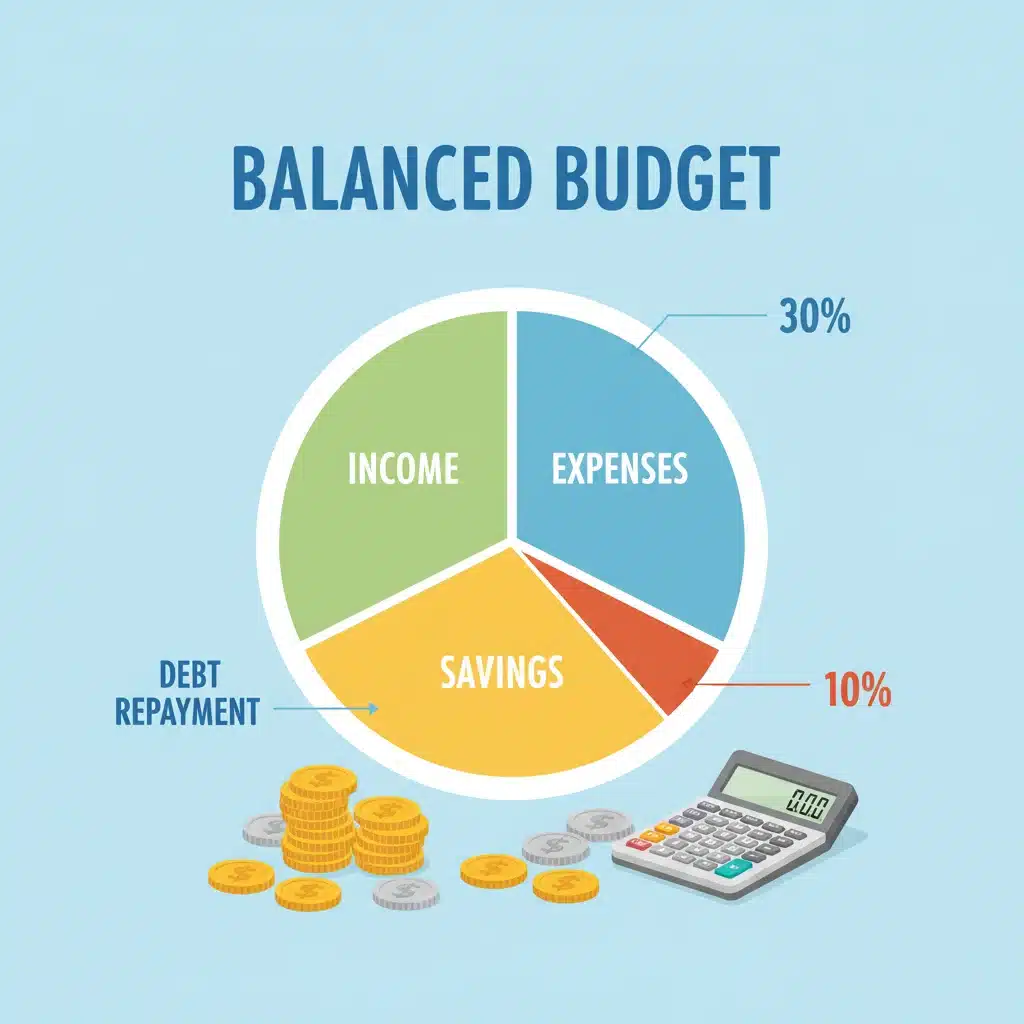
Your savings rate is the percentage of your gross income that you save or invest. This metric is a powerful indicator of your financial discipline and your preparedness for future goals, such as retirement, a down payment on a home, or your children’s education. A common guideline suggests aiming for a savings rate of at least 10-15% of your gross income, but higher is always better. For a truly robust financial wellness checkup in 2026, understanding and optimizing this metric is key to long-term security.
Practical Solutions to Boost Your Savings Rate
- Automate Savings: Set up automatic transfers from your checking account to your savings and investment accounts immediately after you get paid. This ‘pay yourself first’ strategy removes the temptation to spend the money.
- Create a Detailed Budget: A budget helps you understand where your money is going, allowing you to identify areas where you can cut back and reallocate funds to savings. Tools and apps can simplify this process.
- Increase Income & Keep Expenses Stable: If your income increases, resist the urge to immediately upgrade your lifestyle. Instead, channel a significant portion of that extra income directly into savings or investments. This practice is known as ‘lifestyle inflation avoidance.’
- Reduce Discretionary Spending: Identify non-essential expenses that can be reduced or eliminated. Dining out less, canceling unused subscriptions, or finding cheaper entertainment options can free up substantial funds for saving.
- Maximize Employer-Sponsored Plans: If your employer offers a 401(k) or similar retirement plan with a matching contribution, contribute at least enough to get the full match. This is essentially free money and significantly boosts your savings rate.
- Set Clear Financial Goals: Having specific, measurable, achievable, relevant, and time-bound (SMART) goals for your savings can provide immense motivation. Whether it’s a down payment, a vacation, or retirement, clear goals make saving more purposeful.
A healthy savings rate is your best defense against unexpected financial shocks and your most reliable pathway to achieving long-term financial independence. It’s a cornerstone of any effective financial wellness checkup.
Metric 4: Emergency Fund Ratio – Your Financial Safety Net
Understanding Your Emergency Fund Ratio
An emergency fund is a stash of readily accessible cash reserved for unforeseen circumstances like job loss, medical emergencies, or unexpected home repairs. The emergency fund ratio measures how many months of essential living expenses you have saved. Financial experts generally recommend having at least three to six months’ worth of living expenses in an easily accessible, liquid account. For a thorough financial wellness checkup, especially in an unpredictable world, this metric is non-negotiable.
Practical Solutions to Build and Maintain Your Emergency Fund
- Define Essential Expenses: Calculate your absolute minimum monthly living expenses (rent/mortgage, utilities, food, transportation, insurance). This figure forms the basis for your emergency fund goal.
- Automate Contributions: Just like regular savings, automate transfers to a separate, high-yield savings account designated solely for emergencies. This ensures consistent growth without needing constant attention.
- Prioritize Building It: If you don’t have an emergency fund, make it your top financial priority after covering basic needs. Consider temporarily cutting back on non-essential spending until you reach your initial goal (e.g., one month’s expenses).
- Windfalls & Bonuses: Direct any unexpected money – tax refunds, bonuses, or gifts – straight into your emergency fund until it’s fully funded.
- Review and Replenish: Life happens. If you tap into your emergency fund, make it a priority to replenish it as quickly as possible. Regularly review your essential expenses to ensure your fund remains adequate.
- Keep it Separate: Store your emergency fund in an account separate from your everyday checking account to avoid accidental spending. A high-yield savings account offers both liquidity and a modest return.
Having a robust emergency fund provides peace of mind and prevents you from going into debt when life throws unexpected curveballs. It’s a critical component of any comprehensive financial wellness checkup.
Metric 5: Investment Diversification & Performance – Are Your Assets Working Smart?
Understanding Investment Diversification and Performance
For your assets to truly contribute to your financial wellness checkup, they need to be working efficiently. This metric involves two key aspects: diversification and performance. Diversification is the strategy of spreading your investments across various asset classes (stocks, bonds, real estate, commodities), industries, and geographies to minimize risk. Performance refers to how well your investments are growing relative to your goals and market benchmarks. A well-diversified portfolio aims to reduce volatility while still capturing growth opportunities.
Practical Solutions for Optimized Investments
- Asset Allocation Strategy: Develop an asset allocation strategy that aligns with your risk tolerance, time horizon, and financial goals. Younger investors with a longer time horizon might opt for a higher percentage in equities, while those closer to retirement might prefer a more conservative mix.
- Diversify Across Asset Classes: Don’t put all your eggs in one basket. Invest in a mix of stocks (different sectors, market caps, geographies), bonds (government, corporate), real estate (REITs or direct ownership), and potentially other alternative investments.
- Diversify Within Asset Classes: For stocks, don’t just invest in one company or one industry. Use index funds or ETFs to gain broad market exposure, reducing company-specific risk.
- Regular Portfolio Review: Conduct an annual or semi-annual review of your investment portfolio as part of your financial wellness checkup. Rebalance your portfolio if necessary to maintain your desired asset allocation. This might involve selling some assets that have grown significantly and buying more of those that have lagged.
- Understand Fees: Be aware of the fees associated with your investments (management fees, expense ratios, trading fees). High fees can significantly erode your returns over time. Opt for low-cost index funds or ETFs where appropriate.
- Stay Informed, Don’t Panic: While it’s good to be informed about market trends, avoid making impulsive decisions based on short-term market fluctuations. A long-term perspective is crucial for investment success.
- Seek Professional Advice: If you’re unsure about your investment strategy, consider consulting a qualified financial advisor. They can help you create a personalized plan and ensure your investments are aligned with your overall financial wellness checkup goals.
Optimizing your investments ensures that your money is working as hard as possible for you, contributing significantly to your long-term financial health.
Integrating These Metrics into Your Annual Financial Wellness Check-Up
Understanding these five metrics is the first step; integrating them into a routine financial wellness checkup is where the real progress happens. Think of your financial health like your physical health – it requires regular monitoring and adjustments. Here’s how to make your annual financial wellness checkup a powerful habit:
Set a Dedicated Date
Choose a specific time each year, perhaps at the beginning of the year or around your birthday, to conduct your comprehensive financial wellness checkup. Mark it on your calendar and treat it as a non-negotiable appointment.
Gather All Financial Documents
Before your check-up, collect all relevant statements: bank accounts, investment portfolios, retirement accounts, loan statements, credit card bills, and income statements. Having everything organized will streamline the process.
Calculate and Track Each Metric
Use spreadsheets, financial planning software, or even a simple notebook to calculate your net worth, DTI, savings rate, and emergency fund ratio. For investments, review your diversification and performance against benchmarks. Consistency in tracking allows you to see trends and measure progress.
Review Your Budget and Spending
Your budget is the engine of your financial plan. During your financial wellness checkup, review your actual spending against your budget. Identify any discrepancies and adjust your budget for the upcoming year based on changes in income, expenses, or financial goals.
Assess Your Financial Goals
Are your short-term, mid-term, and long-term financial goals still relevant? Have they changed? Your financial wellness checkup is the ideal time to reassess these goals and ensure your current financial plan is still moving you towards them. Perhaps you’ve achieved one goal and need to set a new one, or perhaps a life event has shifted your priorities.
Identify Areas for Improvement
Based on your metric calculations and goal review, pinpoint specific areas where you can improve. Is your DTI too high? Is your savings rate too low? Are your investments underperforming or not diversified enough? Prioritize these areas for the coming year.
Create an Action Plan
For each area identified for improvement, create a concrete action plan with specific steps and deadlines. For example, if your emergency fund is insufficient, your action plan might be: ‘Automate $200 per month transfer to emergency fund, review again in 3 months.’ This turns insights from your financial wellness checkup into actionable steps.
Consider Professional Guidance
If your financial situation is complex, or if you feel overwhelmed, don’t hesitate to seek advice from a certified financial planner. They can provide personalized strategies and help you navigate intricate financial decisions, ensuring your financial wellness checkup is as effective as possible.
The Long-Term Benefits of a Consistent Financial Wellness Check-Up
The commitment to a regular financial wellness checkup yields significant long-term benefits:
- Reduced Financial Stress: Knowing where you stand financially and having a plan in place significantly reduces anxiety about money.
- Achieved Financial Goals: Consistent monitoring and adjustment keep you on track to reach milestones like homeownership, debt freedom, and a comfortable retirement.
- Increased Wealth Accumulation: By optimizing savings and investments, you accelerate the growth of your wealth over time.
- Resilience to Economic Shocks: A strong emergency fund and well-managed debt provide a buffer against unexpected economic downturns or personal crises.
- Empowered Decision-Making: With a clear understanding of your financial picture, you can make more confident and informed decisions about your money.
- Adaptability: Regular check-ups allow you to adapt your financial plan to changing life circumstances, market conditions, and economic policies in 2026 and beyond.
Conclusion: Your Path to Fiscal Prosperity in 2026
Embarking on a comprehensive financial wellness checkup in 2026 is an investment in your future. By diligently tracking and optimizing your net worth, debt-to-income ratio, savings rate, emergency fund ratio, and investment diversification and performance, you gain unparalleled clarity and control over your financial destiny. This isn’t just about numbers; it’s about building a life of security, freedom, and opportunity.
Remember, financial health is a journey, not a destination. It requires continuous attention, learning, and adaptation. Make these five metrics your guiding stars, and commit to regular check-ups. The practical solutions provided here are designed to be immediately actionable, empowering you to take charge of your finances today. By doing so, you’ll not only navigate the financial landscape of 2026 with confidence but also lay a solid foundation for enduring fiscal prosperity for years to come. Start your financial wellness checkup today and unlock your full financial potential!
Author