Maximize Your 401(k) 2026: A Comprehensive Guide to Retirement Savings

In the ever-evolving landscape of personal finance, one of the most powerful tools at your disposal for securing a comfortable retirement is your 401(k). As we look ahead to 2026, understanding how to effectively maximize 401k 2026 contributions is paramount. This comprehensive guide will walk you through the essential strategies, rules, and tips to ensure you’re making the most of this invaluable retirement vehicle. Whether you’sre a seasoned investor or just starting your retirement planning journey, optimizing your 401(k) can significantly impact your financial future.
Understanding the Basics of Your 401(k) for 2026
Before diving into advanced strategies, let’s first establish a solid understanding of what a 401(k) is and why it’s so crucial for retirement planning. A 401(k) is an employer-sponsored defined-contribution retirement plan that allows employees to save and invest for retirement on a tax-deferred basis. This means your contributions and their earnings grow tax-free until you withdraw them in retirement, at which point they’re taxed as ordinary income. Some plans also offer a Roth 401(k) option, where contributions are made with after-tax dollars, and qualified withdrawals in retirement are tax-free.
Key Benefits of a 401(k)
- Tax Advantages: Pre-tax contributions reduce your current taxable income, while Roth contributions offer tax-free withdrawals in retirement.
- Employer Matching: Many employers offer to match a percentage of your contributions, essentially providing “free money” that significantly boosts your savings.
- Automatic Savings: Contributions are typically deducted directly from your paycheck, making saving consistent and effortless.
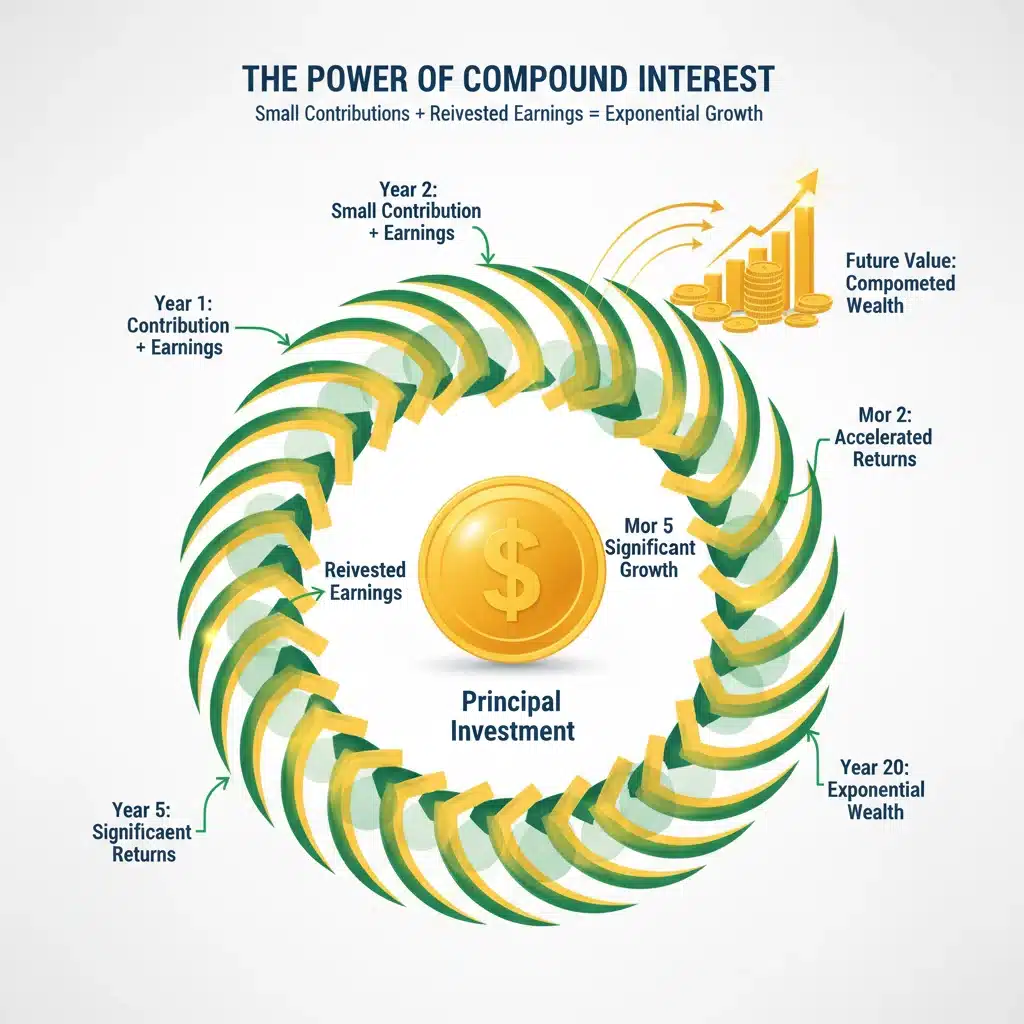
- Compounding Growth: Your investments grow over time, and the earnings themselves earn returns, leading to exponential growth.
- Diversification: 401(k) plans typically offer a range of investment options, allowing for diversification across different asset classes.
Why Focusing on 2026 is Important
While the core principles of 401(k) investing remain constant, specific contribution limits and economic conditions can change year to year. Planning to maximize 401k 2026 means staying informed about the projected limits and adjusting your strategy accordingly. The sooner you start planning, the more time your money has to grow, making proactive engagement crucial.
Projected 401(k) Contribution Limits for 2026
The IRS typically announces the official 401(k) contribution limits for the upcoming year in the fall of the preceding year. While we don’t have the final numbers for 2026 yet, we can anticipate them based on inflation adjustments and historical trends. It’s important to note that these are projections, and the actual figures may vary.
Standard Employee Contribution Limits
For 2025, the standard employee contribution limit for 401(k) plans is $23,000. Based on historical inflation adjustments, it’s reasonable to project that the 2026 limit will increase slightly, potentially reaching around $23,500 to $24,500. This is the maximum amount you can contribute from your paycheck before any employer contributions.
Catch-Up Contributions for Those 50 and Over
If you are age 50 or older, the IRS allows you to make additional “catch-up” contributions to your 401(k). This is a crucial provision for those closer to retirement who may need to boost their savings. For 2025, the catch-up contribution limit is $7,500. We can expect this to also see a slight increase for 2026, potentially reaching $7,750 to $8,000. This means individuals aged 50 and above could contribute a significantly higher amount in total.
Total Employer and Employee Contributions
There’s also an overall limit on the total contributions (employee + employer) to a 401(k) plan. For 2025, this limit is $69,000. For 2026, this total limit is also expected to rise, possibly reaching $70,000 to $72,000. While most employees won’t hit this upper limit, it’s important to be aware of, especially if you have a generous employer match or if you’re self-employed and contributing both as an employee and employer.
To effectively maximize 401k 2026, your first step should be to aim to contribute at least up to these projected limits, if your financial situation allows. Every dollar contributed now has the potential to grow significantly over time.
Top Strategies to Maximize 401(k) 2026 Contributions
Now that we’ve covered the basics and projected limits, let’s delve into actionable strategies to help you maximize 401k 2026 contributions and grow your retirement nest egg.
1. Contribute Enough to Get the Full Employer Match
This is arguably the most fundamental and impactful strategy. If your employer offers a matching contribution, failing to contribute enough to receive the full match is like leaving free money on the table. For example, if your employer matches 50% of your contributions up to 6% of your salary, you should aim to contribute at least 6% of your salary to capture that full match. This immediately gives your savings a 50% boost!
2. Increase Your Contribution Rate Annually
Even a small annual increase in your contribution rate can have a dramatic effect over the long term. Consider committing to increasing your contribution by 1% or 2% each year, especially when you receive a raise. You’ll likely barely notice the difference in your take-home pay, but your retirement savings will thank you. This gradual increase makes it easier to reach the maximum contribution limits.
3. Automate Your Contributions
One of the greatest strengths of a 401(k) is its automated nature. Set your contribution percentage once, and it’s deducted from each paycheck without you having to think about it. This “set it and forget it” approach helps you stay consistent and avoid the temptation to spend money that should be saved.
4. Utilize Catch-Up Contributions (If Applicable)
For those aged 50 and over, catch-up contributions are a golden opportunity to supercharge your retirement savings. If you’ve fallen behind on your savings goals or simply want to boost your retirement income, make every effort to contribute the full catch-up amount in addition to the standard limit. This extra contribution can make a significant difference in your later years.
5. Understand Your Plan’s Vesting Schedule
Employer contributions often come with a vesting schedule, which dictates when you fully own the money your employer has contributed. If you leave your job before you are fully vested, you might forfeit some or all of the employer match. Understand your plan’s vesting rules and factor them into your career planning.
6. Review and Adjust Your Investment Mix Regularly
While contributing consistently is crucial, how your money is invested within your 401(k) is equally important. Periodically review your investment portfolio to ensure it aligns with your risk tolerance, time horizon, and financial goals. As you get closer to retirement, you might want to shift towards a more conservative allocation. Most 401(k) plans offer target-date funds, which automatically adjust their asset allocation over time, making them a convenient option for many.

7. Consider a Roth 401(k) Option
If your employer offers a Roth 401(k), it’s worth considering, especially if you expect to be in a higher tax bracket in retirement than you are now. While contributions are made after-tax, qualified withdrawals in retirement are completely tax-free. This can be a powerful advantage, particularly for younger individuals who have many years for their investments to grow tax-free.
8. Beware of Fees
High fees can erode your investment returns over time. While 401(k) plans often have lower fees than individual investment accounts, it’s still wise to review the expense ratios of the funds offered within your plan. Opt for low-cost index funds or ETFs if available, as even small differences in fees can translate to tens of thousands of dollars over decades.
The Power of Compounding: Why Early and Consistent Contributions Matter
The concept of compound interest is often called the “eighth wonder of the world,” and for good reason. It’s the process by which your investment earnings generate their own earnings. The longer your money is invested, the more powerful compounding becomes. This is why contributing early and consistently to maximize 401k 2026 is so vital.
An Illustrative Example:
Imagine two individuals, Sarah and John, both earning the same salary and retiring at age 65.
- Sarah: Starts contributing $500 per month to her 401(k) at age 25. After 10 years, she stops contributing, having invested a total of $60,000.
- John: Waits until age 35 to start contributing $500 per month. He contributes consistently until age 65, investing a total of $180,000.
Assuming an average annual return of 7%, Sarah, who contributed less overall but started earlier, will likely have significantly more money saved at age 65 than John. This is because her initial contributions had an extra 10 years to compound and grow. This example vividly illustrates why you should strive to maximize 401k 2026 contributions as early as possible.
Navigating Investment Options within Your 401(k)
Your 401(k) isn’t just a savings account; it’s an investment vehicle. Understanding the different investment options available within your plan is key to making informed decisions and optimizing your returns. While specific options vary by plan, common choices include:
1. Target-Date Funds
These are popular choices, especially for those who prefer a hands-off approach. A target-date fund automatically adjusts its asset allocation over time, becoming more conservative as you approach your target retirement date. For example, a “2040 Target Date Fund” would be designed for someone retiring around 2040.
2. Index Funds and ETFs
These funds aim to replicate the performance of a specific market index, such as the S&P 500. They are known for their low expense ratios and broad diversification, making them excellent long-term investment options. Many financial advisors recommend a core portfolio built around low-cost index funds.
3. Mutual Funds (Actively Managed)
These funds are managed by professional fund managers who actively buy and sell securities with the goal of outperforming a specific benchmark. While some actively managed funds can achieve superior returns, they often come with higher fees, and many fail to beat their respective benchmarks over the long term.
4. Company Stock
Some 401(k) plans offer the option to invest in your employer’s stock. While it might seem appealing to invest in the company you work for, it’s generally advisable to limit your exposure to company stock to a small percentage of your overall portfolio (e.g., no more than 10-15%). Over-concentrating in a single stock, especially your employer’s, can expose you to significant risk if the company performs poorly.
Diversification is Key
Regardless of the specific funds you choose, the principle of diversification is paramount. Don’t put all your eggs in one basket. Spread your investments across different asset classes (stocks, bonds, real estate, etc.) and geographies to mitigate risk and enhance potential returns. Your 401(k) should be a component of a broader, diversified investment strategy.
Advanced 401(k) Strategies for 2026 and Beyond
Once you’ve mastered the foundational steps to maximize 401k 2026, consider these advanced tactics to further optimize your retirement savings.
The Mega Backdoor Roth
For high-income earners who have maxed out their traditional and Roth 401(k) contributions, the “mega backdoor Roth” can be an excellent strategy. This involves making after-tax non-Roth contributions to your 401(k) and then converting them to a Roth account (either your Roth 401(k) or an external Roth IRA). This allows you to bypass income limitations for direct Roth IRA contributions and contribute a significant amount of after-tax money that can then grow and be withdrawn tax-free in retirement. Not all 401(k) plans allow after-tax contributions or in-plan Roth conversions, so check with your plan administrator.
Understanding Total Contribution Limits (Employer + Employee)
As mentioned, there’s an overall limit on total contributions (employee + employer). If you’re a business owner or highly compensated employee, this limit becomes particularly relevant. Ensure that the combination of your pre-tax, Roth, and after-tax contributions, plus any employer contributions, does not exceed the IRS annual limit. This is crucial for compliance and avoiding penalties.
Utilizing a Health Savings Account (HSA) in Conjunction with Your 401(k)
While not a 401(k) itself, an HSA is often referred to as a “triple-tax advantaged” account and can be a powerful complement to your retirement savings, especially if you have a high-deductible health plan (HDHP). Contributions are tax-deductible, earnings grow tax-free, and qualified withdrawals for medical expenses are tax-free. If you can afford to pay for current medical expenses out-of-pocket, you can invest your HSA funds and let them grow for retirement, using them as a supplementary retirement account for healthcare costs.
Regularly Rebalance Your Portfolio
Market fluctuations can cause your portfolio’s asset allocation to drift from your target. Rebalancing involves selling off investments that have performed well and buying more of those that have underperformed, bringing your portfolio back to your desired allocation. This helps you manage risk and ensures your portfolio remains aligned with your long-term goals. Many investors choose to rebalance annually or semi-annually.
Common Pitfalls to Avoid When Maximizing Your 401(k)
While the goal is to maximize 401k 2026, it’s equally important to avoid common mistakes that can derail your progress.
1. Not Contributing Enough to Get the Employer Match
This is worth repeating because it’s the easiest money you’ll ever “earn.” Always contribute at least enough to capture your employer’s full match.
2. Cashing Out Your 401(k) When Changing Jobs
Resist the temptation to cash out your 401(k) when you leave a job. Doing so can trigger significant taxes and penalties, and you’ll lose out on years of potential growth. Instead, roll it over into your new employer’s 401(k) (if allowed), an IRA, or leave it with your previous employer if the fees are reasonable.
3. Taking a 401(k) Loan or Hardship Withdrawal
While some plans allow 401(k) loans or hardship withdrawals, these should be considered absolute last resorts. Loans can impact your ability to contribute and grow your account, and hardship withdrawals are subject to taxes and penalties, severely undermining your retirement savings.
4. Being Too Conservative (or Too Aggressive) with Investments
Finding the right balance between risk and return is crucial. Being too conservative in your younger years means missing out on significant growth potential. Being too aggressive as you approach retirement can expose you to unnecessary risk just when you need your capital preserved. Regularly assess your risk tolerance and adjust your allocation accordingly.
5. Ignoring Your 401(k) Statements
Your 401(k) statements provide valuable information about your account balance, investment performance, and fees. Review them regularly to stay informed about your progress and make any necessary adjustments to your contributions or investment strategy.
The Role of Financial Advice in 401(k) Maximization
While this guide provides a wealth of information, complex financial situations often benefit from professional guidance. A qualified financial advisor can help you:
- Assess Your Individual Situation: They can analyze your income, expenses, risk tolerance, and retirement goals to create a personalized plan.
- Optimize Your Contributions: An advisor can help you determine the ideal contribution strategy, including whether a Roth 401(k) is right for you, and how to utilize catch-up contributions effectively.
- Select Appropriate Investments: They can guide you through the investment options available in your 401(k) and help you build a diversified portfolio that aligns with your objectives.
- Integrate Your 401(k) with Your Overall Financial Plan: Your 401(k) is just one piece of your financial puzzle. An advisor can help you integrate it with other savings vehicles, such as IRAs, HSAs, and taxable investment accounts, for a holistic approach to wealth building.
- Stay on Track: Regular reviews with an advisor can help you stay disciplined and make adjustments as your life circumstances or market conditions change.
Don’t hesitate to seek professional advice if you feel overwhelmed or want to ensure you’re making the best possible decisions to maximize 401k 2026 and beyond.
Conclusion: Your Path to a Secure Retirement Starts Now
Maximizing your 401(k) contributions in 2026 is one of the smartest financial moves you can make for your future. By understanding the contribution limits, taking full advantage of employer matching, utilizing catch-up contributions, and making informed investment decisions, you can significantly accelerate the growth of your retirement nest egg. The sooner you implement these strategies, the more time the power of compounding has to work its magic.
Remember, financial planning is an ongoing process. Regularly review your progress, stay informed about changes in contribution limits and tax laws, and don’t be afraid to seek professional guidance when needed. Your efforts today to maximize 401k 2026 will pave the way for a more secure and comfortable retirement tomorrow. Start today, stay consistent, and watch your future grow.
Author