Future of Trade Agreements 2026: Economic Impact & Global Relations

The global economic landscape is in a constant state of flux, shaped by geopolitical shifts, technological advancements, and evolving national interests. As we look towards 2026, the future of trade agreements stands as a pivotal determinant of economic prosperity, industrial competitiveness, and international relations. This article delves deep into the anticipated trajectory of future trade agreements, meticulously analyzing their potential economic impact on U.S. industries and their broader implications for global diplomatic ties.
Understanding the intricacies of these agreements is not merely an academic exercise; it is a vital necessity for businesses, policymakers, and citizens alike. The decisions made today regarding international trade frameworks will resonate for years to come, influencing everything from job creation and consumer prices to innovation and national security. Our exploration will cover the drivers of change, the potential benefits and drawbacks, and the strategic considerations that will define the next chapter of global commerce.
The year 2026 is not an arbitrary marker. It represents a near-term horizon where current policy discussions will have matured into actionable frameworks, and existing agreements will have undergone significant review or renegotiation. The pace of change is accelerating, and the traditional models of trade are being challenged by new economic powers, digital trade complexities, and a renewed focus on supply chain resilience and national security.
The Evolving Landscape of Global Trade: Drivers of Change
Several powerful forces are reshaping the global trade environment, demanding new approaches to future trade agreements. These drivers are interconnected and often amplify each other’s effects, creating a complex web of challenges and opportunities.
Geopolitical Realignment and Economic Nationalism
The rise of economic nationalism, coupled with intensifying geopolitical competition, particularly between major global powers, is fundamentally altering trade priorities. Countries are increasingly prioritizing domestic production, supply chain security, and strategic independence over purely efficiency-driven global supply chains. This shift can lead to more protectionist policies, higher tariffs, and a fragmentation of global trade blocs. The U.S. will likely continue to navigate this delicate balance, seeking to protect national interests while fostering beneficial international partnerships. The impact on future trade agreements will be a move towards more tailored, sometimes smaller, bilateral or regional pacts rather than expansive multilateral treaties.
Technological Advancements and Digital Trade
The rapid evolution of digital technologies – from AI and blockchain to e-commerce platforms and data analytics – is creating an entirely new dimension of trade. Digital trade, encompassing everything from cross-border data flows to online services, presents both immense opportunities and significant regulatory challenges. Existing trade agreements were largely designed for tangible goods; they often struggle to adequately address issues like data privacy, cybersecurity, intellectual property in digital realms, and market access for digital services. Future trade agreements must incorporate robust frameworks for digital trade, ensuring fair competition, protecting consumer data, and facilitating innovation without stifling growth. This will be a critical area for U.S. industries, particularly in the tech and services sectors.
Climate Change and Sustainable Trade Practices
Growing global awareness and the urgency of addressing climate change are increasingly influencing trade policies. Countries are implementing carbon border adjustments, promoting green technologies, and demanding higher environmental standards in production processes. Future trade agreements will likely include stricter environmental provisions, potentially leading to new trade barriers for industries with high carbon footprints but also creating opportunities for sustainable businesses. The U.S. will need to strategically position its industries to meet these evolving standards, leveraging its innovation capacity in green technologies.
Supply Chain Resilience and De-risking
Recent global disruptions, such as the COVID-19 pandemic and geopolitical conflicts, have highlighted the vulnerabilities of highly optimized, just-in-time global supply chains. There is a growing imperative to de-risk supply chains, diversify sourcing, and build greater resilience. This could lead to a re-shoring or near-shoring of production for critical goods, impacting established trade routes and manufacturing hubs. Future trade agreements might focus more on establishing resilient supply chain networks among trusted partners, potentially favoring regional trade blocs and strategic alliances over purely globalized systems.
Economic Impact on U.S. Industries: Opportunities and Challenges
The evolving landscape of future trade agreements will have a multifaceted impact on various U.S. industries, presenting both significant opportunities for growth and considerable challenges that require strategic adaptation.
Manufacturing Sector
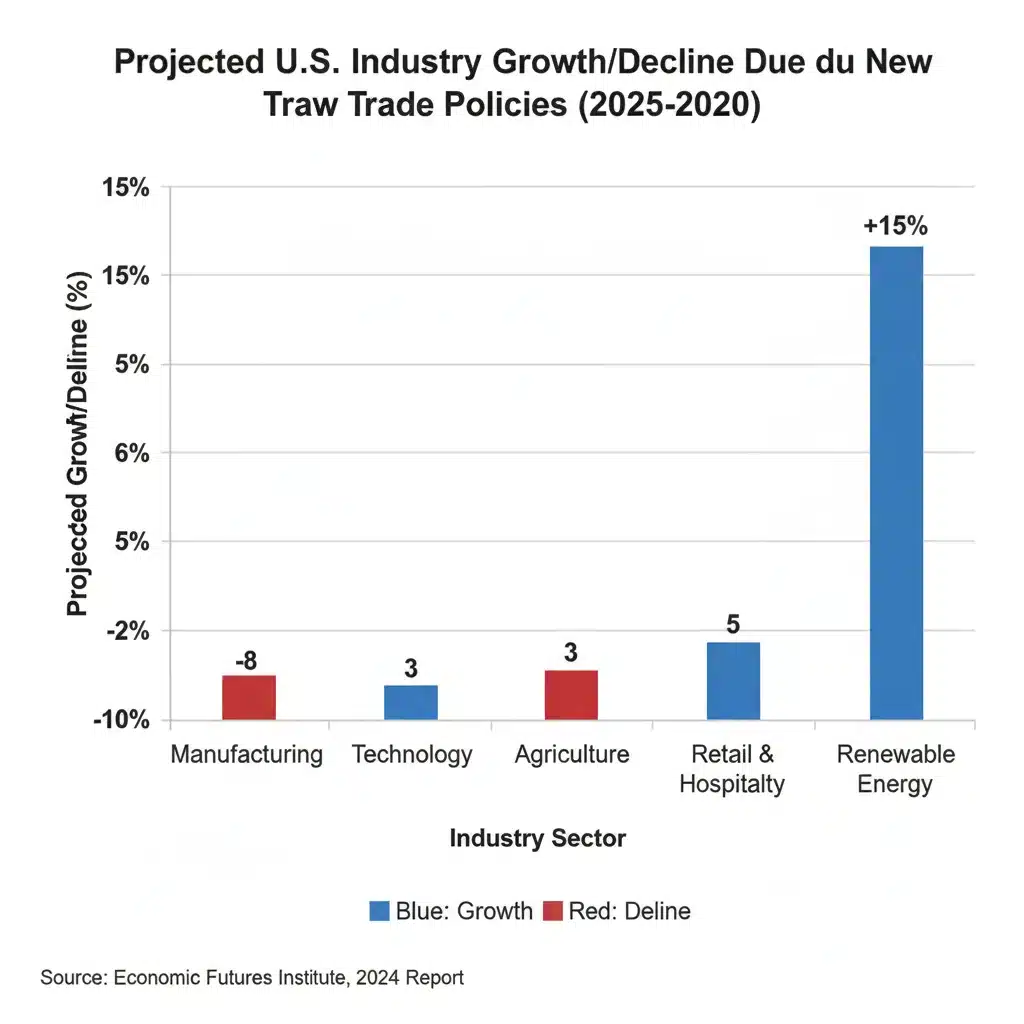
The U.S. manufacturing sector could see a mixed bag of effects. Efforts to reshore critical manufacturing, particularly in areas like semiconductors, pharmaceuticals, and defense, driven by national security concerns and supply chain resilience, could boost domestic production and job creation. Future trade agreements that support these initiatives through incentives or protective measures would be beneficial. However, increased protectionism elsewhere could limit export markets for U.S. manufactured goods, especially those reliant on cost-competitive global supply chains. Industries that successfully adapt to sustainable manufacturing practices and embrace advanced automation will be best positioned.
Agriculture Sector
U.S. agriculture is highly dependent on export markets. Future trade agreements that open new markets or reduce existing barriers will be crucial for the sector’s profitability. However, increased focus on environmental standards in trade agreements could pose challenges for some agricultural practices, requiring adaptation to more sustainable methods. Geopolitical tensions can also disrupt agricultural exports, as seen in past trade disputes. Securing stable market access and fair competition will be paramount.
Technology and Services Sectors
These sectors are poised for significant growth, provided that future trade agreements effectively address digital trade. U.S. tech companies are global leaders in software, cloud computing, AI, and digital platforms. Agreements that facilitate cross-border data flows, establish clear rules for digital services, protect intellectual property, and prevent digital protectionism will be highly advantageous. Conversely, fragmented digital regulations and data localization requirements in other countries could hinder expansion and innovation for U.S. tech and service providers.
Energy Sector
The U.S. is a major energy producer and exporter. Future trade agreements can play a role in securing energy markets and promoting energy security for allies. As the world transitions to cleaner energy, agreements that foster trade in renewable energy technologies, critical minerals for batteries, and carbon capture solutions will create new opportunities. However, policies aimed at reducing fossil fuel consumption globally could impact traditional energy exports, necessitating diversification and adaptation within the sector.
Retail and Consumer Goods
Consumers will feel the direct impact of future trade agreements through pricing and product availability. Tariffs or trade barriers can increase import costs, potentially leading to higher prices for consumers. Conversely, agreements that reduce barriers can lead to lower prices and a wider variety of goods. Retailers will need to navigate complex supply chains and adapt to changing trade rules, potentially diversifying their sourcing strategies to mitigate risks.
Global Relations: A New Era of Diplomacy
The negotiation and implementation of future trade agreements are inherently diplomatic acts, reflecting and shaping the broader landscape of international relations. In 2026, we can expect a recalibration of these relationships.
Strengthening Alliances and Partnerships
The U.S. is likely to prioritize trade agreements with strategic allies and like-minded partners, fostering deeper economic integration and mutual security. This could manifest in stronger regional blocs or targeted bilateral agreements that reinforce existing geopolitical alignments. Such agreements can serve as a bulwark against economic coercion and provide a stable framework for cooperation on shared challenges, from climate change to technological development. The emphasis will be on building resilient supply chains and economic ecosystems among trusted nations.
Navigating Competition with Non-Market Economies
Dealing with non-market economies, particularly China, will remain a central challenge. Future trade agreements will likely continue to address issues such as intellectual property theft, forced technology transfer, state-sponsored enterprises, and unfair trade practices. The U.S. may seek to build coalitions with other countries to collectively pressure for reforms or to create alternative supply chain networks that bypass reliance on such economies. This will be a delicate diplomatic dance, balancing economic engagement with strategic competition.
Multilateral Institutions in Transition
The role of multilateral trade institutions, such as the World Trade Organization (WTO), is undergoing significant scrutiny and reform. While the WTO remains crucial for establishing global trade rules, its effectiveness has been hampered by disagreements over its dispute settlement mechanism and the pace of new rule-making. Future trade agreements may continue to be negotiated outside the WTO framework, but there will also be efforts to revitalize and reform the institution to address 21st-century trade challenges. U.S. engagement with the WTO will be critical in shaping its future relevance.
The Rise of Regionalism
Beyond traditional bilateral agreements, regional trade blocs are gaining renewed importance. The Comprehensive and Progressive Agreement for Trans-Pacific Partnership (CPTPP), for example, represents a significant regional framework. While the U.S. is not currently a member, the dynamics of such blocs will influence U.S. trade policy. The U.S. may explore new regional initiatives or strengthen existing ones, such as NAFTA’s successor, the USMCA, to create integrated economic zones that enhance competitiveness and resilience.

Key Considerations for Policymakers and Businesses
As the landscape for future trade agreements evolves, several key considerations will be paramount for both policymakers crafting these agreements and businesses navigating their complexities.
Agility and Adaptability
The pace of global change demands agility. Policymakers must design agreements with built-in mechanisms for review, adaptation, and responsiveness to unforeseen circumstances. Businesses, in turn, must develop agile supply chains and market entry strategies that can quickly pivot in response to new trade rules or geopolitical shifts. Investing in data analytics and market intelligence will be crucial for anticipating changes.
Inclusivity and Equity
Future trade agreements must address concerns about inclusivity and ensure that the benefits of trade are widely shared. This means considering the impact on small and medium-sized enterprises (SMEs), workers, and vulnerable communities. Provisions related to labor standards, environmental protection, and digital inclusion can help build broader public support for trade and mitigate negative social impacts. The U.S. will need to ensure that its trade policies contribute to equitable growth both domestically and abroad.
Balancing Efficiency and Resilience
The pursuit of maximum efficiency in global supply chains often came at the cost of resilience. Future trade agreements will need to strike a better balance, promoting trade while also fostering diversified and secure supply chains for critical goods. This might involve strategic stockpiling, encouraging domestic production in key sectors, and strengthening trade ties with a wider array of reliable partners.
Strategic Use of Digital Trade Rules
For U.S. industries, particularly the burgeoning tech and services sectors, the strategic inclusion of robust digital trade rules in future trade agreements is non-negotiable. These rules must facilitate cross-border data flows, protect intellectual property in the digital sphere, ensure fair competition for digital services, and prevent discriminatory practices that could hinder innovation and market access. The U.S. has a unique opportunity to shape these global norms.
Leveraging Multilateral and Plurilateral Approaches
While bilateral agreements offer speed and specificity, multilateral and plurilateral forums remain essential for addressing global challenges. The U.S. should actively engage in reforming and strengthening institutions like the WTO, pushing for updates to global trade rules that reflect modern economic realities. Plurilateral agreements, involving a subset of WTO members, can also offer a pathway to progress on specific issues where broader consensus is elusive.
The Role of Domestic Policy in Complementing Trade Agreements
It’s crucial to recognize that the effectiveness of future trade agreements is intrinsically linked to complementary domestic policies. Without strong internal support mechanisms, even the most advantageous trade deals may fail to deliver their full potential.
Investment in Infrastructure and Workforce Development
To maximize the benefits of trade, the U.S. must continue to invest in modern infrastructure – from ports and roads to digital networks. Equally important is robust workforce development, ensuring that American workers have the skills needed for emerging industries and can adapt to changes brought about by global competition. This includes STEM education, vocational training, and lifelong learning initiatives.
Support for Research and Development
Maintaining a competitive edge in global markets requires continuous innovation. Domestic policies that support research and development, particularly in cutting-edge technologies and sustainable practices, will enable U.S. industries to lead in new growth areas and leverage opportunities created by future trade agreements.
Regulatory Coherence and Streamlining
Complex or inconsistent domestic regulations can inadvertently act as trade barriers. Efforts to streamline regulations, ensure transparency, and promote regulatory coherence with trading partners can reduce compliance costs for businesses and facilitate smoother international commerce. This is particularly important for small and medium-sized enterprises (SMEs) that often lack the resources to navigate intricate regulatory landscapes.
Anticipated Challenges and Mitigation Strategies
Despite the opportunities, the path to shaping beneficial future trade agreements in 2026 is fraught with challenges. Proactive mitigation strategies will be essential.
Increased Trade Disputes
The shift towards more strategic trade policies and heightened geopolitical tensions could lead to an increase in trade disputes. The U.S. will need effective mechanisms for dispute resolution, both within existing agreements and through diplomatic channels. Building strong international coalitions can also provide leverage in resolving disputes.
Digital Divide and Data Sovereignty
Disagreements over data governance, privacy standards, and data localization requirements could become significant sticking points in future trade agreements. The U.S. will need to advocate for open, secure, and reliable cross-border data flows while respecting legitimate privacy concerns. Finding common ground on these complex issues will require nuanced diplomatic efforts.
Environmental and Social Standards Harmonization
While the inclusion of environmental and social standards in trade agreements is positive, harmonizing these standards across diverse economies can be challenging. The U.S. must work with partners to develop mutually acceptable and enforceable standards that promote sustainable and ethical trade without creating undue burdens on developing economies.
Public Perception and Political Will
Trade agreements often face public skepticism due to concerns about job displacement or environmental impacts. Policymakers must effectively communicate the benefits of trade, implement robust adjustment assistance programs for affected workers, and ensure transparency in negotiations. Sustaining political will for comprehensive trade agreements requires demonstrating tangible benefits to a broad spectrum of the population.
Conclusion: Charting a Course for 2026 and Beyond
The landscape of future trade agreements in 2026 will be characterized by a dynamic interplay of geopolitical shifts, technological innovation, and evolving societal priorities. For the U.S., these agreements represent critical tools for enhancing economic competitiveness, fostering innovation, and strengthening global alliances.
Successfully navigating this complex environment requires a strategic, adaptable, and forward-looking approach. Policymakers must prioritize agreements that not only open markets but also address the challenges of digital trade, climate change, and supply chain resilience. U.S. industries, in turn, must be prepared to innovate, adapt to new standards, and leverage the opportunities presented by a changing global trade order.
The future of trade is not just about tariffs and quotas; it’s about building robust, resilient, and equitable economic relationships that underpin global stability and prosperity. As we move towards 2026, the decisions made today regarding future trade agreements will profoundly shape the economic destiny of the U.S. and its place in the world. By embracing strategic foresight, collaborative diplomacy, and a commitment to inclusive growth, the U.S. can effectively chart a course towards a more prosperous and interconnected global future.
Author