Competency-Based Education: A 2026 Guide to Its Adoption in US Higher Ed

Competency-Based Education: A 2026 Guide to Its Adoption in US Higher Ed
The landscape of higher education is in constant flux, driven by technological advancements, evolving workforce demands, and a growing call for greater accountability and value. Among the most transformative pedagogical approaches gaining significant traction is Competency-Based Education (CBE). As we look towards 2026, CBE is poised to become a mainstream pillar of US higher education, offering a flexible, learner-centric model that prioritizes demonstrated skills and knowledge over traditional seat time. This comprehensive guide delves into the projected adoption of CBE in US higher education by 2026, exploring its foundational principles, benefits, challenges, and strategic pathways for successful implementation.
The traditional model of higher education, with its fixed credit hours and standardized course structures, has long been the norm. However, this model often fails to adequately address the diverse learning needs of students, particularly adult learners, working professionals, and those seeking to rapidly acquire specific skills for a dynamic job market. This is where CBE higher education steps in, offering a paradigm shift that focuses on what students can actually do, rather than simply how much time they’ve spent in a classroom.
What is Competency-Based Education (CBE)?
At its core, Competency-Based Education (CBE) is an educational framework that organizes academic content around explicit learning outcomes, or "competencies." Instead of progressing through a curriculum based on a fixed schedule, students advance when they demonstrate mastery of these competencies. This means that learning is personalized, self-paced, and directly tied to practical application and real-world skills. The focus shifts from time spent learning to actual learning achieved.
Key characteristics of CBE include:
- Explicit Learning Outcomes: Competencies are clearly defined, measurable, and often aligned with industry standards or professional requirements.
- Personalized Pacing: Students can progress at their own speed, accelerating through familiar material and spending more time on challenging concepts.
- Flexible Learning Paths: CBE programs often offer various ways for students to demonstrate mastery, including projects, portfolios, simulations, and traditional assessments.
- Direct Assessment of Learning: Evaluation focuses on a student’s ability to apply knowledge and skills, rather than just recall information.
- Faculty as Facilitators: Instructors transition from lecturers to coaches and mentors, guiding students through their learning journey and providing individualized support.
- Emphasis on Prior Learning: Many CBE programs allow students to receive credit for prior learning experiences, whether through work, military service, or other informal education.
The rise of CBE is not a sudden phenomenon. It has been steadily gaining momentum over the past decade, driven by a confluence of factors including the increasing cost of higher education, the demand for a more skilled workforce, and the need for greater flexibility in learning formats. By 2026, it is anticipated that a significant number of US higher education institutions will have either fully adopted CBE models or integrated substantial CBE components into their offerings.
The Driving Forces Behind CBE Adoption by 2026
Several powerful forces are propelling the rapid adoption of CBE higher education across the United States. Understanding these drivers is crucial for institutions looking to strategically implement or expand their CBE programs.
Addressing the Skills Gap and Workforce Needs
One of the most significant catalysts for CBE is the persistent and widening skills gap in the global economy. Employers are increasingly seeking graduates who possess not just theoretical knowledge but also demonstrable, job-ready skills. Traditional degree programs sometimes struggle to adapt quickly enough to these evolving demands. CBE, by its very design, is inherently responsive to workforce needs, as competencies can be directly mapped to industry standards and employer expectations. This direct alignment makes graduates of CBE programs highly attractive to employers, fostering a more direct pathway from education to employment.
Enhanced Student Outcomes and Engagement
CBE’s individualized approach caters to diverse learning styles and paces, leading to improved student outcomes. Students who feel empowered to control their learning journey and see the direct relevance of their studies to their career goals tend to be more engaged and motivated. This can result in higher retention rates and greater academic success, particularly for non-traditional students who may be juggling work and family responsibilities.
Increased Affordability and Value Proposition
The rising cost of higher education is a major concern for students and policymakers alike. CBE offers a potential solution by allowing students to accelerate through material they already know, thereby reducing the time and cost associated with obtaining a degree or credential. Furthermore, by focusing on demonstrable competencies, CBE provides a clearer value proposition, as students can articulate precisely what skills they have acquired, making their investment in education more transparent and justifiable.
Leveraging Technology for Personalized Learning
Advancements in educational technology have made CBE more feasible and scalable than ever before. Learning management systems (LMS), adaptive learning platforms, and sophisticated assessment tools can now support personalized learning paths, track student progress on competencies, and provide real-time feedback. These technologies are integral to managing the complexities of CBE programs and delivering a high-quality, customized learning experience.
Meeting the Needs of Diverse Learners
The student demographic in US higher education is becoming increasingly diverse, encompassing a wide range of ages, backgrounds, and prior experiences. CBE is particularly well-suited to serve this diverse population. Adult learners, for instance, often bring a wealth of prior knowledge and professional experience, which CBE can acknowledge and credit, allowing them to focus on acquiring new skills efficiently. This flexibility makes higher education more accessible and inclusive.
Challenges and Considerations for CBE Implementation
While the benefits of CBE higher education are compelling, its widespread adoption is not without its challenges. Institutions planning to implement or expand CBE programs must carefully consider these hurdles to ensure a successful transition.
Curriculum Redesign and Competency Definition
One of the most significant challenges is the fundamental redesign of curricula. Moving from a course-centric to a competency-centric model requires a deep dive into what students truly need to know and be able to do. Defining clear, measurable, and stackable competencies is a complex and time-intensive process that often requires collaboration between faculty, industry experts, and instructional designers.
Faculty Development and Cultural Shift
CBE demands a significant shift in faculty roles and pedagogical approaches. Educators must transition from delivering content to facilitating learning, coaching students, and developing robust competency-based assessments. This requires extensive professional development, ongoing support, and a cultural shift within academic departments to embrace new teaching and assessment methodologies.
Assessment Design and Validity
Effective CBE relies on robust and authentic assessment strategies that accurately measure competency mastery. Designing these assessments, ensuring their validity and reliability, and providing timely and meaningful feedback to students can be challenging. Institutions must invest in developing sophisticated assessment frameworks that go beyond traditional tests to include projects, portfolios, simulations, and performance-based evaluations.
Accreditation and Regulatory Hurdles
Accreditation bodies and regulatory frameworks, traditionally designed for seat-time-based education, have had to adapt to CBE models. While progress has been made, institutions may still encounter complexities in demonstrating compliance with existing regulations, particularly concerning financial aid eligibility and program approval. Navigating these regulatory landscapes requires careful planning and communication with accreditors.
Technology Infrastructure and Data Management
Implementing CBE effectively necessitates a robust technology infrastructure capable of supporting personalized learning paths, tracking competency attainment, and managing complex student data. Institutions need to invest in appropriate learning platforms, data analytics tools, and IT support to ensure seamless operation and provide valuable insights into student progress and program effectiveness.
Student Support Services
While CBE offers flexibility, it also requires strong student support services. Students, particularly those accustomed to traditional education, may need guidance on self-paced learning, time management, and navigating new assessment methods. Institutions must ensure that advising, tutoring, and other support systems are tailored to the unique needs of CBE learners.
Strategic Pathways for CBE Adoption by 2026
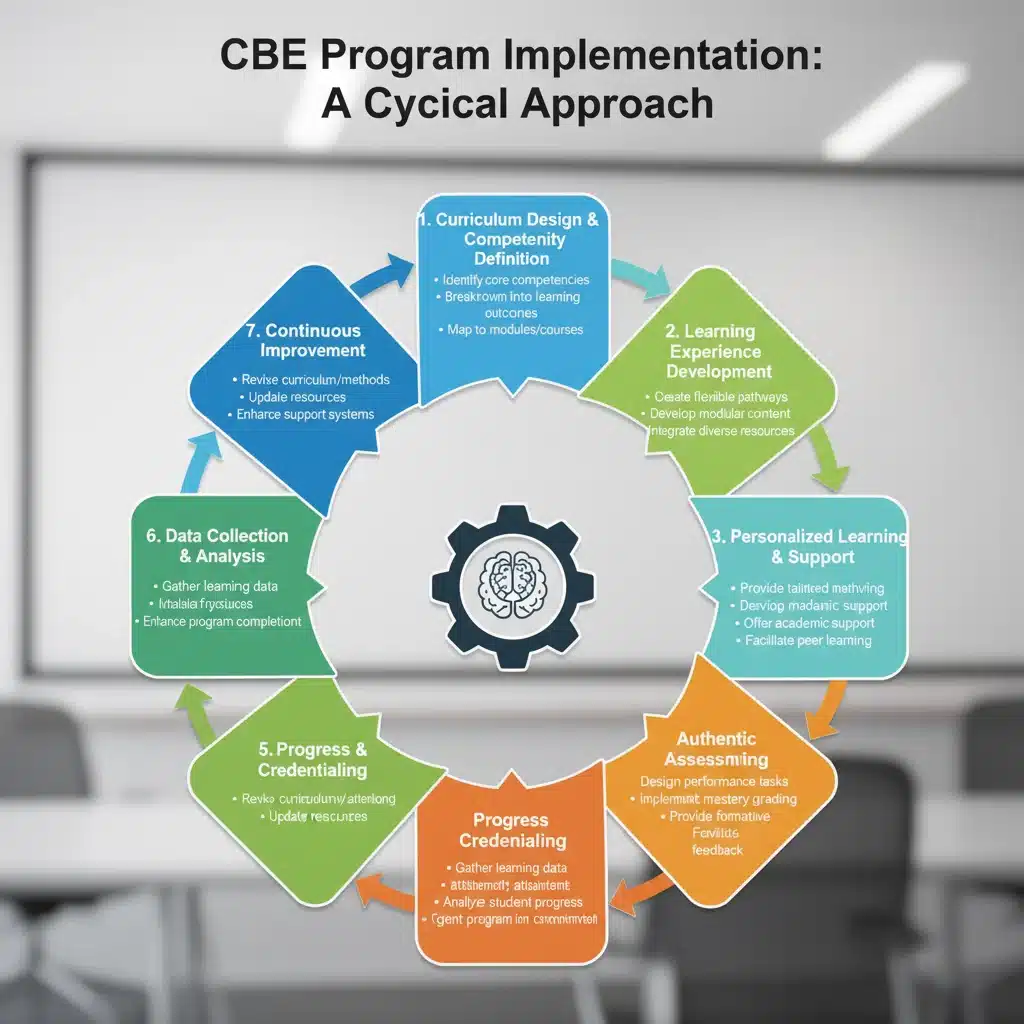
For institutions looking to successfully adopt CBE higher education by 2026, a strategic and phased approach is essential. Here are key pathways to consider:
Start Small, Scale Smart
Rather than launching a full-scale institutional transformation, many successful CBE implementations begin with pilot programs in specific departments or disciplines. This allows institutions to learn, iterate, and refine their approach before scaling up. Starting with programs that have strong industry alignment or a clear demand for specific competencies can yield early successes and build internal momentum.
Foster Faculty Buy-in and Development
Engaging faculty early and often is paramount. Provide ample opportunities for professional development, training in instructional design for CBE, and peer-to-peer learning. Create incentives for faculty participation and recognize their efforts in developing and delivering CBE programs. A strong, supportive culture that values innovation and continuous improvement will be critical.
Collaborate with Industry Partners
Partnerships with employers and industry leaders are invaluable for defining relevant competencies, ensuring program alignment with workforce needs, and providing opportunities for internships or experiential learning. These collaborations can also lead to direct employment pipelines for graduates, further enhancing the value proposition of CBE programs.
Invest in Technology and Data Analytics
Robust technology is the backbone of modern CBE. Institutions should invest in learning platforms that can effectively manage competencies, track student progress, and provide personalized feedback. Furthermore, leveraging data analytics to monitor student performance, identify areas for improvement, and demonstrate program effectiveness will be crucial for continuous optimization and accreditation purposes.
Develop Clear Communication Strategies
Effective communication is vital for all stakeholders – students, faculty, administrators, and external partners. Clearly articulate the benefits of CBE, explain how it works, and address any concerns or misconceptions. Transparency throughout the implementation process will build trust and facilitate a smoother transition.
Ensure Robust Student Support Systems
CBE students, particularly those who are self-paced, require strong support. This includes dedicated academic advisors who understand the CBE model, access to learning resources, and mechanisms for timely feedback. Proactive outreach and personalized guidance can significantly impact student success and retention in CBE programs.
Embrace a Culture of Continuous Improvement
CBE is not a static model; it requires ongoing evaluation and refinement. Institutions should establish mechanisms for regularly reviewing competencies, assessing program effectiveness, and incorporating feedback from students, faculty, and employers. This iterative process ensures that CBE programs remain relevant, high-quality, and responsive to evolving needs.
The Future Outlook for CBE in US Higher Education by 2026
By 2026, the integration of CBE higher education into the mainstream of US higher education is expected to be substantial. We anticipate several key trends:
- Increased Hybrid and Online CBE Offerings: The flexibility of CBE naturally lends itself to online and hybrid formats, making higher education more accessible to a broader population. This trend will likely accelerate, with institutions leveraging digital tools to deliver high-quality, competency-based learning experiences.
- Micro-credentials and Stackable Pathways: CBE is perfectly suited for the development of micro-credentials, badges, and certificates that can be stacked to form larger degrees. This modular approach allows students to acquire specific skills as needed and build towards comprehensive qualifications over time, enhancing career mobility.
- Stronger Employer Partnerships: The direct alignment of CBE with workforce needs will lead to even deeper collaborations between higher education institutions and employers. We can expect more co-designed programs, apprenticeships, and industry-recognized certifications embedded within CBE curricula.
- Advanced Data Analytics for Learning: The use of artificial intelligence and machine learning in CBE will become more sophisticated, enabling highly personalized learning pathways, predictive analytics for student success, and more efficient competency assessment.
- Policy and Accreditation Evolution: As CBE becomes more prevalent, accreditation standards and federal financial aid policies will continue to evolve to better accommodate and support these innovative models, reducing regulatory hurdles for institutions.
- Focus on "Soft Skills" or "Power Skills": Beyond technical competencies, CBE programs will increasingly emphasize the development and assessment of crucial soft skills such as critical thinking, problem-solving, communication, collaboration, and adaptability, which are highly valued by employers.
The journey towards widespread CBE adoption is not without its complexities, but the potential rewards – a more skilled workforce, engaged learners, and a more accessible and valuable higher education system – are significant. Institutions that proactively embrace and strategically implement CBE will be well-positioned to thrive in the evolving educational landscape of 2026 and beyond.

Case Studies and Success Stories (Brief Examples)
To illustrate the tangible impact of CBE, it’s worth briefly looking at institutions that have already made significant strides:
- Western Governors University (WGU): A pioneer in CBE, WGU has demonstrated the scalability and effectiveness of the model, serving tens of thousands of students primarily online. Their success has inspired many other institutions.
- Southern New Hampshire University (SNHU): SNHU has developed innovative CBE programs, including their College for America initiative, which partners directly with employers to deliver affordable and relevant education.
- University of Wisconsin System: The UW System has launched UW Flexible Option, offering several competency-based degrees and certificates, demonstrating how a large public university system can integrate CBE.
These examples highlight that CBE is not merely a theoretical concept but a proven model capable of delivering quality education and preparing students for successful careers.
Conclusion: Embracing the Future of Learning
The year 2026 marks a critical juncture for US higher education, with Competency-Based Education poised to redefine how learning is delivered and valued. The shift towards CBE is driven by an undeniable need for more flexible, affordable, and workforce-aligned educational pathways. While the transition presents challenges in curriculum design, faculty development, and regulatory navigation, the strategic adoption of CBE offers immense opportunities for institutions to enhance student outcomes, meet evolving employer demands, and solidify their relevance in the 21st century.
For students, CBE represents a promise of education that directly translates into tangible skills and career readiness. For institutions, it offers a pathway to innovation, greater efficiency, and a stronger connection to the economic and social needs of their communities. Embracing CBE higher education is not just about adopting a new pedagogical model; it’s about committing to a future where education is truly personalized, outcome-driven, and transformative for all learners. The time to prepare for this future is now.
Author