
In an increasingly interconnected and rapidly evolving global economy, the strategic allocation of resources towards foundational elements of societal and economic function—commonly known as infrastructure—is not merely a matter of maintenance but a potent catalyst for progress. As we look towards 2026, the discussion around infrastructure spending impact takes on heightened importance, promising not just to repair and upgrade existing systems but to lay the groundwork for future prosperity and resilience. This comprehensive analysis will explore the multifaceted economic multiplier effects and the significant regional development impacts stemming from robust infrastructure investments, providing a detailed roadmap of what to expect and how these investments can shape our collective future.
The concept of infrastructure spending impact is deeply rooted in economic theory, particularly the Keynesian principle that government spending can stimulate economic growth, especially during periods of low private sector investment or economic downturns. However, its relevance extends far beyond counter-cyclical policy. In 2026, with global economies navigating complex challenges such as climate change, technological disruption, and demographic shifts, strategic infrastructure investment becomes a proactive tool for sustainable development and competitive advantage. The scale and nature of these investments will determine not only the immediate economic uplift but also the long-term trajectory of regions and nations.
Understanding the Economic Multiplier Effect of Infrastructure Spending
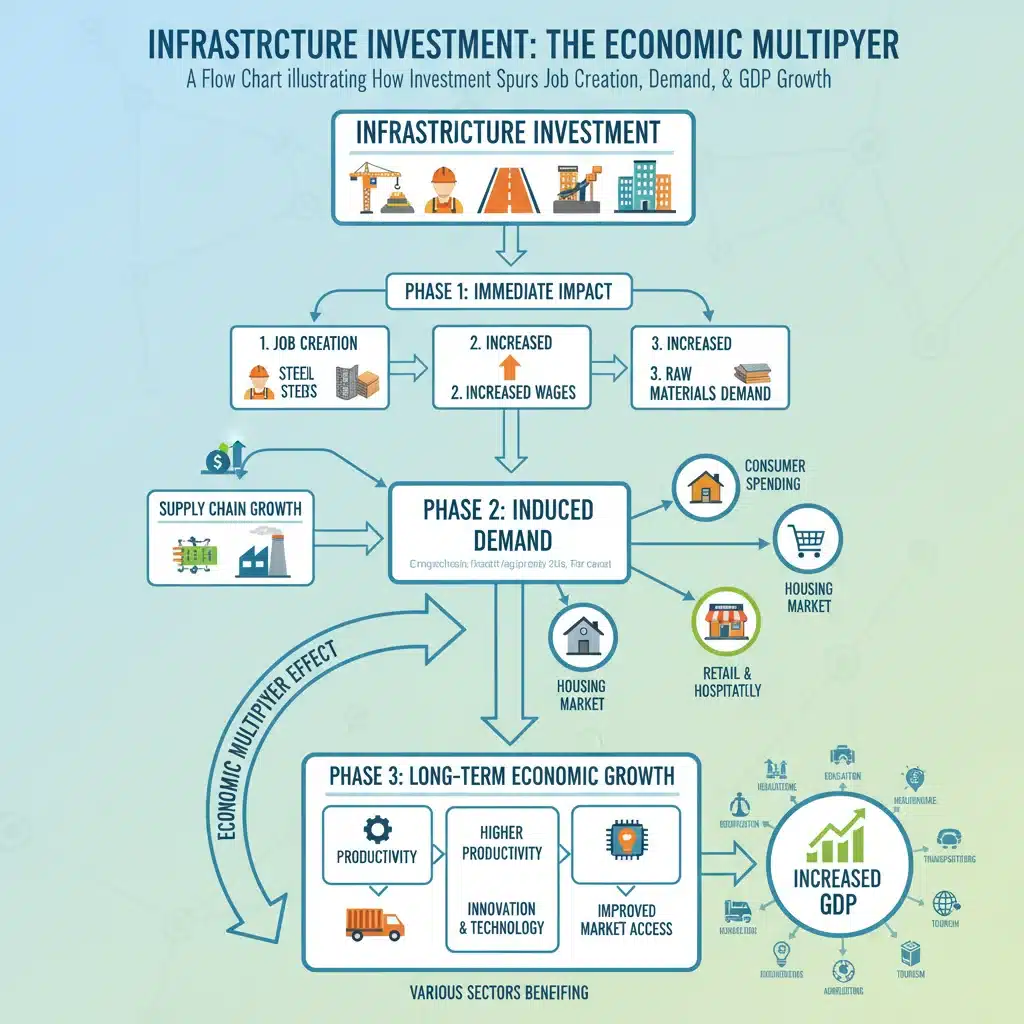
At the heart of the argument for increased infrastructure investment lies the economic multiplier effect. This phenomenon describes how an initial injection of spending into an economy leads to a larger increase in overall economic output. When governments or private entities invest in infrastructure projects—be it roads, bridges, public transit, energy grids, or digital networks—several economic channels are activated, generating a ripple effect throughout the economy.
Direct and Indirect Economic Benefits
The immediate and most visible benefit of infrastructure spending impact is the direct creation of jobs. Construction projects require a significant workforce, from engineers and project managers to skilled laborers and material suppliers. These jobs not only reduce unemployment but also put money into the hands of consumers, who then spend it on goods and services, further stimulating demand. This initial wave of spending is just the beginning.
Indirect benefits arise from the supply chain. The demand for construction materials—steel, concrete, machinery, and technology—boosts manufacturing and extractive industries. Transportation and logistics sectors also see increased activity. Each of these industries, in turn, creates its own jobs and economic output, amplifying the original investment. For instance, a major highway project will necessitate increased production from cement factories, which then hire more workers and purchase more raw materials, creating a cascading effect.
Induced Economic Growth
Beyond direct and indirect effects, infrastructure spending generates induced economic growth. As workers employed directly and indirectly in infrastructure projects earn higher wages, their increased disposable income fuels consumer spending across various sectors, from retail and hospitality to healthcare and education. This rise in consumer demand encourages businesses to expand, invest, and hire more, leading to a virtuous cycle of economic activity. The induced impact is often the largest component of the total multiplier effect, showcasing the widespread benefits of strategic infrastructure spending impact.
Key Areas of Infrastructure Investment in 2026
Looking ahead to 2026, several key areas are poised to receive significant infrastructure investment, each with distinct economic and regional development implications.
Sustainable and Green Infrastructure
With the global imperative to address climate change, investments in sustainable and green infrastructure are paramount. This includes renewable energy projects (solar, wind, geothermal), energy-efficient buildings, smart grids, electric vehicle charging networks, and resilient infrastructure designed to withstand extreme weather events. The infrastructure spending impact in this domain is twofold: it creates green jobs and fosters new industries while simultaneously mitigating environmental risks and reducing long-term operational costs. For example, a new offshore wind farm not only generates clean energy but also spurs innovation in marine engineering and manufacturing, creating a specialized workforce and supply chain.
Digital Infrastructure
The COVID-19 pandemic underscored the critical importance of robust digital infrastructure. In 2026, investments in 5G networks, fiber optic broadband expansion, data centers, and cybersecurity will continue to be a priority. Enhanced digital connectivity is a fundamental enabler of economic activity, facilitating remote work, e-commerce, digital education, and telehealth. Regions with superior digital infrastructure are better positioned to attract tech companies, foster innovation, and participate in the global digital economy, thereby experiencing a significant infrastructure spending impact on their economic competitiveness.
Transportation Networks
Modernizing and expanding transportation networks—roads, railways, ports, and airports—remains a cornerstone of infrastructure investment. Efficient transportation systems reduce commute times, lower logistics costs for businesses, and improve access to markets. High-speed rail projects, for instance, can connect major urban centers, fostering economic integration and regional specialization. Investments in public transit not only reduce traffic congestion and pollution but also provide equitable access to employment and services, enhancing the overall quality of life and contributing to a positive infrastructure spending impact.
Social Infrastructure
Often overlooked but equally vital, social infrastructure includes schools, hospitals, affordable housing, and public parks. Investments in these areas directly improve human capital and social well-being. A modern hospital or a well-equipped school not only provides essential services but also creates jobs for healthcare professionals, educators, and support staff. The long-term infrastructure spending impact of social infrastructure is profound, leading to a healthier, more educated, and more productive workforce, which is essential for sustained economic growth.
Regional Development: Bridging Disparities and Fostering Equity
One of the most compelling aspects of infrastructure spending impact is its potential to drive regional development and address geographical economic disparities. Strategic investments can revitalize struggling regions, create new economic hubs, and ensure that the benefits of growth are more equitably distributed.
Revitalizing Rural and Underdeveloped Areas
Historically, infrastructure development has often concentrated in urban centers. However, future investments are increasingly focused on bridging the gap between urban and rural areas. Extending broadband internet to underserved rural communities, improving rural road networks, and investing in regional public transport can unlock new economic opportunities, attract businesses, and retain talent in these areas. This targeted infrastructure spending impact can stem rural depopulation, foster local entrepreneurship, and diversify regional economies.
For example, a new agricultural processing facility in a rural region, supported by improved transport links and reliable energy, can create jobs for local farmers and workers, leading to increased local income and demand for local services. This kind of investment transforms a region’s economic landscape, showcasing the transformative infrastructure spending impact on communities.
Enhancing Urban Competitiveness
In urban areas, infrastructure investments focus on enhancing competitiveness and liveability. This includes upgrading public transit systems to reduce congestion and pollution, developing smart city technologies to improve efficiency, and creating green spaces to enhance urban environments. These improvements attract businesses, skilled workers, and tourists, contributing to a vibrant urban economy. The strategic infrastructure spending impact in cities ensures they remain dynamic engines of growth, capable of adapting to future challenges.
Promoting Inclusivity and Equity
Effective infrastructure planning must also prioritize inclusivity and equity. This means ensuring that infrastructure projects benefit all segments of society, including marginalized communities. Investments in affordable housing, accessible public transport, and community facilities can reduce inequalities and improve social mobility. By considering the diverse needs of different populations, infrastructure spending can become a powerful tool for social justice, delivering a positive infrastructure spending impact that extends beyond purely economic metrics.
Challenges and Considerations for Infrastructure Spending in 2026
While the benefits of infrastructure spending are clear, several challenges and considerations must be addressed to maximize its positive impact.
Funding Mechanisms and Fiscal Responsibility
Financing large-scale infrastructure projects requires substantial capital. Governments often rely on a mix of public funds, private investment (through public-private partnerships, or PPPs), and international loans. Ensuring fiscal responsibility means carefully evaluating the long-term costs and benefits of projects, managing debt sustainably, and exploring innovative financing models. The balance between immediate economic stimulus and long-term fiscal health is a critical consideration for maximizing the infrastructure spending impact without creating undue financial burdens.
Project Planning and Execution
Inefficient project planning, delays, and cost overruns can undermine the effectiveness of infrastructure investments. Robust governance, transparent procurement processes, and effective project management are essential to ensure that projects are delivered on time and within budget. Leveraging digital tools like Building Information Modeling (BIM) and artificial intelligence can improve planning accuracy and operational efficiency, thereby optimizing the infrastructure spending impact.
Environmental and Social Safeguards
Infrastructure projects can have significant environmental and social consequences if not managed properly. This includes displacement of communities, habitat destruction, and increased pollution. Implementing rigorous environmental impact assessments and social safeguards is crucial to minimize negative externalities and ensure that projects are sustainable and equitable. Engaging local communities in the planning process can help address concerns and build consensus, enhancing the overall positive infrastructure spending impact.
Technological Adoption and Innovation
The rapid pace of technological change means that infrastructure projects must be designed with future adaptability in mind. Incorporating smart technologies, automation, and sustainable materials can future-proof infrastructure and enhance its long-term value. Investing in research and development related to infrastructure innovation can also create new industries and jobs, further amplifying the infrastructure spending impact.
Measuring the Impact: Metrics and Evaluation
To truly understand the infrastructure spending impact, it is essential to establish clear metrics and robust evaluation frameworks. This allows policymakers to assess the effectiveness of investments, make data-driven decisions, and demonstrate accountability to the public.
Economic Indicators
Key economic indicators used to measure impact include GDP growth, job creation (direct, indirect, and induced), increased productivity, reduction in transportation costs, and growth in specific industrial sectors. Longitudinal studies can track these metrics over time to provide a comprehensive picture of the long-term benefits.
Social and Environmental Indicators
Beyond economic figures, evaluating social and environmental outcomes is equally important. This includes improvements in public health (e.g., cleaner air from reduced traffic), enhanced educational outcomes due to better school facilities, increased access to essential services, and reductions in carbon emissions. The quality of life improvements, though harder to quantify, are a vital part of the holistic infrastructure spending impact.
Regional Equity Metrics
To assess regional development, metrics can include changes in regional GDP per capita, unemployment rates in specific areas, migration patterns, and the distribution of new businesses. These indicators help determine whether infrastructure investments are effectively narrowing regional disparities and fostering inclusive growth.
Case Studies and Future Outlook
While specific projects for 2026 are still taking shape, historical and ongoing examples provide valuable insights into potential infrastructure spending impact. For instance, countries that have consistently invested in high-quality infrastructure, such as Germany’s autobahns or Japan’s Shinkansen high-speed rail, have seen sustained economic advantages and improved quality of life. Similarly, ongoing projects like the European Union’s Green Deal investments or the United States’ Bipartisan Infrastructure Law showcase a commitment to future-oriented infrastructure development.

Looking to 2026, we anticipate a continued emphasis on projects that integrate technology, sustainability, and social equity. Smart cities will become more prevalent, leveraging IoT and AI to manage urban services efficiently. Renewable energy infrastructure will expand significantly, driven by both climate goals and economic opportunities. Moreover, there will be a strong focus on resilience, ensuring that infrastructure can withstand the impacts of climate change and other unforeseen disruptions, thereby securing a robust long-term infrastructure spending impact.
The Role of Public-Private Partnerships (PPPs)
Public-Private Partnerships (PPPs) are increasingly becoming a favored mechanism for financing and delivering complex infrastructure projects. These collaborations leverage the financial resources, expertise, and efficiency of the private sector, while governments provide strategic oversight, regulatory frameworks, and often, initial capital or guarantees. In 2026, the role of PPPs is expected to expand further, particularly for projects that require significant upfront investment and specialized technical knowledge, such as large-scale renewable energy installations or advanced digital networks.
The benefits of PPPs in enhancing infrastructure spending impact are numerous. They can accelerate project delivery, transfer risks from the public to the private sector, and introduce innovative solutions. Private sector involvement often brings greater efficiency in construction and operation, leading to better value for money. However, careful structuring of PPP agreements is essential to ensure transparency, fair risk allocation, and alignment with public interest goals. Without proper governance, PPPs can lead to higher costs for taxpayers or reduced public access to essential services.
Challenges in PPP Implementation
Despite their advantages, PPPs face challenges. The complexity of contracts, the need for robust regulatory frameworks, and the potential for conflicts of interest require careful management. Governments must have the capacity to negotiate and oversee these partnerships effectively to ensure that they genuinely contribute to regional development and economic growth. The success of PPPs in delivering a positive infrastructure spending impact hinges on clear objectives, strong governance, and a shared commitment to long-term sustainability.
The Geopolitical Dimension of Infrastructure Spending
Beyond domestic economic and regional development considerations, infrastructure spending impact also has a significant geopolitical dimension. Nations are increasingly using infrastructure investment as a tool for strategic influence and international cooperation. Initiatives like China’s Belt and Road Initiative (BRI) demonstrate how infrastructure development can reshape global trade routes, foster diplomatic ties, and extend economic reach.
In 2026, we can expect continued competition and collaboration in infrastructure development on the international stage. Countries will invest in infrastructure projects in developing nations not only for economic returns but also to build alliances, secure supply chains, and promote their technological standards. This geopolitical dimension adds another layer of complexity and opportunity to the discussion of infrastructure spending impact, highlighting its role in shaping the future world order.
Regional Blocs and Collaborative Projects
Regional economic blocs, such as the European Union and ASEAN, often engage in collaborative infrastructure projects that span national borders. These projects, like cross-border high-speed rail lines or integrated energy grids, aim to enhance regional connectivity, facilitate trade, and foster economic integration. The collective infrastructure spending impact of such initiatives can be far greater than individual national efforts, creating larger, more resilient economic zones.
Conclusion: A Vision for 2026 and Beyond
The profound and far-reaching infrastructure spending impact in 2026 will be a defining characteristic of global economic and social development. From stimulating immediate economic activity through the multiplier effect to fostering long-term regional prosperity and bridging societal divides, strategic investments in infrastructure are indispensable. The focus on sustainable, digital, and equitable infrastructure will not only address present challenges but also build a resilient and inclusive future.
As governments, private entities, and international organizations collaborate to fund, plan, and execute these ambitious projects, a commitment to sound governance, technological innovation, and environmental and social responsibility will be paramount. The benefits—measured in jobs created, productivity gained, disparities reduced, and quality of life enhanced—will reverberate across economies and societies for generations. The year 2026 stands as a pivotal moment, where the choices made in infrastructure investment will chart the course for sustainable growth and a more connected, prosperous world.
Ultimately, understanding and harnessing the full potential of infrastructure spending impact is not just an economic imperative but a societal one. It is about building a better tomorrow, brick by brick, byte by byte, and bridge by bridge, ensuring that the foundations we lay today support the aspirations of future generations.