Unemployment Benefit Extensions 2026: Your Guide to Additional 13 Weeks

Navigating Unemployment Benefit Extensions in 2026: Your Comprehensive Guide
The economic landscape is constantly evolving, and for many, the prospect of unemployment can be daunting. Thankfully, safety nets like unemployment benefits exist to provide crucial financial support during challenging times. As we look ahead to 2026, understanding the potential for unemployment benefit extensions becomes paramount. This comprehensive guide aims to shed light on the new provisions for 2026, detailing what qualifies you for an additional 13 weeks of benefits and how to navigate the application process.
Unemployment benefits are designed to offer temporary financial assistance to eligible workers who are unemployed through no fault of their own. While standard benefits typically last for a predetermined period, often 26 weeks in many states, economic downturns or prolonged job market difficulties can necessitate extensions. These extensions are not automatic and often depend on specific federal and state legislation, as well as prevailing economic conditions.
For 2026, discussions around potential unemployment benefit extensions are already underway, influenced by projections for economic recovery, inflation rates, and labor market stability. Understanding these discussions and their implications is vital for anyone who might find themselves in need of prolonged support. This article will delve into the historical context of unemployment extensions, the likely triggers for such provisions in 2026, and the precise criteria you’ll need to meet to qualify for an additional 13 weeks.
Understanding the Basics of Unemployment Benefits
Before diving into extensions, it’s essential to grasp the fundamentals of unemployment benefits. These benefits are typically administered by state unemployment insurance agencies, funded by taxes paid by employers. Each state has its own set of rules regarding eligibility, benefit amounts, and duration. Generally, to qualify for initial unemployment benefits, you must:
- Be unemployed through no fault of your own (e.g., laid off, not fired for misconduct).
- Have earned a minimum amount of wages during a specific period (known as the base period).
- Be able, available, and actively seeking work.
- Meet any other state-specific requirements.
The standard duration of benefits varies by state, but 26 weeks is a common benchmark. However, during periods of high unemployment or economic crisis, federal legislation often steps in to provide funding for extended benefits, offering a lifeline to those who have exhausted their regular state benefits.
Historical Context of Unemployment Benefit Extensions
To fully appreciate the potential for unemployment benefit extensions in 2026, it’s helpful to look at past precedents. Federal unemployment extensions have historically been enacted during significant economic downturns. A prime example is the Great Recession (2008-2009) and the subsequent years, where federal programs like the Emergency Unemployment Compensation (EUC) provided multiple tiers of extended benefits, sometimes lasting for over 99 weeks in total.
More recently, the COVID-19 pandemic triggered unprecedented federal interventions. The CARES Act in 2020 introduced programs like Pandemic Unemployment Assistance (PUA) for those not typically eligible for state benefits (e.g., self-employed, gig workers) and Pandemic Emergency Unemployment Compensation (PEUC), which provided additional weeks of benefits for those who had exhausted their regular state benefits. These programs significantly expanded the scope and duration of unemployment support, demonstrating the government’s capacity and willingness to act during crises.
These historical examples highlight that unemployment benefit extensions are not a permanent feature but rather a response to specific economic conditions. The decision to implement extensions in 2026 will undoubtedly be influenced by similar factors, including the national unemployment rate, economic growth forecasts, and legislative priorities.
Triggers for Unemployment Benefit Extensions in 2026
The enactment of unemployment benefit extensions for 2026 will largely depend on a confluence of economic indicators and legislative actions. While it’s impossible to predict with absolute certainty, several factors are typically considered:
- National and State Unemployment Rates: A sustained period of high unemployment, both nationally and within individual states, is the primary trigger for federal intervention. If the unemployment rate remains elevated or shows signs of increasing significantly, it increases the likelihood of extensions.
- Economic Forecasts: Projections for GDP growth, inflation, and job creation play a crucial role. A stagnant economy or one facing a potential recession would make extensions more probable.
- Legislative Climate: The political will and legislative priorities of Congress will heavily influence whether new extension programs are introduced or existing ones are modified. Bipartisan support is often necessary for such significant economic measures.
- Duration of Joblessness: The average duration of unemployment is another key indicator. If individuals are struggling to find work for extended periods, it signals a need for longer-term support.
For 2026, policymakers will be closely monitoring these metrics. Any significant economic shock or a slower-than-anticipated recovery could prompt a renewed discussion about providing additional weeks of unemployment benefit extensions.
What Qualifies You for an Additional 13 Weeks of Benefits in 2026?
If unemployment benefit extensions are enacted for 2026, qualifying for an additional 13 weeks will likely involve specific criteria. While the exact rules will depend on the legislation passed, based on historical patterns, you can expect the following general requirements:
1. Exhaustion of Regular State Benefits
The most fundamental requirement will be that you have completely exhausted your regular state unemployment benefits. This means you have received all the weeks of benefits your state initially allowed you, typically 26 weeks, but this can vary. Extensions are designed as a safety net for those who have used up their primary allocation.
2. Availability and Active Job Search
You must continue to be able, available, and actively seeking work. This is a continuous requirement for all unemployment benefits, including extensions. States usually require claimants to register with their state’s workforce agency, attend job search workshops, and document their job search activities (e.g., applying for a certain number of jobs per week).
3. Meeting Earnings Requirements
While you would have met initial earnings requirements for your regular state benefits, some extension programs might have additional or specific earnings criteria, though this is less common for federal extensions that build upon state eligibility. The primary focus will be on your previous employment history that qualified you for state benefits.
4. Residency and Work Authorization
You must be a legal resident or authorized to work in the United States and meet the residency requirements of the state from which you are claiming benefits.
5. Not Disqualified for Other Reasons
You must not be disqualified from receiving benefits for reasons such as refusing suitable work, failing to report for a scheduled interview, or being discharged for misconduct during the extension period.
6. Specific Program Requirements (If Applicable)
If the 2026 extensions are part of a new federal program, there might be specific program-level requirements. For instance, past programs sometimes had different tiers of extensions based on the severity of unemployment in your state or region.
It’s crucial to remember that these are general guidelines. Once any legislation for unemployment benefit extensions in 2026 is passed, your state’s unemployment agency will provide detailed information on specific eligibility criteria and application procedures.
The Application Process for Extended Benefits
Applying for extended benefits, including an additional 13 weeks, is often a continuation of your existing unemployment claim rather than a completely new application. However, there are specific steps you’ll need to follow:
1. Monitor Official Announcements
Stay informed about federal and state announcements regarding unemployment benefit extensions. Your state unemployment agency will be the primary source of information. Sign up for email alerts or regularly check their official website.
2. Exhaust Your Regular Benefits
You must first exhaust all your regular state unemployment benefits. The system is designed to automatically transition you to extended benefits if they are available and you are eligible, but sometimes a specific action is required.
3. Receive Notification or Apply
In many cases, if extended benefits become available, your state agency will notify you automatically that your claim has been extended or provide instructions on how to apply for the extension. You might receive a letter, email, or a notification through your online unemployment portal.
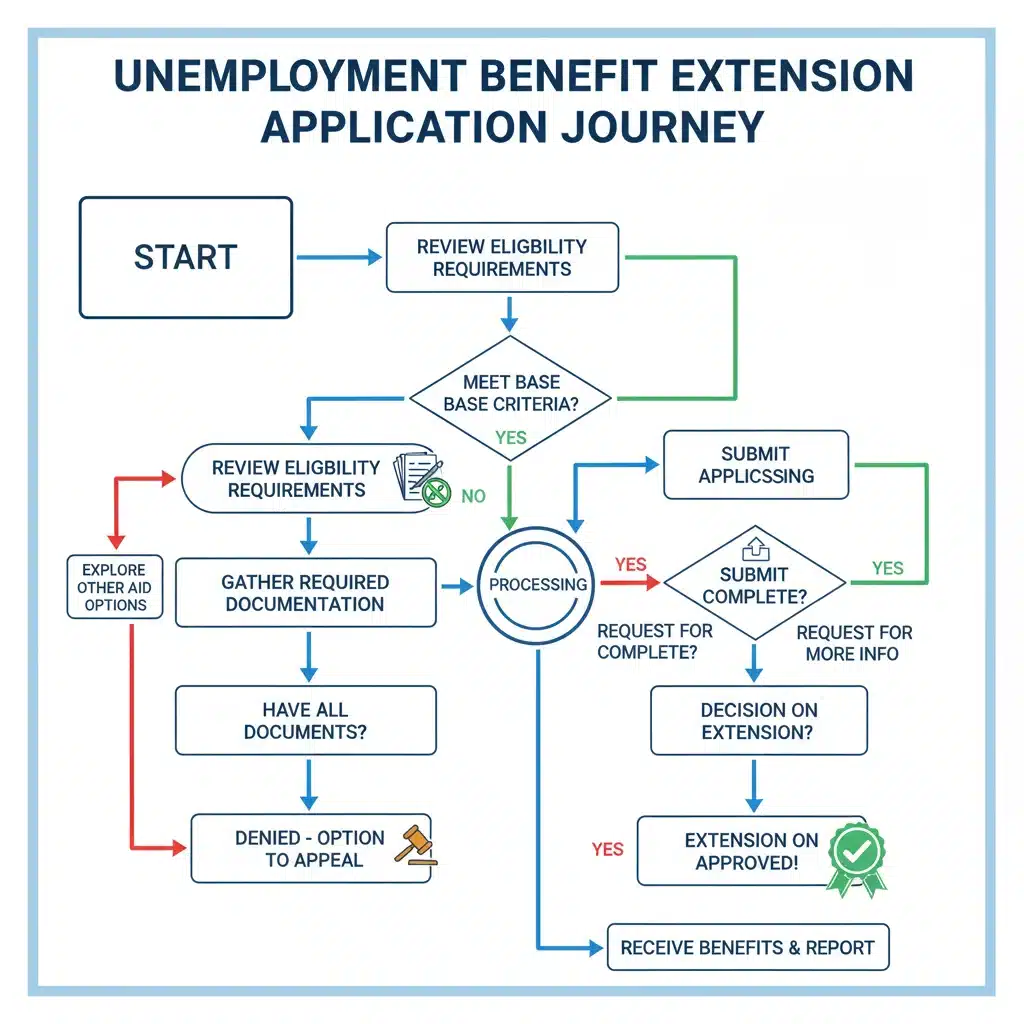
4. Continue Certifying for Benefits
Even if your regular benefits have run out, continue to certify for benefits each week, if your state allows. This demonstrates your continued eligibility and active job search, and it ensures there’s no lapse in receiving payments if extensions are approved.
5. Provide Required Documentation
While extensions typically don’t require re-submitting all initial documentation, you may be asked to verify your identity, provide updated contact information, or confirm your job search activities. Be prepared to provide any requested information promptly.
6. Adhere to Job Search Requirements
The requirement to actively seek work usually intensifies or remains stringent during extended benefit periods. Keep meticulous records of your job applications, interviews, and any networking activities. Failure to meet these requirements can lead to disqualification.
7. Appeal if Denied
If your application for unemployment benefit extensions is denied, you have the right to appeal the decision. Carefully review the denial letter, understand the reason for denial, and follow the instructions for filing an appeal within the specified timeframe. Gathering all relevant documentation and preparing a clear argument will be crucial for a successful appeal.
Key Updates and Considerations for 2026
As we approach 2026, several key considerations will shape the landscape of unemployment benefit extensions:
Economic Outlook
The overall health of the economy will be the most significant determinant. If the economy is robust, with low unemployment and strong job growth, the need for extensive federal unemployment extensions will diminish. Conversely, an economic slowdown or recession would likely trigger renewed calls for such programs.
Inflation and Cost of Living
High inflation rates could influence the debate around benefit amounts and duration. Policymakers might consider adjustments to benefit levels to ensure they provide adequate support in an environment of rising costs.
State-Specific Programs
Even without federal intervention, some states might implement their own extended benefit programs, particularly if they experience localized economic downturns or have higher-than-average unemployment rates. It’s essential to check your specific state’s unemployment agency website for state-level updates.
Job Training and Reskilling Initiatives
Alongside financial aid, there’s often a push for job training and reskilling initiatives during periods of extended unemployment. These programs aim to help individuals acquire new skills or update existing ones to re-enter the workforce more competitively. Utilizing these resources can be a requirement for receiving extended benefits in some instances.
Technological Advancements in Application Processes
State unemployment agencies are continually improving their online portals and digital services. Expect a streamlined, more user-friendly application and certification process for unemployment benefit extensions in 2026, emphasizing online submissions and digital communication.
Maximizing Your Chances of Receiving Extended Benefits
To ensure you are well-positioned to receive unemployment benefit extensions in 2026, consider the following proactive steps:
- Maintain Thorough Records: Keep detailed records of your employment history, earnings, and job search activities. This documentation will be invaluable if you need to apply for or appeal a denial of benefits.
- Stay Informed: Regularly check the official websites of your state’s unemployment agency and the U.S. Department of Labor for the latest updates on legislation and program availability.
- Actively Seek Work: Demonstrate a genuine and consistent effort to find new employment. This includes applying for suitable jobs, attending interviews, and utilizing career services offered by your state.
- Utilize Workforce Services: Take advantage of free resources offered by your state’s workforce development agencies, such as resume writing assistance, interview coaching, and access to job listings.
- Understand Your State’s Rules: Familiarize yourself with your specific state’s unemployment insurance laws, as these can vary significantly and impact your eligibility for both regular and extended benefits.
- Don’t Hesitate to Ask Questions: If you are unsure about any aspect of the application or eligibility process, contact your state unemployment agency directly for clarification.
The Broader Impact of Unemployment Benefit Extensions
Unemployment benefit extensions have a significant impact beyond individual claimants. They serve as an economic stabilizer, injecting funds into local economies by maintaining consumer spending during downturns. This can prevent deeper recessions and aid in quicker recoveries. For individuals, these extensions provide crucial time to find suitable employment without facing immediate financial ruin, allowing for better job matching and reducing long-term economic hardship.
However, extensions also come with debates about their potential effects on labor supply and the national debt. Policymakers must balance the need for social safety nets with concerns about disincentivizing work and fiscal responsibility. The design of any 2026 extension program will likely reflect these ongoing discussions, aiming to provide targeted support while encouraging re-employment.
Preparing for the Future: Beyond 2026 Extensions
While focusing on unemployment benefit extensions for 2026 is critical for those potentially affected, it’s also important to think long-term. Economic cycles are inevitable, and personal financial preparedness is key. Building an emergency fund, diversifying skills, and maintaining a strong professional network can help mitigate the impact of future job losses.
For policymakers, the lessons learned from past crises will inform future responses. The goal is to create agile and effective unemployment insurance systems that can adapt to varying economic conditions, providing timely and adequate support to workers while promoting a swift return to employment. This includes exploring automatic triggers for extensions based on economic indicators, which could streamline the process and reduce delays in providing aid.
Conclusion: Staying Informed and Prepared
The potential for unemployment benefit extensions in 2026 offers a vital lifeline for individuals who may face prolonged joblessness. While the exact details will depend on future economic conditions and legislative decisions, understanding the historical context, eligibility criteria, and application process is crucial. Staying informed through official government channels and proactively preparing for job search requirements will maximize your chances of receiving the support you need.

Remember, unemployment benefits are a temporary bridge, not a permanent solution. Utilize any extended period to enhance your skills, refine your job search strategy, and aggressively pursue new employment opportunities. By doing so, you can navigate the challenges of unemployment effectively and secure your financial future.
Keep a close watch on news from the U.S. Department of Labor and your state’s unemployment agency as 2026 approaches. These will be your authoritative sources for any new legislation, program rollouts, or changes to eligibility requirements for unemployment benefit extensions. Being proactive and well-informed is your best strategy for navigating this complex system.
Author