2026 Medicare Part D Changes: Save Up to $500 on Prescriptions

Anúncios
Understanding the 2026 Medicare Part D Changes: How to Save Up to $500 Annually on Prescriptions
The landscape of prescription drug coverage under Medicare is undergoing significant transformation, with some of the most impactful changes set to take effect in 2026. These adjustments, primarily driven by the Inflation Reduction Act (IRA) of 2022, aim to alleviate the financial burden of prescription drug costs for millions of Americans. For many beneficiaries, understanding these upcoming modifications to Medicare Part D 2026 is not just academic; it could translate into annual savings of up to $500 or more. This comprehensive guide will delve into the specifics of these changes, explain how they will impact your out-of-pocket expenses, and provide actionable strategies to ensure you are well-prepared to maximize your savings.
Anúncios
For years, the complexities and rising costs associated with Medicare Part D have been a source of concern for seniors and individuals with disabilities. The program, while vital for covering prescription drug expenses, has often left beneficiaries facing unpredictable and substantial out-of-pocket costs, particularly those with high drug expenditures. The reforms coming in 2026 are designed to address these long-standing issues, introducing a groundbreaking cap on annual out-of-pocket spending and restructuring how costs are shared between beneficiaries, plans, and drug manufacturers. Preparing for these changes now can make a significant difference in your future healthcare budget.
This article will serve as your essential resource for navigating the Medicare Part D 2026 changes. We will break down the key provisions, explain their implications, and offer expert advice on how to adapt your healthcare planning to take full advantage of the new rules. By the end, you will have a clear understanding of what to expect and how to potentially save hundreds of dollars on your annual prescription drug costs.
Anúncios
The Genesis of Change: The Inflation Reduction Act and Medicare Part D
To fully appreciate the Medicare Part D 2026 changes, it’s important to understand their origin. The Inflation Reduction Act (IRA) of 2022 is a landmark piece of legislation that, among its many provisions, significantly reforms how Medicare covers prescription drugs. While some changes, such as capping insulin costs and allowing Medicare to negotiate drug prices, have already begun or will be phased in earlier, 2026 marks a pivotal year for Part D beneficiaries due to the introduction of a new out-of-pocket spending limit.
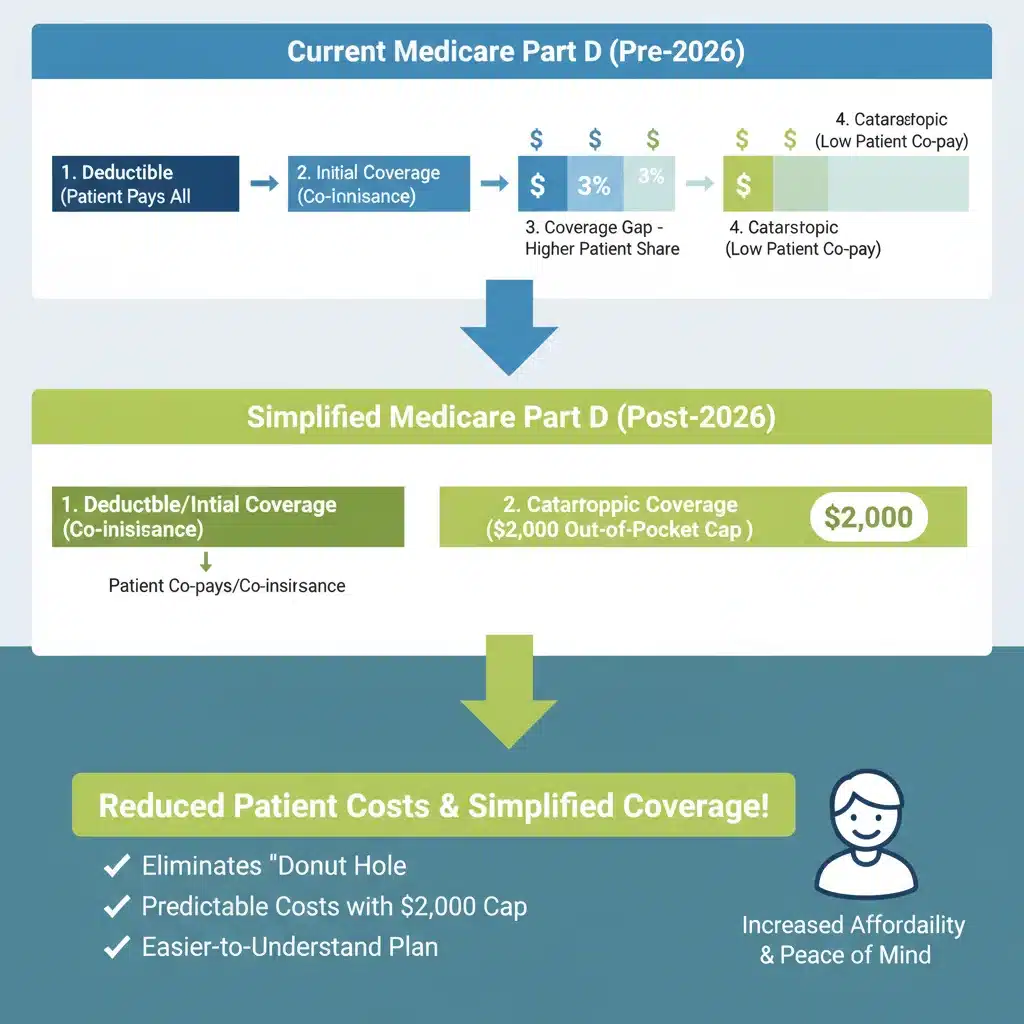
Before the IRA, there was no annual cap on how much Medicare Part D beneficiaries could spend out-of-pocket on prescription drugs. While the catastrophic phase offered substantial plan coverage, beneficiaries were still responsible for 5% of their drug costs, which could amount to thousands of dollars for those with very expensive medications. This unlimited liability was a major pain point and a significant financial risk for many.
The IRA’s reforms are designed to gradually reduce beneficiary costs. In 2023, the law eliminated the 5% coinsurance in the catastrophic phase for certain beneficiaries. In 2024, the catastrophic phase will begin once out-of-pocket costs reach $8,000, and the 5% coinsurance will be completely eliminated for all beneficiaries in the catastrophic phase. However, the most transformative change for most beneficiaries will arrive in 2026.
The Game-Changer: The $2,000 Out-of-Pocket Cap in 2026
The centerpiece of the Medicare Part D 2026 reforms is the establishment of an annual $2,000 out-of-pocket (OOP) spending cap for all Part D beneficiaries. This is a monumental shift that will provide unprecedented financial protection for individuals with high prescription drug costs. Once your total out-of-pocket spending on covered Part D drugs reaches $2,000 in a calendar year, you will pay nothing for your prescriptions for the remainder of that year.
This $2,000 cap includes your deductible, your initial coverage phase costs, and any costs incurred in the catastrophic phase. It does not include the monthly premiums you pay for your Part D plan. This new limit will replace the previous system where beneficiaries continued to pay 5% of their drug costs even in the catastrophic phase, a percentage that could quickly add up for those on expensive specialty medications.
Consider the impact: prior to 2026, someone with very high drug costs could easily spend $5,000, $10,000, or even more out-of-pocket in a year. With the $2,000 cap, their maximum annual expenditure for covered drugs will be fixed, providing predictability and significant relief. This change is expected to benefit millions, particularly those managing chronic conditions that require costly medications.
How the $2,000 Cap Can Save You Up to $500 Annually (and More)
The potential for saving up to $500 annually, and in many cases even more, stems directly from this new $2,000 out-of-pocket maximum. Let’s break down how these savings materialize:
- Elimination of Catastrophic Phase Coinsurance: As mentioned, before 2024, beneficiaries in the catastrophic phase were still responsible for 5% of their drug costs. For someone spending $10,000 on drugs annually, this 5% amounted to $500. For someone spending $20,000, it was $1,000. The $2,000 cap effectively removes this open-ended liability.
- Predictable Costs: Knowing your maximum annual out-of-pocket expense allows for better budgeting and financial planning. No more unexpected bills for expensive medications once you hit the cap.
- Protection for High-Cost Users: Individuals on specialty drugs for conditions like cancer, multiple sclerosis, or rheumatoid arthritis often face astronomical drug costs. The $2,000 cap will provide immense relief to these beneficiaries, capping their annual spending at a level significantly lower than what many currently pay.
While the $500 saving is a frequently cited figure, it’s important to understand that actual savings will vary based on individual drug costs. For beneficiaries who currently spend well over $2,000 out-of-pocket, the savings could be thousands of dollars annually. For those who already spend less than $2,000, the direct savings from the cap might be minimal, but they still gain the benefit of knowing their costs won’t exceed that threshold in the future.
Other Key Changes Impacting Medicare Part D 2026
While the $2,000 out-of-pocket cap is the most significant change, other provisions of the IRA will also influence Medicare Part D 2026 and beyond:
1. Medicare Drug Price Negotiation
Starting in 2026, Medicare will have the authority to negotiate prices for a limited number of high-cost prescription drugs. While the initial list of drugs will be small, this power is expected to expand over time. The negotiated prices will eventually be available to all Medicare beneficiaries, potentially leading to lower drug costs across the board. This is a foundational change that could have long-term benefits for the entire Part D program.
2. Redesigned Part D Benefit Structure
The entire Part D benefit structure is being redesigned in phases. By 2025, the initial coverage phase will effectively end when a beneficiary’s out-of-pocket spending reaches the new catastrophic threshold. The manufacturer discount program will also be expanded. In 2026, the $2,000 out-of-pocket cap fully integrates, simplifying the benefit structure significantly. This redesign aims to make the benefit easier to understand and more predictable for beneficiaries.
3. Premium Stabilization
The IRA also includes provisions to limit the growth of Part D premiums. Starting in 2029, annual Part D premium increases will be capped at 6% per year. While this is a later change, it’s designed to provide long-term stability and prevent rapid premium hikes, making Part D more affordable in the future.
4. Low-Income Subsidy (LIS) Expansion
Effective January 1, 2024, the IRA expanded eligibility for the full Low-Income Subsidy (LIS), also known as "Extra Help." This change helps more low-income Medicare beneficiaries receive assistance with their Part D premiums and out-of-pocket costs. While not a direct 2026 change, it’s an important related reform that enhances affordability for vulnerable populations.
Who Benefits Most from the Medicare Part D 2026 Changes?
The changes coming in Medicare Part D 2026 will broadly benefit all beneficiaries by providing a safety net, but certain groups will experience the most significant impact:
- Individuals with High Prescription Drug Costs: This is the most obvious beneficiary group. Anyone currently spending more than $2,000 annually out-of-pocket on covered Part D drugs will see their costs capped at that amount. This includes those with chronic conditions, rare diseases, or unexpected illnesses requiring expensive medications.
- Beneficiaries in the Catastrophic Phase: Historically, this group faced unlimited 5% coinsurance. The elimination of this coinsurance and the new $2,000 cap will provide substantial relief.
- People with Multiple Chronic Conditions: Managing several chronic diseases often means taking multiple expensive medications. The cap will consolidate these costs into a predictable annual maximum.
- Those Eligible for "Extra Help" (LIS): While LIS already provides significant assistance, the overall redesign and the cap can further simplify their benefit experience and ensure their costs remain minimal.
Even those who do not typically reach high out-of-pocket spending will benefit from the peace of mind that comes with a hard cap. It removes the financial anxiety associated with a potential diagnosis requiring costly long-term medication.
Strategies to Maximize Your Savings Under Medicare Part D 2026
While the new $2,000 cap automatically provides savings for many, proactive planning can help you maximize your benefits under Medicare Part D 2026. Here are some key strategies:
1. Review Your Plan Annually During Open Enrollment
This advice remains paramount. Even with the new cap, plans can vary significantly in their formularies (list of covered drugs), deductibles, and premiums. During the Annual Enrollment Period (AEP) from October 15 to December 7 each year, carefully compare plans to ensure your current medications are covered at the lowest possible cost. Use Medicare’s Plan Finder tool to compare options based on your specific prescriptions.
2. Utilize Generics and Preferred Brands
Always ask your doctor if a generic version of your medication is available. Generics are chemically identical to their brand-name counterparts and are significantly cheaper. If a generic isn’t available, inquire about preferred brand-name drugs, which often have lower copayments within your plan’s formulary.
3. Explore Manufacturer Assistance Programs
Even with the $2,000 cap, some drug manufacturers offer patient assistance programs that can help cover the costs of expensive medications, especially before you reach the cap. Research programs for your specific drugs. However, be aware that some manufacturer coupons or assistance programs may not count towards your out-of-pocket maximum under federal rules, so it’s crucial to understand the terms.
4. Consider State Pharmaceutical Assistance Programs (SPAPs)
Many states offer programs to help residents with prescription drug costs. These programs can provide additional financial support beyond what Medicare Part D offers. Check with your state’s Department of Health or Area Agency on Aging to see if you qualify.
5. Discuss Your Medications with Your Doctor
Regularly review your medication list with your healthcare provider. Sometimes, there might be alternative, less expensive drugs that are equally effective. Your doctor can also help you understand if any of your medications are subject to Medicare’s new drug price negotiation process, which could lead to further savings.
6. Understand the "Extra Help" Program
If you have limited income and resources, explore eligibility for the "Extra Help" (Low-Income Subsidy) program. This program helps pay for Part D premiums, deductibles, and copayments. The IRA has expanded eligibility, so even if you didn’t qualify before, you might now. This could reduce your out-of-pocket costs well below the $2,000 cap.
7. Track Your Spending
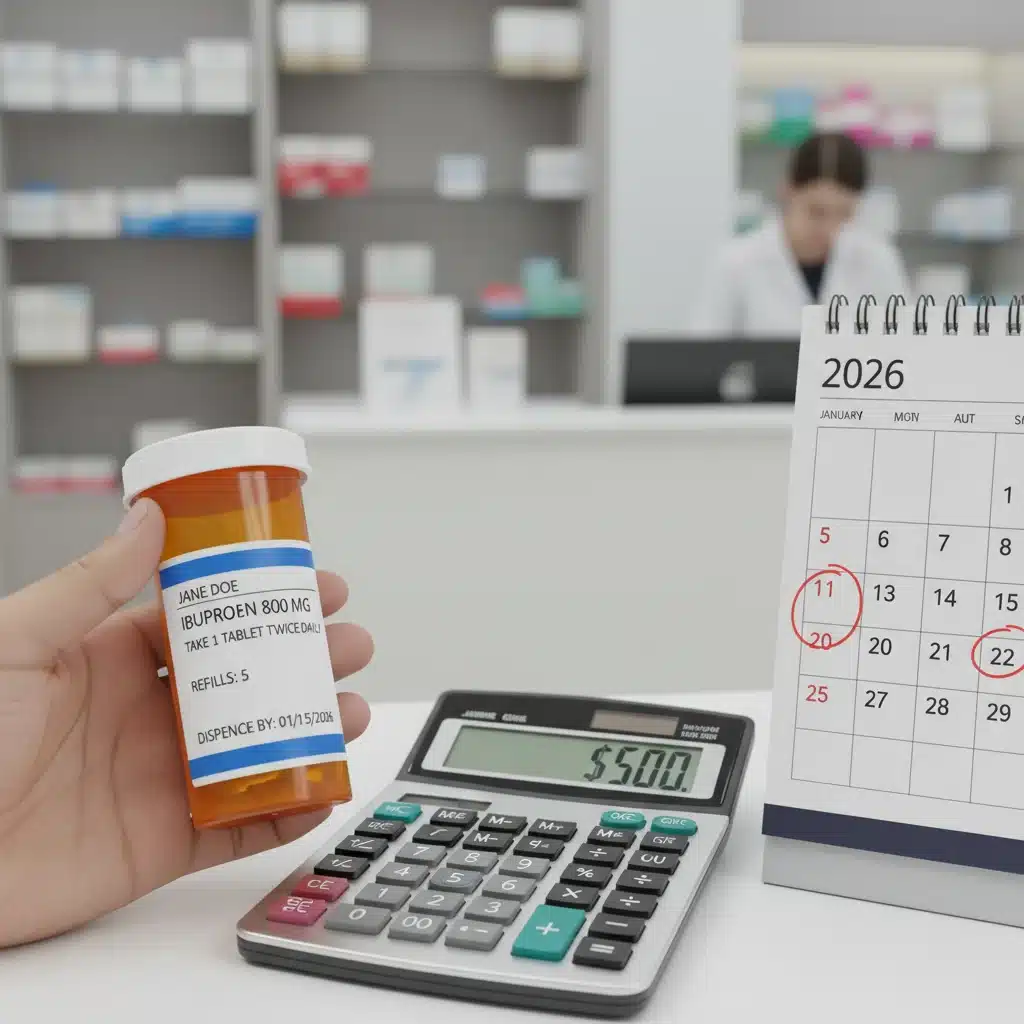
Keep a record of your prescription drug spending throughout the year. While your plan should track this, monitoring it yourself can help you anticipate when you’ll reach the $2,000 cap and provide peace of mind. This also helps in verifying that your plan is accurately accounting for your out-of-pocket costs.
Preparing for the Future of Medicare Part D 2026
The changes in Medicare Part D 2026 represent a significant step forward in making prescription drugs more affordable and predictable for beneficiaries. While the $2,000 cap is the headline, the broader reforms of the Inflation Reduction Act will continue to shape the program for years to come. Staying informed and proactive is key to navigating these changes successfully.
As we approach 2026, expect more detailed guidance from Medicare and your specific Part D plan. Pay close attention to communications from these entities. Attend informational webinars, read official publications, and don’t hesitate to reach out to Medicare directly or a trusted benefits counselor for personalized advice.
The goal of these reforms is to reduce financial stress and improve access to necessary medications. By understanding the new rules, especially the $2,000 out-of-pocket cap, and implementing smart planning strategies, you can ensure you are well-positioned to take advantage of the potential savings and maintain your health without undue financial burden. The future of Medicare Part D 2026 looks brighter for millions of Americans.
Conclusion: A New Era for Medicare Part D Beneficiaries
The year 2026 will usher in a new era for Medicare Part D, characterized by enhanced financial protections and greater predictability in prescription drug costs. The landmark $2,000 annual out-of-pocket cap on drug spending, a direct result of the Inflation Reduction Act, stands to save millions of beneficiaries hundreds, and in some cases, thousands of dollars annually. This fundamental shift will provide much-needed relief to those with high prescription drug expenses, eliminating the fear of unlimited costs in the catastrophic phase.
Beyond the cap, the ongoing reforms, including Medicare’s new ability to negotiate drug prices and the redesigned benefit structure, are all working towards a more affordable and sustainable Part D program. While the promise of saving up to $500 annually is a compelling reason to pay attention, the true value lies in the newfound peace of mind and financial security these changes offer.
To fully capitalize on these benefits, it is crucial to remain informed, actively review your Part D plan during the annual enrollment period, and explore all available assistance programs. By taking these proactive steps, you can ensure that you are well-prepared for Medicare Part D 2026 and beyond, allowing you to focus on your health with greater confidence and less financial worry. The future of prescription drug coverage under Medicare is evolving, and with the right knowledge, you can navigate it successfully to your advantage.
Author