Federal Reserve March 2025: Interest Rates & Economic Outlook
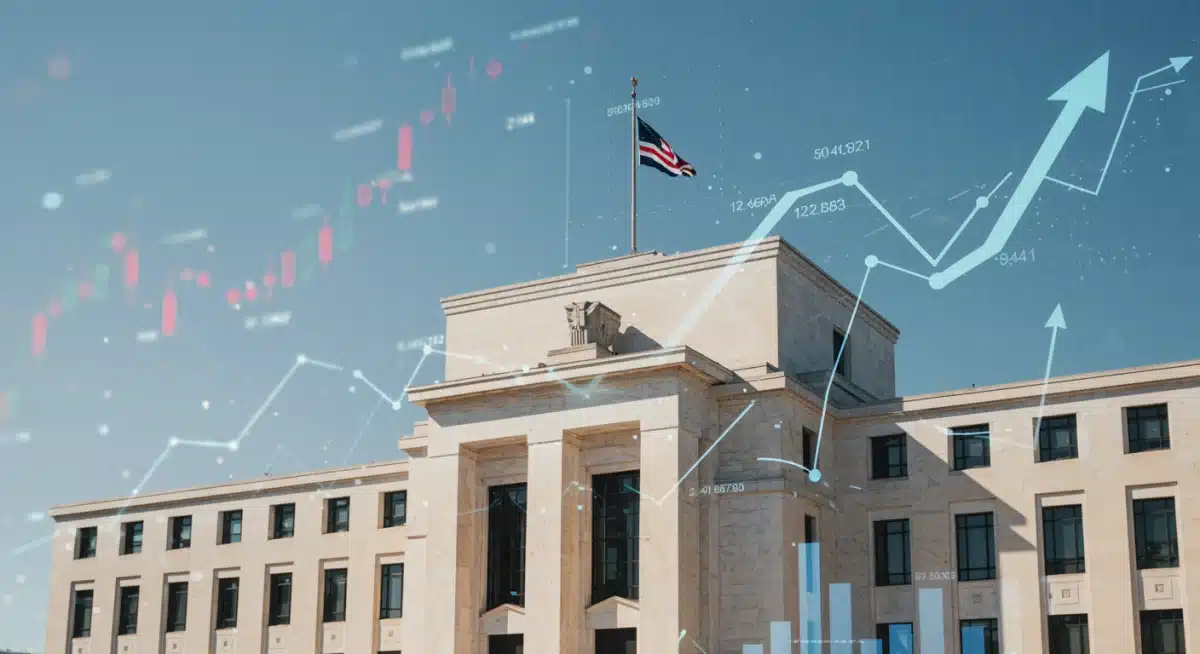
The Federal Reserve’s March 2025 meeting is poised to deliver critical updates on interest rate policy and economic projections, significantly influencing financial markets and the broader U.S. economy.
The Federal Reserve March 2025 meeting stands as a pivotal moment for understanding the future trajectory of the U.S. economy. Investors, businesses, and everyday citizens alike are keenly awaiting the central bank’s decisions on interest rates and its updated economic outlook, which will undoubtedly shape financial landscapes for the foreseeable future.
Decoding the Federal Reserve’s Mandate and March 2025 Focus
The Federal Reserve operates under a dual mandate from Congress: to achieve maximum employment and maintain price stability. These two objectives often require a delicate balancing act, especially in dynamic economic environments. The March 2025 meeting will heavily focus on how current economic conditions align with these goals, particularly in the context of inflation trends and labor market resilience.
Understanding the Fed’s mandate is crucial for interpreting its policy decisions. Maximum employment doesn’t mean zero unemployment, but rather the lowest sustainable rate without triggering inflationary pressures. Price stability, on the other hand, generally refers to maintaining inflation around the Fed’s target of 2%. Any deviation from these targets often prompts policy adjustments.
Key Economic Indicators Under Scrutiny
The Federal Reserve meticulously analyzes a broad array of economic data points to inform its decisions. These indicators provide a comprehensive picture of the economy’s health and help project future trends.
- Inflation Data: Consumer Price Index (CPI) and Personal Consumption Expenditures (PCE) are paramount, indicating consumer spending power and price changes.
- Labor Market Reports: Non-farm payrolls, unemployment rates, and wage growth figures offer insights into employment levels and potential inflationary pressures.
- GDP Growth: Gross Domestic Product reports reflect the overall economic output and growth trajectory of the nation.
- Consumer Sentiment: Surveys gauging consumer confidence and spending intentions provide a forward-looking perspective on economic activity.
The March 2025 meeting will involve a thorough review of these and other indicators, with particular attention to any shifts or emerging patterns since the previous gathering. The Fed’s assessment of these data points directly influences its outlook and subsequent policy actions.
In essence, the Federal Reserve’s mandate guides its actions, and the March 2025 meeting will be a critical juncture for assessing the economy’s alignment with its long-term objectives. The decisions made will ripple through various sectors, making a clear understanding of the Fed’s operational framework indispensable.
Interest Rate Decisions: Anticipating the March 2025 Outcome
The Federal Open Market Committee (FOMC) meeting in March 2025 is widely anticipated for its potential impact on interest rates. These decisions are the primary tool the Fed uses to influence economic activity, affecting everything from borrowing costs for consumers and businesses to the returns on savings accounts.
Market analysts and economists are already formulating various scenarios for the March meeting. Factors like persistent inflation, a robust labor market, or signs of economic slowdown will heavily weigh on the committee’s collective decision. A rate hike would signal the Fed’s continued commitment to curbing inflation, while a cut would suggest a shift towards stimulating economic growth.
Factors Influencing Rate Adjustments
Several critical elements contribute to the FOMC’s interest rate deliberations. These aren’t isolated factors but rather an interconnected web of economic forces.
- Inflationary Pressures: If inflation remains stubbornly high, the Fed might lean towards maintaining or raising rates to cool the economy. Conversely, if inflation is trending downwards towards the 2% target, a more accommodative stance could be adopted.
- Labor Market Health: A strong job market with low unemployment and rising wages could give the Fed room to keep rates higher, assuming it doesn’t lead to excessive wage-price spirals. A weakening labor market might prompt rate cuts to prevent a recession.
- Global Economic Conditions: International economic developments, including geopolitical events and global growth rates, can also influence the Fed’s decisions, as the U.S. economy is not isolated from global trends.
The Fed’s communication leading up to the March 2025 meeting will be keenly watched for any hints or forward guidance regarding their intentions. Transparency and clear communication are vital for managing market expectations and ensuring smooth transitions in monetary policy.
Ultimately, the interest rate decision in March 2025 will be a carefully considered move, balancing the risks of inflation against the need for sustained economic growth. Its implications will extend far beyond financial markets, touching upon the daily lives of American consumers and businesses.
Economic Outlook and Projections: What to Expect
Beyond interest rates, the Federal Reserve’s March 2025 meeting will furnish updated economic projections, providing a crucial glimpse into the central bank’s assessment of future economic conditions. These projections, often summarized in the Summary of Economic Projections (SEP), include forecasts for GDP growth, inflation, and unemployment rates over the next few years.
These projections are not mere academic exercises; they represent the collective wisdom of FOMC members and staff economists, offering a significant benchmark for market participants and policymakers. Any revisions from previous forecasts will be particularly scrutinized, as they indicate a shift in the Fed’s underlying economic assumptions.
Dissecting the Summary of Economic Projections (SEP)
The SEP is a detailed document released quarterly, and the March 2025 edition will be highly anticipated. It includes individual FOMC members’ forecasts, often presented as a range, rather than a single point estimate.
- GDP Growth Forecasts: These projections indicate the expected pace of economic expansion or contraction. A downward revision could signal concerns about a slowdown, while an upward revision suggests stronger growth.
- Inflation Projections: The Fed’s outlook on inflation is critical, as it directly relates to its price stability mandate. Changes in these forecasts will inform expectations about future interest rate policy.
- Unemployment Rate Forecasts: Projections for the unemployment rate reflect the Fed’s view on the health of the labor market and its progress towards maximum employment.
- Dot Plot: This graphical representation shows each FOMC member’s projection for the appropriate federal funds rate at the end of the current year and over the next few years. It offers insight into the committee’s collective thinking on the future path of monetary policy.
The March 2025 economic outlook will be a holistic assessment, taking into account domestic and international developments. These projections help businesses and individuals make informed decisions about investments, spending, and financial planning.
The Federal Reserve’s economic outlook and projections are vital tools for navigating the complexities of the modern economy. The March 2025 updates will provide invaluable insights for anyone seeking to understand the future direction of U.S. economic policy and performance.
Financial Market Reactions: What March 2025 Means for Investors
The Federal Reserve’s March 2025 meeting is expected to trigger significant reactions across financial markets. Investors, traders, and portfolio managers will be on high alert, ready to adjust their strategies based on the Fed’s interest rate decisions and economic outlook. The impact will be felt across various asset classes, from stocks and bonds to commodities and currencies.
Market reactions are often driven by how the Fed’s announcements align with or deviate from market expectations. If the Fed’s stance is more hawkish (aggressive in fighting inflation) or dovish (prioritizing economic growth) than anticipated, it can lead to sharp movements in asset prices.

Impact on Key Asset Classes
Different financial instruments will respond uniquely to the Fed’s announcements:
- Stock Market: Higher interest rates can make borrowing more expensive for companies, potentially dampening corporate earnings and stock valuations. Conversely, lower rates can stimulate growth and boost stock prices.
- Bond Market: Bond prices typically move inversely to interest rates. A rate hike usually leads to lower bond prices and higher yields, while a rate cut has the opposite effect.
- U.S. Dollar: Interest rate differentials often influence currency values. Higher rates in the U.S. can make the dollar more attractive to foreign investors, strengthening its value against other currencies.
- Commodities: Commodity prices, particularly gold and oil, can also be affected. A stronger dollar can make dollar-denominated commodities more expensive for international buyers, potentially lowering demand.
Investors will meticulously analyze the Fed’s statements for any forward guidance, seeking clues about future policy moves. This information is crucial for adjusting investment portfolios and managing risk effectively.
The March 2025 meeting represents a critical juncture for financial markets. Understanding the potential reactions and preparing for various scenarios will be key for investors navigating the evolving economic landscape.
Broader Economic Implications and Household Impact
The decisions made by the Federal Reserve in March 2025 extend far beyond financial markets, permeating into the broader economy and directly impacting the financial well-being of households across the United States. Changes in interest rates, for instance, can significantly alter borrowing costs for everything from mortgages to credit cards.
For consumers, a rate hike means higher costs for new loans and potentially increased payments on variable-rate debt. Conversely, a rate cut can make borrowing more affordable, potentially stimulating consumer spending and investment. The Fed’s policies also influence savings rates, affecting individuals relying on interest income.
Direct and Indirect Effects on Households
The ripple effects of the Fed’s policies are numerous and varied:
- Mortgage Rates: Changes in the federal funds rate indirectly influence mortgage rates. A rise can make homeownership less affordable, while a decline can spur refinancing activity and boost housing demand.
- Credit Card Debt: Most credit cards have variable interest rates tied to the prime rate, which is influenced by the federal funds rate. Higher rates mean higher interest payments for those carrying balances.
- Auto Loans and Personal Loans: Similar to mortgages and credit cards, the cost of these loans will generally move in tandem with the Fed’s rate decisions, impacting affordability.
- Savings Accounts: While higher rates increase borrowing costs, they can also lead to better returns on savings accounts, certificates of deposit (CDs), and money market accounts.
Beyond these direct financial impacts, the Fed’s stance on economic growth and inflation also plays a role. A strong economy, fostered by appropriate monetary policy, generally leads to job creation and wage growth, benefiting households. Conversely, an economic downturn can lead to job losses and financial hardship.
The Federal Reserve’s March 2025 meeting will have tangible consequences for households, influencing their ability to borrow, save, and manage their daily finances. Understanding these implications is vital for personal financial planning.
Historical Context and Future Trajectories
To fully appreciate the significance of the Federal Reserve’s March 2025 meeting, it’s essential to consider its historical context. The Fed’s monetary policy has evolved significantly over decades, adapting to various economic crises, inflationary periods, and technological shifts. Understanding past responses can provide valuable insight into potential future trajectories.
From the high inflation of the 1970s that led to aggressive rate hikes under Paul Volcker, to the quantitative easing measures adopted during the 2008 financial crisis and the COVID-19 pandemic, the Fed’s toolkit and strategies have continuously adjusted. Each era has presented unique challenges, shaping the institution’s approach to its dual mandate.
Lessons from Past Fed Cycles
Historical data offers valuable lessons for anticipating the Fed’s future actions:
- Inflationary Battles: The Fed has a clear track record of prioritizing price stability when inflation becomes a significant concern, even if it means some economic slowdown.
- Recessionary Responses: During economic downturns, the Fed typically employs expansive monetary policy, including rate cuts and unconventional measures, to stimulate recovery.
- Communication Evolution: The Fed has increasingly emphasized transparency and forward guidance to manage market expectations and enhance policy effectiveness.
The current economic environment leading up to March 2025 is a result of policies enacted in previous periods. For instance, the post-pandemic inflation surge and the Fed’s subsequent rate-hiking cycle are direct consequences of earlier accommodative policies and supply chain disruptions.
Looking ahead, the Federal Reserve’s March 2025 meeting will not only address immediate economic conditions but also lay the groundwork for future policy trajectories. The decisions made will be influenced by historical precedents while simultaneously charting new courses in response to emerging economic realities.
By examining the Federal Reserve’s historical responses and current economic indicators, we can better anticipate the potential directions it might take in March 2025 and beyond. This historical perspective is crucial for making informed predictions about the future of monetary policy.
| Key Aspect | Brief Description |
|---|---|
| Interest Rate Decisions | The FOMC will determine whether to adjust the federal funds rate, impacting borrowing costs. |
| Economic Projections (SEP) | Updated forecasts for GDP, inflation, and unemployment, offering insights into the Fed’s outlook. |
| Inflation Assessment | Analysis of recent inflation data to gauge progress towards the 2% target and inform policy. |
| Market and Household Impact | Decisions will influence stock, bond, and currency markets, alongside consumer borrowing and savings. |
Frequently Asked Questions About the Fed’s March 2025 Meeting
The Federal Reserve’s primary goal, mandated by Congress, is to achieve maximum employment and maintain price stability. This dual mandate guides all its monetary policy decisions, including those made at the March 2025 meeting, aiming for a healthy and balanced economy.
Interest rate changes directly impact consumers by altering the cost of borrowing for mortgages, auto loans, and credit cards. Higher rates mean more expensive loans and potentially better returns on savings, while lower rates have the opposite effect, influencing spending and investment behaviors.
The “dot plot” is a graphical representation within the Summary of Economic Projections (SEP) showing each FOMC member’s forecast for the federal funds rate. It’s important because it offers insight into the committee’s collective expectations for future monetary policy, guiding market participants.
Inflation is a critical factor for the Fed, as price stability is a key mandate. If inflation deviates significantly from the 2% target, the Fed may adjust interest rates to either cool down an overheating economy or stimulate it if inflation is too low, aiming for balance.
The March 2025 meeting could lead to significant shifts in stock, bond, and currency markets. Decisions on interest rates and economic outlook can influence corporate earnings, bond yields, and the U.S. dollar’s value, prompting investors to re-evaluate their portfolios and strategies.
Conclusion
The Federal Reserve’s March 2025 meeting is undoubtedly a landmark event for the U.S. economy and global financial markets. The decisions on interest rates and the updated economic outlook will provide critical guidance for investors, businesses, and households, shaping financial strategies and influencing daily economic life. As the central bank navigates its dual mandate of maximum employment and price stability, its actions will continue to be a primary driver of economic trajectory in the months and years to come. Staying informed about these developments is essential for anyone looking to understand and respond to the evolving financial landscape.