2026 Election Outlook: Key Battleground States and Policy Impact
The political landscape of the United States is in a constant state of flux, with each election cycle bringing new challenges, opportunities, and shifts in power. As we cast our gaze towards the 2026 election, the stakes are undeniably high. This article delves into the critical factors that will shape the 2026 Election Outlook, with a particular emphasis on the pivotal battleground states whose electoral decisions could dramatically alter the trajectory of national policy. Understanding these dynamics is not merely an academic exercise; it is essential for citizens, policymakers, and political observers alike to grasp the potential future of American governance.
The 2026 election, while two years away, is already a topic of intense speculation and strategic planning. Historically, midterm elections often serve as a referendum on the sitting president and the party in power. They can lead to significant shifts in congressional control, impacting legislative agendas, judicial appointments, and the overall balance of power in Washington D.C. The outcomes in key states will not only determine which party holds the majority in the House and Senate but also influence the political narrative leading into the 2028 presidential election.
To truly comprehend the 2026 Election Outlook, we must dissect the various layers of political, economic, and social factors at play. From evolving demographics to shifts in voter sentiment, and from the efficacy of political campaigns to the impact of national and global events, each element contributes to the complex mosaic of an election. Our analysis will provide a comprehensive overview, highlighting the states that are expected to be most competitive and the specific issues that are likely to resonate with voters.
This deep dive isn’t just about predicting winners and losers; it’s about understanding the mechanisms through which political power is contested and exercised. It’s about recognizing the issues that drive voters to the polls and the potential consequences of their choices on everything from healthcare and education to climate change and economic policy. The 2026 Election Outlook is a window into the future of American policy, and by exploring it thoroughly, we can better prepare for the changes and challenges ahead.
The Significance of Midterm Elections in Shaping National Policy
Midterm elections, often overshadowed by the presidential race, hold immense power in shaping the legislative agenda and national policy. Unlike presidential elections, which capture global attention, midterms are frequently seen as a more granular reflection of the electorate’s current mood and their satisfaction (or dissatisfaction) with the party in power. The 2026 Election Outlook will be no different, serving as a critical barometer for the political climate.
Control of Congress is paramount. If one party gains or maintains control of both the House and the Senate, they have a much clearer path to enacting their legislative priorities. Conversely, a divided government, where different parties control the House and Senate, or where one party holds the presidency while the other controls Congress, often leads to legislative gridlock and increased partisan conflict. This dynamic directly impacts the speed and scope of policy implementation across various sectors.
For example, a shift in congressional control could lead to significant changes in fiscal policy, including taxation, government spending, and budget priorities. Healthcare reform, environmental regulations, immigration policy, and even foreign relations can all be subject to drastic alterations depending on the electoral outcomes. The 2026 Election Outlook therefore isn’t just about who wins; it’s about what kind of policy environment will emerge from those victories.
Furthermore, midterm elections often influence judicial appointments. While Supreme Court justices are appointed by the President, Senate confirmation is required. A change in Senate control can significantly impact the confirmation process for both Supreme Court and federal appellate court nominees, thereby shaping the ideological balance of the judiciary for decades to come. This long-term impact on the interpretation and application of laws underscores the profound importance of the 2026 Election Outlook.
Beyond legislation and judicial appointments, midterm elections also serve as a proving ground for emerging political figures and new policy ideas. Successful campaigns in competitive states can elevate individuals to national prominence and bring their policy platforms to the forefront of national debate. This continuous cycle of political renewal and ideological contestation is fundamental to the American democratic process.
Identifying the Key Battleground States for 2026
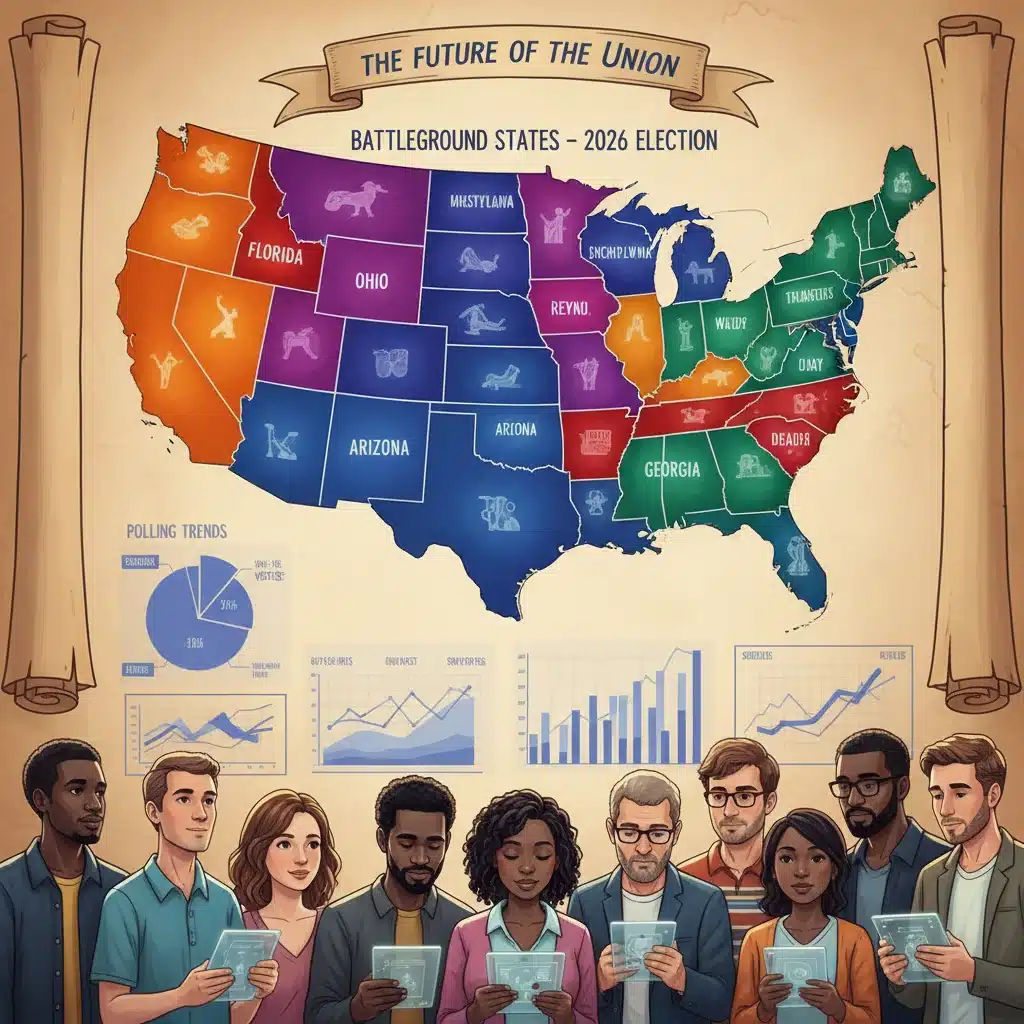
The concept of ‘battleground states’ is central to any election analysis, and the 2026 Election Outlook will be heavily defined by these pivotal regions. These are states where the electoral outcome is not consistently predictable for either major party, often decided by narrow margins, and thus attract disproportionate attention and resources from campaigns. While the specific list can evolve, certain states consistently appear on this list due to their demographic makeup, historical voting patterns, and the competitiveness of their statewide races.
States like Pennsylvania, Michigan, Wisconsin, Arizona, Georgia, and Nevada have consistently proven to be crucial in recent election cycles. Their diverse populations, often split between urban, suburban, and rural voters, make them highly contested. In the 2026 Election Outlook, these states will likely once again be at the heart of the political battle. Each of these states possesses unique political characteristics and demographic trends that will be vital to understand.
Pennsylvania, with its mix of working-class communities, suburban voters, and urban centers, often mirrors the national political mood. Economic issues, particularly those related to manufacturing and energy, tend to resonate strongly here. The ability of candidates to connect with voters across these diverse groups will be key.
Michigan and Wisconsin, part of the ‘Rust Belt,’ share similar economic concerns, including job creation, trade, and the future of industries like automotive and agriculture. Shifting allegiances in these states have demonstrated their capacity to swing national elections, making them indispensable to the 2026 Election Outlook.
In the Southwest, Arizona and Nevada have seen significant demographic changes, with growing Hispanic populations and an influx of new residents. Issues such as immigration, water rights, and rapid urban development are often front and center. These states represent a microcosm of the evolving American electorate, and their outcomes will provide valuable insights into broader national trends.
Georgia, a state that has transitioned from reliably Republican to a competitive battleground, showcases the impact of demographic shifts and sustained grassroots organizing. Urbanization and an increasingly diverse electorate have transformed its political landscape, making it a crucial watch in the 2026 Election Outlook.
Beyond these perennial battlegrounds, other states might emerge as unexpectedly competitive. Factors such as retiring incumbents, changing economic conditions, or the rise of charismatic local candidates can shift a state’s political leanings. Campaigns will be meticulously tracking polling data, demographic shifts, and local sentiment to identify these emerging battlegrounds.
The strategies employed in these states will be intensive, involving significant financial investment, extensive ground operations, and sophisticated media campaigns. Understanding the specific issues, demographics, and political histories of these battleground states is fundamental to grasping the full scope of the 2026 Election Outlook.
Demographic Shifts and Voter Behavior in 2026
Demography is destiny, or so the saying goes in politics. The demographic shifts occurring across the United States will play a crucial role in shaping the 2026 Election Outlook. Changes in population growth, ethnic composition, age distribution, and educational attainment all contribute to evolving voter behavior and political preferences. Analyzing these trends is critical for understanding future electoral outcomes.
One of the most significant demographic trends is the increasing diversity of the American electorate. The growth of Hispanic, Asian, and other minority populations is altering the voter base in many states, particularly in the Sun Belt. These groups often have distinct political priorities and allegiances, which can shift the balance of power in competitive races. For instance, the growing Hispanic vote in states like Arizona and Nevada could be a decisive factor in the 2026 Election Outlook.
Generational shifts are also profoundly impactful. Younger voters, particularly Gen Z and younger millennials, tend to be more progressive on social issues and often prioritize concerns like climate change, student debt, and social justice. As these generations constitute a larger share of the electorate, their participation rates and voting patterns will be vital to watch. Conversely, older generations, while often more reliable voters, may hold different priorities, creating a generational divide that campaigns must navigate.
Urbanization and suburbanization continue to reshape political geography. Large urban centers typically lean Democratic, while rural areas often favor Republicans. The suburbs, however, remain a critical swing demographic, often deciding the fate of statewide and national elections. The ongoing migration patterns, particularly the movement of people in and out of suburban areas, will be a key factor in the 2026 Election Outlook.
Educational attainment also correlates with voting behavior. Voters with higher levels of education often exhibit different political leanings than those with less formal education. As educational opportunities and access change, these shifts can subtly alter the political landscape over time. Campaign strategies will need to be finely tuned to appeal to voters across various educational backgrounds.
Finally, voter turnout dynamics are always a wild card. Enthusiasm levels, the perceived stakes of the election, and the effectiveness of get-out-the-vote efforts can all influence who shows up at the polls. Campaigns will invest heavily in voter registration and mobilization, particularly in battleground states, to ensure their supporters cast their ballots. The ability to energize and mobilize specific demographic groups will be a defining feature of the 2026 Election Outlook.
Economic Factors and Their Influence on Voter Sentiment
Economic conditions are consistently among the most significant drivers of voter sentiment and are therefore central to the 2026 Election Outlook. When the economy is perceived to be strong, voters often reward the incumbent party; conversely, economic downturns or anxieties frequently lead to a desire for change. The state of the economy – encompassing inflation, employment rates, wage growth, and consumer confidence – will undoubtedly shape how Americans vote.
Inflation, in particular, has been a major concern in recent years, impacting household budgets and purchasing power. If inflation remains high or becomes a persistent issue leading up to 2026, it could significantly erode public confidence in the party in power. Voters often judge economic performance based on their personal financial situations, making the cost of living a highly salient issue in the 2026 Election Outlook.
Employment rates and job growth are also critical indicators. A robust job market tends to foster optimism and economic stability, which can benefit incumbents. However, if unemployment rises or job growth stagnates, it can create widespread discontent. The types of jobs being created – whether high-paying or low-wage – and the perceived security of those jobs also play a role in how voters assess economic health.
Wage growth, especially in relation to inflation, is another key metric. If wages are not keeping pace with the cost of goods and services, even a low unemployment rate may not translate into positive voter sentiment. The feeling of falling behind financially can be a powerful motivator for voters seeking a different political direction, directly influencing the 2026 Election Outlook.
Consumer confidence, which reflects how optimistic consumers are about the state of the economy, can also be a leading indicator of electoral success. When consumers feel secure about their financial future, they are more likely to spend, driving economic growth. A decline in consumer confidence, on the other hand, can signal trouble for the incumbent party. Political messaging around economic issues will be crucial, with each party attempting to frame the economic narrative in their favor.
Beyond national economic indicators, localized economic issues can also be decisive, particularly in battleground states. For example, the health of specific industries, the impact of trade policies, or the availability of affordable housing can all influence how voters in a particular region perceive the economy. These localized economic concerns will be heavily targeted by campaigns seeking to win over voters in competitive districts, making them integral to the 2026 Election Outlook.
Key Policy Issues Dominating the 2026 Election Cycle
While economic factors often take center stage, a range of other critical policy issues will undoubtedly dominate the discourse surrounding the 2026 Election Outlook. These issues reflect the evolving priorities and concerns of the American public and will be central to how candidates differentiate themselves and appeal to voters.
Healthcare remains a perennial top-tier issue. Debates around access to affordable care, the future of the Affordable Care Act, prescription drug costs, and reproductive rights will continue to be highly contentious. Depending on the political climate, these issues could mobilize significant portions of the electorate, particularly in states where healthcare access or reproductive rights are under threat. The 2026 Election Outlook will see candidates articulate clear stances on these complex issues.
Climate Change and Environmental Policy are growing in importance, especially among younger voters. Discussions around renewable energy, environmental regulations, and the federal government’s role in addressing climate change will be prominent. The impact of extreme weather events and natural disasters on various regions could further elevate these concerns, making them a significant factor in the 2026 Election Outlook.
Immigration policy continues to be a deeply divisive issue. Debates over border security, pathways to citizenship, and the treatment of undocumented immigrants will likely be central to campaigns, particularly in states bordering Mexico or those with large immigrant populations. Candidates will need to navigate complex humanitarian and economic arguments, making this a high-stakes issue in the 2026 Election Outlook.
Education, from K-12 schooling to higher education costs and student loan debt, will also feature prominently. Parents and students alike are concerned about the quality of education, curriculum debates, and the financial burden of college. Policy proposals addressing these concerns could swing votes, especially in suburban areas where education is often a top priority. The 2026 Election Outlook will see candidates proposing various reforms and funding initiatives.
Social and Cultural Issues, such as LGBTQ+ rights, gun control, and religious freedom, continue to be powerful motivators for voters on both sides of the political spectrum. These issues often tap into deeply held values and can drive voter turnout, even if they are not directly tied to economic well-being. Campaigns will strategically highlight these issues to energize their base and persuade undecided voters, impacting the overall 2026 Election Outlook.
Finally, ongoing debates about Government Spending and the National Debt will continue. Concerns about fiscal responsibility, the size of government, and the allocation of taxpayer dollars will be central to many campaigns. Proposals for tax reform and budget cuts or increases will be carefully scrutinized by an electorate conscious of economic stability. The interplay of these diverse policy issues will define the political narratives and influence voter decisions in the 2026 Election Outlook.
The Role of Campaign Strategies and Digital Outreach
In the modern political era, effective campaign strategies and sophisticated digital outreach are indispensable for success, and the 2026 Election Outlook will be no exception. Campaigns are increasingly leveraging data analytics, social media, and microtargeting to reach specific voter segments, persuade the undecided, and mobilize their base. The technological arms race in politics continues to escalate, with significant implications for electoral outcomes.
Data analytics plays a critical role in identifying potential voters, understanding their preferences, and tailoring messages. Campaigns collect vast amounts of data on demographics, past voting behavior, consumer habits, and online activity to create highly detailed voter profiles. This allows for hyper-personalized messaging through various channels, maximizing the impact of limited resources. The ability to effectively utilize ‘big data’ will be a hallmark of successful campaigns in the 2026 Election Outlook.
Social media platforms have become central to political communication. From disseminating campaign messages and responding to criticisms to organizing events and fundraising, platforms like X (formerly Twitter), Facebook, Instagram, and TikTok are essential tools. The viral nature of content on these platforms means that campaigns must be agile and responsive, capable of shaping narratives and countering misinformation in real-time. The ability to engage with voters directly and authentically on social media will be crucial for influencing the 2026 Election Outlook.
Microtargeting allows campaigns to deliver highly specific messages to small, defined groups of voters based on their interests, demographics, and behaviors. Instead of broad, generic advertisements, voters might receive messages tailored to their concerns about healthcare, local environmental issues, or specific economic policies. This precision campaigning aims to maximize persuasion and turnout, making it a powerful tool in competitive races for the 2026 Election Outlook.
Grassroots organizing, while traditionally reliant on door-to-door canvassing and phone banking, is increasingly integrated with digital tools. Online volunteer recruitment, digital organizing platforms, and virtual town halls extend the reach of traditional ground operations. The synergy between digital and traditional outreach methods will be key to effective voter mobilization, especially in the battleground states that will define the 2026 Election Outlook.
Finally, the battle against misinformation and disinformation will be a significant challenge. Campaigns will need robust strategies to fact-check, counter false narratives, and build trust with voters in an increasingly fragmented media landscape. The ability to control the narrative and present a coherent, truthful message will be vital for success. The sophistication of these campaign strategies and digital outreach efforts will heavily influence the 2026 Election Outlook and the ultimate balance of power.

Potential Impact on National Policy and Future Legislation
The outcomes of the 2026 Election Outlook will have profound and far-reaching implications for national policy and the legislative agenda for the remainder of the decade. Depending on which party gains control of Congress, or if the existing balance of power is maintained, significant policy shifts could occur across virtually every sector of government and society.
If the party currently in the White House loses ground in Congress, particularly if they lose control of one or both chambers, it could lead to increased legislative gridlock. A divided government often results in fewer landmark bills being passed, as the executive and legislative branches struggle to find common ground. This could stall progress on major initiatives, from infrastructure spending to climate legislation, impacting the pace of national development.
Conversely, if one party achieves a strong majority in both the House and Senate, they could accelerate their legislative agenda. This might include significant reforms in areas like healthcare, taxation, immigration, or environmental protection. For example, a unified government could push for comprehensive tax reform, either increasing or decreasing corporate and individual tax rates, which would have a direct impact on businesses and citizens alike. The 2026 Election Outlook could thus set the stage for a period of rapid policy change.
Beyond specific legislation, the 2026 Election Outlook will also influence the regulatory environment. New administrations and congressional majorities often seek to either roll back or expand regulations in areas such as environmental protection, financial markets, and consumer safety. These regulatory shifts can have significant economic consequences, affecting industries, job creation, and public health.
Foreign policy could also be impacted. While the President holds primary authority in foreign affairs, congressional support is often crucial for treaties, trade agreements, and funding for international initiatives. A shift in congressional control could lead to different approaches to international relations, alliances, and global challenges, altering America’s role on the world stage. The 2026 Election Outlook is therefore not just a domestic concern but has global ramifications.
Finally, the results of 2026 will inevitably set the stage for the 2028 presidential election. The performance of parties and individual candidates in the midterms will be seen as an indicator of their strength and viability for the next presidential cycle. The legislative successes or failures post-2026 will form a significant part of the narrative for the subsequent presidential campaign, making the 2026 Election Outlook a crucial precursor to future political battles.
Challenges and Uncertainties Leading to 2026
While we can analyze trends and anticipate battlegrounds, the path to the 2026 Election Outlook is fraught with challenges and uncertainties. A myriad of unforeseen events – both domestic and international – can dramatically alter the political landscape and influence voter behavior. Preparing for these unknowns is a critical aspect of political strategy.
Geopolitical events, such as international conflicts, humanitarian crises, or significant shifts in global power dynamics, can quickly overshadow domestic issues. These events can rally public support around the incumbent party or, conversely, lead to widespread criticism if the government’s response is deemed inadequate. The impact of such events on the 2026 Election Outlook is often unpredictable but potentially profound.
Domestic crises, including natural disasters, public health emergencies, or significant social unrest, can also reshape the political narrative. The government’s handling of these crises, the perceived effectiveness of its response, and the empathy shown by leaders can significantly sway public opinion. Voters often look to their leaders for stability and competence during times of crisis, making these moments critical for electoral success or failure in the 2026 Election Outlook.
The emergence of new political figures or third-party movements could also introduce an element of unpredictability. While the American political system is largely dominated by two major parties, a charismatic independent or a well-funded third-party candidate could siphon votes from one of the major parties, particularly in close races. This could disrupt traditional electoral calculations and make the 2026 Election Outlook even more complex.
Technological advancements and their societal impacts represent another area of uncertainty. Issues related to artificial intelligence, data privacy, and the future of work could become prominent policy debates, potentially creating new political cleavages. How parties articulate their vision for a technologically evolving society could resonate with different segments of the electorate, influencing the 2026 Election Outlook.
Finally, the ongoing polarization of American politics presents a persistent challenge. The deep ideological divides and partisan animosity make it difficult for compromise and consensus, often leading to stalemates and public frustration. The ability of campaigns to bridge these divides, or at least to effectively navigate them, will be crucial. The level of political engagement and the willingness of voters to cross party lines will ultimately shape the final 2026 Election Outlook, making it a period of intense scrutiny and strategic maneuvering for all involved.
Conclusion: Navigating the Complexities of the 2026 Election Outlook
As we have explored, the 2026 Election Outlook is a multifaceted tapestry woven from demographic shifts, economic currents, critical policy debates, and sophisticated campaign strategies. The future of national policy, from healthcare and the environment to the economy and foreign relations, hinges significantly on the outcomes in key battleground states. These states, with their diverse populations and often razor-thin margins, will once again be the crucible where the nation’s political future is forged.
Understanding the interplay of these factors is not merely an academic exercise; it is essential for anyone seeking to comprehend the trajectory of American governance. The midterm elections serve as a vital checkpoint, offering the electorate an opportunity to affirm or redirect the nation’s course. The decisions made at the polls in 2026 will reverberate through legislative chambers, judicial appointments, and the daily lives of millions of Americans.
The challenges and uncertainties leading up to 2026 are substantial, ranging from unpredictable geopolitical events to evolving domestic crises. Political campaigns will need to be agile, responsive, and adept at leveraging both traditional and digital outreach methods to connect with an increasingly diverse and fragmented electorate. The battle against misinformation, the art of persuasion, and the power of grassroots mobilization will all play critical roles in shaping the final electoral landscape.
Ultimately, the 2026 Election Outlook is a testament to the dynamic and often unpredictable nature of democratic politics. While predictions can be made based on current trends, the true outcome will be determined by the collective will of the voters, influenced by the issues that matter most to them, and the leaders they believe can best address those concerns. As the election cycle unfolds, continuous analysis and engagement will be crucial for navigating its complexities and understanding its profound implications for national policy.