Gamification of Learning: Top 5 Platforms Transforming US Schools by 2026
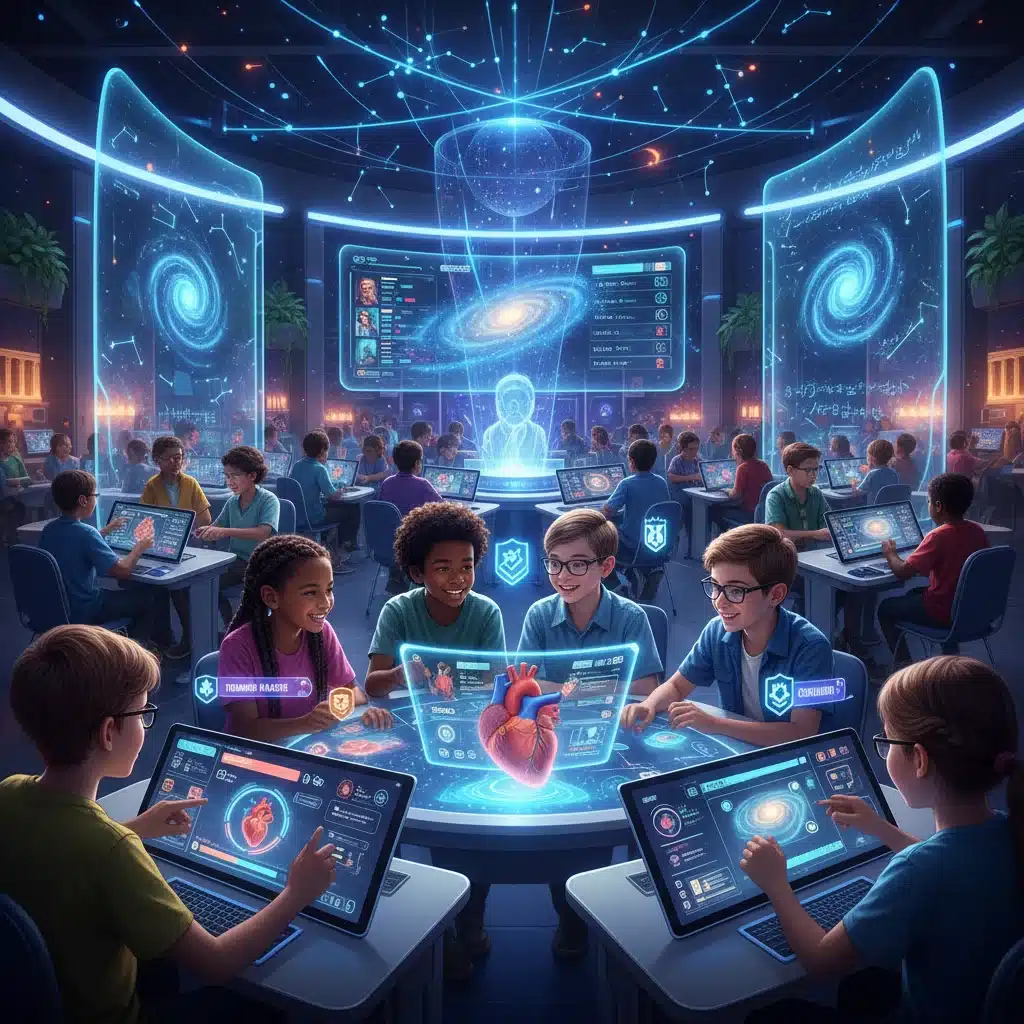
The Gamification of Learning: 5 New Platforms Gaining Traction in US Schools by 2026
The educational landscape is undergoing a profound transformation, driven by technological innovation and a deeper understanding of student engagement. Among the most exciting developments is the rise of gamification in learning. By integrating game-like elements into educational content, schools are finding new ways to motivate students, enhance retention, and make learning an intrinsically rewarding experience. This article explores the top 5 gamification learning platforms poised to redefine education in US schools by 2026, highlighting their unique features and the impact they are already making.
Why Gamification is the Future of Learning
For decades, traditional education models have struggled with student disengagement, particularly as digital natives demand more interactive and dynamic learning experiences. The concept of gamification learning platforms offers a compelling solution. It’s not just about turning lessons into games; it’s about applying game design principles – such as points, badges, leaderboards, challenges, and narrative-driven progression – to non-game contexts to enhance motivation and engagement. In an educational setting, this translates to:
- Increased Motivation: Students are driven by the desire to achieve goals, earn rewards, and compete.
- Enhanced Engagement: Interactive elements keep students actively involved, reducing passive learning.
- Improved Retention: Learning through doing and problem-solving in a gamified environment leads to deeper understanding and better memory recall.
- Personalized Learning Paths: Many gamified platforms adapt to individual student progress, offering tailored challenges.
- Immediate Feedback: Games provide instant feedback on performance, allowing students to learn from mistakes quickly.
- Development of Soft Skills: Collaboration, critical thinking, and problem-solving are often central to gamified learning.
As US schools increasingly recognize these benefits, the adoption of specialized gamification learning platforms is skyrocketing. By 2026, these platforms are expected to be integral to the curriculum, shaping how millions of students learn and grow.
Criteria for Selecting Top Gamification Platforms
To identify the leading gamification learning platforms, we considered several key factors that contribute to their effectiveness and potential for widespread adoption:
- Pedagogical Soundness: Do they align with educational objectives and learning theories?
- Engagement Metrics: How effectively do they capture and maintain student interest?
- Scalability and Accessibility: Can they be easily implemented across diverse school environments and accessed by all students?
- Teacher Support and Integration: Are they user-friendly for educators and compatible with existing school systems?
- Data Analytics and Reporting: Do they provide valuable insights into student performance and progress?
- Innovation and Future Potential: Are they pushing the boundaries of educational technology and poised for continued growth?
Based on these criteria, we’ve identified five platforms that are not only gaining traction but are also setting the standard for the future of gamified learning in US schools.
1. Classcraft: Turning Classrooms into Adventures
Overview of Classcraft
Classcraft is arguably one of the most comprehensive and widely recognized gamification learning platforms. It transforms the classroom into a role-playing game (RPG) where students become heroes, earning experience points (XP), leveling up, acquiring powers, and collaborating in teams. Teachers act as game masters, customizing quests, managing student behavior through positive reinforcement, and facilitating collaborative learning.
Key Features and Impact
- Character Customization: Students choose avatars and develop unique powers that can be used for academic benefits (e.g., asking for an extension, getting a hint).
- Behavior Management: Positive behaviors (completing assignments, helping peers) earn XP, while negative behaviors might result in ‘damage’ to their character, encouraging self-regulation.
- Quests and Challenges: Teachers can design learning modules as narrative quests, making curriculum content engaging and goal-oriented.
- Team-Based Learning: Students work in teams, fostering collaboration and mutual support, as team members can use their powers to help others.
- Parent Engagement: Classcraft offers a parent portal, allowing families to track student progress and celebrate achievements.
Classcraft’s strength lies in its ability to integrate seamlessly into existing curriculum and classroom management strategies, making it a powerful tool for boosting student motivation and creating a positive classroom culture. Its intuitive design and deep engagement mechanics position it as a frontrunner among gamification learning platforms by 2026.
2. Kahoot!: Interactive Quizzes and Learning Games
Overview of Kahoot!
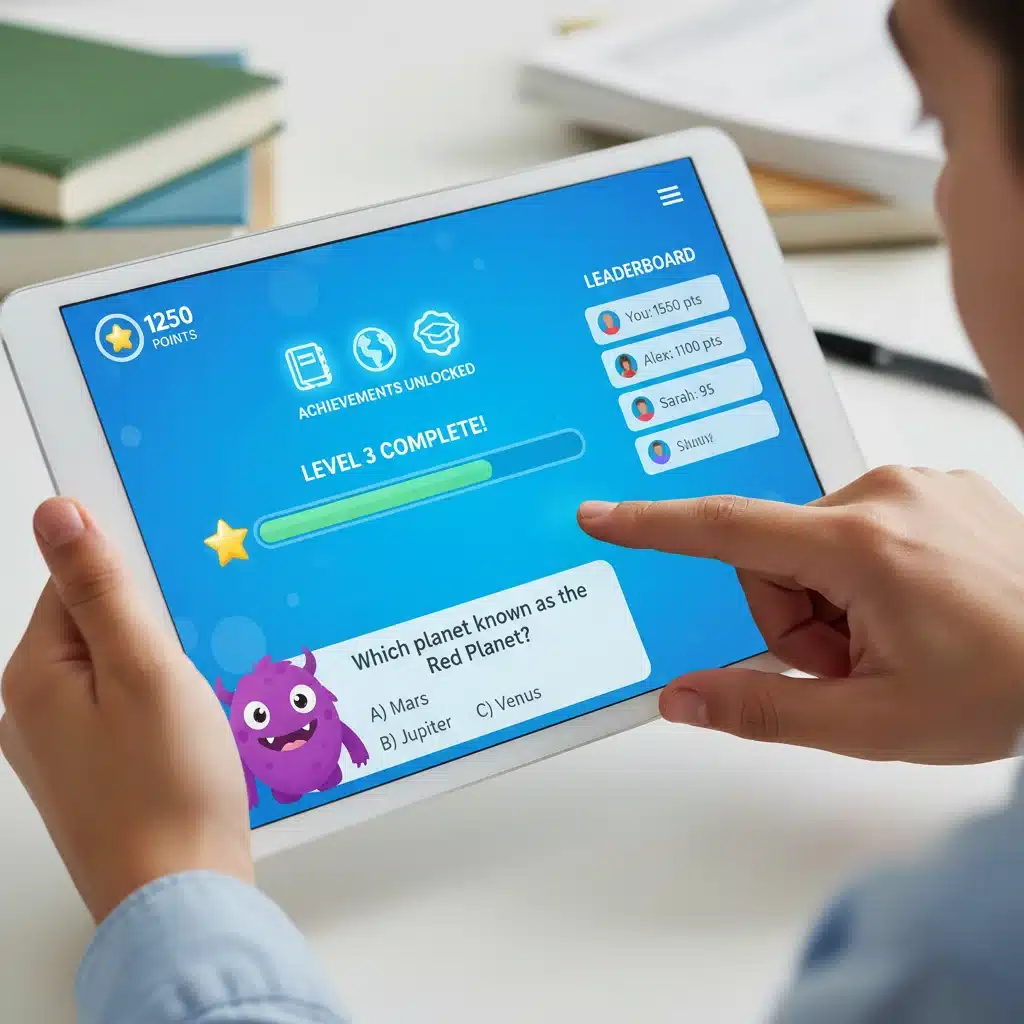
While perhaps more widely known, Kahoot! continues to evolve as a leading gamification learning platform, especially for formative assessment and review. It allows educators to create interactive quizzes, discussions, and surveys that students participate in using their devices. The competitive, fast-paced nature of Kahoot! makes learning fun and highly engaging, suitable for all age groups.
Key Features and Impact
- Engaging Quiz Format: Multiple-choice questions, true/false, and open-ended questions presented in a game show-like format.
- Live Play and Self-Paced Challenges: Teachers can host live games in class or assign challenges for students to complete asynchronously.
- Millions of Ready-Made Kahoots: A vast library of user-generated content allows teachers to find relevant quizzes quickly or customize their own.
- Detailed Reporting: Provides insights into student performance, identifying areas where students excel or need additional support.
- Collaboration Features: Teams can play together, fostering communication and shared problem-solving.
Kahoot!’s simplicity, accessibility, and immediate feedback mechanisms have made it a staple in many US classrooms. Its continuous updates, including new game modes and integration options, ensure its relevance and continued growth as a top gamification learning platform in the coming years.
3. Prodigy Math Game: Making Math Magical
Overview of Prodigy Math Game
Prodigy Math Game is a fantasy-themed RPG designed specifically to teach math concepts to elementary and middle school students. As students play, they engage in math battles, solve problems to cast spells, capture pets, and explore a vast virtual world. The platform adapts to each student’s learning pace and curriculum needs, providing personalized challenges and a fun way to master math skills.
Key Features and Impact
- Adaptive Learning: The game automatically adjusts difficulty based on student performance, ensuring optimal challenge.
- Curriculum Alignment: Content is aligned with US Common Core State Standards and other curricula, making it easy for teachers to integrate.
- Engaging Narrative: The immersive fantasy world and quest-driven gameplay keep students motivated to continue learning.
- Teacher Dashboard: Provides comprehensive data on student progress, strengths, and weaknesses, allowing for targeted instruction.
- Home Access: Students can play at home, extending learning beyond the classroom in a structured, educational environment.
Prodigy has demonstrated remarkable success in improving math scores and fostering a positive attitude towards the subject. Its deep integration of curriculum with engaging gameplay makes it an exemplary gamification learning platform for foundational subjects, and its growth trajectory suggests it will be a dominant force in US schools by 2026.
4. Duolingo for Schools: Language Learning Made Fun
Overview of Duolingo for Schools
Duolingo, a globally recognized language-learning app, has successfully extended its gamified approach to classrooms with Duolingo for Schools. This platform leverages short, bite-sized lessons, immediate feedback, points, streaks, and leaderboards to make language acquisition addictive and effective. Teachers can create virtual classrooms, assign lessons, track student progress, and monitor performance across various language skills.
Key Features and Impact
- Bite-Sized Lessons: Micro-learning approach makes language learning manageable and less intimidating.
- Progress Tracking: Students earn points and maintain streaks, fostering a sense of accomplishment and consistent practice.
- Interactive Exercises: A variety of exercises, including listening, speaking, reading, and writing, ensure comprehensive skill development.
- Teacher Management Tools: Educators can assign specific lessons, set deadlines, and view detailed reports on individual and class progress.
- Personalized Learning: The platform adapts to student performance, offering practice in areas where they struggle.
Duolingo for Schools has proven to be an invaluable tool for language educators, making the often-challenging process of learning a new language accessible and enjoyable. Its widespread popularity and continuous refinement solidify its position as a top gamification learning platform for language education in US schools by 2026.
5. Minecraft: Education Edition: Building Knowledge Block by Block
Overview of Minecraft: Education Edition
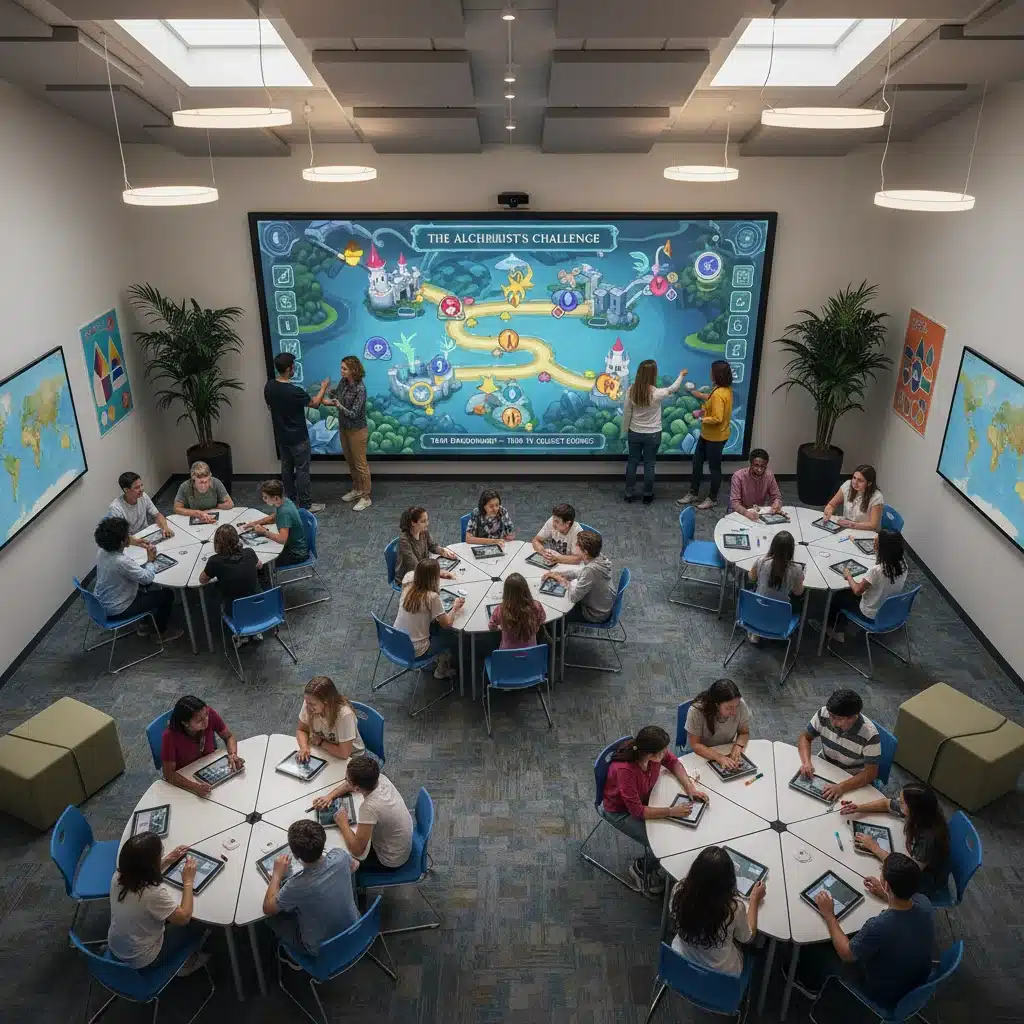
Minecraft: Education Edition takes the immensely popular sandbox game and tailors it for educational purposes. It’s a game-based learning platform that promotes creativity, collaboration, and problem-solving in an immersive digital environment. Teachers can use it to create lessons across various subjects, from history and science to art and coding, allowing students to explore, build, and learn through hands-on experience.
Key Features and Impact
- Open-Ended Creativity: Students can build anything they imagine, fostering design thinking and innovation.
- Collaborative Learning: Multiplayer capabilities allow students to work together on projects, promoting teamwork and communication.
- Curriculum-Aligned Worlds: A vast library of pre-built worlds and lessons covers a wide range of subjects and learning objectives.
- Coding and Computational Thinking: Integrates coding activities, helping students develop essential computational skills.
- Assessment Tools: Features like ‘Camera’ and ‘Book & Quill’ allow students to document their work and demonstrate understanding.
Minecraft: Education Edition leverages students’ existing familiarity and love for the game, transforming it into a powerful educational tool. Its versatility and ability to facilitate deep, experiential learning make it a unique and highly impactful gamification learning platform, expected to grow significantly in US schools as educators embrace its potential for project-based learning and immersive content delivery.
The Broader Impact of Gamification in US Education
The adoption of these gamification learning platforms signifies a broader shift in educational philosophy. It moves away from a one-size-fits-all, lecture-based model towards a more student-centered, active learning approach. This shift has several far-reaching implications for US schools:
Addressing Learning Gaps
Gamified platforms often include adaptive learning technologies that identify and address individual learning gaps. By providing targeted practice and personalized challenges, these platforms can help students catch up in areas where they struggle, ensuring no one is left behind. This is particularly crucial in diverse classrooms where students come with varying levels of prior knowledge and learning styles.
Fostering a Growth Mindset
The iterative nature of games, where failure is a temporary setback rather than a definitive end, naturally cultivates a growth mindset. Students are encouraged to try again, learn from their mistakes, and persist through challenges. This resilience and belief in one’s ability to improve are invaluable life skills that extend far beyond the classroom.
Preparing Students for a Digital Future
By engaging with sophisticated digital platforms, students are developing critical digital literacy skills, computational thinking, and familiarity with technology that will be essential in their future careers and daily lives. These gamification learning platforms are not just teaching content; they are teaching students how to navigate and thrive in an increasingly digital world.
Enhancing Teacher Effectiveness
While some might view technology as replacing teachers, gamification learning platforms empower educators. They provide teachers with powerful tools to differentiate instruction, monitor progress in real-time, and free up time for more personalized one-on-one interactions and creative lesson planning. The data analytics offered by these platforms give teachers unprecedented insights into student learning patterns, allowing for more informed pedagogical decisions.
Bridging the Home-School Connection
Many of these platforms offer features that allow parents to engage with their child’s learning journey. This transparency fosters a stronger home-school connection, enabling parents to support their children’s education more effectively and celebrate their academic achievements together. When learning extends beyond school walls in an engaging way, it reinforces the value of education.
Equity and Access
As these platforms become more widespread, efforts are also being made to ensure equitable access. Many offer free versions or are supported by school district initiatives to provide devices and internet access, aiming to ensure that all students, regardless of socioeconomic background, can benefit from these innovative learning tools. This focus on equity is vital for widespread adoption and impact by 2026.
Challenges and Considerations for Widespread Adoption
While the benefits of gamification learning platforms are clear, their widespread adoption by 2026 also comes with challenges that US schools must address:
- Teacher Training: Educators need adequate training to effectively integrate these platforms into their teaching strategies and maximize their potential.
- Infrastructure and Connectivity: Reliable internet access and sufficient devices are crucial, particularly in underserved areas.
- Curriculum Alignment: Ensuring that gamified content truly aligns with specific learning objectives and standards requires careful planning and customization.
- Screen Time Concerns: Balancing digital engagement with other forms of learning and addressing potential concerns about excessive screen time.
- Cost: While many platforms offer free tiers, premium features and institutional licenses can be a significant investment for schools.
- Assessment and Data Privacy: Developing effective assessment methods within gamified environments and ensuring the privacy and security of student data are paramount.
Overcoming these hurdles will be essential for these gamification learning platforms to reach their full potential and truly transform education across the US.
Author