Upskilling vs. Reskilling: Boost Your Earning Potential by 20% by 2026 in the US

Upskilling vs. Reskilling: Which Path Offers a 20% Higher Earning Potential in 2026 for US Workers?
The landscape of the American workforce is undergoing a profound transformation. Driven by rapid technological advancements, evolving consumer demands, and global economic shifts, the skills required for success are constantly changing. For US workers looking to not only stay relevant but also significantly boost their earning potential, the strategic choices of upskilling and reskilling have become paramount. But which path offers the most lucrative return? Data suggests that by 2026, one of these approaches could lead to a remarkable 20% higher earning potential. Understanding the nuances of upskilling vs. reskilling is no longer just about career survival; it’s about strategic growth and financial prosperity.
In this comprehensive guide, we will delve deep into the definitions, benefits, and practical applications of both upskilling and reskilling. We’ll analyze the current US job market trends, identify the most in-demand skills, and provide actionable insights into how you can leverage these strategies to secure a brighter, more prosperous future. Whether you’re an experienced professional feeling the shift, a recent graduate navigating your first career steps, or an employer aiming to future-proof your workforce, this article will equip you with the knowledge to make informed decisions and capitalize on the opportunities that lie ahead.
Understanding the Core Concepts: Upskilling vs. Reskilling
Before we can determine which path offers a higher earning potential, it’s crucial to clearly define what upskilling and reskilling entail. While often used interchangeably, these terms represent distinct approaches to professional development, each with its own strategic implications.
What is Upskilling?
Upskilling refers to the process of learning new, advanced, or supplementary skills within your current role or industry. The primary goal of upskilling is to enhance your existing capabilities, making you more proficient, efficient, and valuable in your current professional trajectory. Think of it as deepening your expertise or broadening your skill set within the same domain. For instance, a marketing professional learning advanced data analytics for campaign optimization is upskilling. A software developer mastering a new programming language or framework relevant to their existing projects is also upskilling. The core idea is to build upon an existing foundation, improving your performance and adaptability within your chosen field.
The benefits of upskilling are numerous and directly impact earning potential. By acquiring specialized skills, you become a more sought-after expert, capable of tackling more complex projects and taking on greater responsibilities. This often translates into higher salaries, promotions, and increased job security. Companies are eager to retain employees who can adapt to new technologies and methodologies, reducing the need for external hiring and training.
What is Reskilling?
Reskilling, on the other hand, involves learning entirely new skills to transition into a different role or even a new industry. This approach is typically adopted when an individual’s current role is at risk of automation, their industry is declining, or they simply wish to make a significant career change. For example, a factory worker whose job has been automated might reskill to become a robotics technician. A retail manager facing store closures might reskill to enter the burgeoning field of e-commerce logistics. The objective of reskilling is to gain a completely new set of competencies that open doors to different career opportunities.
Reskilling is often a more intensive and time-consuming process than upskilling, as it requires building a new knowledge base from the ground up. However, its potential rewards are equally significant. For those in declining industries, reskilling offers a lifeline, allowing them to pivot into high-growth sectors with promising job prospects and often, competitive salaries. It’s about adapting to the future of work by reinventing one’s professional identity.
The Evolving US Job Market: Why Upskilling and Reskilling are Critical
The US job market is not static; it’s a dynamic ecosystem constantly shaped by technological innovation, globalization, and societal shifts. Several key trends highlight the urgent need for both upskilling and reskilling:
- Automation and AI: Artificial intelligence and automation are rapidly transforming industries, automating repetitive tasks and creating demand for new roles focused on managing, developing, and interacting with these technologies.
- Digital Transformation: Nearly every industry is undergoing digital transformation, requiring a workforce proficient in digital tools, data analysis, cybersecurity, and cloud computing.
- Gig Economy Growth: The rise of the gig economy necessitates adaptable workers with diverse skill sets who can pivot between projects and roles.
- Skill Gaps: Employers consistently report significant skill gaps, particularly in areas like advanced IT, data analysis, project management, and critical thinking.
- Demographic Shifts: An aging workforce and changing demographics mean that continuous learning is essential for all age groups to remain competitive.
These trends underscore a fundamental truth: the skills that got you here might not get you there. Continuous learning, whether through upskilling or reskilling, is no longer a luxury but a necessity for long-term career viability and increased earning potential.
Which Path Leads to a 20% Higher Earning Potential by 2026?
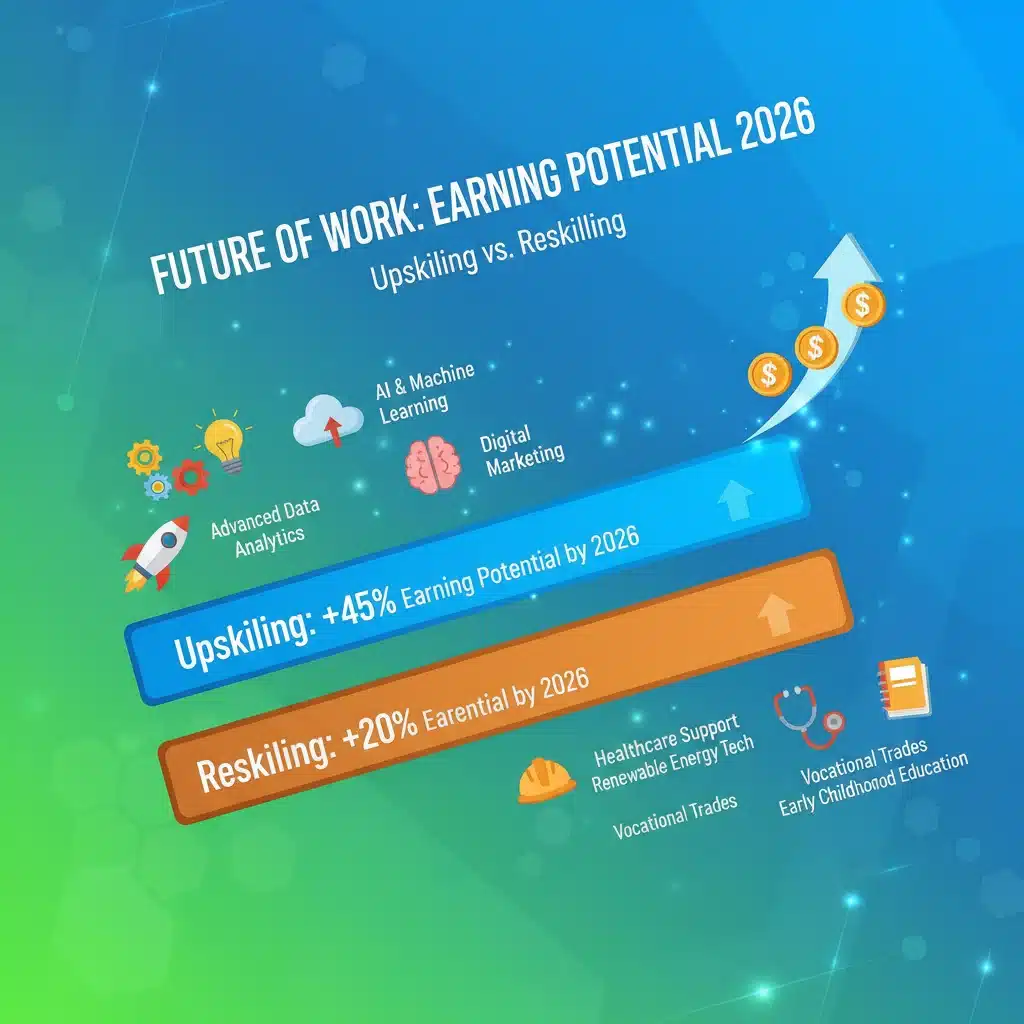
Now, to the core question: which strategy, upskilling or reskilling, is projected to offer a 20% higher earning potential for US workers by 2026? While both are vital, recent analyses and projections suggest that strategic upskilling in high-demand, specialized areas within one’s existing field may offer a more direct and often quicker path to a significant boost in earning potential.
Why upskilling? Here’s the rationale:
- Leveraging Existing Experience: Upskilling builds upon your established professional experience and industry knowledge. This means you’re adding high-value skills to an already valuable foundation, making you an expert with both depth and breadth. Employers are willing to pay a premium for such specialized expertise.
- Faster Integration and Impact: The learning curve for upskilling is often less steep than for reskilling. You’re already familiar with the industry context, company culture, and core business processes. This allows for faster integration of new skills and a quicker demonstration of impact, leading to quicker promotions and salary increases.
- Addressing Immediate Skill Gaps: Many companies are actively seeking to fill immediate skill gaps within their existing teams. An employee who upskills to meet these needs becomes indispensable, commanding higher compensation.
- Niche Specialization: Upskilling often leads to niche specialization. In fields like data science, cybersecurity, AI development, or advanced digital marketing, specific, cutting-edge skills can be incredibly lucrative. For example, a software engineer specializing in machine learning operations (MLOps) or a cybersecurity analyst with expertise in cloud security architecture can command significantly higher salaries than generalists.
While reskilling is crucial for career pivots and entering entirely new fields, the initial earning potential might be lower as you start a new professional journey. The 20% higher earning potential by 2026 is more likely to be realized by those who strategically enhance their existing careers with in-demand, advanced skills, thus becoming top-tier experts in their chosen domain.

Key Areas for Upskilling: Where to Focus for Maximum Earning Potential
To achieve that 20% higher earning potential, US workers should focus their upskilling efforts on areas with documented high demand and future growth. Here are some of the most promising fields:
1. Data Science and Analytics
From business intelligence to machine learning, proficiency in data collection, analysis, interpretation, and visualization is invaluable across almost all sectors. Learning advanced statistical modeling, predictive analytics, big data tools (like Hadoop or Spark), or specialized data visualization software (Tableau, Power BI) can significantly boost your value.
2. Artificial Intelligence and Machine Learning
Beyond basic AI literacy, developing skills in machine learning algorithms, deep learning, natural language processing (NLP), computer vision, or AI ethics is extremely lucrative. Roles like AI Engineer, Machine Learning Specialist, or AI Product Manager are in high demand.
3. Cybersecurity
With increasing cyber threats, cybersecurity professionals are critical. Upskilling in areas like cloud security, penetration testing, incident response, security architecture, or compliance (e.g., GDPR, CCPA) can lead to substantial salary increases.
4. Cloud Computing
Expertise in major cloud platforms (AWS, Azure, Google Cloud) is essential. Certifications and skills in cloud architecture, migration, security, or DevOps practices within a cloud environment are highly sought after.
5. Digital Marketing and E-commerce
Advanced skills in SEO, SEM, content strategy, social media analytics, conversion rate optimization (CRO), and e-commerce platform management can make a significant difference in marketing roles.
6. Project Management and Agile Methodologies
While not strictly technical, advanced project management skills, especially in Agile, Scrum, or Lean methodologies, are crucial for successful project delivery in tech and non-tech sectors alike. Certifications like PMP or CSM can significantly enhance earning potential.
7. Automation and Robotics
As automation becomes more prevalent, skills in robotic process automation (RPA), automation engineering, or managing automated systems are increasingly valuable.
8. User Experience (UX) and User Interface (UI) Design
In a user-centric world, expertise in designing intuitive and engaging digital experiences is paramount. Advanced UX research, UI prototyping, and design system creation are high-value skills.
Strategies for Effective Upskilling
To effectively upskill and realize that 20% higher earning potential, consider these strategies:
- Identify Skill Gaps: Start by assessing your current role, industry trends, and desired career trajectory. What skills are becoming critical? What are your weaknesses?
- Leverage Online Learning Platforms: Platforms like Coursera, edX, Udacity, and LinkedIn Learning offer specialized courses, certifications, and even degree programs from top universities and industry experts.
- Seek Employer-Sponsored Training: Many companies invest in employee development. Inquire about internal training programs, tuition reimbursement, or access to professional development resources.
- Pursue Industry Certifications: Certifications from recognized bodies (e.g., AWS Certified Solutions Architect, Google Professional Data Engineer, CompTIA Security+) validate your skills and are highly valued by employers.
- Network and Mentor: Connect with professionals in your target skill area. Mentors can provide guidance, insights, and even opportunities.
- Hands-on Projects: Apply what you learn through personal projects, volunteer work, or by taking on new responsibilities at your current job. Practical experience solidifies learning.
- Stay Curious and Adaptable: The learning journey is continuous. Cultivate a growth mindset and be prepared to adapt to new technologies and methodologies as they emerge.
When Reskilling Becomes the Better Option
While upskilling often offers a more direct route to increased earning potential within a current career, there are scenarios where reskilling is not just advisable, but essential. If your industry is in significant decline, your current role is highly susceptible to automation with no clear upskilling path, or you feel deeply unfulfilled by your current work, reskilling might be your best strategic move.
For example, if you’re in a manufacturing role that has been largely replaced by robotics, reskilling into a field like robotics maintenance, data entry for AI training, or even a completely different sector like healthcare administration, could offer a more sustainable and ultimately higher earning future. The initial pay cut might be temporary, as you gain new foundational skills in a growing field.
The key is to identify high-growth industries and roles that align with your interests and aptitudes. Consider fields like renewable energy, healthcare technology, educational technology, or specialized trades that are less susceptible to automation.
The Role of Government and Employers in Upskilling and Reskilling
The responsibility for workforce development doesn’t solely rest on the individual. Governments and employers play a crucial role in fostering a culture of continuous learning and providing the necessary resources.
Government Initiatives:
Many US states and the federal government offer programs and funding for workforce training. These can include:
- Grants and Subsidies: Funding for educational institutions to develop and offer relevant training programs.
- Unemployment Benefits for Training: Programs that allow individuals to receive unemployment benefits while undergoing approved training for new skills.
- Community College Programs: Support for community colleges to offer affordable, career-focused courses and certifications.
- Partnerships with Industry: Collaborations to identify skill needs and create targeted training initiatives.
Employer Strategies:
Forward-thinking companies recognize that investing in their workforce’s skills is an investment in their own future. Employers can:
- Internal Training Programs: Develop in-house academies or workshops to teach new skills relevant to company needs.
- Tuition Reimbursement: Offer financial assistance for employees pursuing external education or certifications.
- Mentorship Programs: Pair experienced employees with those looking to develop new skills.
- Skill-Based Hiring and Promotion: Prioritize skills over traditional credentials, incentivizing employees to learn and apply new competencies.
- Creating Learning Pathways: Map out clear career progression paths that involve specific upskilling or reskilling milestones.
Workers should actively seek out employers who demonstrate a commitment to employee development, as this can significantly ease the financial and logistical burden of acquiring new skills.
Measuring the ROI: How to Quantify Your Upskilling Investment
When embarking on an upskilling or reskilling journey, it’s important to consider the return on investment (ROI). While the 20% higher earning potential by 2026 is an attractive benchmark, individual results will vary based on several factors:
- Cost of Training: Evaluate the financial cost of courses, certifications, and materials.
- Time Commitment: Consider the time invested in learning, which can impact your work-life balance and current productivity.
- Market Demand for New Skills: Research the current and projected demand for the skills you are acquiring. Higher demand often translates to higher salaries.
- Industry and Location: Earning potential for specific skills can vary significantly by industry and geographic location within the US.
- Negotiation Skills: Your ability to articulate the value of your new skills during salary negotiations is crucial.
To quantify your ROI, track your progress. Monitor job market trends, look at salary benchmarks for roles requiring your new skills, and actively seek opportunities for promotion or new positions that leverage your enhanced capabilities. Even if a direct 20% increase isn’t immediate, the long-term career resilience and expanded opportunities often far outweigh the initial investment.
Conclusion: Charting Your Course for a Prosperous Future
The choice between upskilling and reskilling is a strategic one, deeply personal and dependent on your current career stage, industry, and aspirations. However, for US workers aiming for a 20% higher earning potential by 2026, the data strongly suggests that focused upskilling in high-demand, specialized areas within your existing field often provides the most direct and impactful route. It allows you to leverage your foundational experience while acquiring the cutting-edge skills that employers are desperate for and willing to pay a premium to secure.
That said, reskilling remains an invaluable option for those facing significant industry disruption or seeking a complete career transformation. The key is to be proactive, continuously assess the evolving job market, and commit to lifelong learning. By making informed decisions about your professional development, you can not only secure your place in the future workforce but also unlock significant financial rewards.
Don’t wait for your skills to become obsolete. Embrace the journey of continuous learning, whether through deepening your expertise or forging a new path, and position yourself to thrive in the dynamic US economy of tomorrow.
Author