Mastering Financial Resilience: 7 Expert Strategies for 2026

Mastering Financial Resilience: 7 Expert Strategies for 2026
In an ever-evolving global economy, the concept of financial resilience strategies has transcended from a mere buzzword to an absolute necessity. As we look towards 2026, individuals and families are increasingly seeking robust methods to safeguard their financial well-being against unforeseen economic shifts, market volatility, and personal challenges. Building financial resilience isn’t just about accumulating wealth; it’s about creating a robust financial infrastructure that can withstand shocks, adapt to change, and continue to grow, regardless of external pressures. This comprehensive guide will delve into seven expert financial resilience strategies designed to empower you with the knowledge and tools needed to navigate the future with confidence and security.
The journey to financial resilience is a marathon, not a sprint. It requires foresight, discipline, and a willingness to adapt. The strategies outlined here are not quick fixes but rather foundational principles that, when consistently applied, will build an unshakeable financial fortress for you and your loved ones. From optimizing your emergency fund to strategically diversifying your investments and embracing continuous learning, each strategy plays a pivotal role in strengthening your financial position. Let’s explore these critical components of financial resilience.
1. Fortifying Your Emergency Fund: The Bedrock of Financial Resilience
The first and most crucial step in building financial resilience strategies is to establish and maintain a robust emergency fund. This isn’t merely a savings account; it’s your immediate financial shock absorber. Economic downturns, unexpected job losses, medical emergencies, or significant home repairs can quickly derail your financial stability if you’re unprepared. Experts universally recommend having at least three to six months’ worth of essential living expenses saved in an easily accessible, liquid account, separate from your regular checking or investment accounts. For those seeking even greater security, particularly in volatile industries or with dependents, aiming for nine to twelve months of expenses is a wise move.
To effectively build this fund, start by meticulously tracking your monthly essential expenditures. This includes rent/mortgage, utilities, food, transportation, insurance premiums, and minimum debt payments. Once you have a clear picture of this figure, set an aggressive savings goal. Automating transfers from your checking account to your emergency fund each payday can significantly accelerate this process. Treat this fund as sacrosanct; it’s not for vacations, new gadgets, or investment opportunities. Its sole purpose is to provide a safety net during times of crisis, allowing you to breathe and make rational decisions without the added stress of immediate financial hardship. Regularly review and adjust your emergency fund target as your living expenses or financial situation changes.
2. Strategic Debt Management: Eliminating Financial Anchors
Debt, particularly high-interest consumer debt, can act as a significant drag on your financial progress and severely impede your financial resilience strategies. While some debt, like a mortgage or student loans, can be a necessary part of life, uncontrolled debt can quickly erode your ability to save, invest, and adapt to financial challenges. The second crucial strategy involves developing a proactive and strategic approach to debt management.
Begin by listing all your debts, including interest rates and minimum payments. Prioritize paying off high-interest debts first, such as credit card balances or personal loans. The ‘snowball method’ (paying off smallest balances first for psychological wins) or the ‘avalanche method’ (paying off highest interest rates first to save money) are popular and effective strategies. Consider debt consolidation for multiple high-interest debts, but only if it results in a lower overall interest rate and a clear repayment plan. Avoid taking on new unnecessary debt, and if possible, pay off credit card balances in full each month. Reducing your debt burden frees up more of your income, enhancing your cash flow and significantly bolstering your capacity to withstand financial shocks.
3. Diversifying Income Streams: Beyond the Single Salary
Relying solely on a single income source, particularly in an unpredictable job market, can be a major vulnerability. One of the most effective financial resilience strategies for 2026 and beyond is to actively cultivate multiple income streams. This doesn’t necessarily mean taking on a second full-time job; it can encompass a wide range of activities that leverage your skills, hobbies, or existing assets.
Consider exploring side hustles that align with your passions or expertise. This could include freelancing in your professional field, consulting, teaching online courses, selling handmade goods, or engaging in the gig economy. Passive income streams, such as rental properties, dividend stocks, peer-to-peer lending, or even creating digital products, can also significantly contribute to your financial stability over time. The goal is to create a buffer, so if one income source is disrupted, you have others to fall back on. This diversification not only provides financial security but can also open up new opportunities for personal and professional growth, making you less dependent on any single employer or industry.
4. Strategic Investment Diversification: Spreading Your Risk
Investing is a cornerstone of long-term wealth building, but doing so wisely is paramount for true financial resilience strategies. The fourth strategy emphasizes strategic investment diversification, which is about spreading your investments across various asset classes, industries, and geographies to mitigate risk. Putting all your eggs in one basket, whether it’s a single stock, a particular industry, or even one type of asset, can expose you to significant losses if that specific area performs poorly.
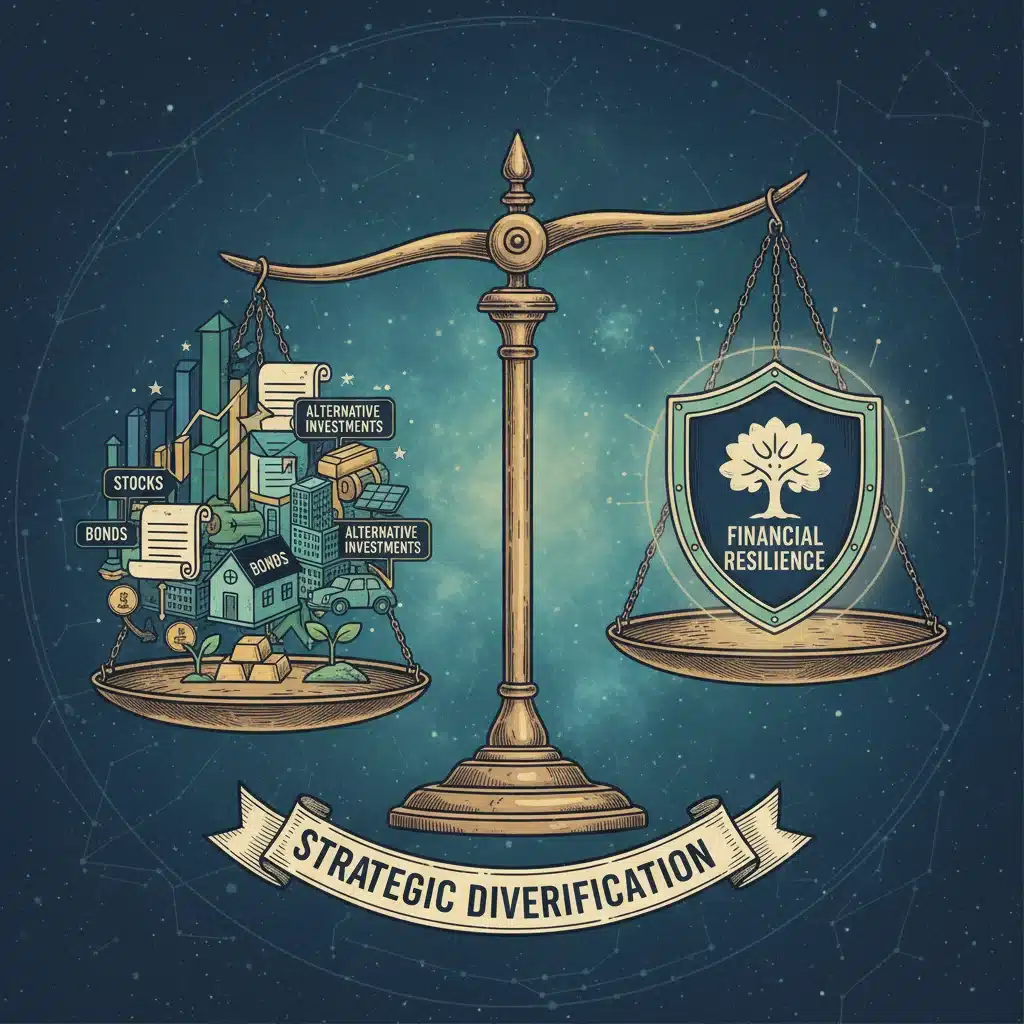
A well-diversified portfolio might include a mix of:
- Stocks: Across different sectors (technology, healthcare, consumer goods, etc.) and market capitalizations (large-cap, mid-cap, small-cap), including international stocks.
- Bonds: Government bonds, corporate bonds, and municipal bonds, which typically offer more stability than stocks.
- Real Estate: Through direct ownership, REITs (Real Estate Investment Trusts), or crowdfunding platforms.
- Commodities: Gold, silver, or other raw materials, which can act as a hedge against inflation.
- Alternative Investments: Such as private equity, hedge funds (if accessible), or even cryptocurrencies (with caution and a small allocation).
The key is to align your diversification strategy with your risk tolerance and financial goals. Regularly rebalance your portfolio to maintain your desired asset allocation. Working with a qualified financial advisor can be invaluable in constructing and maintaining a diversified portfolio that is tailored to your unique circumstances and objectives, ensuring it contributes effectively to your overall financial resilience.
5. Mastering Your Budget and Cash Flow: The Art of Financial Control
Understanding and controlling your money is fundamental to any effective set of financial resilience strategies. This fifth strategy focuses on mastering your budget and cash flow management. Many people view budgeting as restrictive, but it’s actually a powerful tool for financial liberation, giving you a clear picture of where your money goes and enabling you to make conscious choices about your spending and saving.
Start by meticulously tracking all your income and expenses for at least a month. Categorize your spending to identify areas where you might be overspending or where cuts can be made. Popular budgeting methods include the 50/30/20 rule (50% needs, 30% wants, 20% savings/debt repayment) or zero-based budgeting (every dollar is assigned a job). The goal is not just to track, but to create a spending plan that aligns with your financial goals, including building your emergency fund, paying down debt, and investing.
Cash flow management goes hand-in-hand with budgeting. It involves ensuring that more money is coming in than going out. Regularly review your subscriptions, negotiate bills, and look for opportunities to reduce recurring expenses. Automate savings and bill payments to ensure consistency and avoid late fees. A healthy cash flow provides the flexibility to respond to financial challenges without resorting to debt, thereby significantly enhancing your financial resilience. Regularly review your budget and cash flow statements to adapt them to changing circumstances and ensure they remain effective tools for your financial control.
6. Investing in Financial Literacy and Continuous Learning
The financial world is dynamic, constantly evolving with new products, regulations, and economic trends. Therefore, a critical component of strong financial resilience strategies is a commitment to continuous financial literacy and learning. The more you understand about personal finance, investing, taxes, and economic principles, the better equipped you will be to make informed decisions and adapt to changes.

Make it a habit to read reputable financial news sources, books, and blogs. Follow financial experts, take online courses, or even consider certifications if you’re deeply interested. Understanding concepts like inflation, compound interest, asset allocation, and tax-efficient investing can profoundly impact your financial outcomes. This knowledge empowers you to ask the right questions, evaluate financial advice critically, and avoid costly mistakes. Furthermore, staying informed about global economic trends and technological advancements can help you anticipate potential risks and identify new opportunities, allowing you to proactively adjust your financial strategies and maintain your resilience in a changing world. Financial literacy is not a one-time achievement but a lifelong pursuit that pays dividends in financial security and peace of mind.
7. Planning for the Unforeseen: Insurance and Estate Planning
Even with a robust emergency fund and diversified investments, life can throw curveballs that require more extensive protection. The seventh, and often overlooked, aspect of comprehensive financial resilience strategies involves proactive planning for the unforeseen through adequate insurance coverage and meticulous estate planning.
Insurance: Review your insurance policies regularly to ensure they meet your current needs. This includes:
- Health Insurance: Essential for covering medical emergencies and ongoing care, preventing catastrophic medical bills from derailing your finances.
- Life Insurance: Particularly crucial if you have dependents, providing financial support for your loved ones in your absence.
- Disability Insurance: Protects your income if you become unable to work due to illness or injury.
- Homeowner’s/Renter’s Insurance: Safeguards your most valuable assets against damage, theft, or liability.
- Auto Insurance: Legally required in most places and protects against accidents.
- Umbrella Insurance: Provides additional liability coverage beyond your standard policies, offering an extra layer of protection.
Adequate insurance acts as a financial shield, transferring significant risks away from your personal finances. Without it, a single catastrophic event could wipe out years of savings and investment.
Estate Planning: While often associated with wealth, estate planning is vital for everyone, regardless of their current net worth. It ensures your assets are distributed according to your wishes and that your loved loved ones are cared for. Key components include:
- Will: Dictates how your assets will be distributed and who will care for minor children.
- Trusts: Can be used to manage assets, avoid probate, and provide for beneficiaries.
- Power of Attorney: Designates someone to make financial and medical decisions on your behalf if you become incapacitated.
- Beneficiary Designations: Ensure your retirement accounts and life insurance policies go directly to your intended beneficiaries.
By putting these plans in place, you not only protect your assets but also provide clarity and ease for your family during difficult times, significantly strengthening your overall financial resilience.
Conclusion: Embracing a Future of Financial Security
Building strong financial resilience strategies is an ongoing commitment, not a one-time task. As we navigate towards 2026 and beyond, the economic landscape will undoubtedly present new challenges and opportunities. By diligently implementing these seven expert strategies—fortifying your emergency fund, managing debt strategically, diversifying income streams, spreading investment risk, mastering your budget, investing in financial literacy, and planning for the unforeseen—you are not just reacting to circumstances but proactively shaping a secure and prosperous financial future.
The benefits extend beyond mere monetary stability; financial resilience brings peace of mind, reduces stress, and empowers you to pursue your life goals with greater freedom and confidence. Start today, take small consistent steps, and remember that every decision you make contributes to the strength of your financial foundation. Embrace these principles, and you will be well-equipped to weather any storm and thrive in the years to come, turning potential vulnerabilities into powerful opportunities for growth and lasting security.
Author