STEM Education 2026: Preparing Students for Future Jobs
Anúncios
Anúncios
How New STEM Education Initiatives in 2026 Are Preparing Students for Future Jobs
The landscape of work is undergoing an unprecedented transformation, driven by rapid technological advancements, artificial intelligence, automation, and global interconnectedness. As we look towards 2026 and beyond, the skills required for success in the job market are evolving at an astonishing pace. Recognizing this critical shift, educational institutions, governments, and industries worldwide are redoubling their efforts to innovate within Science, Technology, Engineering, and Mathematics (STEM) education. These new initiatives are not merely incremental changes; they represent a fundamental reimagining of how we prepare the next generation. The focus is squarely on equipping students with not just knowledge, but also the adaptability, critical thinking, and problem-solving capabilities essential for thriving in a future that is increasingly complex and unpredictable. This article will delve into the core of these new STEM education 2026 initiatives, exploring how they are being designed and implemented to effectively prepare students for the jobs of tomorrow.
The urgency for robust STEM education 2026 cannot be overstated. Projections indicate a continued surge in demand for STEM professionals across various sectors, from renewable energy and biotechnology to cybersecurity and advanced manufacturing. However, merely filling these roles isn’t enough; the individuals entering these fields must possess a unique blend of technical proficiency and soft skills. Traditional educational models, often criticized for their siloed approaches and emphasis on rote memorization, are proving inadequate for this new reality. Consequently, the initiatives we see emerging for 2026 are characterized by their interdisciplinary nature, experiential learning focus, and a strong emphasis on computational thinking and data literacy. These changes are designed to foster a generation of innovators, critical thinkers, and adaptable problem-solvers who can navigate the complexities of a rapidly evolving global economy.
The Evolving Job Market and the Imperative for STEM Education 2026
Before we explore the specifics of the new initiatives, it’s crucial to understand the driving forces behind them: the evolving job market. Automation and AI are not just eliminating routine tasks; they are fundamentally reshaping entire industries and creating entirely new job categories that didn’t exist a decade ago. Roles in AI ethics, quantum computing research, sustainable urban planning, and personalized medicine are just a few examples of emerging fields demanding highly specialized STEM skills. The World Economic Forum’s Future of Jobs Report consistently highlights that skills like analytical thinking, innovation, complex problem-solving, and critical thinking are becoming paramount. Furthermore, digital literacy, technological design, and data analysis are no longer niche competencies but foundational requirements across almost all professional domains. This dynamic environment necessitates a proactive approach to education, one that anticipates future needs rather than merely reacting to current demands. This is precisely what the new STEM education 2026 initiatives aim to achieve, by designing curricula that are forward-looking and adaptable.
Anúncios
Beyond technical skills, the future workforce will require a strong emphasis on human-centric capabilities. Empathy, creativity, collaboration, and communication will be crucial in roles where human interaction and innovation are irreplaceable by machines. Therefore, effective STEM education 2026 must integrate these ‘soft skills’ alongside rigorous scientific and technical training. The challenge lies in creating educational environments that foster both deep disciplinary knowledge and broad interdisciplinary understanding, alongside the development of these essential human attributes. The initiatives for 2026 recognize that a holistic approach is vital, moving beyond a narrow definition of STEM to encompass a wider range of competencies necessary for personal and professional success in the 21st century. This integrated approach ensures students are not just technically proficient but also well-rounded individuals capable of contributing meaningfully to society.
Key Pillars of New STEM Education 2026 Initiatives
1. Interdisciplinary and Project-Based Learning
One of the most significant shifts in STEM education 2026 is the move away from isolated subject teaching towards integrated, interdisciplinary approaches. Real-world problems rarely fit neatly into single academic disciplines; solving them requires drawing on knowledge from science, technology, engineering, and mathematics simultaneously. New curricula are designed around complex, authentic projects that require students to apply concepts from multiple STEM fields. For instance, a project might involve designing a sustainable urban farm, necessitating knowledge of biology (plant growth), engineering (irrigation systems), technology (sensor networks, data monitoring), and mathematics (resource allocation, yield prediction). This project-based learning (PBL) fosters deeper understanding, critical thinking, and collaborative skills, mirroring the collaborative nature of professional work environments.
The emphasis on interdisciplinary learning also extends to incorporating arts and humanities into STEM, creating a STEAM (Science, Technology, Engineering, Arts, and Mathematics) framework. The ‘Arts’ component is crucial for fostering creativity, design thinking, and communication skills, which are increasingly vital in innovation. For example, designing user-friendly interfaces for new technologies or communicating complex scientific findings effectively requires an understanding of aesthetics and human perception. By integrating these elements, STEM education 2026 aims to produce not just technically proficient individuals, but also creative problem-solvers who can innovate across diverse domains. This holistic approach ensures that students are prepared for a wider array of future roles, where boundaries between disciplines are increasingly blurred.
2. Advanced Technology Integration: AI, VR/AR, and Robotics
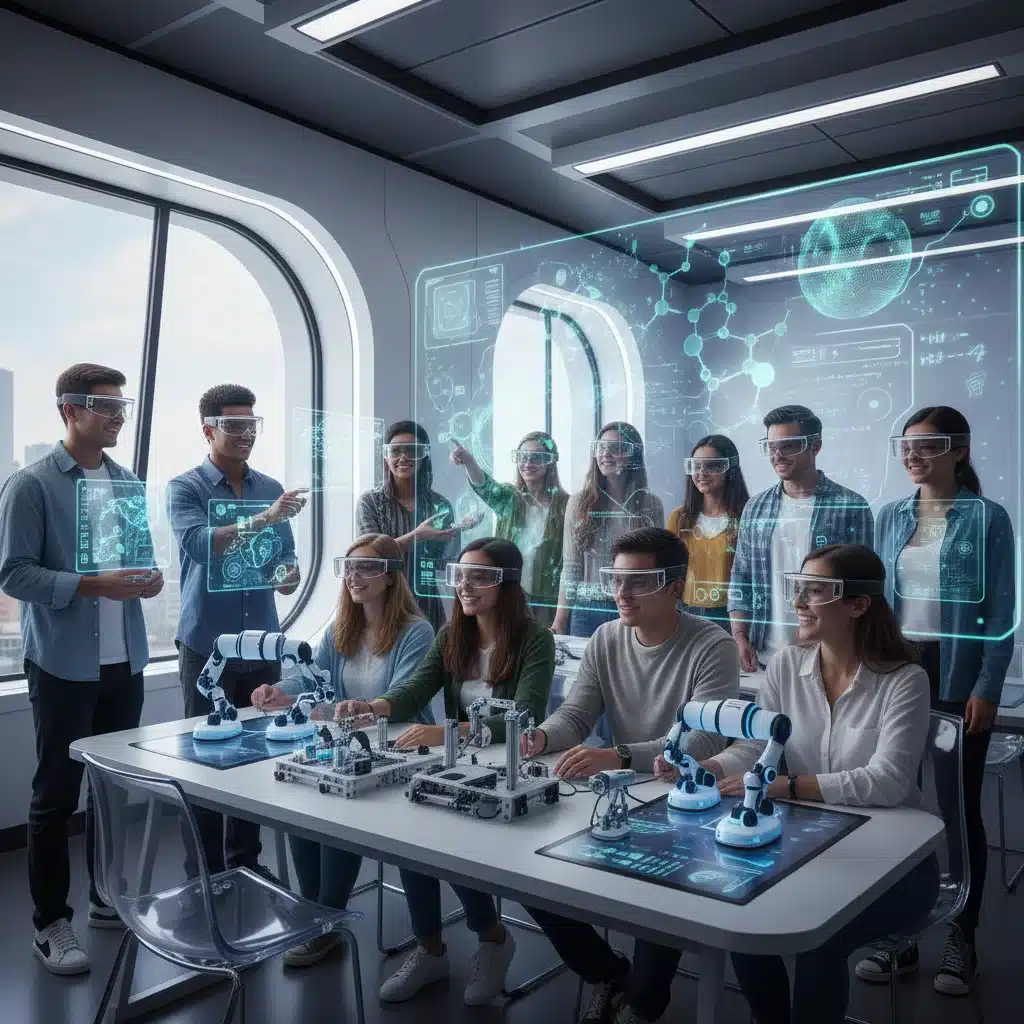
The new initiatives are heavily focused on integrating cutting-edge technologies directly into the learning process. Artificial Intelligence (AI) is being used not just as a subject of study, but also as a tool for personalized learning, providing adaptive content and feedback tailored to individual student needs. Virtual Reality (VR) and Augmented Reality (AR) are transforming how students experience and interact with complex concepts. Imagine dissecting a virtual frog, exploring the human circulatory system in 3D, or designing and testing engineering prototypes in a simulated environment without physical constraints. These immersive technologies make learning more engaging, accessible, and effective, allowing for experimentation and exploration that would be impossible or too costly in traditional settings.

Robotics and coding are also becoming foundational elements of STEM education 2026. Students are learning to program robots, build autonomous systems, and understand the principles of automation from an early age. This hands-on experience demystifies complex technologies and develops computational thinking – the ability to break down problems into smaller, manageable steps, identify patterns, and design algorithms. Furthermore, exposure to these technologies helps students understand their ethical implications and societal impact, preparing them to be responsible innovators. The goal is not just to use technology, but to understand its underlying principles and be able to create with it, thus empowering students to be creators rather than just consumers of technology.
3. Emphasis on Computational Thinking and Data Literacy
In an increasingly data-driven world, computational thinking and data literacy are non-negotiable skills. STEM education 2026 initiatives are placing a strong emphasis on developing these competencies across all grade levels. Computational thinking involves problem decomposition, pattern recognition, abstraction, and algorithm design – skills that are valuable far beyond computer science, applicable to solving problems in any field. Students are learning to approach problems systematically, develop logical solutions, and understand how information is processed and represented.
Data literacy involves the ability to read, work with, analyze, and communicate with data. This includes understanding statistical concepts, interpreting data visualizations, identifying biases in data, and making evidence-based decisions. With the explosion of big data, the capacity to extract meaningful insights from vast datasets is a critical skill for almost every profession. New curricula are integrating data analysis tools and techniques, enabling students to collect, organize, and interpret real-world data from scientific experiments, social studies projects, or environmental monitoring. This prepares them for roles ranging from data scientists and business analysts to researchers and public policy makers, ensuring they can navigate and contribute to a data-rich world effectively.
4. Fostering Entrepreneurship and Innovation Mindsets
Beyond technical skills, STEM education 2026 aims to cultivate an entrepreneurial and innovative mindset. This involves encouraging creativity, risk-taking, resilience, and the ability to identify opportunities and develop novel solutions. Programs are incorporating elements of design thinking, where students learn to empathize with users, define problems, ideate solutions, prototype, and test their ideas iteratively. This process not only develops innovative thinking but also teaches valuable lessons in project management, teamwork, and communication.
Mentorship programs, hackathons, and partnerships with local startups and businesses are also becoming integral parts of the curriculum. These initiatives provide students with exposure to real-world challenges, connect them with industry professionals, and offer opportunities to develop and pitch their own innovative ideas. The goal is to inspire the next generation of entrepreneurs and innovators who can not only adapt to future job markets but actively shape them. By fostering this mindset, STEM education 2026 ensures students are not just job-seekers but also job-creators, contributing to economic growth and societal progress.
Challenges and Opportunities in Implementing STEM Education 2026
While the vision for STEM education 2026 is compelling, its successful implementation faces several challenges. One major hurdle is teacher training and professional development. Educators need ongoing support and training to adapt to new curricula, master emerging technologies, and effectively facilitate interdisciplinary and project-based learning. This requires significant investment in professional learning programs and a shift in pedagogical approaches. Another challenge is ensuring equitable access to these advanced STEM opportunities. Disparities in resources, technology, and qualified teachers can exacerbate existing educational inequalities, making it crucial to implement policies that promote inclusivity and provide support for underserved communities.
Funding is also a perpetual challenge. Implementing new technologies, developing innovative curricula, and providing continuous teacher training require substantial financial resources. Public-private partnerships, government grants, and philanthropic contributions will be essential to sustain and scale these initiatives. Furthermore, there’s a need for continuous evaluation and adaptation. The job market and technological landscape are constantly changing, so STEM education 2026 initiatives must remain flexible and responsive, regularly reviewing their effectiveness and making necessary adjustments to stay relevant. This iterative approach ensures that the education system can keep pace with the rapid advancements in the world outside the classroom.

Despite these challenges, the opportunities presented by these new initiatives are immense. A well-prepared STEM workforce will drive economic growth, foster innovation, and address some of the world’s most pressing challenges, from climate change and healthcare to food security and sustainable development. By investing in STEM education 2026, we are investing in the future capacity of our societies to solve complex problems and create a better world. The collaborative efforts between governments, educational institutions, industries, and communities are creating a powerful ecosystem for learning and innovation, promising a brighter future for students and society alike.
The Role of Partnerships in Advancing STEM Education 2026
Crucial to the success of STEM education 2026 initiatives are robust partnerships between various stakeholders. Industry collaboration is vital for ensuring that curricula are aligned with current and future workforce needs. Companies can provide invaluable insights into required skills, offer internships and mentorship opportunities, and contribute resources for equipment and program development. For example, tech companies might partner with schools to develop coding bootcamps or provide access to their proprietary software, giving students real-world exposure and experience.
Government agencies play a critical role in setting policy frameworks, providing funding, and promoting STEM education at a national level. They can incentivize innovation in teaching, support research into effective pedagogical practices, and establish standards that ensure quality and consistency across different educational settings. Non-profit organizations and community groups also contribute significantly by offering extracurricular STEM programs, organizing science fairs, and providing resources to underserved populations, thereby broadening access and engagement in STEM fields. These multi-faceted partnerships create a supportive ecosystem that amplifies the impact of STEM education 2026, ensuring that more students have the opportunity to develop critical skills for the future.
Furthermore, international collaborations are gaining traction, allowing educators and policymakers to share best practices, learn from different educational systems, and develop globally relevant curricula. In a world where global challenges require global solutions, fostering a globally aware and competent STEM workforce is paramount. These partnerships ensure that STEM education 2026 is not only locally relevant but also globally competitive, preparing students to contribute on an international stage.
Looking Ahead: The Long-Term Impact of STEM Education 2026
The long-term impact of these forward-thinking STEM education 2026 initiatives is expected to be profound. Beyond preparing individuals for specific jobs, a stronger emphasis on STEM will cultivate a more scientifically literate and critically thinking populace. This is essential for informed civic engagement, enabling citizens to make sound decisions on complex issues ranging from public health to environmental policy. A society with a strong foundation in STEM is better equipped to innovate, adapt to change, and maintain global competitiveness.
Moreover, by fostering creativity and an entrepreneurial spirit, these initiatives are laying the groundwork for future breakthroughs and the creation of entirely new industries. The students benefiting from STEM education 2026 today will be the scientists, engineers, technologists, and mathematicians who will solve the grand challenges of tomorrow. They will be the ones developing sustainable energy solutions, pioneering medical cures, designing intelligent infrastructure, and pushing the boundaries of human knowledge and capability.
The commitment to equity and inclusivity within these new initiatives means that a wider range of voices and perspectives will contribute to these future innovations. By actively working to dismantle barriers and provide opportunities for all students, regardless of their background, STEM education 2026 is ensuring that the workforce of the future is not only skilled but also diverse and representative. This diversity is a crucial asset, as it fosters a broader range of ideas and approaches to problem-solving, leading to more robust and creative solutions.
Conclusion
The new STEM education 2026 initiatives represent a crucial and timely response to the demands of a rapidly evolving global job market. By prioritizing interdisciplinary learning, integrating advanced technologies, emphasizing computational thinking and data literacy, and fostering entrepreneurial mindsets, these programs are designed to equip students with the essential skills and adaptability needed for future success. While challenges in implementation, such as teacher training, equitable access, and funding, remain significant, the collaborative efforts of governments, industries, and educational institutions are paving the way for a transformative educational landscape.
The ultimate goal is to cultivate a generation of innovators, critical thinkers, and problem-solvers who are not only prepared for the jobs of tomorrow but are also capable of shaping the future themselves. By investing strategically in STEM education 2026, we are making a vital commitment to the intellectual capital, economic prosperity, and societal well-being of the future. The transformation underway promises to empower students to navigate an uncertain world with confidence and creativity, driving progress and innovation for decades to come.
Author