
Current Trends in U.S. Stock Market Performance: A Mid-2026 Analysis for Investors
Anúncios
As we navigate the midpoint of 2026, the global financial landscape continues to evolve, presenting both opportunities and challenges for investors. The US Stock Market 2026 has been a focal point of this dynamism, reflecting a complex interplay of domestic economic policies, geopolitical developments, technological advancements, and shifting consumer behaviors. Understanding these intricate forces is paramount for anyone looking to make informed investment decisions in the current climate. This comprehensive analysis aims to dissect the performance of the U.S. stock market as of mid-2026, offering insights into key drivers, sector-specific trends, and a forward-looking perspective.
The first half of 2026 has been characterized by a blend of cautious optimism and underlying volatility. While certain sectors have soared, others have faced headwinds, creating a diverse investment environment. This article will delve into the macroeconomic factors shaping the US Stock Market 2026, examine the performance of major indices, and highlight the sectors that are currently leading or lagging. Furthermore, we will explore the implications of these trends for individual and institutional investors, providing a strategic framework for navigating the remainder of the year and beyond.
Macroeconomic Landscape: Key Drivers of the US Stock Market 2026
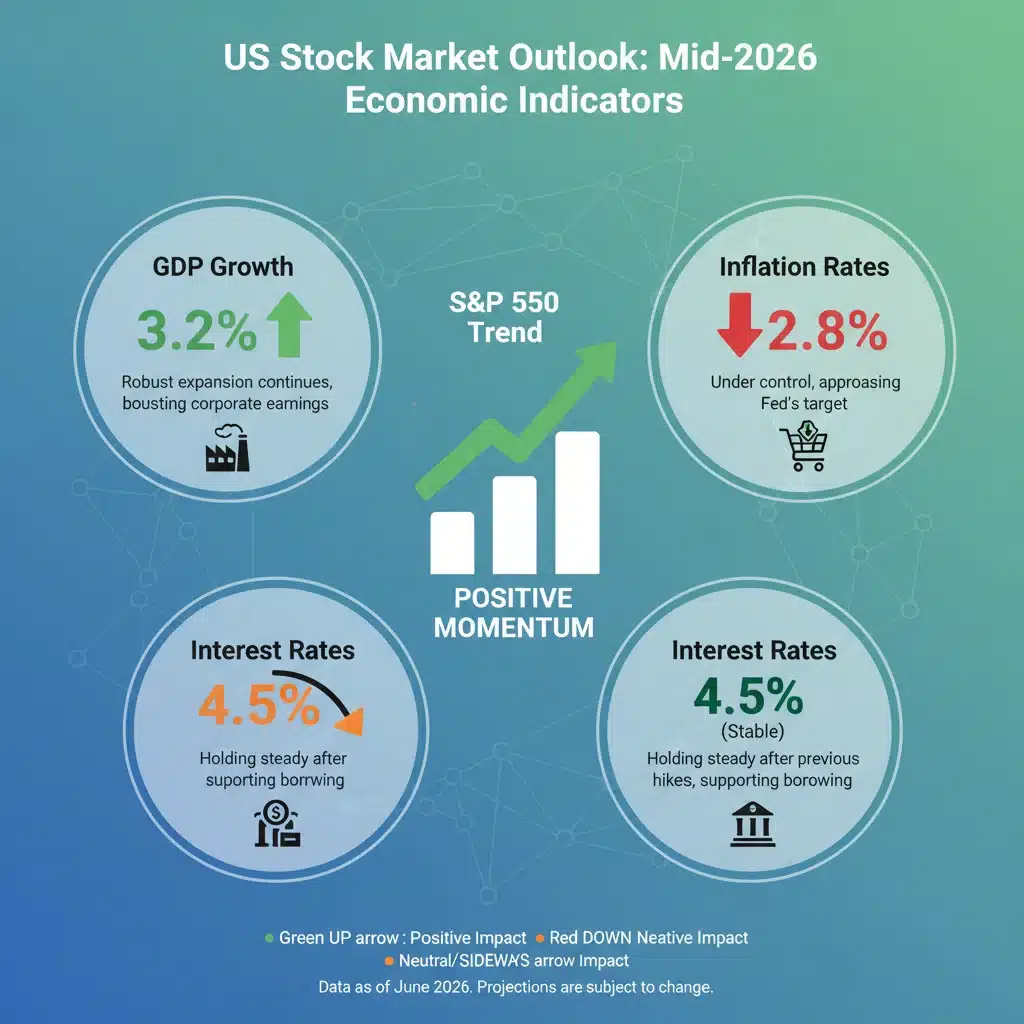
The health of the U.S. economy is inextricably linked to the performance of its stock market. Several macroeconomic indicators have played a crucial role in shaping the US Stock Market 2026. Inflation, interest rates, GDP growth, and employment figures are among the primary variables that investors closely monitor. As of mid-2026, the Federal Reserve’s monetary policy continues to be a dominant force, with its decisions on interest rates having a ripple effect across all asset classes.
Anúncios
Inflationary Pressures and Monetary Policy
Inflation, while showing signs of moderation compared to previous years, remains a significant concern. Persistent supply chain issues, coupled with robust consumer demand in certain segments, have kept price levels elevated. The Federal Reserve’s commitment to achieving its 2% inflation target has led to a sustained period of quantitative tightening and interest rate adjustments. These actions, designed to cool down the economy and curb inflation, have a direct impact on corporate earnings and investor sentiment. Higher borrowing costs can dampen investment and consumer spending, potentially slowing economic growth, which in turn influences stock valuations. The market’s reaction to each Fed announcement underscores the sensitivity of the US Stock Market 2026 to monetary policy.
GDP Growth and Employment Figures
Gross Domestic Product (GDP) growth, while not as explosive as in post-pandemic recovery periods, has demonstrated resilience. A steady, albeit slower, expansion of the economy provides a stable foundation for corporate profitability. However, any signs of significant deceleration could trigger concerns about a potential recession, leading to market corrections. The employment market, on the other hand, has remained remarkably strong. Low unemployment rates and consistent wage growth signal a healthy labor market, supporting consumer purchasing power. This robust employment picture acts as a buffer against economic downturns, providing a degree of stability to the US Stock Market 2026. However, rapid wage growth can also contribute to inflationary pressures, creating a delicate balancing act for policymakers.
Geopolitical Influences and Global Trade
Beyond domestic factors, geopolitical events and global trade dynamics exert considerable influence on the US Stock Market 2026. Ongoing conflicts, trade disputes, and shifts in international alliances can introduce volatility and uncertainty. Energy prices, often influenced by geopolitical tensions, have a broad impact on corporate costs and consumer budgets. Supply chain disruptions, exacerbated by global events, continue to pose challenges for multinational corporations, affecting their production capabilities and profitability. Investors are increasingly incorporating geopolitical risk into their portfolio strategies, recognizing its potential to swiftly alter market trajectories.
Performance of Major Indices in Mid-2026
A closer look at the performance of the major U.S. stock indices provides a snapshot of the broader market trends. The S&P 500, Dow Jones Industrial Average, and Nasdaq Composite each offer unique insights into different segments of the economy.
S&P 500: A Broad Market Barometer
The S&P 500, representing 500 of the largest U.S. publicly traded companies, is often considered the best gauge of large-cap U.S. equities and the overall health of the economy. In mid-2026, the S&P 500 has demonstrated a mixed performance. While it has experienced periods of strong growth, particularly driven by large-cap technology and growth stocks, it has also faced corrections due to macroeconomic uncertainties. The index’s performance reflects the ongoing tug-of-war between strong corporate earnings in certain sectors and the broader economic headwinds. Diversification within the S&P 500 has become increasingly important, as not all constituents are performing equally.
Dow Jones Industrial Average: The Industrial Bellwether
The Dow Jones Industrial Average, comprising 30 significant U.S. companies, tends to represent the traditional industrial backbone of the American economy. Its performance in mid-2026 has been somewhat more stable than the tech-heavy Nasdaq, but it has still been influenced by fluctuations in commodity prices, manufacturing output, and global trade. Companies within the Dow have navigated challenges such as rising input costs and labor shortages, but many have also benefited from robust consumer spending in specific areas. The Dow’s trajectory suggests a resilient, though not spectacular, performance from established American enterprises.
Nasdaq Composite: The Technology and Growth Engine
The Nasdaq Composite, heavily weighted towards technology and growth companies, has continued to be a significant driver of market sentiment. Despite concerns about valuations and the impact of higher interest rates on future earnings, many technology firms have shown remarkable innovation and adaptability. Artificial intelligence, cloud computing, and cybersecurity continue to be areas of substantial investment and growth. However, the Nasdaq has also been more susceptible to volatility, with investor sentiment often shifting rapidly based on earnings reports, technological breakthroughs, and regulatory developments. The performance of the US Stock Market 2026 is heavily influenced by the health and innovation within the tech sector.
Sector-Specific Performance and Key Trends
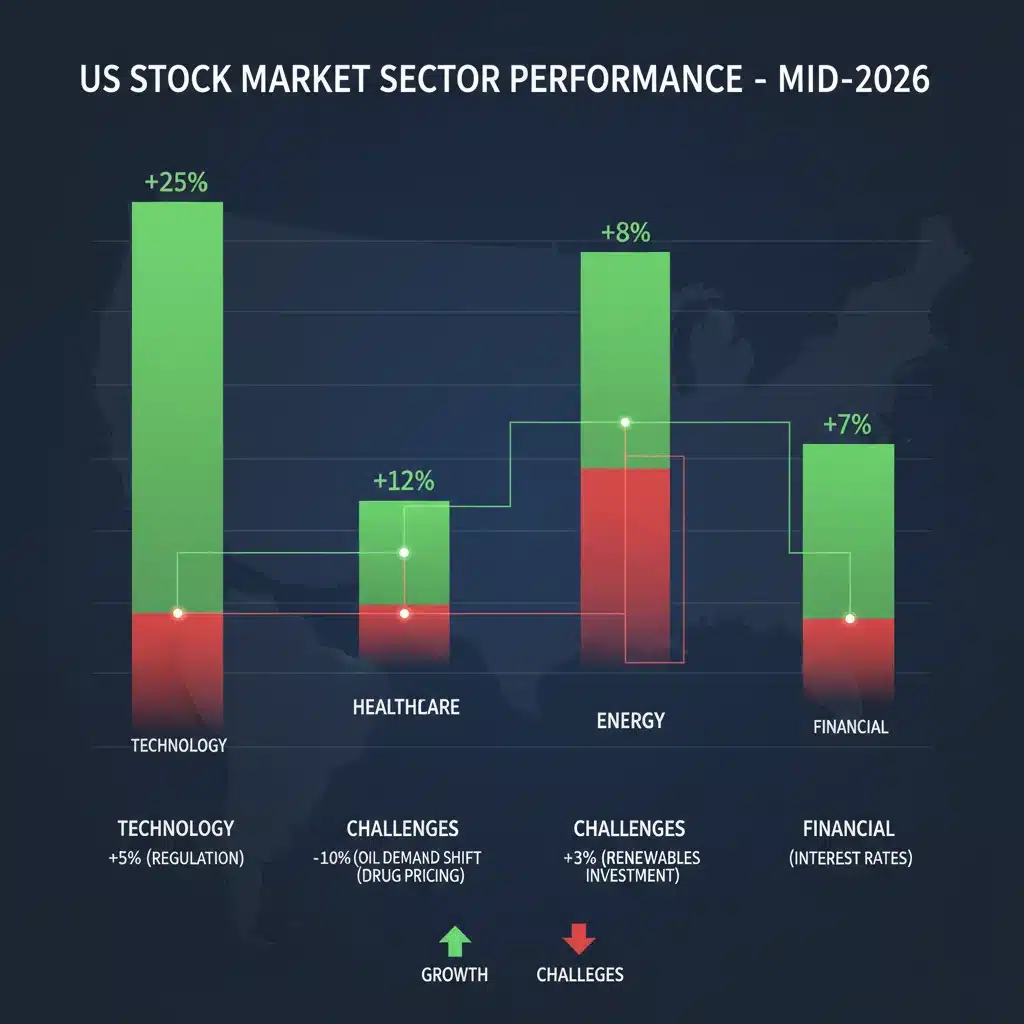
Beyond the broad indices, a deeper dive into individual sectors reveals a more nuanced picture of the US Stock Market 2026. Some sectors are thriving, while others are grappling with fundamental shifts and challenges.
Technology Sector: Continued Innovation and Dominance
The technology sector remains a powerhouse. Companies at the forefront of AI, machine learning, and advanced analytics are experiencing significant demand and growth. The race for technological supremacy continues to drive innovation and investment. However, regulatory scrutiny and concerns about market concentration are also growing. Valuations for some tech giants remain high, prompting investors to carefully assess growth prospects versus potential risks. Despite these concerns, the long-term outlook for transformative technologies appears robust, making this sector a critical component of the US Stock Market 2026.
Healthcare Sector: Resilience and Innovation
The healthcare sector continues to demonstrate resilience, driven by demographic trends (an aging population), advancements in biotechnology, and ongoing demand for medical services. Pharmaceutical companies, medical device manufacturers, and healthcare providers are all contributing to growth. Innovation in areas like gene therapy, personalized medicine, and digital health solutions is creating new investment opportunities. While regulatory changes and pricing pressures can be challenges, the fundamental demand for healthcare services provides a stable backdrop for this sector within the US Stock Market 2026.
Energy Sector: Volatility and Transition
The energy sector has been characterized by significant volatility, largely influenced by geopolitical events, global supply and demand dynamics, and the ongoing transition towards renewable energy. Oil and gas prices have fluctuated, impacting the profitability of traditional energy companies. Simultaneously, investment in renewable energy sources such as solar, wind, and hydrogen continues to grow rapidly. This dual dynamic presents both opportunities and risks, as investors weigh the short-term demand for fossil fuels against the long-term shift towards sustainable alternatives. The energy sector’s role in the US Stock Market 2026 is increasingly defined by this transition.
Financial Sector: Adapting to Higher Rates
The financial sector, including banks, insurance companies, and investment firms, has been navigating the environment of higher interest rates. While higher rates can boost net interest margins for banks, they also carry the risk of increased loan defaults and a slowdown in lending activity. The real estate market, closely tied to the financial sector, has also seen adjustments. Financial technology (FinTech) continues to disrupt traditional banking, driving innovation but also creating new competitive pressures. The adaptability of financial institutions to these evolving conditions will be key to their performance in the US Stock Market 2026.
Consumer Discretionary vs. Consumer Staples
The consumer sector offers a tale of two halves. Consumer discretionary companies, which sell non-essential goods and services, are more sensitive to economic cycles and consumer confidence. While strong employment and wage growth have supported some discretionary spending, persistent inflation and higher borrowing costs could temper demand. In contrast, consumer staples, which include essential goods like food and household products, tend to be more resilient during economic downturns. Investors are carefully watching consumer spending patterns to gauge the overall health of the economy and its impact on these critical sectors of the US Stock Market 2026.
Investment Strategies for the Remainder of 2026
Given the current market dynamics, investors need to adopt thoughtful and adaptive strategies. The environment of mid-2026 calls for a balanced approach, focusing on both growth opportunities and risk management.
Diversification and Asset Allocation
Diversification remains a cornerstone of prudent investing. Spreading investments across different asset classes (equities, fixed income, real estate, commodities) and within various sectors can help mitigate risk. Given the varied performance across sectors in the US Stock Market 2026, a well-diversified equity portfolio that includes a mix of growth and value stocks, as well as exposure to different industries, is crucial. Regular rebalancing of portfolios to align with investment goals and risk tolerance is also advisable.
Focus on Quality and Fundamentals
In an uncertain economic environment, focusing on companies with strong fundamentals becomes even more critical. Look for companies with robust balance sheets, consistent earnings growth, competitive advantages, and experienced management teams. These ‘quality’ companies are often better positioned to weather economic downturns and outperform in the long run. Valuations should be carefully scrutinized, ensuring that current prices are justified by future growth prospects. This disciplined approach is essential for navigating the complexities of the US Stock Market 2026.
Consider Thematic Investing
Thematic investing, which involves identifying long-term trends and investing in companies that stand to benefit from them, can be a powerful strategy. Themes such as artificial intelligence, renewable energy, cybersecurity, and biotechnology are likely to drive significant growth over the coming years, regardless of short-term market fluctuations. Investors keen on capitalizing on these trends within the US Stock Market 2026 should research ETFs or individual companies that are pure-plays in these high-growth areas. However, it’s important to differentiate between genuine long-term trends and fleeting fads.
Risk Management and Hedging Strategies
Effective risk management is paramount. This includes setting clear investment objectives, understanding one’s risk tolerance, and employing strategies to protect capital. For some investors, this might involve incorporating defensive assets into their portfolios, such as high-quality bonds or dividend-paying stocks. Options strategies or other hedging instruments can also be used by more sophisticated investors to mitigate downside risk. Staying informed about market news and economic indicators is also a form of risk management, allowing for timely adjustments to investment strategies as conditions evolve in the US Stock Market 2026.
Challenges and Opportunities Ahead
The remainder of 2026 presents both challenges and opportunities for the US Stock Market 2026. Challenges include the persistent threat of inflation, potential interest rate hikes, ongoing geopolitical instability, and the possibility of a global economic slowdown. These factors could lead to increased market volatility and periods of correction.
However, opportunities also abound. Technological innovation, particularly in AI and sustainable technologies, continues to create new avenues for growth. A resilient U.S. labor market and sustained consumer spending could provide underlying support. Furthermore, corporate adaptability and efficiency gains could lead to stronger earnings, even in a slower growth environment. Investors who remain agile, conduct thorough research, and maintain a long-term perspective are best positioned to capitalize on these opportunities.
Conclusion: Navigating the US Stock Market 2026 with Prudence
The mid-2026 analysis of the US Stock Market 2026 reveals a market in transition, shaped by a complex interplay of macroeconomic forces, technological advancements, and geopolitical shifts. While challenges such as inflation and interest rate uncertainties persist, the underlying resilience of the U.S. economy and the dynamism of its corporate sector offer grounds for optimism.
For investors, the key to success lies in a disciplined approach: embracing diversification, prioritizing quality companies, exploring thematic growth areas, and implementing robust risk management strategies. By staying informed and adapting to evolving market conditions, investors can navigate the complexities of the US Stock Market 2026 and position their portfolios for long-term growth. The journey through the latter half of 2026 promises to be dynamic, requiring both vigilance and a strategic vision to unlock its full potential.