U.S. Bond Market 2026: Conservative Investor’s Guide to Opportunities

Anúncios
Understanding the landscape of the U.S. bond market in 2026 is paramount for any conservative investor seeking stability and predictable income. As we look towards 2026, the global economic environment continues to evolve, presenting both challenges and compelling U.S. bond opportunities for those who approach the market with a well-defined strategy. For conservative investors, the primary goals typically revolve around capital preservation, consistent income generation, and mitigating risk. The U.S. bond market, with its vast array of instruments, can be an ideal arena to achieve these objectives, provided one navigates it with informed decisions.
The year 2026 is poised to be influenced by several macroeconomic factors, including inflation trends, Federal Reserve monetary policy, geopolitical developments, and domestic economic growth. These elements collectively shape the yield curve, credit spreads, and overall attractiveness of various bond sectors. A deep dive into these factors is essential for identifying the most promising U.S. bond opportunities. This comprehensive guide aims to equip conservative investors with the knowledge and strategies necessary to evaluate and capitalize on these opportunities, ensuring their portfolios remain resilient and productive.
Anúncios
Conservative investing in bonds isn’t merely about buying government securities; it involves a nuanced understanding of different bond types, their risk-reward profiles, and how they fit into a broader investment strategy. From U.S. Treasuries, often considered the safest haven, to agency bonds, municipal bonds, and investment-grade corporate bonds, each category offers distinct advantages and considerations. This article will meticulously explore these avenues, providing practical insights into building a robust bond portfolio tailored for conservative goals in 2026.
The Macroeconomic Backdrop for U.S. Bond Opportunities in 2026
To effectively identify U.S. bond opportunities in 2026, it’s crucial to first understand the overarching macroeconomic environment. The interplay of inflation, interest rates, and economic growth forms the bedrock of bond market performance. In 2026, we anticipate continued efforts by central banks, particularly the Federal Reserve, to manage inflation while supporting sustainable economic expansion. This balancing act will have profound implications for bond yields and, consequently, for investors.
Anúncios
Inflationary Pressures and Their Impact
Inflation remains a critical concern. While central banks aim for a target inflation rate, unexpected surges or persistent high inflation can erode the purchasing power of fixed-income returns. For conservative investors, understanding how various bond types perform in different inflationary environments is key. Inflation-Protected Securities (TIPS) are explicitly designed to offer protection against rising prices, making them a potentially attractive component of a conservative portfolio when inflation risks are elevated. However, their real yields can fluctuate, requiring careful consideration.
Beyond TIPS, other bond categories react differently. Long-duration bonds are generally more susceptible to inflation risk, as their fixed coupon payments become less valuable over time. Shorter-duration bonds, conversely, tend to be less affected and offer more flexibility to reinvest at potentially higher rates if inflation drives up yields. Monitoring inflation data and forward-looking indicators will be essential for positioning a portfolio to capitalize on U.S. bond opportunities.
Federal Reserve Policy and Interest Rate Outlook
The Federal Reserve’s monetary policy decisions are arguably the most significant driver of U.S. bond market movements. Their stance on interest rates – whether they are tightening, easing, or maintaining a neutral position – directly influences bond yields across the curve. In 2026, the Fed’s decisions will likely be guided by inflation trends, employment figures, and overall economic stability. Conservative investors must pay close attention to Fed communications and projections to anticipate potential shifts in interest rate policy.
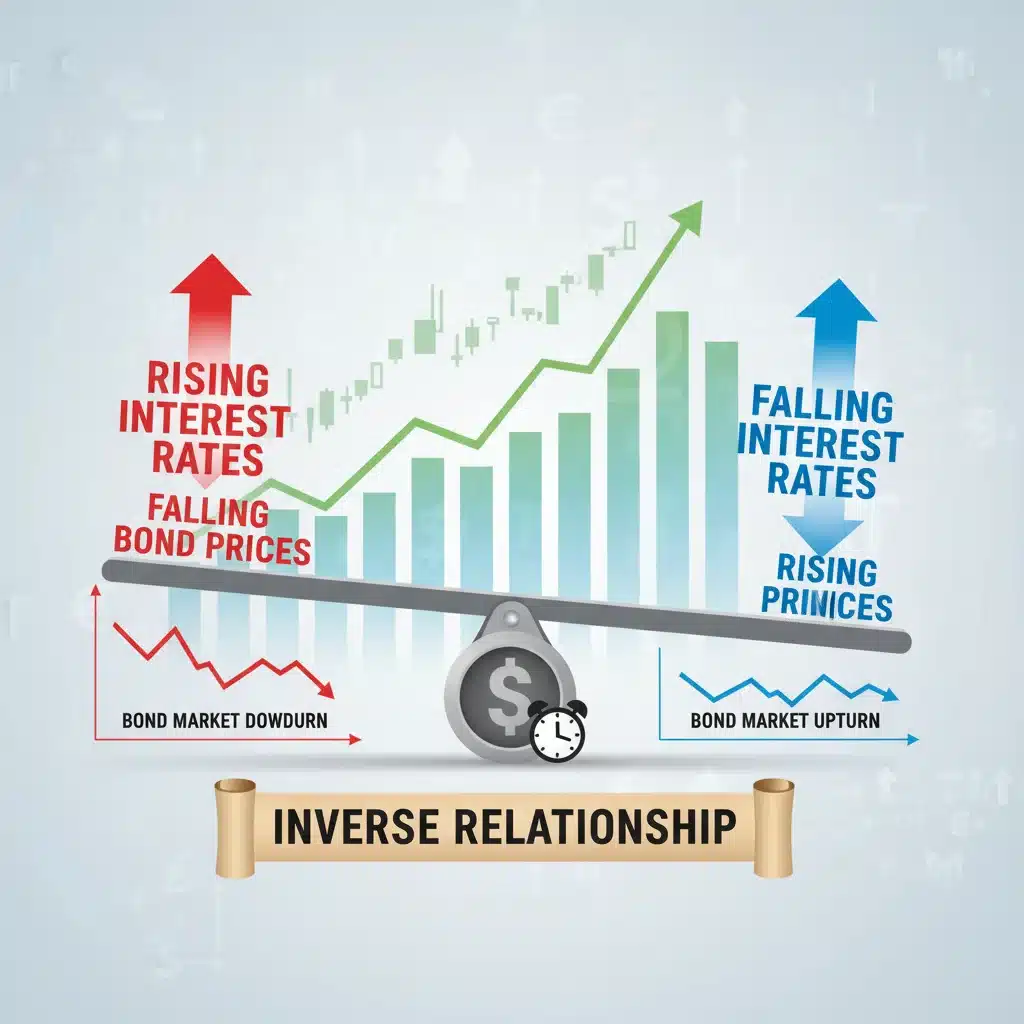
Changes in the federal funds rate ripple through the entire bond market. A rising rate environment generally leads to lower bond prices for existing bonds (as newly issued bonds offer higher yields), while a falling rate environment typically results in higher bond prices. For 2026, understanding the likely trajectory of interest rates will be pivotal for timing bond purchases and managing portfolio duration. This involves not only tracking the federal funds rate but also analyzing the yield curve, which provides valuable insights into market expectations for future rates.
Economic Growth and Geopolitical Considerations
The pace of U.S. economic growth directly impacts corporate earnings, credit quality, and investor sentiment. A robust economy generally supports corporate bonds, as companies are more likely to meet their debt obligations. Conversely, an economic slowdown can increase default risks, particularly for lower-rated corporate bonds. Geopolitical events, ranging from international conflicts to trade disputes, can also introduce volatility into financial markets, often driving investors towards safe-haven assets like U.S. Treasuries. Conservative investors should factor these broader economic and geopolitical considerations into their analysis when seeking U.S. bond opportunities.
A stable economic outlook, combined with predictable geopolitical conditions, fosters a more predictable bond market environment. However, unforeseen events can quickly alter market dynamics. Therefore, a diversified approach, which includes a mix of bond types and maturities, can help cushion the impact of unexpected shocks. The ability to adapt and rebalance a portfolio in response to changing global circumstances is a hallmark of successful conservative investing.
Key U.S. Bond Opportunities for Conservative Investors in 2026
For conservative investors, identifying specific U.S. bond opportunities involves a careful selection of instruments that align with their risk tolerance and financial objectives. The U.S. bond market offers a spectrum of choices, each with its own characteristics.
U.S. Treasuries: The Ultimate Safe Haven
U.S. Treasuries, including Treasury bills, notes, and bonds, are widely considered the safest investments globally due due to the full faith and credit backing of the U.S. government. For conservative investors, they form the bedrock of a stable portfolio. In 2026, Treasuries will likely continue to serve as a primary safe-haven asset, particularly during periods of market uncertainty. Their liquidity and minimal credit risk make them indispensable for capital preservation.
When considering Treasuries, investors should evaluate different maturities. Short-term Treasuries offer high liquidity and lower interest rate risk, making them suitable for cash management or as a temporary holding during volatile periods. Mid-term Treasuries (2-10 years) strike a balance between yield and interest rate sensitivity, often providing a reasonable income stream. Long-term Treasuries (20-30 years) offer higher yields but come with greater interest rate risk; a small increase in rates can significantly impact their price. For 2026, a laddering strategy across various Treasury maturities could be particularly effective, allowing investors to capture prevailing rates while maintaining flexibility.
Agency Bonds: A Step Beyond Treasuries
Agency bonds are debt securities issued by U.S. government-sponsored enterprises (GSEs) like Fannie Mae, Freddie Mac, and the Federal Home Loan Banks. While not directly backed by the full faith and credit of the U.S. government (except in specific cases or during crises), they carry an implicit government guarantee, making them highly secure and offering slightly higher yields than comparable Treasuries. This makes them attractive U.S. bond opportunities for conservative investors seeking a modest yield pickup without significantly increasing credit risk.
Mortgage-backed securities (MBS) issued by agencies are a common type of agency bond. These pool together thousands of mortgage loans, and investors receive principal and interest payments as homeowners pay their mortgages. While MBS offer attractive yields, they come with prepayment risk – homeowners may refinance their mortgages when interest rates fall, returning principal to investors sooner than expected. Conservative investors considering MBS should understand this risk and assess whether the additional yield adequately compensates for it.
Municipal Bonds: Tax-Exempt Income
Municipal bonds, or ‘munis,’ are debt securities issued by state and local governments to finance public projects such as schools, roads, and infrastructure. A key advantage of municipal bonds for many investors is their tax-exempt status at the federal level, and often at the state and local level if the investor resides in the issuing state. This tax advantage can make their after-tax yield highly competitive, especially for investors in higher tax brackets, presenting significant U.S. bond opportunities.
Munis come in two main forms: general obligation (GO) bonds, backed by the full faith and credit and taxing power of the issuer, and revenue bonds, which are backed by the revenue generated from the specific project they finance (e.g., toll roads, utility systems). GO bonds are generally considered safer due to broader backing. Conservative investors should prioritize highly-rated municipal bonds (A-rated or higher) to minimize credit risk. Evaluating the fiscal health of the issuing municipality is crucial, as is understanding the specific revenue stream backing revenue bonds. Diversifying across different issuers and geographical regions is also a prudent strategy.
Investment-Grade Corporate Bonds: Enhanced Yields with Managed Risk
Investment-grade corporate bonds are debt securities issued by corporations with high credit ratings (typically BBB- or higher by S&P and Fitch, or Baa3 or higher by Moody’s). These companies are considered financially stable with a low risk of default. They offer higher yields than Treasuries or agency bonds to compensate investors for the slightly increased credit risk. For conservative investors willing to take on a modicum of additional risk for enhanced returns, these bonds can be valuable U.S. bond opportunities.
When selecting corporate bonds, thorough credit analysis is essential. This involves examining the issuing company’s financial statements, industry outlook, and competitive position. Diversification across different industries and companies is also critical to mitigate idiosyncratic risks. While investment-grade bonds are generally safe, economic downturns can still impact corporate profitability and, in rare cases, lead to credit rating downgrades or defaults. Therefore, a careful and selective approach is warranted, focusing on companies with strong balance sheets and consistent cash flows. For 2026, sectors with stable demand and robust earnings, such as utilities or established technology firms, might offer particularly compelling investment-grade corporate bond opportunities.
Strategies for Conservative Investors in the 2026 Bond Market
Beyond selecting individual bond types, conservative investors need robust strategies to navigate the U.S. bond market in 2026. These strategies focus on managing risk, optimizing returns, and adapting to changing market conditions.
Duration Management and Laddering
Duration is a key concept in bond investing, measuring a bond’s price sensitivity to changes in interest rates. Bonds with longer durations are more sensitive to interest rate fluctuations. For conservative investors, managing duration is crucial. In an environment where interest rates are expected to rise, shorter-duration bonds are generally preferred, as their prices are less impacted, and their principal can be reinvested at higher rates sooner. Conversely, if rates are expected to fall, longer-duration bonds can offer greater capital appreciation.
A bond ladder is a highly effective strategy for conservative investors. It involves purchasing bonds with staggered maturity dates. For example, an investor might buy bonds maturing in 1, 2, 3, 4, and 5 years. As each bond matures, the principal is reinvested into a new bond at the longest end of the ladder (e.g., a new 5-year bond). This strategy provides a steady stream of income, reduces interest rate risk by averaging out reinvestment rates over time, and offers liquidity as bonds mature periodically. A bond ladder can help conservative investors capture prevailing U.S. bond opportunities regardless of the interest rate cycle.
Credit Quality Focus and Diversification
For conservative investors, maintaining a strong focus on credit quality is non-negotiable. This means primarily investing in bonds with high credit ratings (investment-grade or higher). While lower-rated bonds offer higher yields, they come with significantly elevated default risk, which is generally unacceptable for a conservative approach. Regular monitoring of credit ratings for all holdings is essential, as downgrades can impact bond prices and increase risk.
Diversification is another cornerstone of conservative bond investing. This involves spreading investments across different bond types (Treasuries, agencies, municipals, investment-grade corporates), maturities, and issuers. Diversification helps mitigate specific risks associated with any single bond or sector. For instance, if one municipal issuer faces financial difficulties, a diversified portfolio will not be overly reliant on that single bond. It also helps in capturing a broader range of U.S. bond opportunities that may arise in different segments of the market.
Considering Actively Managed Bond Funds and ETFs
For many conservative investors, particularly those without the time or expertise to manage individual bonds, actively managed bond funds or exchange-traded funds (ETFs) can be excellent options. These funds offer instant diversification, professional management, and liquidity. Actively managed funds employ experienced portfolio managers who seek to outperform a benchmark by making tactical decisions on duration, credit quality, and sector allocation. They can dynamically adjust the portfolio to respond to changes in the economic outlook and interest rate environment, potentially capturing more U.S. bond opportunities.
When selecting bond funds or ETFs, investors should consider expense ratios, the fund’s investment objective, its historical performance, and the credit quality of its holdings. For conservative investors, funds focused on investment-grade bonds with moderate duration are typically most appropriate. ETFs offer the flexibility of trading like stocks throughout the day, while mutual funds are priced once daily. Both can provide a convenient and diversified approach to accessing the U.S. bond market in 2026.
Risks and Challenges in the 2026 U.S. Bond Market
While the U.S. bond market offers stability, it is not without risks. Conservative investors must be aware of these challenges to effectively mitigate them and protect their portfolios.
Interest Rate Risk
Interest rate risk is the most significant concern for bond investors. As discussed, when interest rates rise, the market value of existing bonds with lower fixed coupon payments tends to fall. This can lead to capital losses if bonds are sold before maturity. In 2026, if inflation remains elevated or economic growth unexpectedly accelerates, the Federal Reserve might be compelled to raise rates, posing a challenge to bond portfolios. Conservative investors can mitigate this risk through duration management, bond laddering, and investing in floating-rate bonds where coupon payments adjust with market rates.
Inflation Risk
Inflation risk refers to the possibility that the purchasing power of a bond’s future cash flows will be eroded by rising prices. Even if a bond pays a fixed coupon, if inflation is higher than the coupon rate, the real return becomes negative. This is particularly problematic for conservative investors whose primary goal is wealth preservation. Strategies to counter inflation risk include investing in TIPS (Treasury Inflation-Protected Securities), which adjust their principal value based on the Consumer Price Index, and maintaining a portion of the portfolio in shorter-duration bonds that can be reinvested at higher rates more frequently.
Credit Risk
Credit risk is the risk that a bond issuer will default on its principal or interest payments. While minimal for U.S. Treasuries, it becomes a consideration for agency, municipal, and corporate bonds. Even investment-grade bonds carry some degree of credit risk, albeit low. Economic downturns, industry-specific challenges, or mismanagement can lead to credit downgrades or defaults. Conservative investors must prioritize high-quality issuers and diversify across multiple issuers to minimize this risk. Regular review of credit ratings is also a crucial aspect of managing credit risk in a bond portfolio.
Liquidity Risk
Liquidity risk is the risk that an investor may not be able to sell a bond quickly at a fair market price. While U.S. Treasuries are highly liquid, some other bond types, particularly certain municipal or less common corporate bonds, can be less liquid. This means if an investor needs to sell before maturity, they might have to accept a lower price. For conservative investors, maintaining a portion of their bond portfolio in highly liquid assets like short-term Treasuries or money market funds can provide a buffer against unexpected cash needs, reducing exposure to liquidity risk in less active markets.
Building a Resilient Conservative Bond Portfolio for 2026
Constructing a resilient bond portfolio for 2026 requires a thoughtful combination of the discussed strategies and a deep understanding of market dynamics. For conservative investors, the emphasis should always be on capital preservation and consistent income, even if it means sacrificing some potential for higher returns.
Asset Allocation and Portfolio Construction
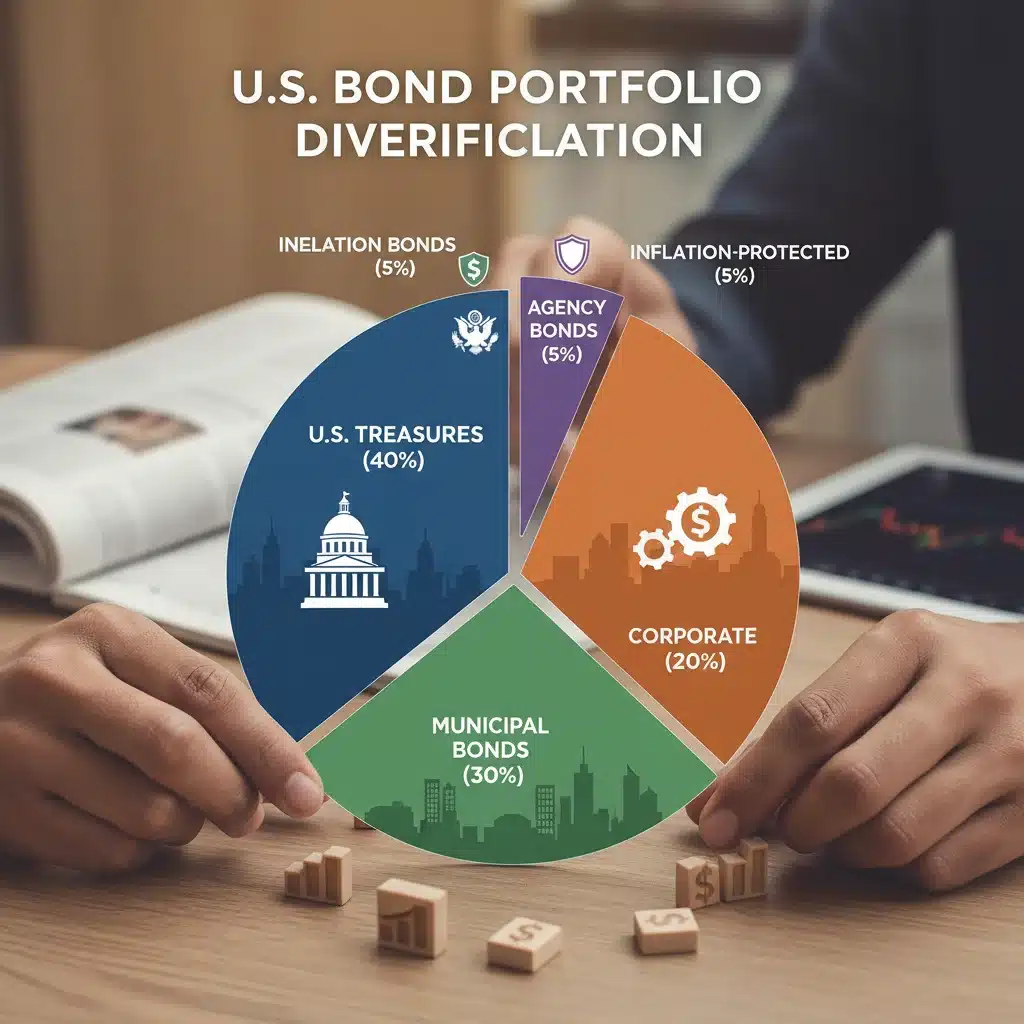
The first step in building a resilient portfolio is determining the appropriate asset allocation. For conservative investors, a significant portion of the portfolio will likely be allocated to fixed income, with a smaller allocation to other asset classes like equities for growth. Within the fixed-income allocation, a strategic mix of bond types is crucial. A common approach might include a substantial allocation to U.S. Treasuries for safety, a moderate allocation to agency bonds for slightly enhanced yield, and a smaller, carefully selected allocation to highly-rated municipal and corporate bonds for further diversification and income.
The specific percentages will depend on individual circumstances, including age, financial goals, and overall risk tolerance. Regular rebalancing of the portfolio is also important to maintain the desired asset allocation and ensure that it continues to align with the investor’s objectives. This proactive approach helps in capturing new U.S. bond opportunities as they emerge.
Monitoring and Adjusting Your Portfolio
The bond market is dynamic, and what works today may not be optimal tomorrow. Therefore, continuous monitoring of economic indicators, Federal Reserve policy, and geopolitical events is essential. Conservative investors should regularly review their bond holdings, paying attention to changes in credit ratings, yield movements, and their portfolio’s overall duration. If economic conditions shift significantly, adjustments to the portfolio may be necessary.
For example, if inflation unexpectedly accelerates, increasing exposure to TIPS or shortening portfolio duration might be warranted. Conversely, if a recession appears imminent, a flight to quality might necessitate an increase in U.S. Treasury holdings. The ability to adapt and make informed adjustments is a hallmark of successful long-term investing, ensuring that the portfolio remains optimized for the prevailing U.S. bond opportunities.
The Role of Professional Guidance
For many conservative investors, particularly those with complex financial situations or limited time, seeking guidance from a qualified financial advisor can be invaluable. A professional advisor can help assess individual risk tolerance, define financial goals, construct a diversified bond portfolio, and provide ongoing monitoring and adjustments. They can also offer insights into niche bond markets or specific strategies that might be particularly advantageous in 2026. While self-managing a bond portfolio is possible, the complexities of the market often make professional advice a worthwhile investment for achieving peace of mind and optimizing returns.
Conclusion: Navigating U.S. Bond Opportunities for a Secure 2026
The U.S. bond market in 2026 presents a landscape rich with U.S. bond opportunities for conservative investors committed to capital preservation and income generation. By thoroughly understanding the macroeconomic environment, including inflation trends and Federal Reserve policy, investors can make informed decisions about where to allocate their capital. The diverse array of bond types, from the safety of U.S. Treasuries to the tax advantages of municipal bonds and the enhanced yields of investment-grade corporate bonds, offers ample choices for portfolio construction.
Strategic approaches such as duration management, bond laddering, and rigorous credit quality focus are indispensable for mitigating risks and optimizing returns. Furthermore, active diversification across various bond categories and issuers helps build a resilient portfolio capable of weathering market fluctuations. While challenges like interest rate risk and inflation risk will always be present, a proactive and informed approach can transform these challenges into manageable aspects of a successful investment strategy.
Ultimately, a well-constructed and regularly monitored bond portfolio, potentially guided by professional advice, can provide the stability and predictable income that conservative investors seek. As we move into 2026, remaining vigilant, adaptable, and disciplined will be key to unlocking the full potential of the U.S. bond market and securing a stable financial future.
Author