
ESG’s Impact on US Job Market: New Career Opportunities by 2026
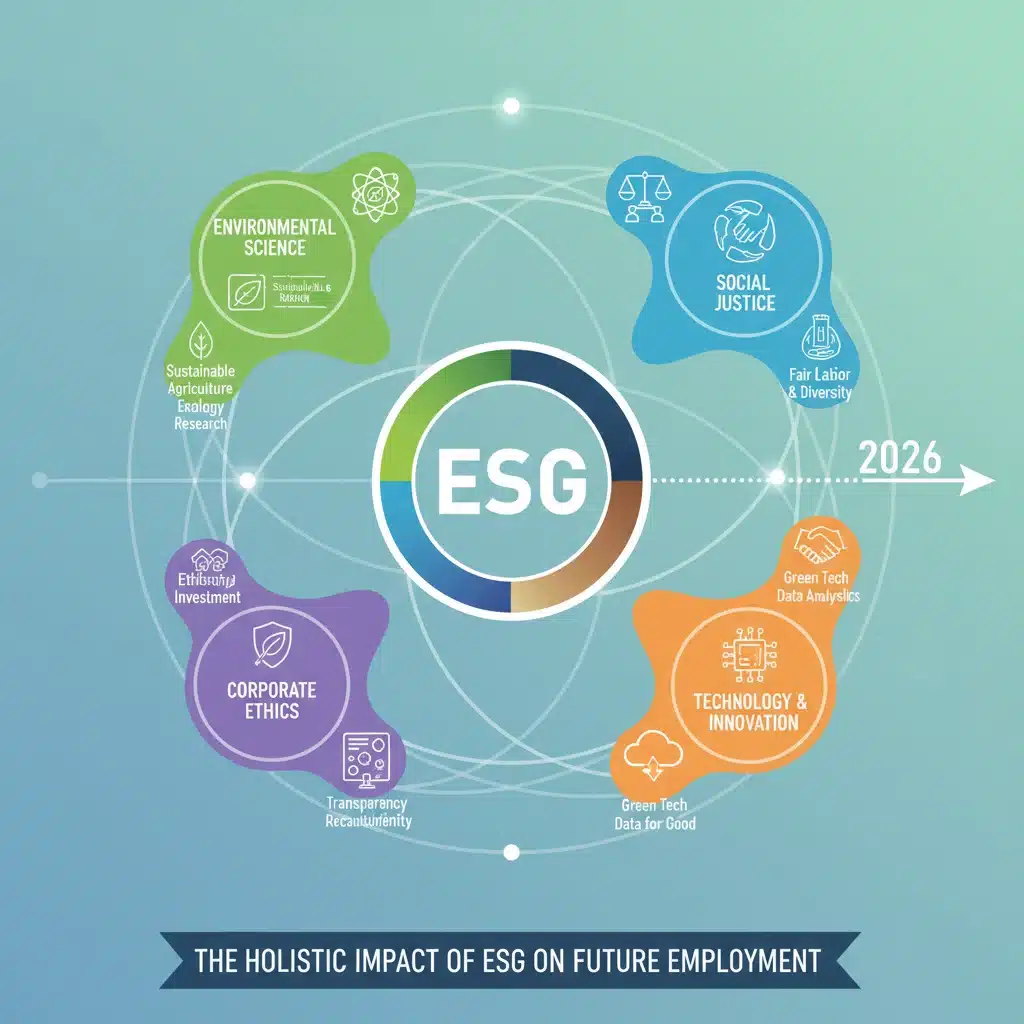
The landscape of the American workforce is undergoing a profound transformation, driven by a powerful acronym: ESG. Environmental, Social, and Governance factors are no longer niche considerations for a select few companies; they are rapidly becoming central to business strategy, investment decisions, and, crucially, the future of the US job market. As we look towards 2026, the influence of ESG is set to create a wave of new career opportunities, redefine existing roles, and demand a new set of skills from professionals across all sectors. This article delves deep into the transformative impact of the ESG job market, exploring the emerging roles, the evolving skill sets, and the strategic importance of aligning with these principles.
Understanding the ESG Revolution and its Influence on the Job Market
ESG refers to the three central factors in measuring the sustainability and ethical impact of an investment in a company or business. Environmental criteria consider how a company performs as a steward of nature. Social criteria examine how it manages relationships with employees, suppliers, customers, and the communities where it operates. Governance deals with a company’s leadership, executive pay, audits, internal controls, and shareholder rights.
The rise of ESG is not merely a trend; it’s a fundamental shift in how businesses operate and are evaluated. Investors are increasingly prioritizing companies with strong ESG performance, recognizing that such companies often demonstrate better long-term financial stability and resilience. Consumers, particularly younger generations, are also demanding greater transparency and accountability from the brands they support. This dual pressure from investors and consumers is forcing companies to integrate ESG principles into their core operations, leading to a significant ripple effect across the US job market.
This integration isn’t just about compliance; it’s about innovation, risk management, and competitive advantage. Companies are realizing that strong ESG practices can reduce operational costs, enhance brand reputation, attract top talent, and open new market opportunities. Consequently, the demand for professionals who can navigate and implement these complex strategies is skyrocketing. The ESG job market is burgeoning, offering a diverse array of roles that were either non-existent or considered peripheral just a few years ago.
By 2026, experts predict that the ESG job market will have matured significantly, with dedicated departments, specialized consultants, and integrated roles becoming commonplace. This evolution presents an exciting prospect for job seekers and career changers, but it also necessitates a proactive approach to skill development and career planning.
The Environmental Pillar: Green Jobs and Sustainable Careers
The ‘E’ in ESG is perhaps the most visible driver of new job creation. As companies strive to reduce their carbon footprint, manage resources efficiently, and adopt renewable energy, a vast array of green jobs are emerging. These roles span various industries, from energy and manufacturing to agriculture and technology.
Key Environmental Roles Emerging by 2026:
- Renewable Energy Specialists: With the push towards clean energy, demand for solar panel installers, wind turbine technicians, and renewable energy project managers will continue to surge. These roles require a blend of technical expertise and project management skills.
- Sustainability Consultants: Businesses are seeking experts to help them develop and implement sustainability strategies, assess environmental risks, and comply with evolving regulations. This includes roles in environmental impact assessment, lifecycle analysis, and sustainable supply chain management.
- Circular Economy Engineers: Focused on designing waste out of the system, these professionals will be crucial in developing innovative solutions for product reuse, recycling, and remanufacturing. This area is particularly ripe for growth in manufacturing and consumer goods.
- Climate Risk Analysts: As climate change impacts become more pronounced, companies need analysts to assess and mitigate climate-related financial risks and opportunities. This involves data analysis, financial modeling, and an understanding of climate science.
- Environmental Data Scientists: The collection and analysis of environmental data (e.g., emissions, resource consumption, biodiversity) will be critical for reporting, compliance, and strategic decision-making. These roles demand strong analytical and programming skills.
The growth in these areas signifies a fundamental shift towards a more sustainable economy. Companies are investing heavily in research and development for green technologies, creating further opportunities for scientists, engineers, and innovators. The ESG job market, particularly its environmental component, is not just about reducing harm but about actively building a more resilient and sustainable future.
The Social Pillar: Ethical Business and Community Engagement
The ‘S’ in ESG focuses on a company’s relationship with its stakeholders, including employees, customers, and the broader community. This pillar emphasizes fair labor practices, diversity and inclusion, human rights, and product safety. The increasing scrutiny on social impact is generating new roles centered around ethical operations and responsible corporate citizenship.
Key Social Roles Emerging by 2026:
- Diversity, Equity, and Inclusion (DEI) Officers: Companies are hiring dedicated professionals to develop and implement strategies that foster a more inclusive workplace culture. These roles are critical for attracting and retaining diverse talent and ensuring equitable opportunities.
- Human Rights and Labor Standards Managers: With global supply chains, ensuring ethical sourcing and fair labor practices is paramount. These professionals will be responsible for auditing supply chains, developing codes of conduct, and addressing human rights concerns.
- Community Relations Managers: Building strong relationships with local communities is vital for social license to operate. These roles involve managing community outreach programs, addressing social impacts, and fostering positive local engagement.
- ESG Communications Specialists: Transparently communicating a company’s ESG efforts to internal and external stakeholders is crucial. These roles combine expertise in public relations, corporate communications, and sustainability reporting.
- Employee Well-being and Engagement Specialists: Beyond traditional HR, these roles focus on creating supportive work environments that prioritize employee mental health, physical well-being, and overall satisfaction, recognizing the direct link between employee welfare and company performance.
The focus on social factors within the ESG job market reflects a growing understanding that a company’s success is intricately linked to its impact on people. Companies with strong social performance are often seen as more attractive employers and more trustworthy brands, leading to a competitive edge in the marketplace. These roles require strong interpersonal skills, empathy, strategic thinking, and a deep understanding of social dynamics and ethical frameworks.

The Governance Pillar: Transparency, Ethics, and Accountability
Good governance is the bedrock upon which strong environmental and social performance is built. The ‘G’ in ESG encompasses a company’s leadership, executive pay, audits, internal controls, and shareholder rights. As corporate scandals and ethical lapses continue to make headlines, the demand for robust governance frameworks and professionals who can implement them is on the rise.
Key Governance Roles Emerging by 2026:
- ESG Risk and Compliance Officers: These professionals ensure that companies adhere to a growing body of ESG regulations and standards. They identify, assess, and mitigate ESG-related risks, from data privacy breaches to ethical sourcing violations.
- Corporate Governance Analysts: Working within financial institutions or directly for corporations, these analysts evaluate the effectiveness of a company’s governance structures, board diversity, executive compensation, and shareholder engagement.
- Ethical AI and Data Governance Specialists: With the proliferation of artificial intelligence and big data, ensuring ethical data practices, algorithmic fairness, and data privacy is becoming critical. These roles bridge technology, ethics, and legal compliance.
- Internal Auditors with ESG Expertise: Traditional internal audit functions are expanding to include ESG performance. Auditors with expertise in sustainability reporting, ethical conduct, and social impact metrics will be highly sought after.
- ESG Reporting and Disclosure Managers: As mandatory ESG reporting becomes more widespread, professionals who can collect, verify, and report on ESG data according to various frameworks (e.g., GRI, SASB, TCFD) will be essential.
The governance pillar underpins the credibility and effectiveness of a company’s entire ESG strategy. Without strong governance, environmental and social initiatives can falter. The ESG job market in this area demands professionals with a keen eye for detail, strong analytical skills, an understanding of legal and regulatory frameworks, and a commitment to ethical leadership. These roles are vital for maintaining investor confidence and ensuring long-term corporate integrity.
Essential Skills for the Evolving ESG Job Market by 2026
To thrive in the burgeoning ESG job market, professionals will need to cultivate a blend of traditional and emerging skills. Beyond specific technical expertise for each role, several overarching competencies will be crucial for success.
Core Skills for ESG Professionals:
- Data Literacy and Analytics: The ESG world is increasingly data-driven. Professionals need to be able to collect, analyze, interpret, and present complex ESG data to inform decision-making and reporting. This includes understanding metrics, benchmarks, and data visualization tools.
- Strategic Thinking and Problem-Solving: ESG challenges are often complex and multifaceted. Professionals must be able to think strategically, identify root causes, and develop innovative solutions that align with business objectives and sustainability goals.
- Communication and Storytelling: Effectively communicating ESG performance and impact to diverse stakeholders – from investors and employees to customers and regulators – is paramount. This requires strong written and verbal communication skills, as well as the ability to craft compelling narratives.
- Interdisciplinary Collaboration: ESG issues cut across various departments and functions. Professionals must be adept at collaborating with colleagues from different backgrounds, including finance, legal, operations, and human resources.
- Regulatory Knowledge and Adaptability: The ESG regulatory landscape is constantly evolving. Professionals need to stay abreast of new laws, standards, and best practices, and be able to adapt quickly to changes.
- Ethical Judgment and Integrity: At the heart of ESG is a commitment to ethical conduct. Professionals must possess strong ethical judgment and unwavering integrity to guide decision-making and uphold corporate values.
- Project Management: Many ESG initiatives involve complex projects with multiple stakeholders and tight deadlines. Strong project management skills are essential for successful implementation.
- Digital Fluency: Leveraging technology for ESG data management, reporting, and impact assessment will become increasingly important. Familiarity with ESG software platforms and digital tools will be a significant advantage.
Education and continuous learning will play a pivotal role. Universities and professional organizations are rapidly developing ESG-focused programs, certifications, and workshops. Investing in these learning opportunities will be key for individuals looking to enter or advance within the ESG job market.
Industry-Specific Shifts and Opportunities
While ESG impacts all sectors, some industries are experiencing more profound shifts and generating a higher volume of new ESG-related roles. Understanding these industry-specific dynamics can help job seekers target their efforts effectively.
Finance and Investment:
The financial sector is at the forefront of the ESG revolution. Asset managers, banks, and private equity firms are integrating ESG factors into investment analysis, portfolio construction, and risk management. This has led to a surge in demand for ESG analysts, sustainable finance specialists, impact investing managers, and responsible investment strategists. These roles require a strong understanding of financial markets combined with expertise in ESG methodologies and data.
Technology:
Technology plays a dual role in ESG – both as a source of environmental impact and a solution for sustainability. The tech sector is seeing growth in roles related to green IT, energy-efficient data centers, development of ESG software platforms, and AI-driven solutions for environmental monitoring and resource optimization. Data privacy and ethical AI also fall under the governance umbrella, creating demand for specialists in these areas.
Manufacturing and Supply Chain:
Manufacturers are under pressure to reduce their environmental footprint, improve labor practices, and ensure ethical sourcing across complex global supply chains. This drives demand for sustainable supply chain managers, environmental compliance officers, circular economy specialists, and ethical sourcing managers. The focus here is on operational efficiency, waste reduction, and responsible production.
Energy and Utilities:
The transition to a low-carbon economy is fundamentally reshaping the energy sector. Roles in renewable energy development, grid modernization, energy efficiency, and carbon capture technologies are expanding rapidly. Utility companies are also hiring specialists in sustainable infrastructure and climate resilience planning.
Consulting Services:
As companies grapple with integrating ESG, there’s a growing need for external expertise. ESG consulting firms are expanding, hiring professionals with diverse backgrounds to advise clients on strategy development, risk assessment, reporting, and implementation of ESG initiatives. This offers a broad range of opportunities for those with strong analytical and client-facing skills.
Challenges and Opportunities in the ESG Job Market
While the ESG job market presents immense opportunities, it also comes with its challenges. One significant hurdle is the talent gap – a shortage of professionals with the specialized skills and interdisciplinary knowledge required for these roles. This gap, however, translates directly into a significant opportunity for individuals willing to invest in upskilling and reskilling.
Another challenge is the evolving nature of ESG standards and regulations. What is considered best practice today might be outdated tomorrow. This necessitates a commitment to continuous learning and adaptability from professionals in the field. However, this dynamic environment also fosters innovation and creates new niches for experts who can navigate complexity.
For organizations, the challenge lies in effectively integrating ESG into their core business strategy rather than treating it as a separate initiative. This requires strong leadership commitment, cross-functional collaboration, and a willingness to invest in new talent and technologies. Companies that successfully embed ESG will not only attract top talent but also gain a significant competitive advantage in the marketplace.
The opportunities far outweigh the challenges. The ESG job market is not just about compliance; it’s about driving innovation, creating long-term value, and contributing to a more sustainable and equitable world. For individuals, it offers a chance to pursue careers that are both professionally rewarding and purpose-driven. For businesses, it’s an imperative for future success and resilience.
Preparing for the ESG Job Market by 2026
For individuals looking to capitalize on the growth in the ESG job market, proactive preparation is key. Here are actionable steps to take:
- Educate Yourself: Enroll in online courses, certifications (e.g., FSA, SASB), or degree programs focused on sustainability, ESG, or related fields. Many reputable institutions now offer specialized ESG training.
- Develop Interdisciplinary Skills: Focus on building a diverse skill set that includes data analytics, project management, communication, and strategic thinking, alongside your core expertise.
- Network Strategically: Connect with professionals already working in ESG. Attend industry conferences, webinars, and join professional organizations focused on sustainability and responsible business.
- Gain Practical Experience: Look for opportunities to apply ESG principles in your current role, volunteer for sustainability initiatives, or seek internships in ESG-focused organizations.
- Tailor Your Resume and LinkedIn Profile: Highlight any experience or skills related to sustainability, corporate social responsibility, ethical practices, or environmental management. Use relevant keywords to attract recruiters.
- Understand Industry Specifics: Research how ESG impacts your target industry and identify the specific roles and skills that are in demand within that sector.
By taking these steps, you can position yourself as a valuable asset in the rapidly expanding ESG job market, ready to seize the new career opportunities that will emerge by 2026 and beyond.
Conclusion: A Sustainable Future, A Flourishing Job Market
The impact of ESG on the US job market is undeniable and set to intensify significantly by 2026. What began as a niche concern has evolved into a strategic imperative, driving innovation, reshaping corporate priorities, and creating a diverse array of new career paths. From environmental scientists and sustainability consultants to DEI officers and ethical AI specialists, the demand for professionals skilled in ESG principles is surging across every sector.
This shift represents more than just a change in job titles; it signifies a fundamental reorientation of business towards purpose, sustainability, and long-term value creation. For individuals, the ESG job market offers not only robust career prospects but also the chance to contribute meaningfully to a more sustainable and equitable future. By understanding the evolving landscape, acquiring critical skills, and proactively seeking out opportunities, professionals can navigate this transformation successfully and thrive in the burgeoning ESG economy. The future of work is green, social, and governed by strong ethics, and those who embrace these principles will lead the way.