AI in US Classrooms: 5 Education Trends by 2026
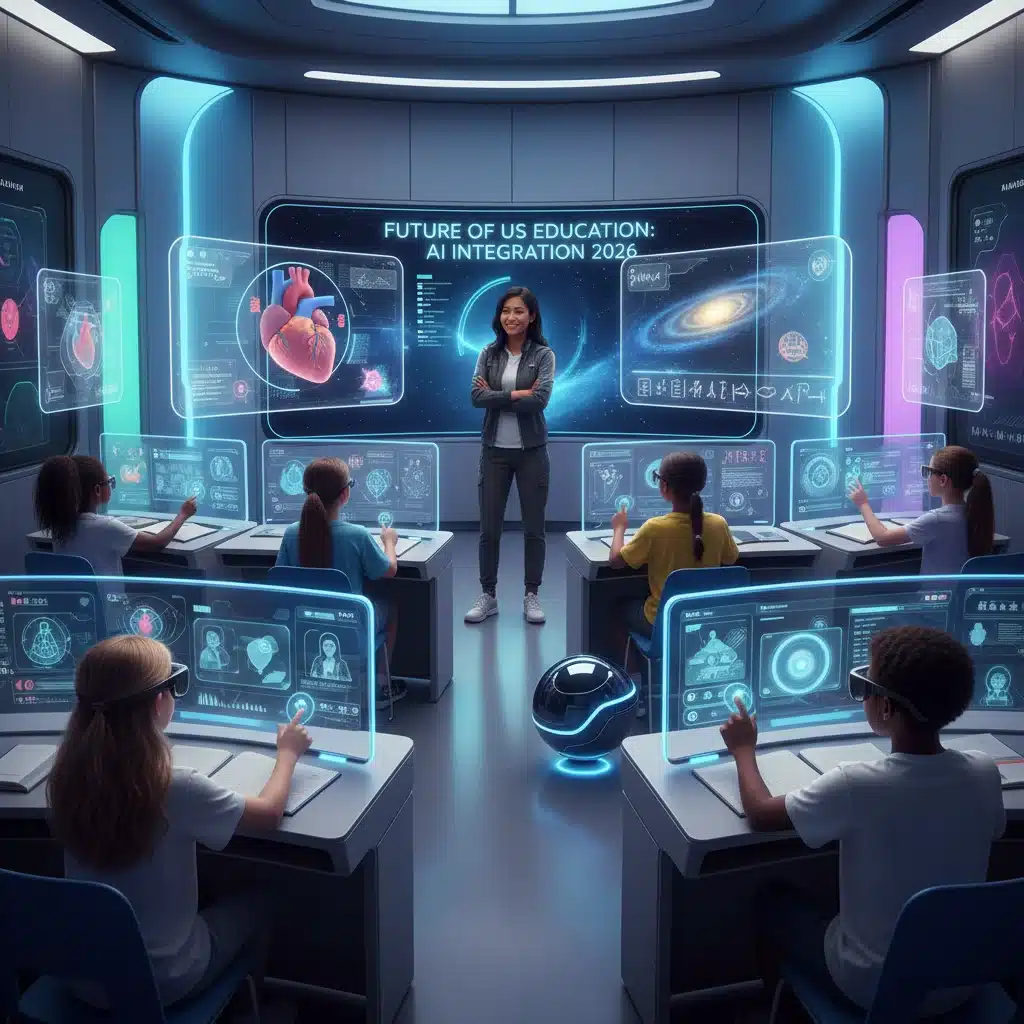
The dawn of artificial intelligence has ushered in an era of unprecedented transformation across nearly every sector, and education is no exception. As we fast-forward towards 2026, the integration of AI into US classrooms is not merely a futuristic concept but a rapidly unfolding reality. This paradigm shift promises to redefine pedagogical approaches, personalize learning experiences, and empower educators with tools previously unimaginable. The conversation around AI education trends is no longer about ‘if’ but ‘how’ and ‘when’ these technologies will become ubiquitous. Understanding these emerging trends is crucial for educators, policymakers, parents, and students alike, as they will fundamentally reshape the learning landscape.
The United States, with its diverse educational ecosystem, is particularly fertile ground for AI innovation. From urban public schools to rural private institutions, the potential for AI to address long-standing challenges—such as learning disparities, teacher workload, and student engagement—is immense. However, this integration also brings forth new considerations, including ethical implications, data privacy, and the need for robust infrastructure. This article will delve into the five most impactful AI education trends that are set to dominate US classrooms by 2026, providing a comprehensive overview of their potential, challenges, and the profound implications for the future of learning.
As we explore these trends, it becomes clear that AI is not a replacement for human educators but rather a powerful augmentation. It’s about leveraging technology to free up teachers from administrative burdens, allowing them to focus on what they do best: inspiring, mentoring, and fostering critical thinking. It’s about creating learning environments that are more adaptive, inclusive, and engaging than ever before. The future of education, powered by AI, is one where every student has the opportunity to reach their full potential, tailored to their individual needs and learning styles. Let’s embark on this journey to understand the transformative power of AI education trends.
1. Hyper-Personalized Learning Paths and Adaptive Content
One of the most significant AI education trends poised to revolutionize US classrooms by 2026 is the widespread adoption of hyper-personalized learning paths and adaptive content. Historically, education has often followed a one-size-fits-all model, where curriculum and pace are standardized for an entire class. This approach, while efficient for mass education, often fails to cater to the diverse learning styles, paces, and prior knowledge of individual students. AI is changing this dynamic fundamentally.
AI-powered platforms can now analyze a student’s performance data, identify their strengths and weaknesses, and even detect their preferred learning modalities (e.g., visual, auditory, kinesthetic). Based on this intricate analysis, these systems can then dynamically adjust the curriculum, provide targeted resources, and recommend specific exercises or projects that are most relevant and beneficial to that particular student. This isn’t just about differentiating instruction; it’s about creating a truly bespoke educational journey for each learner.
Imagine a student struggling with a particular mathematical concept. An AI system wouldn’t just flag their low score; it would identify the specific sub-skills they’re missing, provide interactive tutorials, suggest supplementary videos, and offer practice problems tailored to reinforce those exact areas. Conversely, a student excelling in a subject could be presented with advanced challenges, enrichment materials, or opportunities to delve deeper into topics of personal interest, preventing boredom and fostering a love for continuous learning.
Adaptive content goes hand-in-hand with personalized paths. AI algorithms can modify the difficulty of questions, the complexity of explanations, and even the format of information presented in real-time. This ensures that learning materials are always at the ‘just right’ level for each student, maximizing engagement and minimizing frustration. It moves beyond static textbooks and generic online modules to create an interactive, responsive learning environment that evolves with the student.
The implications of this trend are profound. It holds the potential to significantly reduce achievement gaps by providing timely interventions and support. It empowers students to take ownership of their learning, fostering self-directed study habits and critical thinking. For educators, it means less time spent on lesson differentiation and more time on high-value activities like mentorship, facilitating discussions, and addressing socio-emotional needs. The promise of hyper-personalized learning, driven by AI, is nothing short of transformative for the US educational system.
However, implementing this trend effectively requires careful consideration of data privacy and algorithmic bias. Ensuring that these systems are equitable and do not inadvertently perpetuate existing biases is paramount. Furthermore, educators will need training to effectively integrate and leverage these powerful tools within their classrooms, understanding how to interpret AI-generated insights and complement them with their professional judgment. Despite these challenges, hyper-personalized learning stands as a cornerstone of future AI education trends.
2. AI-Powered Tutors and Intelligent Feedback Systems
Another pivotal development among AI education trends is the emergence and refinement of AI-powered tutors and intelligent feedback systems. The traditional student-to-teacher ratio often limits the amount of individualized attention and immediate feedback a student can receive. AI is bridging this gap, providing accessible, on-demand support that complements the role of human educators.
AI tutors are not designed to replace teachers but to act as highly available, patient, and knowledgeable assistants. These systems can guide students through complex problems, explain concepts in multiple ways, and provide hints without giving away the answer directly. They can engage students in Socratic-style dialogues, prompting them to think critically and articulate their reasoning. This constant availability of personalized tutoring can significantly improve student comprehension and problem-solving skills, especially outside of regular class hours.
Intelligent feedback systems take this a step further. Beyond simply marking answers right or wrong, these AI tools can analyze student work in detail, offering nuanced, constructive feedback. For instance, in writing assignments, an AI system can identify grammatical errors, suggest improvements in sentence structure, highlight areas for stronger argumentation, and even assess the overall coherence and clarity of an essay. This immediate and specific feedback allows students to learn from their mistakes in real-time, fostering a continuous cycle of improvement.
In subjects like mathematics and science, AI can pinpoint misconceptions in a student’s thought process, rather than just identifying an incorrect final answer. It can then offer targeted mini-lessons or practice problems to address those specific conceptual gaps. This level of diagnostic feedback is incredibly valuable, as it helps students build a solid foundational understanding rather than just memorizing procedures.
The benefits extend beyond academic subjects. AI feedback can also be applied to developing soft skills, such as public speaking or collaborative project work, by analyzing speech patterns, body language (via video analysis), or contribution patterns within group tasks. This broad applicability underscores the potential of this trend to enhance holistic student development.
For teachers, AI-powered tutors and feedback systems are game-changers. They significantly reduce the burden of grading and providing individual feedback, freeing up valuable time that can be redirected towards more complex instructional tasks, addressing socio-emotional needs, or developing innovative lesson plans. Teachers can also leverage the data generated by these systems to gain deeper insights into class-wide learning patterns and individual student struggles, informing their instructional strategies.
As with all AI integrations, ethical considerations around data privacy and the potential for over-reliance on AI must be addressed. The goal is to use AI to augment human capabilities, not diminish them. By 2026, these intelligent systems will be commonplace, transforming how students receive support and how teachers provide feedback, marking a significant stride in AI education trends.
3. Immersive Learning Experiences through AI and VR/AR
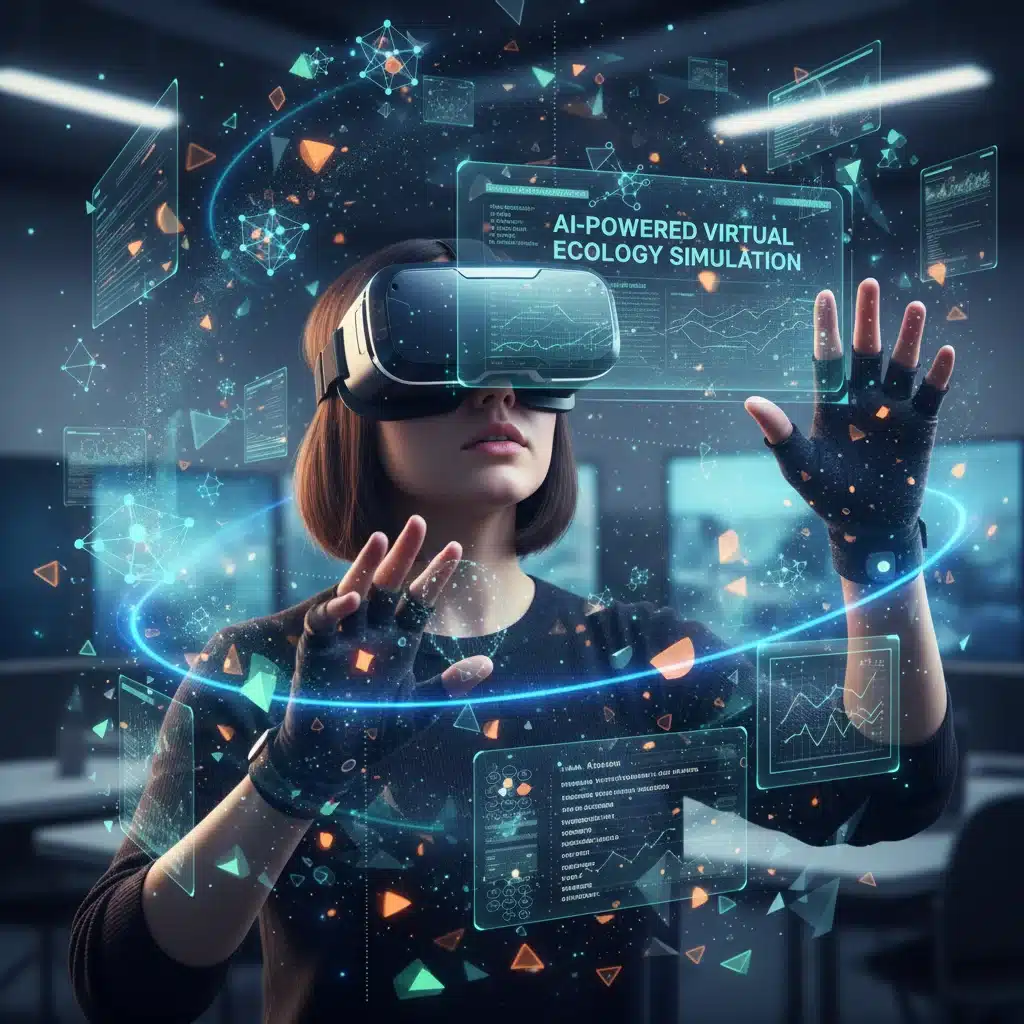
The third major trend among AI education trends that will reshape US classrooms by 2026 involves the powerful combination of Artificial Intelligence with Virtual Reality (VR) and Augmented Reality (AR) to create truly immersive learning experiences. Traditional learning often relies on abstract concepts and two-dimensional representations. VR and AR, supercharged by AI, allow students to step into, interact with, and manipulate their learning environments, making abstract concepts tangible and engaging.
Imagine a history class where students don’t just read about ancient Rome but can virtually walk through the Colosseum, interact with Roman citizens (AI-powered characters), and witness historical events unfold around them. Or a biology lesson where students can dissect a virtual frog, explore the human circulatory system from the inside, or manipulate DNA strands in a 3D environment, all without the need for physical specimens or expensive lab equipment.
AI plays a crucial role in making these immersive experiences intelligent and adaptive. An AI engine can personalize the VR/AR environment based on a student’s learning progress and interests. If a student is struggling to understand the physics of flight, the AI could create a simulated scenario where they design and test different airplane wings, providing real-time feedback on their choices. The AI can also generate dynamic scenarios, respond to student queries within the virtual world, and even adapt the behavior of virtual characters to enhance the learning outcome.
The benefits of immersive learning are manifold. It significantly boosts student engagement and motivation, transforming passive learning into active exploration. It allows for experiential learning that might be too dangerous, expensive, or logistically impossible in a traditional classroom setting. Furthermore, it caters to different learning styles, particularly kinesthetic and visual learners, who often struggle with purely textual or auditory instruction.
For subjects like engineering, architecture, or medicine, VR/AR simulations powered by AI can provide invaluable hands-on practice in a safe, controlled environment. Students can perform complex procedures, troubleshoot intricate systems, and make critical decisions, learning from their mistakes without real-world consequences. This practical application of theoretical knowledge is essential for developing job-ready skills.
While the initial cost of VR/AR hardware can be a barrier, the decreasing price of these technologies, coupled with the increasing availability of educational content, makes this trend increasingly viable. Schools will need to invest in the necessary infrastructure and provide professional development for teachers to effectively integrate these tools into their curriculum. However, the potential for deeply engaging and effective learning experiences makes AI-enhanced VR/AR a truly exciting frontier in AI education trends.
4. AI-Driven Data Analytics for Institutional Improvement
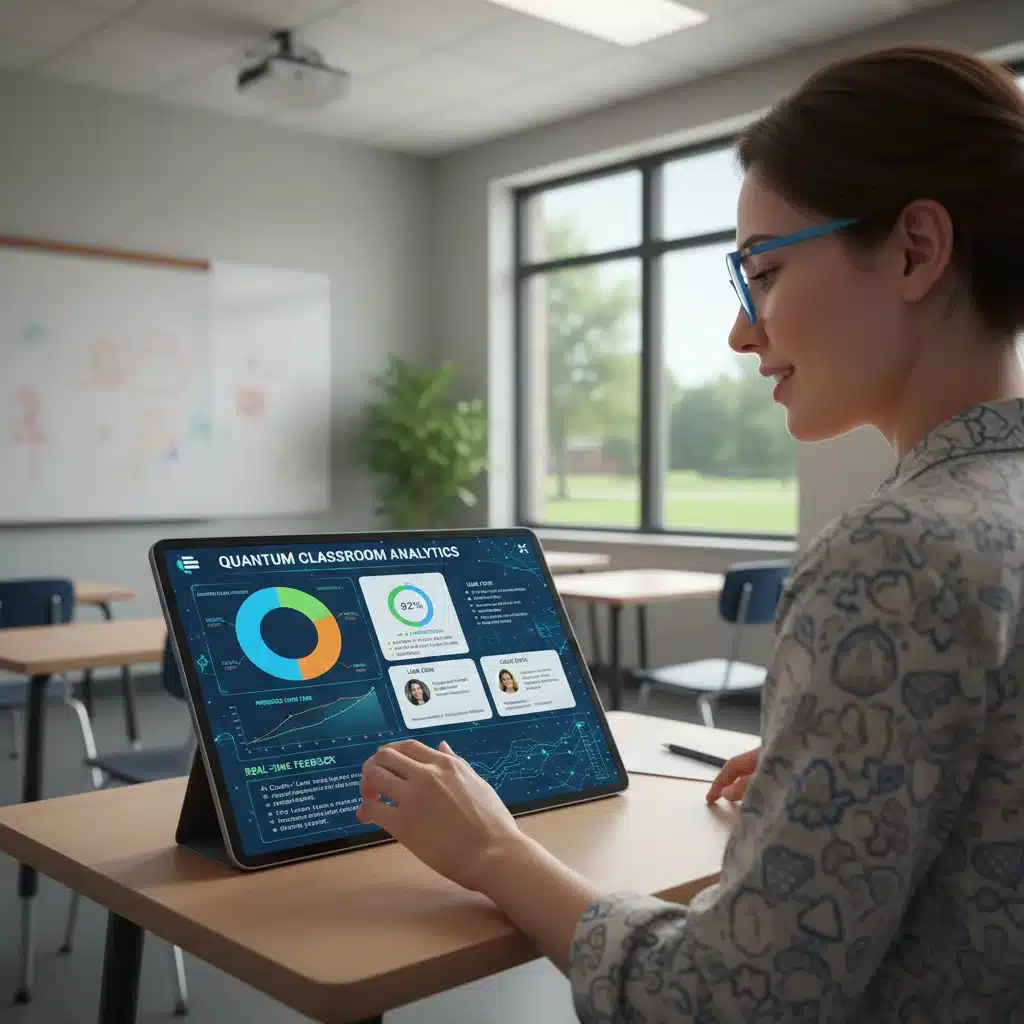
Beyond individual student learning, another powerful among AI education trends is the application of AI-driven data analytics for institutional improvement. Schools and districts generate vast amounts of data daily—from student performance metrics and attendance records to resource allocation and demographic information. Traditionally, analyzing this data has been a laborious and often underutilized process. AI is changing that, transforming raw data into actionable insights that can drive strategic decision-making.
AI analytics platforms can process and interpret large datasets at speeds and scales impossible for humans. These systems can identify patterns, correlations, and anomalies that might otherwise go unnoticed. For example, AI can predict which students are at risk of dropping out based on a multitude of factors, allowing educators to intervene proactively with targeted support. It can identify specific curriculum areas where students consistently struggle, prompting curriculum developers to revise or enhance those modules.
Furthermore, AI can optimize resource allocation. By analyzing student-teacher ratios, classroom utilization, and the effectiveness of various educational programs, AI can help administrators make more informed decisions about staffing, budgeting, and facility management. This leads to more efficient use of resources and better outcomes for students.
Consider the potential for identifying best practices. AI can analyze the teaching methodologies employed by highly effective teachers and correlate them with student success metrics. This doesn’t mean AI dictates teaching styles, but it can provide data-backed insights into what approaches are most effective for particular student demographics or subject matters, facilitating professional development and knowledge sharing across an institution.
AI can also play a crucial role in ensuring equity within the educational system. By analyzing data on student access to resources, performance across different demographic groups, and disciplinary actions, AI can highlight systemic biases or disparities. This allows institutions to address these issues head-on, working towards a more equitable and inclusive learning environment for all students.
The implementation of AI-driven data analytics requires robust data governance policies, strong cybersecurity measures, and clear ethical guidelines to protect student privacy. Transparency in how data is collected, analyzed, and used is paramount to building trust among all stakeholders. However, the ability of AI to provide a holistic, data-informed view of institutional performance is an invaluable asset for continuous improvement. By 2026, expect AI analytics to be a foundational tool for school leaders seeking to enhance educational quality and operational efficiency, marking a significant development in AI education trends.
5. AI for Teacher Support and Professional Development
The final, yet equally critical, of the AI education trends impacting US classrooms by 2026 focuses on empowering educators themselves: AI for teacher support and professional development. While much of the discussion around AI in education centers on student learning, AI’s potential to alleviate teacher workload, enhance instructional effectiveness, and provide personalized professional growth opportunities is immense.
Teachers often face significant administrative burdens, from grading and lesson planning to managing classroom logistics. AI tools can automate many of these tasks. For example, AI-powered grading systems can quickly assess objective assignments, freeing up teachers to focus on providing qualitative feedback on more complex tasks. AI can also assist in generating lesson plans, creating quizzes, and even identifying relevant resources for specific topics, saving countless hours of preparation time.
Beyond automation, AI can act as a powerful professional development coach. Imagine an AI system that analyzes a teacher’s classroom interactions (with consent, of course), identifying patterns in their questioning techniques, student engagement levels, or time management. This AI could then provide personalized feedback, suggest relevant professional development modules, or connect the teacher with resources and strategies tailored to their specific needs and goals.
AI can also facilitate peer learning and collaboration among teachers. By analyzing successful teaching strategies and their impact on student outcomes, AI can identify teachers who excel in specific areas and connect them with colleagues who could benefit from their expertise. This fosters a culture of continuous learning and shared best practices within schools and districts.
Furthermore, AI can help teachers stay abreast of the latest pedagogical research and educational technologies. With the sheer volume of new information constantly emerging, it’s challenging for educators to keep up. AI-powered aggregators can filter, summarize, and present relevant research, trends, and tools, ensuring teachers have access to the most current and effective strategies.
The integration of AI into teacher support systems is not about replacing human mentors or professional development facilitators but about augmenting their capabilities. It ensures that every teacher, regardless of their experience level or school resources, has access to personalized, data-driven support that helps them grow and thrive in their profession. This support is crucial for teacher retention and for ensuring a high-quality educational experience for all students.
Addressing potential concerns about surveillance or over-reliance on algorithms is vital. AI tools should be designed to empower teachers, providing insights and suggestions rather than prescriptive mandates. The focus must remain on supporting human judgment and fostering professional autonomy. By 2026, AI will be an indispensable partner for educators, transforming their daily practice and professional growth, solidifying its place among the top AI education trends.
Conclusion: The Future is Now for AI Education Trends
The integration of artificial intelligence into US classrooms is not a distant vision but a present reality, rapidly accelerating towards 2026. The five AI education trends discussed—hyper-personalized learning, AI-powered tutors and feedback, immersive learning experiences, AI-driven data analytics, and AI for teacher support—collectively paint a picture of a transformed educational landscape. These trends promise to make learning more accessible, engaging, efficient, and equitable for millions of students across the nation.
While the benefits are profound, the journey to fully harness AI’s potential in education is not without its challenges. Ethical considerations surrounding data privacy, algorithmic bias, and the need for robust infrastructure and teacher training are paramount. Addressing these concerns proactively will be crucial for successful and equitable implementation. It is essential to remember that AI is a tool, and its effectiveness ultimately depends on how wisely and thoughtfully it is deployed within a human-centric educational framework.
The future of education will see AI working in concert with dedicated educators, empowering them to focus on the unique human aspects of teaching: mentorship, empathy, critical thinking, and fostering creativity. AI will handle the data, personalize the content, and provide immediate feedback, allowing teachers to cultivate deeper relationships with their students and inspire them to become lifelong learners. As these AI education trends continue to evolve, continuous dialogue, research, and adaptation will be key to ensuring that AI serves the best interests of every student and educator in the United States.
Embracing these advancements responsibly will not only prepare students for a rapidly changing world but also elevate the entire educational ecosystem, making learning a more dynamic, personalized, and impactful experience for all. The time to engage with and shape these transformative AI education trends is now.
Author