Smart Debt Management 2026: Strategies to Reduce High-Interest Loans by 15%

Anúncios
Smart Debt Management in 2026: Strategies to Reduce High-Interest Loans by 15% This Year
Are you feeling the burden of high-interest loans? In today’s economic climate, managing debt effectively is more crucial than ever. For many, the dream of financial freedom feels distant, overshadowed by mounting interest payments that seem to eat away at every extra dollar. However, with the right strategies and a focused approach, it is entirely possible to take control of your financial future. This comprehensive guide will equip you with the knowledge and actionable steps to implement smart debt management practices in 2026, with a specific goal: to significantly reduce high-interest loans by a remarkable 15% this year. Achieving this target will not only save you considerable money in interest but also pave the way for greater financial stability and peace of mind.
Anúncios
The journey to reduce high-interest loans begins with understanding your current financial landscape. Before you can effectively tackle your debt, you need a clear picture of what you owe, to whom, and at what cost. This initial assessment is fundamental to crafting a successful debt reduction plan. We’ll delve into practical methods for evaluating your debt, exploring various repayment strategies, and leveraging financial tools that can accelerate your progress. By the end of this article, you will have a robust framework to not only meet but potentially exceed your goal of reducing high-interest loans by 15% in 2026.
Understanding Your High-Interest Debt Landscape
The first step in any effective debt management plan is a thorough understanding of your current financial situation. This means more than just knowing your total debt; it involves a detailed breakdown of each loan, its interest rate, minimum payment, and remaining balance. High-interest loans often include credit card debt, personal loans, and sometimes even certain types of student loans or car loans. These are the debts that erode your financial health the fastest, making them the primary targets for reduction.
Anúncios
Identify All High-Interest Loans
Start by listing every single debt you have. For each debt, note down:
- Creditor Name: Who do you owe money to?
- Original Balance: How much did you initially borrow?
- Current Balance: How much do you still owe?
- Interest Rate (APR): This is crucial. Highlight anything above 8-10% as a high-interest loan.
- Minimum Monthly Payment: What is the smallest amount you can pay each month?
- Due Date: When is the payment due?
Organizing this information, perhaps in a spreadsheet, will provide a clear visual of your debt burden and help you prioritize. The goal here is to identify where the most significant financial drain is occurring. Often, credit card debt tops this list due to its notoriously high Annual Percentage Rates (APRs), sometimes exceeding 20% or even 30%.
Calculate Your Total Interest Paid
It can be an eye-opening exercise to calculate how much you are currently paying in interest each month or year on your high-interest loans. Many online calculators can assist with this, or you can do a rough estimate by multiplying your current balance by the interest rate, then dividing by 12 for a monthly figure. This number often motivates individuals to pursue aggressive debt reduction strategies, as the sheer volume of money going towards interest rather than principal can be staggering.
Assess Your Monthly Budget and Cash Flow
To effectively reduce high-interest loans, you need to know how much extra money you can realistically allocate towards debt payments. This requires a detailed review of your monthly income and expenses. Create a budget if you don’t already have one. Track every dollar coming in and going out for at least a month. Categorize your expenses into fixed (rent, mortgage, loan payments) and variable (groceries, entertainment, utilities). Look for areas where you can cut back, even temporarily, to free up more funds for debt repayment. Every dollar saved from discretionary spending can be directed towards accelerating your debt reduction journey.
Strategic Approaches to Reduce High-Interest Loans
Once you have a clear picture of your debt, it’s time to formulate a strategic plan. There are several proven methods to tackle high-interest debt, each with its own advantages. The best approach for you will depend on your financial situation, personality, and discipline.
Debt Snowball Method
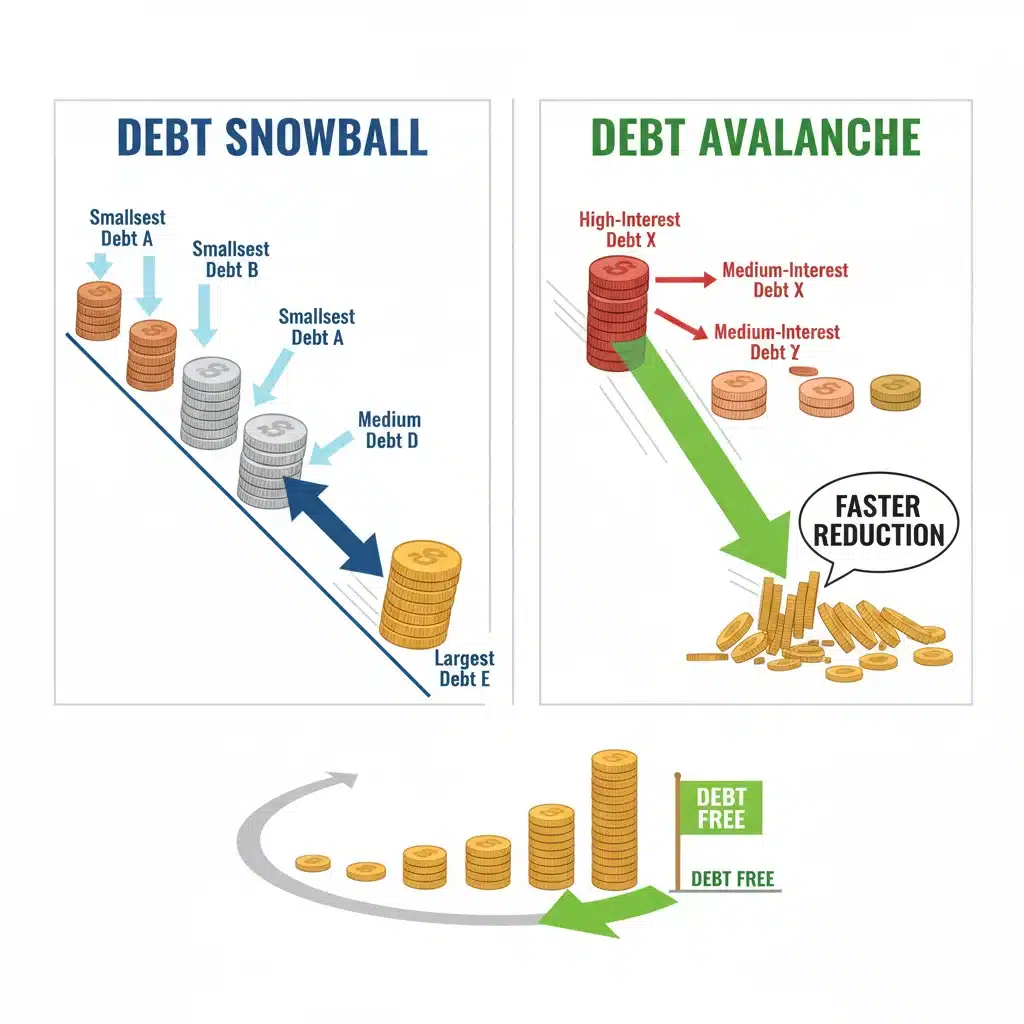
The debt snowball method involves paying off your smallest debt first, regardless of its interest rate, while making minimum payments on all other debts. Once the smallest debt is paid off, you take the money you were paying on that debt and add it to the minimum payment of the next smallest debt. This creates a ‘snowball effect’ where your payments grow larger as each debt is eliminated. The psychological wins of quickly paying off smaller debts can be incredibly motivating, providing momentum to continue tackling larger ones.
Debt Avalanche Method
In contrast, the debt avalanche method prioritizes paying off debts with the highest interest rates first, while making minimum payments on all other debts. Once the highest interest debt is paid off, you move on to the next highest interest debt, and so on. Mathematically, this method saves you the most money in interest over time. If you are disciplined and motivated by financial savings rather than quick wins, the debt avalanche can be a highly effective strategy to reduce high-interest loans.
Debt Consolidation: A Powerful Tool
Debt consolidation involves combining multiple debts into a single, new loan, often with a lower interest rate. This can simplify your payments and potentially reduce your overall interest burden, making it easier to reduce high-interest loans. There are several ways to consolidate debt:
- Personal Loans: A personal loan from a bank or credit union can be a good option if you have a strong credit score. These loans typically have fixed interest rates and terms, providing predictable monthly payments.
- Balance Transfer Credit Cards: Some credit cards offer introductory 0% APR on balance transfers for a promotional period (e.g., 12-18 months). This can be an excellent way to pay down high-interest credit card debt without accruing additional interest during the promotional period. Be mindful of balance transfer fees and ensure you can pay off a significant portion of the transferred balance before the introductory period ends.
- Home Equity Loan or Line of Credit (HELOC): If you own a home, you might be able to use your home equity to consolidate debt. These often come with lower interest rates than unsecured loans, but they carry the risk of using your home as collateral. This option should be approached with caution and a clear repayment plan.
Before opting for debt consolidation, carefully compare interest rates, fees, and terms. Ensure that the new loan truly offers better terms and that you are not simply extending your debt over a longer period without a real reduction in interest or principal.
Negotiating with Creditors
Sometimes, the most direct approach is to negotiate with your creditors. If you’re struggling to make payments, reaching out to them might lead to favorable terms. Creditors may be willing to:
- Lower your interest rate: Especially if you have a good payment history or can demonstrate financial hardship.
- Waive fees: Late fees or annual fees might be negotiable.
- Set up a payment plan: They might agree to a modified payment schedule that is more manageable for you.
It’s always worth a call, as creditors would often prefer to receive some payment rather than none at all. Be polite, explain your situation clearly, and be prepared to negotiate.
Leveraging Financial Tools and Resources
In 2026, a plethora of financial tools and resources are available to help you manage and reduce high-interest loans more efficiently. From budgeting apps to credit counseling services, these resources can provide the support and guidance you need.
Budgeting Apps and Software
Modern budgeting apps like Mint, YNAB (You Need A Budget), or Personal Capital can automate the tracking of your income and expenses, categorize spending, and even help you set debt repayment goals. These tools provide real-time insights into your financial health, making it easier to stick to your budget and identify areas where you can free up funds to reduce high-interest loans.
Credit Counseling Services
Non-profit credit counseling agencies can offer invaluable assistance. They can help you create a personalized budget, develop a debt management plan (DMP), and even negotiate with creditors on your behalf. A DMP typically involves making one consolidated payment to the agency, which then distributes funds to your creditors. This can often result in lower interest rates and reduced monthly payments, making debt repayment more manageable. When choosing a credit counseling agency, ensure it is reputable and accredited.

Financial Education and Workshops
Many community organizations, banks, and online platforms offer free or low-cost financial education workshops. These resources can enhance your financial literacy, teaching you about budgeting, saving, investing, and advanced debt management strategies. The more knowledgeable you are, the better equipped you will be to make informed decisions and effectively reduce high-interest loans.
Practical Steps to Achieve Your 15% Reduction Goal
Setting a goal to reduce high-interest loans by 15% is ambitious but achievable with a structured approach. Here’s a breakdown of practical steps to help you reach this target in 2026.
1. Create a Detailed Debt Repayment Plan
Based on your chosen strategy (snowball, avalanche, or consolidation), create a detailed plan outlining which debts you will tackle first, how much extra you will pay each month, and your projected timeline. Break down your 15% reduction goal into smaller, monthly or quarterly targets. For example, if your total high-interest debt is $10,000, a 15% reduction means paying off $1,500 this year. This translates to an average of $125 per month dedicated to principal reduction on high-interest loans, over and above your minimum payments. This specific goal will help you stay focused and motivated.
2. Automate Payments and Set Reminders
Automating your minimum payments ensures you never miss a due date, which can save you from late fees and negative impacts on your credit score. For your extra payments towards high-interest debt, consider setting up recurring transfers to ensure consistency. Use calendar reminders for important dates, especially if you’re utilizing balance transfer cards with introductory periods.
3. Increase Your Income (If Possible)
While cutting expenses is vital, increasing your income can significantly accelerate your debt reduction efforts. Consider taking on a side hustle, freelancing, or exploring opportunities for overtime at your current job. Even a small increase in income, when fully dedicated to debt repayment, can make a substantial difference in how quickly you reduce high-interest loans.
4. Cut Unnecessary Expenses Ruthlessly
Go through your budget with a fine-tooth comb. Identify subscriptions you don’t use, dining out habits that can be curbed, or entertainment expenses that can be reduced. Temporarily sacrificing certain luxuries can free up hundreds of dollars each month, which can then be directly applied to your high-interest debts. Think of it as an investment in your financial future.
5. Build an Emergency Fund (Even a Small One)
While it might seem counterintuitive to save while trying to reduce high-interest loans, having a small emergency fund (e.g., $1,000) can prevent you from incurring new debt when unexpected expenses arise. A flat tire, a medical co-pay, or a minor home repair can quickly derail your debt repayment plan if you don’t have a safety net, forcing you back to credit cards. A small emergency fund acts as a buffer.
6. Monitor Your Progress Regularly
Periodically review your debt balances and track your progress against your 15% reduction goal. Seeing the numbers decrease can be incredibly motivating and help you stay on track. Celebrate small milestones along the way, but remain focused on the ultimate goal. Adjust your strategy if necessary; life happens, and flexibility is key.
Avoiding Future High-Interest Debt
Reducing your current high-interest loans is only half the battle; the other half is preventing new high-interest debt from accumulating. This requires a shift in financial habits and a commitment to responsible spending.
Live Within Your Means
The golden rule of personal finance is to spend less than you earn. This fundamental principle is crucial for long-term financial health. Create a realistic budget and stick to it. Avoid lifestyle inflation, where increased income leads to increased spending rather than increased savings or debt repayment.
Use Credit Cards Wisely
Credit cards are not inherently bad; they can be useful tools for building credit and earning rewards. However, they become problematic when balances are carried month-to-month, accruing high interest. If you use credit cards, aim to pay the full statement balance every month. If you can’t, consider whether you should be using them at all until your debt situation improves.
Continue Building Your Emergency Fund
Once your high-interest debts are under control, continue to build a robust emergency fund, ideally covering 3-6 months of living expenses. This larger safety net provides significant financial security and reduces the likelihood of needing to rely on high-interest loans for unforeseen events.
Invest in Financial Literacy
Financial education is an ongoing process. Stay informed about personal finance best practices, investment opportunities, and economic trends. The more you learn, the better equipped you’ll be to make sound financial decisions throughout your life.
The Long-Term Benefits of Reducing High-Interest Loans
Achieving your goal to reduce high-interest loans by 15% in 2026 will have profound and lasting benefits. Beyond the immediate financial savings, you will experience:
- Improved Credit Score: As you pay down debt, especially credit card balances, your credit utilization ratio improves, which positively impacts your credit score. A higher credit score can lead to better interest rates on future loans (e.g., mortgages, car loans) and even lower insurance premiums.
- Reduced Financial Stress: The psychological burden of debt is immense. As your debt decreases, so too will your stress levels, leading to better mental and physical health, and an overall improved quality of life.
- Increased Savings and Investments: The money you free up from high-interest payments can be redirected towards savings, investments, or other financial goals, helping you build wealth faster.
- Greater Financial Flexibility: With less debt, you’ll have more disposable income and greater flexibility to pursue your dreams, whether that’s traveling, starting a business, or saving for a down payment on a home.
The strategies outlined in this article – from thoroughly understanding your debt landscape to employing strategic repayment methods and leveraging financial tools – are designed to empower you. Making a concerted effort to reduce high-interest loans by 15% this year is a significant, achievable goal that will set you on a path to lasting financial well-being. Start today, stay disciplined, and watch your financial future transform.
Author