VR in US Vocational Training: 2026 Projections & Impact
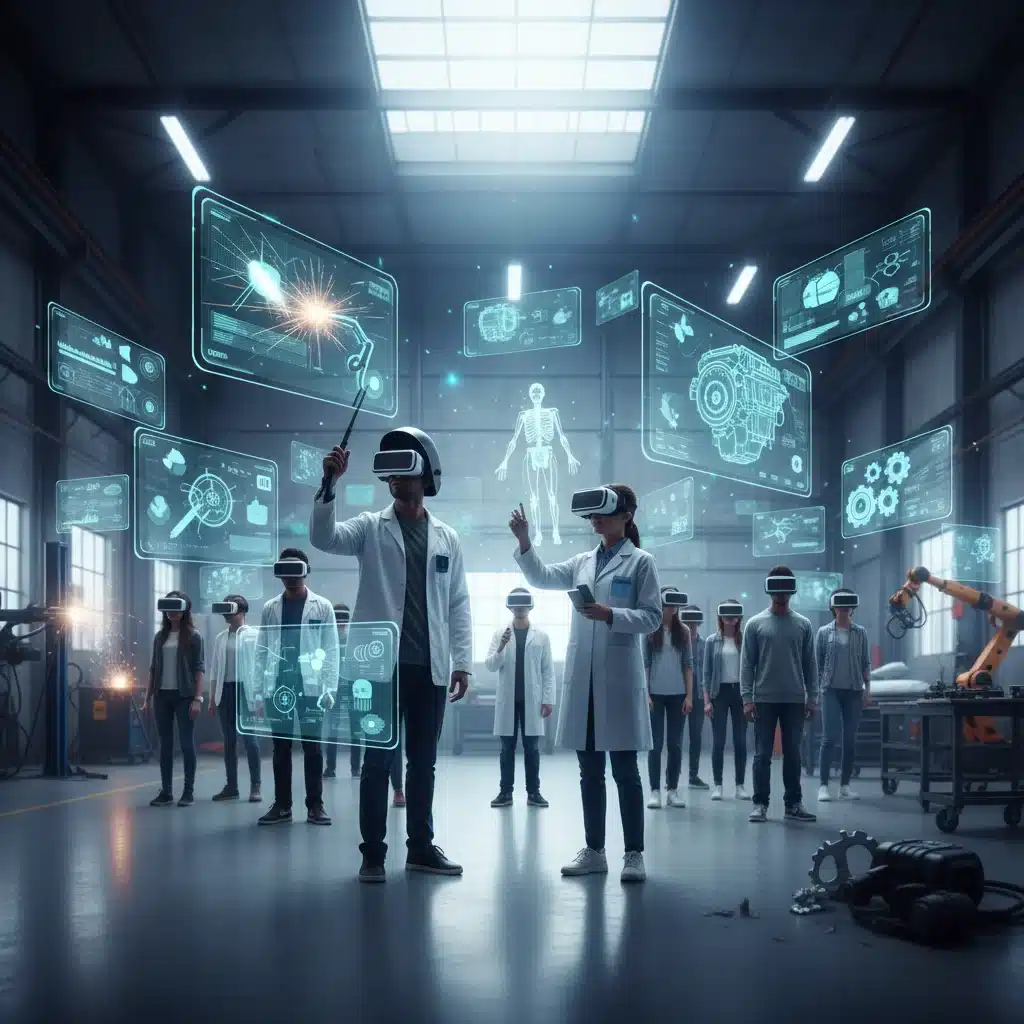
The Transformative Power of Virtual Reality in US Vocational Training: 2026 Projections
The landscape of education is constantly evolving, driven by technological advancements and the ever-growing demand for a highly skilled workforce. In the United States, vocational training programs are at the forefront of this transformation, embracing innovative tools to prepare students for the complexities of modern industries. Among these innovations, Virtual Reality (VR) stands out as a game-changer, promising to revolutionize how vocational skills are taught and mastered. By 2026, the integration of VR vocational training is not just a possibility; it’s an imperative, poised to reshape the educational paradigm, enhance learning outcomes, and address critical skill gaps across various sectors.
This comprehensive article delves into the profound impact of Virtual Reality on US vocational training, offering a forward-looking perspective towards 2026. We will explore the current state of VR adoption, project its future growth, highlight the myriad benefits it brings to both learners and institutions, and address the challenges that must be navigated for successful implementation. From welding to healthcare, construction to automotive repair, VR vocational training is creating immersive, safe, and highly effective learning environments that were once unimaginable. Join us as we uncover the future of skilled trades education, powered by the boundless potential of virtual reality.
The Current State of VR in US Vocational Training
While still in its nascent stages for widespread adoption, Virtual Reality has already begun to make significant inroads into specialized vocational training programs across the US. Early adopters, recognizing the unique advantages of immersive learning, have started piloting VR solutions in areas where traditional training methods present significant limitations or high costs. For instance, industries requiring hands-on experience with dangerous equipment or complex procedures, such as heavy machinery operation, intricate surgical simulations, or high-voltage electrical work, have found VR to be an invaluable tool.
Institutions are currently experimenting with VR to provide students with realistic simulations that mirror real-world scenarios without the associated risks or expenses. This includes virtual workshops for automotive mechanics, simulated construction sites for aspiring builders, and virtual patient care environments for healthcare professionals. The initial feedback from these programs is overwhelmingly positive, with students reporting increased engagement, better retention of information, and a higher level of confidence before entering actual work environments. The current focus is on developing high-fidelity simulations that are both pedagogically sound and technically robust, ensuring that the virtual experience directly translates to tangible skills in the physical world. This foundational work is crucial for the accelerated adoption of VR vocational training that we anticipate by 2026.
Projected Growth and Adoption by 2026
The trajectory for Virtual Reality in US vocational training is steep and promising. Market analyses and technological forecasts indicate a significant surge in adoption rates over the next few years. Several factors contribute to this optimistic outlook. Firstly, the cost of VR hardware is steadily decreasing, making it more accessible to a wider range of educational institutions. What was once a prohibitively expensive technology is becoming increasingly affordable, allowing more schools and training centers to invest in VR labs and individual headsets for students.
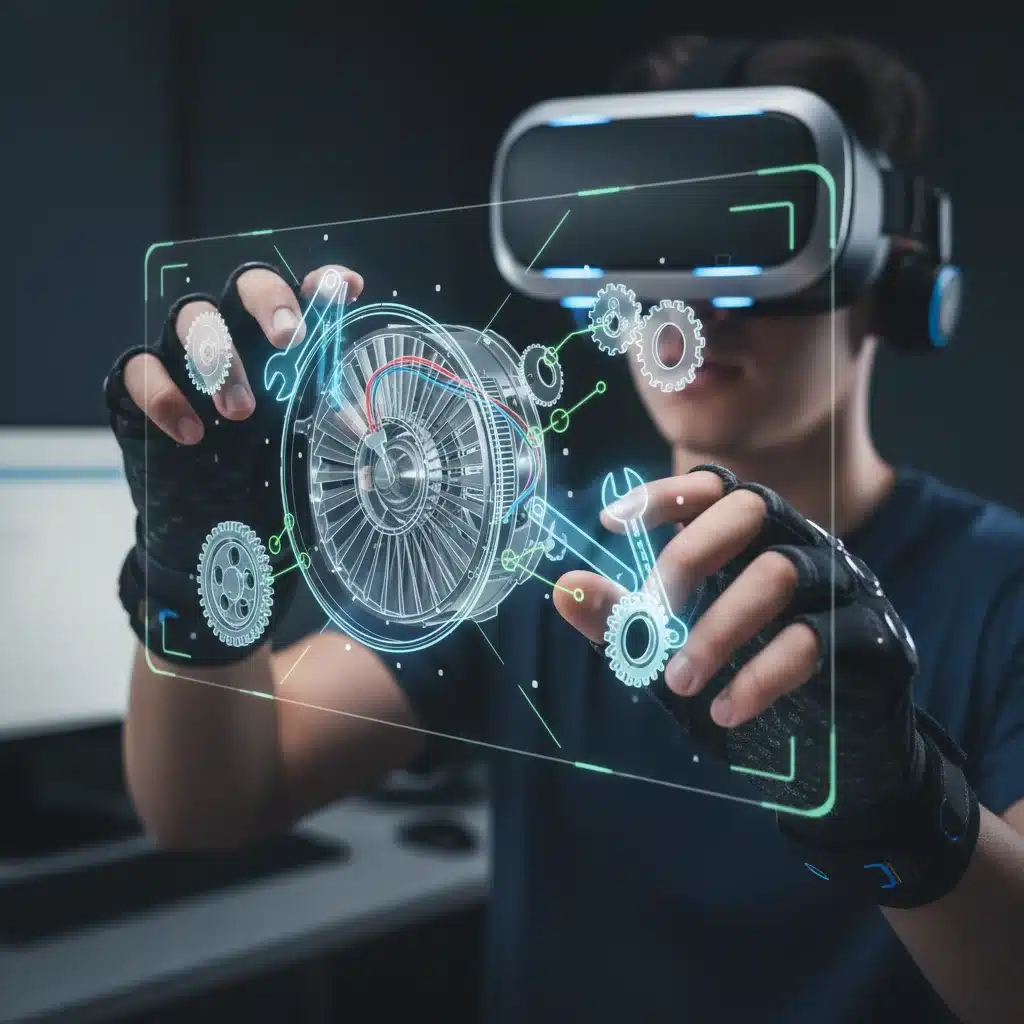
Secondly, the development of VR content and platforms is maturing rapidly. Content creators are now able to develop more sophisticated, realistic, and pedagogically effective simulations tailored specifically for vocational skills. This includes advanced haptic feedback systems that allow users to ‘feel’ virtual objects and tools, enhancing the realism and effectiveness of hands-on training. Furthermore, the push for digital transformation within education, accelerated by recent global events, has made institutions more receptive to innovative technologies like VR. Government initiatives and industry partnerships are also expected to play a crucial role, providing funding and support for the integration of VR vocational training into national workforce development strategies. By 2026, it is projected that a substantial percentage of vocational programs will have integrated VR modules into their curriculum, moving beyond pilot programs to full-scale implementation, fundamentally altering how future generations of skilled workers are educated and trained.
Key Benefits of VR in Vocational Education
Enhanced Learning Engagement and Retention
One of the most compelling advantages of VR vocational training is its ability to dramatically increase student engagement. Traditional classroom settings, while essential, often struggle to capture the full attention of learners, especially when dealing with complex or abstract concepts. VR, by its very nature, is immersive and interactive. It places students directly into a simulated work environment, allowing them to learn by doing rather than just observing or reading. This active participation fosters a deeper understanding of the material and significantly improves information retention. When students can virtually manipulate tools, perform procedures, and see the immediate consequences of their actions, the learning experience becomes more memorable and impactful. This hands-on, experiential learning through VR leads to a more profound grasp of vocational skills, preparing them more effectively for real-world challenges.
Safe and Cost-Effective Training Environments
Many vocational trades involve working with dangerous machinery, hazardous materials, or in high-risk environments. Traditional training in such fields often requires expensive equipment, dedicated facilities, and strict safety protocols, which can be costly and limit access. VR vocational training offers a revolutionary solution by providing a completely safe space for practice. Students can make mistakes, learn from them, and repeat procedures as many times as needed without any risk to themselves, others, or expensive equipment. This not only reduces the potential for accidents but also significantly lowers training costs associated with materials, equipment wear and tear, and facility maintenance. For example, aspiring welders can practice countless welds in a virtual booth, healthcare students can perform delicate surgeries without risk to patients, and construction workers can operate heavy machinery without the danger of real-world mishaps. This aspect alone makes VR an indispensable tool for modern vocational education.
Personalized Learning Paths and Skill Development
Every student learns at their own pace and has unique strengths and weaknesses. Traditional group-based instruction often struggles to accommodate these individual differences effectively. VR, however, excels in providing personalized learning experiences. VR platforms can track a student’s progress, identify areas where they need more practice, and even adapt the training scenario in real-time to challenge them appropriately. This adaptive learning approach ensures that students receive targeted feedback and can focus on developing specific skills that require improvement. Whether it’s mastering a complex circuit diagram, perfecting a carpentry joint, or honing diagnostic skills, VR vocational training allows for individualized instruction that can accelerate skill acquisition and build confidence. Furthermore, students can access VR modules anytime, anywhere, allowing for flexible learning schedules that cater to diverse student needs and lifestyles.
Access to Specialized and Remote Training
For vocational programs in rural areas or those requiring access to highly specialized equipment that is expensive or difficult to transport, VR offers an unprecedented solution. It democratizes access to high-quality training by making it available regardless of geographical location or physical resource limitations. A student in a remote town can experience training on a state-of-the-art industrial robot or a complex medical imaging machine through VR, even if their local institution doesn’t possess the physical equipment. This expands the reach of vocational education, allowing more individuals to pursue specialized trades and addressing regional skill shortages. Furthermore, VR facilitates remote collaboration, enabling students and instructors from different locations to participate in shared virtual training environments, fostering a sense of community and shared learning experience. This capability of VR vocational training is vital for building a robust and adaptable national workforce.
Challenges and Considerations for Implementation
Initial Investment and Infrastructure Requirements
Despite the decreasing cost of VR hardware, the initial investment for establishing a comprehensive VR vocational training program can still be substantial. This includes not only the headsets but also powerful computers capable of running complex simulations, specialized software licenses, and potentially dedicated VR laboratory spaces. Furthermore, robust internet connectivity and IT support are essential to manage and maintain the VR infrastructure. For many vocational schools and community colleges, securing the necessary funding can be a significant hurdle. Grant opportunities, government funding for workforce development, and partnerships with industry leaders will be crucial in overcoming these financial barriers and ensuring equitable access to VR technology across different institutions.
Content Development and Customization
One of the biggest challenges lies in the creation of high-quality, pedagogically sound VR content tailored to specific vocational trades. Developing realistic and effective simulations requires significant expertise in 3D modeling, game development, instructional design, and a deep understanding of the vocational skills being taught. Generic VR experiences often fall short of meeting the specific needs of vocational training. Customizing content to align with industry standards, specific equipment models, and curriculum objectives is a complex and time-consuming process. Institutions may need to collaborate with specialized VR content developers or invest in training their own staff to create and maintain these simulations. Ensuring that the VR content is regularly updated to reflect new technologies and industry practices will also be an ongoing challenge that requires continuous investment and effort in VR vocational training.
Instructor Training and Acceptance
The successful integration of VR into vocational training hinges significantly on the willingness and ability of instructors to adopt and effectively utilize the new technology. Many experienced vocational instructors may be unfamiliar with VR technology and require comprehensive training not only on how to operate the equipment but also on how to integrate VR experiences seamlessly into their existing curriculum. Overcoming potential resistance to change and demonstrating the tangible benefits of VR will be crucial. Professional development programs focused on VR pedagogy, best practices for facilitating virtual learning, and techniques for troubleshooting common issues will be essential. Without enthusiastic and well-trained instructors, even the most advanced VR vocational training systems may fail to reach their full potential, underscoring the importance of human-centric implementation strategies.
Technological Limitations and User Experience
While VR technology has advanced rapidly, certain limitations still exist. Issues such as motion sickness (though less prevalent with modern headsets), the physical discomfort of wearing headsets for extended periods, and the need for adequate physical space for some VR experiences can impact user experience. The fidelity of graphics and haptic feedback, while improving, may not always perfectly replicate the tactile nuances of real-world tasks. Ensuring that the VR experience is intuitive, comfortable, and truly enhances learning without causing undue frustration is paramount. Continuous improvements in hardware design, software optimization, and user interface development will be necessary to address these technological limitations and ensure that VR vocational training remains an engaging and effective tool for all learners.
Case Studies and Success Stories
Across the US, pioneering vocational institutions and industry partners are already demonstrating the immense potential of VR vocational training. For example, some community colleges have implemented VR welding simulators that allow students to practice intricate welds with immediate feedback on technique, angle, and speed. These simulators not only reduce material waste but also accelerate the learning curve, allowing students to achieve proficiency faster than with traditional methods. In the healthcare sector, nursing schools are utilizing VR to simulate complex patient scenarios, allowing students to practice critical decision-making and emergency response in a risk-free environment. This prepares them for high-pressure situations and improves patient safety in real-world settings.
Another notable success comes from the construction industry, where VR is being used to train heavy equipment operators. Students can learn to operate bulldozers, excavators, and cranes in a virtual environment, mastering controls and spatial awareness before ever stepping into a real cab. This significantly reduces the risk of accidents during initial training and provides a cost-effective way to gain experience on expensive machinery. Similarly, automotive technology programs are leveraging VR for diagnostics and repair simulations, enabling students to virtually disassemble and reassemble complex engine components. These diverse success stories underscore the versatility and effectiveness of VR vocational training across a wide array of skilled trades, providing compelling evidence for its continued expansion by 2026.
The Future Outlook: Beyond 2026
Looking beyond 2026, the integration of VR vocational training is expected to deepen and broaden, becoming an indispensable component of workforce development. We can anticipate several key trends shaping this future. Firstly, the convergence of VR with Augmented Reality (AR) and Mixed Reality (MR) will create even more sophisticated and integrated learning experiences. AR, for instance, could overlay digital instructions onto real-world equipment, guiding students through repair processes, while MR could blend virtual tools with physical workspaces, offering unparalleled realism. This blended reality approach will provide the best of both worlds: the safety and flexibility of virtual environments combined with the tactile feedback of physical interaction.
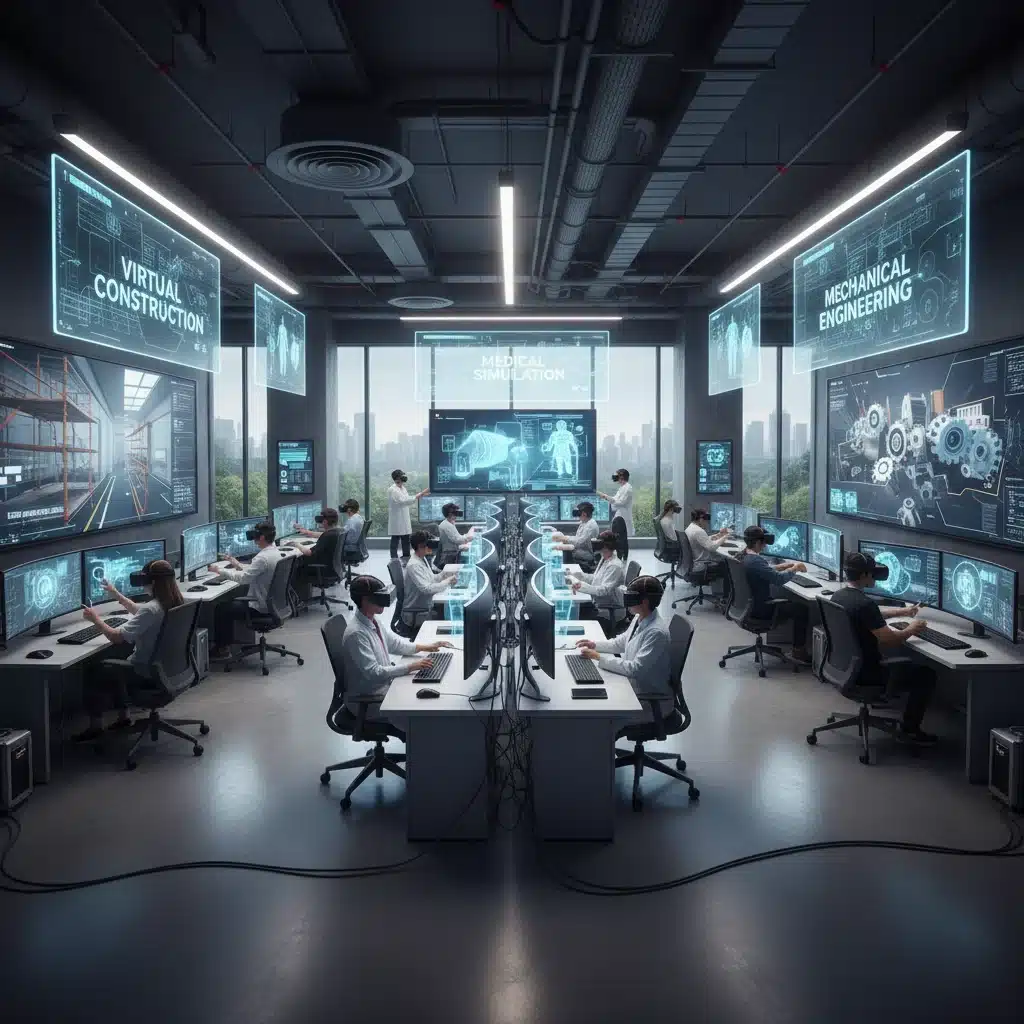
Secondly, Artificial Intelligence (AI) will play an increasingly vital role in personalizing VR training. AI-powered tutors could provide real-time feedback, analyze performance data to identify learning patterns, and adapt curricula dynamically to individual student needs. This hyper-personalized approach will optimize learning outcomes and ensure that every student reaches their full potential. Furthermore, the development of more affordable and portable VR hardware, including standalone headsets with greater processing power, will make VR training even more accessible, extending its reach to smaller institutions and even individual learners at home. The future of VR vocational training is not just about simulating tasks; it’s about creating intelligent, adaptive, and universally accessible learning ecosystems that continuously evolve with industry demands, fostering a highly skilled and resilient workforce for decades to come.
Conclusion: A New Era for Skilled Trades
The journey of Virtual Reality in US vocational training is a testament to the power of innovation in education. As we move towards 2026 and beyond, VR is not merely a supplementary tool; it is rapidly becoming a foundational element that redefines how vocational skills are acquired, practiced, and mastered. The benefits are undeniable: increased engagement, enhanced retention, safer training environments, cost efficiencies, personalized learning, and expanded access to specialized instruction. While challenges related to investment, content development, and instructor training remain, these are surmountable obstacles that will be addressed through collaborative efforts between educators, industry, and technology developers.
The embrace of VR vocational training represents a critical step in preparing the next generation of skilled workers for the demands of a rapidly changing economy. It equips them with the practical expertise, critical thinking, and adaptability necessary to thrive in complex, technology-driven industries. As institutions continue to invest in and refine their VR programs, we will witness a new era of vocational education – one that is more immersive, more effective, and ultimately, more empowering for students pursuing vital trades. The future of the American workforce is intrinsically linked to the successful integration of these cutting-edge technologies, ensuring a pipeline of highly competent professionals ready to build, heal, and innovate.
Author